Home Blog Page 1906

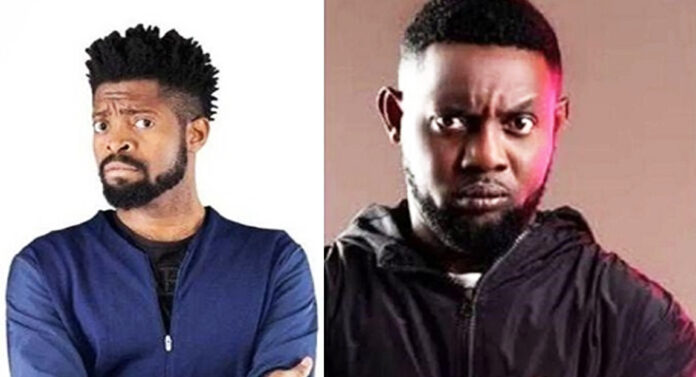
Basketmouth settles 17 yrs beef with colleague Comedian AY

0
Basketmouth and AY Makun

Nigerian Comedian, Basketmouth, born Bright Okpocha, has settled a 17-year beef between himself and colleague Comedian, AY Makun.

In April, AY in an interview disclosed that his long-term beef with Basketmouth, whom he tagged along with to events at the outset of his career, began in 2006.

AY, among other things, claimed that he stood in for Basketmouth at an event but didn’t get his N30,000 payment for the job.

In an apology video posted on his official Instagram page on Monday, Basketmouth finally reached out to AY and sought forgiveness.

He said, “Now, to my guy, AY. I don’t know if my apology is still valid right now, but if it is, please forgive me for whatever I have done or said in the past that affected you in any way,

“I want you to know that I have forgiven you for whatever you did or said knowingly or unknowingly. I just want us to live in peace and harmony.”

Basketmouth also apologised to other colleagues in the industry, whom he may have offended over time.

“Knowingly or unknowingly, I say this to you right now from the bottom of my heart. I am genuinely sorry. Please forgive me,” he pleaded.

However, to the people who accused him of doing one thing or another that affected their career, he did not deny or accept the allegations “because God knows the truth”.

“Regardless, please forgive me. I beg you from the bottom of my heart,” he added.

Don’t be scared of death prophecies –Kaywa to Celebrities

0
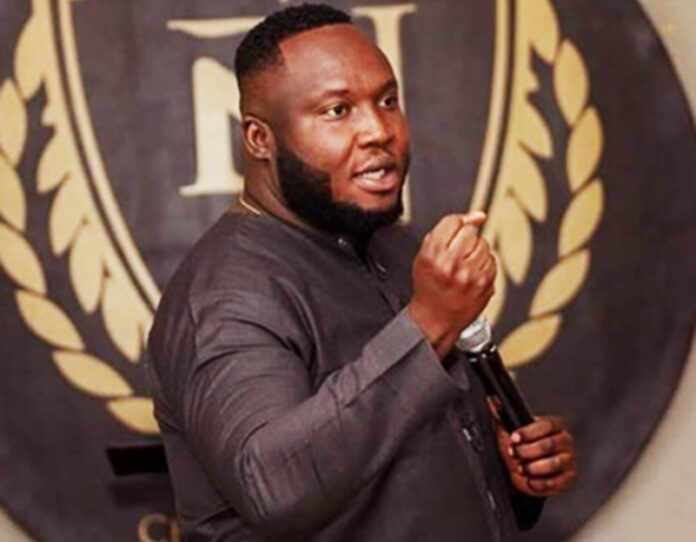
Kaywa

Prophet cum renowned music producer, Kaywawho is known to be the spiritual fathers of some celebrities in Ghana has mentioned that, those in public eye should not allow death prophecies to scare them.

According to him, a number of celebrities and the public are scared of doom prophecies because of poor understanding.

“What is death, we are just transitioning from one place to the other. If you are a believer, death should not put fear in you. God reveals to redeem so if there is a prophecy about death we should pray about it and everything will be fine,” he said during the Graphic Showbiz Twitter (X) Dialogue last Thursday on the topic ‘Does Prophecy have a place in Showbiz?’.

Kaywa further noted that, prophecies should be accepted in good faith whether good or bad adding that a prophet is a messenger from God sent to deliver a message and don’t speak their minds.

“Whether you believe in the prophecy or not, the prophets aim is to tell you what God has revealed to him. It is left with the receiver to accept it and work on it. I have given some prophecies about some individuals and they took it in good faith and we prayed about it. Before Ebony died, I had the prophecy and reached out to her. I can say on authority that I converted her to Christ before she died,” he said.

Pres Akufo-Addo’s daughter’s position at the Creative Arts Agency is illegal –Kojo Preko 

0
Gyankroma Akufo-Addo, Executive Secretary of the Creative Arts Agency

The Convener of the Foundation of Concerned Arts Professionals (FOCAP), Kojo Preko Dankwa, has described as illegal the appointment of Gyankroma Akufo-Addo as the Executive Secretary of the Creative Arts Agency.

On Joy FM‘s Showbiz A-Z, he said that Gyankroma is working in the office without the official knowledge of the stakeholders of the industry.

“She is the illegal Executive Secretary of the Creative Arts Agency. And I am surprised we are still sitting on this matter and the President is still watching, the Ministry is still watching,” he told the host Kwame Dadzie.

According to him, her appointment needed to have been made public if indeed it was duly conducted.

“If she has received her appointment letter we have to know. The President appoints a Chief Executive Officer of the Volta River Authority and it is not done in darkness. We all know. Officially, you need to tell us. Then [if she’s been given her appointment letter] it means that government does not respect us,” he explained.

Credit: myjoyonline.com

Kuami Eugene opens up about how fame at a tender age affected him

0
Kuami Eugene

Highlife Artiste, Kuami Eugene, has opened up about the danger of being exposed to wealth at a young age and how public criticism affected him at the beginning of his career.

Kuami Eugene explained the rapid transition from having nothing to suddenly having substantial wealth, including being paid for shows and driving a Range Rover. He felt that the public didn’t empathise with his situation.

“To move from not having anything to taking this amount for a show, to driving a Range Rover, I’ve never had all these before, all within a very short period. That wasn’t fair on the side of the public. They didn’t reason that he is a young boy and he is getting all this money,” he said.

In an interview, he expressed feeling mistreated by critics who, he believed, should have taken his youth and newfound wealth into account.

He stated, “I made a lot of mistakes when I was young; blowing up as a young guy wasn’t easy. At the age of 19, they should have considered the fact that ‘Oh, he is a young boy.’”

Kuami Eugene rose to fame at a tender age of 19 with the release of his debut song, ‘Angela,’ in 2017. He further released various other hit songs like ‘Ohemaa,’ ‘Wish Me Well,’ and ‘Open Gate,’ while signed on to Lynx Entertainment Records.

In October 2022, Kuami announced that he had signed on to the American record label ‘Empire Records.’


Bono Regional Minister commissions football park in Wenchi

0
The minister (m) opening the park

The Bono regional minister, Madam Justina Owusu Banahene, has commissioned a state-of-the-art football pitch in Wenchi in the Bono region.

The project, funded by the Wenchi Municipal Assembly, has a VIP stand with a seating capacity of two hundred, and a dressing room equipped with modern facilities.

The Minister extended her appreciation to the government, the Municipal Chief Executive, and the entire assembly for their commitment to the project.

She also acknowledged Nananom for providing the land on which the park now stands.

She mentioned some of the benefits of the project, including its positive social, health, and economic impacts on the municipality and the entire region.

The regional minister appealed to users of the facility to “cherish and protect the park while cultivating a culture of maintenance to ensure that this vital asset endures for generations to come, benefiting the community and beyond.”

ICT training to address societal challenge

0
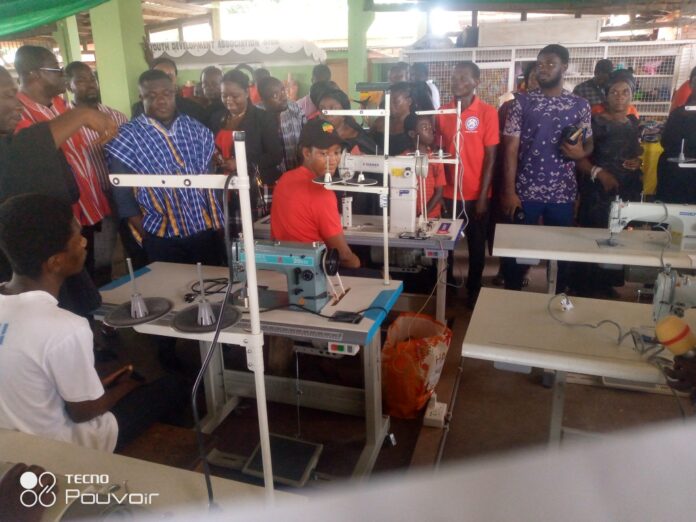
Trainees at the ICT training

Trainees of the Sunyani Youth Development Association (SYDA) have undergone a three-day Information and Communication Technology (ICT) training as part of their three-year intensive skills training.

The ICT training workshop is to empower the participants to identify problems in their respective communities and possible ideas to solve them and contribute to the achievement of the United Nations Sustainable Development Goals (SDGs).

It was organised and facilitated by the Business Innovation Development and Entrepreneurship Initiative (BIDET), a youth-based nonprofit making organisation in Sunyani.

It was through UNLEASH, a Global Invocation Lab into addressing community challenges towards the attainment of the SDGs.

The workshop is an ideation training to help participants generate possible ideas and find out societal problems, the actual causes of the problems and how it can be addressed.

BIG BOOST

Mr. Akoto Snr announced that the SYDA had received training equipment worth GH¢140,000.00 from the GIIF as support to improve employable skills training opportunities for the youth.

He said SYDA has facilitated 58 trainees to graduate already, making the total of 65 beneficiaries of the association who have established themselves in business.

Mr. Akoto Snr said there are 10 Master Crafts Persons with 42 trainees currently undergoing three-year training in fashion, kente weaving, smock weaving, auto mechanic, hairdressing, cosmetology, and aluminium fabrication and bead crafts.

The association also has other training modules such as wood technology, bicycle repairs, solar energy installation technology, catering and decor under its entrepreneurial hub training.

The Ghana Infrastructure Investment Fund (GIIF) funded the acquisition additional tools, machines and materials for the expansion of the skills training equipments

In all, the association has 95 sewing machines including 25 industrial sewing machines with the remaining being hand and other electric sewing machines at the fashion department.

The other departments, auto mechanic, textile hand weaving (Kente), bead crafts, aluminum fabrication and hairdressing also benefited from the GIIF support.

The association is also into solar energy technology, wood technology (carpentry), visual arts and bicycle repairs as other areas of the skills training project.

SYDA inaugurates phase II of skills training project

0
Some of the equipment at the SYDA training center

A Board Member of the Ghana Infrastructure Investment Fund (GIIF), Ambassador George Kumi, has appealed to the Sunyani Municipal Assembly and the Ghana TVET Service to support the Sunyani Youth Development Association (SYDA) Skills Training Centre through the assembly’s Skills Fund.

“I wish to appeal to the Sunyani Municipal Assembly to consider supporting the skills training in Sunyani with part of its Skills Fund,” he said.

Ambassador Kumi was speaking at the inauguration of phase two of the Sunyani Youth Development Association’s skills training project initiated to support the livelihoods of vulnerable youth in the Bono Region.

The program was on the theme: “Resourcing TVET Facilities to enhance Entrepreneurship Development and Job Creation.”

As part of the inauguration ceremony, 22 new trainees (about 95 per cent females), mostly teenage single mothers, were inducted into the skills training programme.

Ambassador Kumi pledged the government’s commitment to making Technical, Vocational Education and Training (TVET) the game changer in the socio-economic and livelihood development of Ghanaians.

Ambassador Kumi(l) and Mr Ansu Kumi(r), Sunyani MCE at the SYDA training center

He noted: “Handicraft skill training initiatives like that of SYDA deserves maximum support, because that’s one of the best means to help reduce youth unemployment in Ghana and Africa.”

The President of the Sunyani Youth Development Association, Mr. Atta Akoto Senior, said having reached the community with advocacies over the years, management of the association realised that just talking alone could not solve the problems facing the youth, but rather embark on a direct impact project that would make the unemployed youth self-sufficient, which resulted in the skills training project.

“This idea was discussed with Nana Bosoma Asor Nkrawiri II, the late Paramount Chief of Sunyani Traditional Area and President of the Sunyani Traditional Council.”

The late Nana Bosoma II and the entire Council threw in their support to make our idea a reality, hence, the introduction of the “SYDA Integrated Sewing Project”, he said.

The Sunyani Municipal Chief Executive, Mr. Ansu Kumi, thanked the GIIF Board for the logistical support to improve the skills development initiative that would create employment opportunities for young people of Sunyani and the Bono region.

Mr. Ansu Kumi pledged the Assembly’s support to the Centre and encouraged the trainees to take advantage of the opportunity so they could also help train others.

Does Walking Barefoot Have Health Benefits?

0
Walking Barefoot

Overview

Walking barefoot might be something you only do at home. But for many, walking and exercising barefoot is a practice they do daily.

When a toddler is learning to walk, parents are told to let this process happen naturally, and without shoes. That’s because shoes can affect how a child uses the muscles and bones in their feet.

Kids also receive feedback from the ground when they walk barefoot, and it improves their proprioception (awareness of their body in space).

As a child gets older, we shove their feet into shoes and lose the benefits that come from walking barefoot.

That’s why advocates of barefoot walking and exercising are pushing back on wearing shoes all day long and encouraging all of us to let our feet be free.

What are the benefits of walking barefoot?

“The most straightforward benefit to barefoot walking is that in theory, walking barefoot more closely restores our ‘natural’ walking pattern, also known as our gait,” explains Dr. Jonathan Kaplan, foot and ankle specialist and orthopedic surgeon with Hoag Orthopaedic Institute.

But if you go to any running or walking store and look at several different pairs of shoes, you’ll see that many of them have excessive cushioning and support.

While this pillow-type padding can feel pretty amazing when you walk in these types of shoes, board-certified podiatrist and foot surgeon Dr. Bruce Pinker says they can prevent you from using certain muscle groups that can actually strengthen your body.

Other benefits of walking barefoot include:

better control of your foot position when it strikes the ground  improvements in balance, proprioception, and body awareness, which can help with pain relief better foot mechanics, which can lead to improved mechanics of the hips, knees, and core maintaining appropriate range of motion in your foot and ankle joints as well as adequate strength and stability within your muscles and ligaments  relief from improperly fitting shoes, which may cause bunions, hammertoes, or other foot deformities  stronger leg muscles, which support the lower back region

What are the potential dangers of walking and exercising barefoot?

Walking barefoot in your house is relatively safe. But when you head outside, you expose yourself to potential risks that could be dangerous.

“Without appropriate strength in the foot, you are at risk of having poor mechanics of walking, thereby increasing your risk for injury,” explains Kaplan.

This is especially important to consider when you’re beginning to incorporate barefoot walking after having spent much of your life in shoes.

He also says that you need to consider the surface being walked on. While it may be more natural to walk or exercise barefoot, without additional padding from shoes, you are susceptible to injury from the terrain (like rough or wet surfaces or issues with temperature, glass, or other sharp objects on the ground).

You also take the chance of exposing your feet to harmful bacteria or infections when you walk barefoot, especially outside.

Christopher Dietz, DO, MedExpress, says people with diabetes should always consult with their primary care physician before going barefoot. “If they have peripheral neuropathy, they can sustain wounds on the bottom of their feet and not realize it,” he explains.

How do you properly walk and exercise barefoot?

Knowing how to walk and exercise barefoot takes time, patience, and the right information. So, before you ditch your shoes in favor of a more natural approach to walking and exercise, there are a few things to consider.

Start slow. You need to be patient and start with short 15- to 20-minute sessions of walking barefoot. Kaplan says it’s vital that you allow your feet and ankles to adapt to the new environment. As your feet get used to walking without shoes, you can increase the distance and time.

Ease up if you feel any new pain or discomfort. “While walking barefoot sounds like the perfect option, there are dangers that should be considered,” explains Kaplan. “Without appropriate strength in the foot, you are at risk of having poor mechanics of walking, thereby increasing your risk for injury. This is especially important to consider if you are beginning to incorporate barefoot walking after spending much of your life in shoes,” he adds.

Try it out indoors. Before you hit the pavement running, it might be a good idea to let your bare feet get used to the safe surfaces in your house. Misiura says the best thing to do would be to use an indoor surface that you know is free of something you could step on accidentally.

Practice on safe surfaces. Once you’ve mastered the indoors, try walking on outside surfaces that are less dangerous, such as turf, rubber tracks, sandy beaches, and grass.

Consider using a minimalist shoe. While your feet are adjusting to less structure and padding from your shoes, you may want to consider using a minimalist shoe before going completely barefoot.

Experiment with balance exercises. Misiura recommends you start with simple balance exercises like standing on one foot or pressing yourself up onto your toes and lowering down slowly.

Try an activity that requires you to be barefoot. Take advantage of activities that are already performed barefoot, like yoga, Pilates, or martial arts.

Examine your feet for injury. Every day examine the bottom of your feet for injury, as many have reduced sensation in their feet.

More strenuous activities such as barefoot running or hiking should not be incorporated until you’ve spent adequate time preparing your feet for this type of activity.

If you have pain in your heels after resting or have pain when you walk, you may need to go back to supportive shoes and start slowly again when your feet have healed.

Source: www.healthline.com

Feature: Policing in Ghana – Introspections, challenges and prospects

0
Feature

Section 200(1) of the 1992 Constitution states that: “No person or authority shall raise any police service except by or under the authority of an Act of Parliament.” Again, Articles 200-204 of the Constitution set the legal framework for the police to enforce law, protect lives and property throughout the territorial boundaries of Ghana.

Additionally, Section 51(1) of the Police Service Act, 1970 (Act 350) states that “it shall be the duty of the police to prevent and detect crime, apprehend offenders and maintain public law, order and safety of persons and property.”

However, these Acts failed to articulate a regulatory guideline for police conduct. This gap was somewhat addressed in the Ghana Police Manual launched in May 2010.

Police officers and responsibilities

The 1951 Young report defined a police officer as a citizen serving the office of a Constable, who has certain powers and liable to certain responsibilities. He or she derives his or her authority from the Sovereign/the State that he or she serves.

Constitutionally, the police perform several obligations. They include police station operations, patrolling, traffic control, crime prevention and control, intelligence gathering, forensic analysis, research and development, and general and technical functions.

Some of the regular responsibilities of the mandate are: Institute criminal charges; invite, arrest and/or detain suspects (with or without warrant or trail) in police custody for not more than 48 hours, and per Article 14(3) of the 1992 Constitution shall bring the suspect before a court of competent jurisdiction.

Again, the police receive confession statement from a suspect, grant bail to a suspect in police custody, interrogate a suspect and/or issue caution statement. Further, the police are vested to intercept communication, conduct identification, conduct lawful entry, search and seizure or surveillance, and collect admissible evidence.

The police are also empowered to invade privacy, use reasonable force, confiscate property, freeze asset, and interfere with movement, life and liberty of a person. The police are at liberty to choose the methods and means of operation to enforce these responsibilities, law and order.

Independence of the police service

Globally, the police service lacks a legal sovereignty; a phenomenon that cripples neutral and professional police service in law maintenance. The Ghana Police Service is not immune from this global reality.

The police in the African Colonies were historically and culturally constructed. In Ghana, the police service was formed by the British Colonialists primarily for political and economic exploitation.

As a result, the police became the agents and handmaiden of the imperialists for controlling the citizens through “indirect rule” using the chief as the bridgeheads. The police were unfriendly, un-civilian and alien to their own countrymen and women through colonial command.

The imperialistic posturing affected the legitimacy and independence of the police. Their authority as true native representatives was weakened. The police became unattractive to the citizens particularly the elites and affluent who considered them as traitors of their race.

After independence in 1957, President Kwame Nkrumah launched the Africanisation policy which included police transformation. Nkrumah renamed the Gold Coast Regiment as the Ghana Army, and the Gold Coast Police Force as the Ghana Police Service. The construction and character of the police service did not change much.

The orientation of the police service was heavily rooted in colonial norms. The police service became an appendage to post-independence government, and not an institution working for the citizens.

The service was infiltrated by the loyalists of the Nkrumah-led Convention People’s Party (CPP) government who snooped on the Intelligence Branch of the police. Police reform was a mere change of institutional arrangements, and succeeded minimally in domesticating home-grown police service as the wheels of security sector governance.

The police service continued to be centralised after the birth of the 1992 Constitution. The appointment of Inspector-General of Police (IGP) became executive preserve of the President of the Republic. Balancing the act of protecting the interest of the appointing authority and by extension, the political regime and the interest of the State remained a difficult task for the IGP and the police service.

This often led to the politicisation of the police and the service they render to the public. Throughout the Fourth Republic, successive governments have recruited party foot-soldiers and confidants into the police service. The politicisation suffocates the neutrality, autonomy, professionalism and accountable police service to the public.

Appointment of the IGP and security of tenure

Article 202 Clause 3 and Article 203 Clause 1 give executive orders to the President to appoint the IGP in consultation with the Council of State and the Police Council. The powers to appoint and remove the IGP offer a caveat for political interference in the affairs of the Police Administration. In some cases, successive Presidents have compelled the IGP to vacate post or contract extended as the position of IGP does not have security of tenure.

For example, IGP Mr. Patrick Kwarteng Acheampong was 57 years old (three years to retirement) when he was compelled by President Prof. Evans Fiifi Atta Mills-led National Democratic Congress (NDC) government to resign on 28 January 2009 after the political transition. Again, IGP Mr. John Kudalor was directed by President Nana Addo Dankwa Akufo-Addo-led New Patriotic Party (NPP) government to resign on 25 January 2017 though he had one year to retire.

In other cases, IGPs who were due for retirement were given contract to stay on the job, an example being Mr. David Asante-Appeatu. The political meddling affects security of tenure of the leadership and administrative autonomy of the police service. The issue speaks decisively to the extreme form of winner-taking-all system of governance practiced in Ghana.

The intermarriage between the police and political regime often leads to reciprocal loyalty. Such loyalty offers pathway of a culture of undermining between ranks and file of the police. It also sowsseed of politicking in favour of the government but weakens the independence and legitimacy of the police service.

It is recommended that the independence of the IGP must be insulated from political interference through a security of tenure across political regimes which would ensure that the appointment is transparent, consultative and by parliamentary approval.

Implications for law maintenance

The executive power of the President to appoint or remove the IGP and some members of the Police Council and by extension, the Attorney General and Minister of Justice, the Chief Justice, and the Special Prosecutor has raised public concerns about the insulation of these public office holders from political interference, which arguably choke their autonomy and effective law enforcement. These appointees hold constitutional and sometimes discretionary powers to adjudicate and prosecute criminal matters.

It is an open secret that both the NDC and the NPP have used the appointing powers to unduly influence police governance and legitimise their holding powers.  Ironically, both the NDC and the NPP are suspicious of the police service once they lose political power.

The political interferences make the police administration the weaker link in the power holding arrangement, that at times, officers notice an appearance of wrongdoing, yet feel helpless, because of structural defects and chain of command which ultimately rest with political hands and the appointing authority.

For example, the police sometimes face the challenge of publishing names of high-profile personalities associated with the ruling government who engage in alleged election-related crimes.

In principle, the ruling coalition is aware of the structural defects of the police service and implications for law maintenance. Yet, the political will to address them is either minimal or intentionally absent.

Again, often, one observes that senior officers at the Police Headquarters or Regional Command who are outspoken with the truth are perceived to be anti-government.  Such officers are often transferred or undergo job rotation as a form of quelling them into submission, regardless of the competencies they possess to advancing the course of law enforcement.

It is reasoned that such institutional politicking would continue from medium-to-long term as long as the IGP is appointed by the President. The appointment of IGP principally remains a political convenience for the pursuit of regime security over professional policing.

And attempt by any IGP to turn this around and overhaul the police administration will naturally face a stiff opposition within and without the police service. However, that achievement by any IGP would be remarkable for the pursuit of a professional and world-class police service in Ghana.

Some challenges of police service

Apart from the constitutional challenges outlined above, the police service is confronted with a number of institutional difficulties that inhibit performance, some of which are self-healing and self-correcting. These include: Inability to meet police-citizen ratio of 1:500 due to inadequate human resource, legitimacy deficit and trust-deficit.

Others are excessive use of force, selective law enforcement and mistreatment, police collusion with demonstrators and human rights abuse. Again, the police service is confronted with misconduct and indiscipline among some officers and corruption.

Additionally, there is weak decentralisation from the centre to lower echelons of command and deficit in the deployment of information communication technological gadgets. Also, there is weak cooperation from the public which affect reliable intelligence gathering on rising crime, community violence and lawlessness, and poor remuneration which affects officers’ morale.

Prospects for professional policing

The Ghana Police Service has gained recognition for maintaining security, public safety and peacebuilding. However, this recognition is yet to be fully democratised into a world-class professional policing. The willful puzzle between the independence of the police service and the political class has implications for public trust in the police administration and law enforcement.

In May 2010, the Ghana Police Service envisioned a five-year strategic plan that will turn the service into a world-class organisation. The strategic direction spelt out the principles of professional policing.  This is yet to be realised after a decade of launching the vision.

It is timely for Ghana to fashion out people–centered policing enjoining the police to be cooperative, normative and behave pro-socially in law enforcement. It also implies that citizens have a duty to obey the police subjecting their judgments to orders and verdict of the police in law enforcement. This also means voluntary obedience of obligation by the citizens rather than fear of punishment or anticipation of reward.

However, it must be noted that, the rights conferred on the police by the public to enforce the law are not automatic. The behaviour of the police forms the basis for producing law-abiding citizens and willingness to cooperate with the police to maintain the law.

This perspective reinforces the legal, political and moral philosophical argument of why people ought to obey the State and by extension the police.

The police should also leverage on smart technologies and platforms for law enforcement. These include body-worn cameras, vehicle-mounted cameras, video analytics and integration of traffic cameras for incidence detection and analysis.

Others are GPS enabled tracing, installation of panic button in public places, SOS mobile application and police alert systems on crime, command and control platforms for intelligence monitoring, and real-time event reporting.

By Kojo Impraim

Credit: myjoyonline.com

Today’s Champions League Group Stage Fixtures & Previews

0
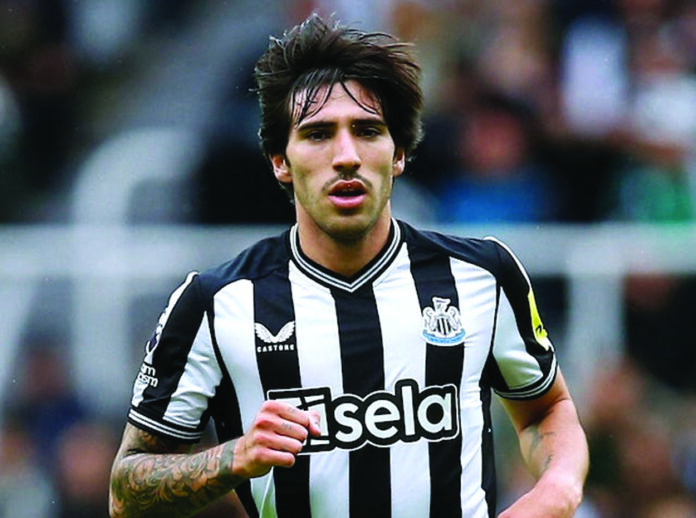
Sandro Tonali

Champions League football return to St James’ Park as Newcastle host PSG

Since the start of 2022, Newcastle have been subjected to a mere five competitive defeats on home turf – three of which were against Liverpool – and Wednesday’s game will see Champions League football return to St James’ Park for the first time since August 2003.

French champions Paris Saint-Germain visit St James’ Park for a tantalising Champions League Group F tie on Wednesday evening, as Newcastle United play host to Paris Saint-Germain.

Newcastle marked their return to the big time with a hard-fought goalless stalemate away to AC Milan on matchday one, while Les Parisiens saw off Borussia Dortmund 2-0.

Entering Wednesday’s game in tip-top condition on the back of a three-game winning streak, Newcastle ended September in magnificent fashion with nine goals across 180 minutes of football – eight in a record-breaking obliteration of Sheffield United, and one to dump Manchester City out of the EFL Cup in the third round.

After esteemed coaches such as Thomas TuchelMauricio Pochettino and Christophe Galtier failed to lift PSG’s continental curse, Les Parisiens have turned to Barcelona treble-winner Luis Enrique in a bid to finally achieve European stardom, but his side no longer strike the same level of fear into the hearts of opposing teams. PSG’s star man Mbappe completed the full 90 against Clermont after shaking off an ankle scare.

The boisterous St James’ Park atmosphere will also play its part in intimidating the French champions, but despite the visitors’ stretch of inconsistent form, keeping Mbappe and co quiet might be a step too far for an injury-ravaged Magpies team.

Credit: sportsmole.co.uk

DortmundAC Milan search for their first Group F win

Both searching for their first Champions League Group F win at the second attempt, Borussia Dortmund and AC Milan pit their wits against one another at the Signal Iduna Park on Wednesday.


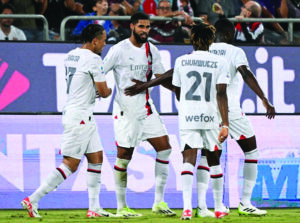
AC Milan players

Edin Terzic‘s men fell to a 2-0 defeat to Paris Saint-Germain on matchday one, while the Rossoneri were left to rue a string of wasted chances in a 0-0 draw with Newcastle United.

Defeat in the French capital snapped a 13-game unbeaten run across all competitions for Dortmund, who occupy last place in the Group F rankings with plenty of continental football left to be played, and they have responded to their opening Champions League setback with a pair of Bundesliga triumphs over Wolfsburg and Hoffenheim.

Wednesday’s intriguing showdown will mark the first competitive meeting between Milan and Dortmund since the 2002-03 group stage.

Unbeaten on home soil since August 2022, Dortmund can prolong their hot streak at Signal Iduna Park against a depleted Milan team, whose midfield options are severely limited at the minute.

The Rossoneri already struggle for prolific attacking displays in the Champions League, and while making the net ripple domestically is never normally an issue for Pioli’s team, their powers should wane against a Dortmund side who possess plenty of defensive wherewithal in front of the home crowd.

Credit: sportsmole.co.uk

Leipzig will fancy their chances against Manchester City 

For the first time since January of last season, Man City have suffered back-to-back losses in all competitions after following up their EFL Cup third-round defeat at Newcastle United with a 2-1 loss at Wolverhampton Wanderers in the Premier League last weekend; the Citizens had lost only two of their previous 41 games before this spell.

Manchester City players

Man City’s impressive form in the Champions League bodes well in their quest to avoid a third successive defeat, as they have only lost two of their last 30 matches in the group stage, while they extended their overall unbeaten run in the competition to 14 games when they came from behind at half time to beat Red Star 3-1 at the Etihad Stadium in gameweek one.

However, the treble winners have failed to win in each their last four visits to Germany including both of their previous two trips to Leipzig, with the aforementioned 1-1 draw last season preceded by a 2-1 defeat at the Red Bull Arena in the 2021-22 Champions League group stage.

Man City may have breezed to victory in their last meeting with Leipzig, but a much closer affair is set to be in store on Wednesday considering the contrasting form of the two teams.

Leipzig will fancy their chances of breaching City’s backline, but the expected return of Rodri is a huge boost for the visitors, who we believe will bounce back from their recent setbacks to claim maximum points, especially if Haaland laces up his shooting boots.

Credit: sportsmole.co.uk


Injury-hit Porto defence rally to face Barcelona

Both on the hunt for back-to-back wins in Champions League Group H, Porto and Barcelona prepare for battle at the Estadio do Dragao this evening.

Sergio Conceicao‘s side put Shakhtar Donetsk to the sword 3-1 in their continental opener, while the Spanish champions produced a five-star performance to destroy Royal Antwerp.

Barcelona players

Porto have navigated their last three Champions League matches at the Estadio do Dragao without suffering defeat, but they are still waiting for their first home clean sheet of the season, and Barcelona needed no second invitation to capitalise on defensive frailties on matchday one.

Barcelona seek to improve a measly record of just two wins from their last seven Champions League away matches, and the head-to-head column certainly makes for pleasant reading for Xavi’s charges.

Indeed, Barcelona have prevailed in each of their last four meetings with Porto, but it has been over 12 years since the two sides last locked horns in a competitive fixture.

Porto’s stellar home feats coupled with Barcelona’s struggles for Champions League successes away from their Catalan headquarters could make Wednesday’s affair a trickier one than it would appear on paper for Xavi’s side, but the visitors’ attacking qualities should soon come to the fore.

Alongside their injury-hit defence, Porto’s morale would have taken a hit with their painful loss to Benfica at the weekend, and we have faith in Barcelona to make it two wins from two in Group H.

Credit: sportsmole.co.uk

The Ghanaian Chronicle