Home Blog Page 1447

Editorial: COCOBOD Must Go To The Aid Of Ellembelle Farmers

0
COCOBOD

In the Wednesday edition of The Chronicle, we reported the story of cocoa farmers in the Ellembelle District of the Western Region, who had taken to the streets to protest against what they described as ‘wanton destruction of cocoa trees’ by illegal miners in the area.

The farmers who owned these cocoa farms that are being destroyed recounted aggressive strategy the illegal miners have adopted to seize their farms in search of gold. As a result of this, they have petitioned the Member of Parliament (MP) for the area, Emmanuel Armah Kofi Buah, who is also the deputy Minority Leader in Parliament, to use his good offices to avert the further destruction of their farms.

As a matter of fact, it is gradually emerging that illegal mining is not only destroying our water bodies, but cocoa as well, which is the mainstay of our national economy. We have been hearing and reading several stories about cocoa trees being chopped down to pave way for illegal mining. In some cases too, the illegal miners offer money to the farmers to destroy such important economic trees, because of the quick money they are looking for.

The development is now having a heavy toll on cocoa production in the country. In the 2010/11 crop season, Ghana produced a record 1,024,000 metric tonnes of cocoa. Surprisingly, the production of the commodity went down until the 2020/21 season when we hit the jackpot, by producing over 1,030,000 metric tonnes.

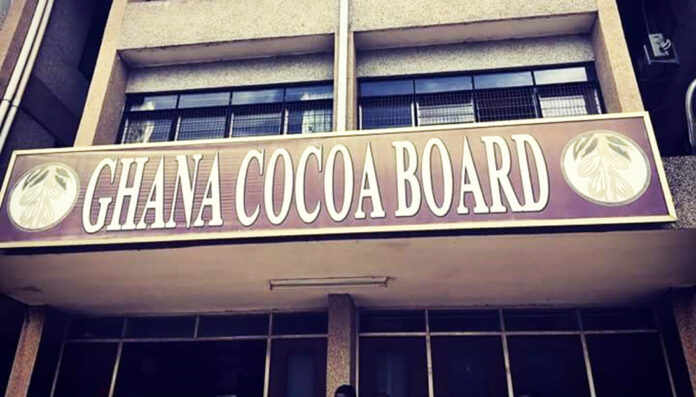
As it happened in 2010, after this record achievement in 2020/21 season, the production figure dropped to 750,000 metric tonnes the following crop season. This year, Ghana Cocoa Board (COCOBOD) has projected to buy between 650,000 and 700,000 tonnes. This means our cocoa production figures keep dropping every year and this should bother every Ghanaian who thinks about the interest of the country.

Apart from the smuggling of commodity to neighbouring countries such as Togo and Ivory Coast, COCOBOD has also identified illegal mining as a major cause in the decline of our cocoa production.

It is undeniably fact that Western and Western North regions are the two major cocoa producing regions in the country. Ashanti, Central, Eastern and Volta regions add to the number to make Ghana the second largest producer of cocoa in the world. It is, therefore, important that government pays attention to the cry of cocoa farmers in the Ellembelle District, who have accused illegal miners of destroying their farms in search of gold.

In a durbar held for cocoa farmers last year, COCOBOD pleaded with the farmers to report to them any attempt by illegal miners to take over their farms and that they (COCOBOD) were ready to fight for them.

It is, therefore, our contention that  what is happening in Ellembelle presents a good case for COCOBOD to collaborate with the Member of Parliament for  Ellembelle, the District Chief Executive (DCE)  to address the issue of cocoa farms destruction in the area.

We cannot certainly sit down unconcerned when the illegal miners are destroying our cocoa farms in the name of mining – Not at all! We need to sit up because cocoa plays a vital role in the economic development of this country.
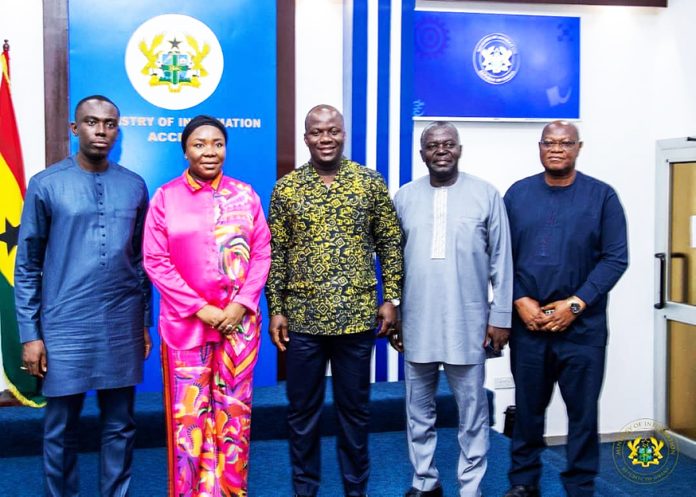
Ghana to Host 2024 Global Conference on Universal Access to Information 

0
Dignitaries present at the press briefing in a photograph

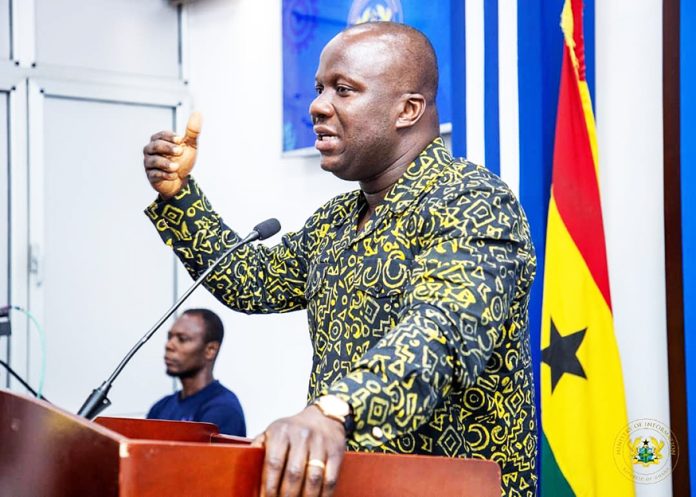
Fatimatu Abubakar, Minister for Information, has disclosed that Ghana will host the 2024 Global Conference of the International Day for Universal Access to Information (IDUAI).

The conference, which will be under the theme: “Mainstreaming Access to Information and Participation across the Public Sector,” is scheduled for October 1st to 2nd, 2024 in Accra.

Addressing the gathering at the launch, the minister said the upcoming conference serves as a testament to the progress in promoting Ghana’s right to information.

The theme for this year’s conference, the minister indicated, underscores the importance of integrating the right to information into the fabric of public institutions.

Abubakar took the opportunity to recount Ghana’s journey towards establishing the Right to Information (RTI) Law.

“Despite the 1992 Constitution guaranteeing the right to access information, it wasn’t until May 21, 2019, that the RTI Law was assented. Its implementation began in 2020 after extensive advocacy and legislative efforts.

“Seven years after the 1992 Constitution came into force, the Institute of Economic Affairs (IEA) prepared the first draft of a right to information bill.

“However, the passage of the bill into law was delayed through different political administrations,” Mrs Abubakar explained.

Additionally, she added that the Right to Information Commission has been set up, serving as the regulatory body to ensure compliance and address grievances.

Highlighting the global importance of access to information, Abubakar referenced the United Nations’ proclamation of September 28 as the International Day for Universal Access to Information.

“The 2024 Global Conference marks the first time this celebration is hosted by an African Member State, providing an opportunity to highlight successful access to information practices on the continent,” Mrs Abubakar noted.

“The conference’s main objective is to offer Governments and civil society a list of best practices for mainstreaming the right to information into the organisational systems and culture of different public authorities,” she said.

Ama Serwah Nerquaye-Tetteh, the Secretary-General of the Ghana Commission for UNESCO, expressed delight over Ghana being chosen to host the 2024 Global Conference.

“The Ghana Commission for UNESCO is delighted that Ghana has been selected to host this important conference to commemorate the International Day for Universal Access to Information,” Nerquaye-Tetteh announced.

She highlighted Ghana’s history of hosting significant global conferences under UNESCO’s auspices, including the World Press Freedom Day in 2018 and the recent African Media Convention.

“For us at the Commission, this is another feather in the nation’s cup and testifies to Ghana’s high repute and the impact it makes globally in the area of information access,” she noted.

“This conference will enable important conversations on how to improve access, especially in the digital age,” she stated, underscoring the significance of the event in advancing global information access standards.

The Ghana Commission for UNESCO pledged its support to ensure the success of the conference.

The conference will feature a high-level Inter-Ministerial panel discussion, focusing on improving access to information across various government sectors. Special sessions will address critical areas such as environment, health, and ICTs, exploring the role of international standards and best practices.

The event will conclude with the adoption of the Accra Statement titled “Harnessing the Power of Data for Positive Change: A Commitment to Access to Information” and the launch of a Special Joint Publication commemorating the 10th anniversary of the Model Law on Access to Information in Africa.

 Ghana’s Long-Term Development Strategy – What Are We Waiting For?

0
Wisdom Koudjo Klu, the writer

As a nation, we cannot continue to ignore the need for a comprehensive development plan. The cycle of abandoned projects and lack of continuity between governments has hindered our progress and left our citizens suffering. Mr. President, don’t you think it’s about time we worked on this? infrastructure, including roads, hospitals, schools, and security systems, are in a state of disrepair.

The lack of a unified development plan has resulted in a piecemeal approach, with each government starting new projects without completing existing ones. This wasteful approach has led to a staggering amount of wasted resources and unfulfilled promises.

The consequences of this approach are far-reaching. Our citizens are denied access to basic services, our economy suffers, and our nation’s growth is stifled. The time has come for a holistic development plan that prioritizes the needs of our citizens and sets a clear path for our nation’s future.

A comprehensive development plan would ensure that projects are completed, regardless of changes in government. It would foster collaboration between ministries, agencies, and stakeholders, promoting a cohesive approach to development. This plan would also prioritize sustainable development, addressing the environmental, social, and economic needs of our nation.

Learning from African Success Stories

Ghana can draw inspiration from other African countries that have successfully implemented long-term development plans. Rwanda, for instance, has made remarkable strides through its Vision 2050 plan. This ambitious strategy aims to transform Rwanda into an upper-middle-income country by 2035 and a high-income country by 2050.

Vision 2050 is built on five key pillars: high standards of living, modern infrastructure, economic transformation, a capable and responsive state, and global and regional integration. Rwanda’s commitment to this plan has resulted in significant improvements in infrastructure, healthcare, and education, setting a shining example for other nations.

Similarly, Ethiopia’s Growth and Transformation Plan (GTP), which began in 2010, has been pivotal in driving economic growth and reducing poverty. The GTP focuses on key areas such as agriculture, industrial development, and infrastructure.

By prioritizing these sectors, Ethiopia has experienced substantial economic growth, improved transportation networks, and increased access to healthcare and education. Ghana can learn from Ethiopia’s integrated approach and focus on sectors that drive sustainable development.

The Components of a Holistic Development Plan for Ghana

  • Infrastructure Development: Roads, bridges, and transportation networks are the veins of a nation. Ghana needs a comprehensive infrastructure plan that prioritizes the construction and maintenance of roads and transportation systems. Consistent investment in infrastructure will enhance connectivity, facilitate commerce, and spur economic activities.
  • Healthcare: The health of a nation is its wealth. Ghana’s healthcare system requires a robust framework that guarantees access to quality healthcare for all citizens. This includes building and equipping hospitals, training healthcare professionals, and ensuring the availability of essential medicines and technologies. Rwanda’s healthcare reforms, which have focused on universal health coverage and community-based health insurance, can serve as a model for Ghana.
  • Education: Education is the foundation of development. Ghana must focus on improving the quality of education from primary to tertiary levels. This involves upgrading school facilities, investing in teacher training, and developing curricula that meet the demands of the modern world. Countries like Botswana have made significant investments in education, resulting in high literacy rates and a skilled workforce.
  • Security: A secure environment is essential for development. Strengthening the security apparatus, including the police and military, to ensure peace and stability is paramount. This also involves investing in technology and intelligence to combat emerging security threats. South Africa’s focus on modernizing its security forces and adopting advanced technologies can provide useful insights for Ghana.
  • Economic Diversification: Ghana’s economy has traditionally been reliant on commodities like cocoa and gold. Diversifying the economy to include sectors such as technology, manufacturing, and tourism can create jobs and reduce vulnerability to global market fluctuations. Nigeria’s recent efforts to diversify its economy by investing in agriculture, technology, and entertainment offer valuable lessons for Ghana.

Political Will and Public Participation

For a holistic development plan to succeed, it must be insulated from the vicissitudes of political change. This requires a national consensus and commitment across the political spectrum. Political parties must agree to uphold and continue development projects initiated by their predecessors, recognizing that national interest supersedes partisan interests. Public participation is also crucial.

The development plan should be a product of extensive consultations with various stakeholders, including civil society, business leaders, and ordinary citizens. This ensures that the plan reflects the aspirations and needs of the people and enjoys broad-based support.

 The Role of Technology and Innovation

In the digital age, technology and innovation play a pivotal role in development. Ghana must leverage technological advancements to drive its development agenda. This includes adopting e-governance to enhance transparency and efficiency, investing in ICT infrastructure, and fostering a culture of innovation and entrepreneurship among the youth.

Kenya’s strides in technology, particularly in the fintech sector with the success of M-Pesa, demonstrate how innovation can transform an economy. By investing in technology, Ghana can not only improve governance and service delivery but also create new economic opportunities.

Conclusion

The path to sustained development lies in the adoption of a holistic development plan that addresses the nation’s critical needs while anticipating future challenges. Such a plan requires relentless political will, broad-based support, and a commitment to continuity and excellence. Mother Ghana is crying for a development plan that will heal her wounds and propel her into a future of prosperity and stability.

By drawing lessons from successful models in other African countries and tailoring them to our unique context, we can chart a course towards a brighter future. It is a collective responsibility to ensure that the dream of a developed Ghana becomes a reality, not just for us but for generations to come. The time is now, and we must seize it.

By: Wisdom Koudjo Klu,

(wisdomklu@gmail.com)

Editor’s note: Views expressed in this article do not represent that of The Chronicle

MLNR to plant 10 million trees on Friday

0
Samuel A. Jinapor, Minister for Lands and Natural Resources addressing the media

To mark the 4th Edition of the Green Ghana Day, Samuel A. Jinapor, Minister of Lands and Natural Resources has disclosed that 10 million trees will be planted.

The event, under the theme: “Growing for a Greener Tomorrow” scheduled this Friday, June 7, 2024 aims to build on the successes of previous years.

“To ensure maximum survival rate, we have decided to maintain the 2023 target of ten million (10,000,000) trees”, the minister stated.

Samuel A. Jinapor, addressing the media at a news conference in Accra on Tuesday, this week, emphasised the urgency of addressing environmental challenges through reforestation efforts.

“Climate change, air pollution and loss of biodiversity are issues that affect us all. One of the most effective and immediate actions we can take to combat these challenges is planting trees. Trees are the lungs of our planet, vital to our survival and well-being,” Mr Jinapor stated, highlighting the crucial role of trees in maintaining ecological balance.

The Minister expressed his gratitude to all Ghanaians for their support of the Green Ghana Project since its inception in 2021, as part of the government’s afforestation and reforestation program.

The Minister highlighted the success of past editions of Green Ghana Day, noting that over 41 million trees have been planted since the project’s inception.

“On the maiden edition, we targeted five million (5,000,000) trees. With your support, over seven million (7,000,000) trees were planted.

“In 2022, we raised our ambition and targeted at least, twenty million (20,000,000) trees. Again, you supported us and over twenty-four million (24,000,000) trees were planted.

“Last year, you, once more supported us to plant over ten million, seven hundred thousand (10,700,000) trees, bringing the total number of trees planted over the years in excess of forty-one million (41,000,000)”, he added.

He emphasised the importance of sustaining and nurturing the existing trees while continuing to plant new ones to restore degraded landscapes.

To ensure a high survival rate of the planted trees, Mr. Jinapor announced that the focus for 2024 would be on planting 10 million trees, maintaining the same target as the previous year.

The allocated seedlings will include a variety of tree species such as Eucalyptus, Mahogany, Teak, Mango and Coconut, chosen to suit the climate conditions in different regions across the country.

He continued that, of the 10 million trees to be planted this year, 6 million seedlings will be planted in degraded Forest Reserves, while 4 million will be distributed within farms, watershed areas and communities.

The Minister urged Regional Ministers to exceed the allotted targets and encouraged various sectors of society, including government officials, religious leaders, students and businesses, to actively participate in the tree planting exercise.

Furthermore, the minister indicated that private institutions will have the opportunity to adopt specific compartments for tree planting, which will be branded with their names and logos.

The seedlings, he said, will be made available at designated locations for collection on Green Ghana Day, ensuring widespread participation in the tree planting initiative.

“And as always, seedlings will be made available at the Ministry of Lands and Natural Resources, the District Offices of the Forestry Commission and at various designated public places, for collection on the Green Ghana Day”, the Minister emphasized.

The Minister reiterated the crucial role trees play in maintaining the health of the planet and the well-being of communities.

He called on all and sundry to participate actively in the tree-planting exercise, emphasising the wide-ranging impact of such collective efforts.

“It is the expectation of Government that, this year, we will receive the usual massive support to build on the successes achieved in 2021, 2022, and 2023,” he said.

Ex-Pres Jonathan asks judges not to accept fictitious election petitions

0
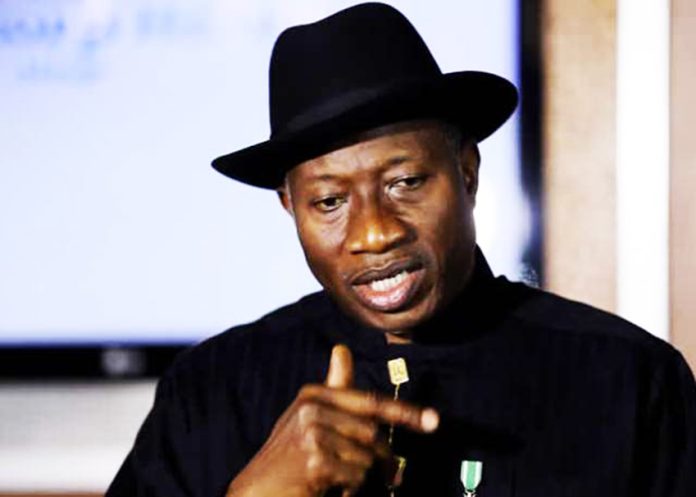
Former President Goodluck Jonathan

Former President Goodluck Jonathan has appealed to the nation’s judiciary to do the right thing by not entertaining what he called fictitious elections litigations filed by politicians. 

Jonathan spoke in Asaba, the Delta State capital where he inaugurated the Delta State High Court Complex and also flagged off the presentation of 20 Toyota Prado Sports Utility Vehicles to judges in the state.

He commended Governor Sheriff Oborewvori his administration’s development drives in the state.

He said, “My thinking is that 50 percent of those who go to court go to court because they felt they were cheated by the electoral management system; they were rigged out.

“When you feel naturally aggrieved, you have to go to court. So, assuming the elections are properly conducted, they know they failed the election, but they feel they can use the judiciary to declare them winners.

“If the judiciary doesn’t declare who doesn’t win the election that they are winners, that many 50 percent will not go to court.

“In South Africa, the electoral management body will never compromise, they all know. If you lose the election, you just wait for the next election. You don’t need to go to court.

“Because if you go to court, the judiciary too will not compromise. So, you will not get anything.”

The High Court building which was initiated since 1999 is a five-floor storey building equipped with six court rooms, six conference halls, six witness waiting rooms, six holding cells, six secretarial offices, two general conference halls, a ceremonial hall, multi-purpose hall, a library among others.

Credit: channelstv.com

Army tasks finance personnel on proficiency

0
Nigerian Army

The Nigerian Army on Wednesday mandated all its Finance personnel to be proactive and proficient in discharging their duties.

The Chief of Accounts and Budget, Nigerian Army, Maj.-Gen. Adetokunbo Fayemiwo gave the charge at the 1 Division Finance Training Week 2024 in Kaduna.

Fayemiwo, represented by Chief of Staff, 1 Division Brig.-Gen. David Nwakonobi said this would ensure that financial services were rendered to all the Nigerian Army personnel as well as units and formations at the right time and place. The Nigerian Army on Wednesday mandated all its Finance personnel to be proactive and proficient in discharging their duties.

The Chief of Accounts and Budget, Nigerian Army, Maj.-Gen. Adetokunbo Fayemiwo gave the charge at the 1 Division Finance Training Week 2024 in Kaduna.

Fayemiwo, represented by Chief of Staff, 1 Division Brig.-Gen. David Nwakonobi said this would ensure that financial services were rendered to all the Nigerian Army personnel as well as units and formations at the right time and place.

NAN reports that the theme of the training Week is ‘Enhancing Capacity and Skills of 1 Division Finance Officers/Clerks for Proactive and Efficient Delivery of Financial Services to 1 Division Nigerian Army”.

He stressed that the Nigerian Army finance personnel were to conform to the extant regulations and remain professional in their conduct as military personnel.

According to him, the division’s finance training week was designed to address the training needs of Finance officers and soldiers at the division level.

Fayemiwo said, ”It will provide a good platform for updating personnel on contemporary government financial policies, financial best practices and their implications on accounting for Nigerian Army funds.

“This training week will focus on enhancing the capacity of 1 Division Finance personnel in rendering professional and efficient financial services to the Nigerian Army.”

He added that the duties and responsibilities of the Nigerian Army Finance Corps were central to the performance and effectiveness of the Nigerian Army both in war and peace times.

Credit: dailypost.ng

Senate passes bill to regulate cattle rearing & ranching business

0
Nigerian Senate

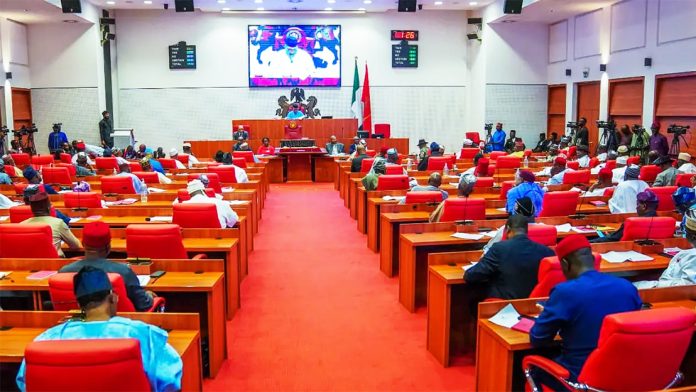
The Nigerian Senate has passed a bill to establish the National Animal Husbandry and Ranches Commission after a heated debate on Wednesday.

The bill, sponsored by Senator Titus Tartenger Zam representing Benue North West was meant to control and regulate cattle rearing ranching business across the country.

Explaining the general principles of the bill, Zam canvassed the need for the proposed Commission to manage, regulate, and preserve ranches across the country.

He said: “The proposed National Animal Husbandry and Ranches Commission is for management, preservation, and control of ranches throughout Nigeria.”

The bill, however, met stiff opposition from Senator Danjuma Goje from Gombe and his counterpart from Kebbi, Adamu Aliero.

Both Lawmakers and former governors argued that cattle rearing and ranching activities were more in the North than in other parts of the country, reasoning that lawmaking should be for the entire country and not for a section.

Goje specifically maintained that cattle routes begin from the far north and end in Lokoja as “the route does not extend to the South”.

In his contribution, Senator Hussein Babangida Uba, representing Jigawa North-West, called for extra caution in passing the bill, given its trail of controversies in the past.

Other Senators who supported the bill contended that the proposed Commission would manage the farmers/herders crisis, hence, it should be passed.

Credit: dailypost.ng

Tinubu directs finance minister to present minimum wage template

0
Finance minister Wale Edun and President Tinubu

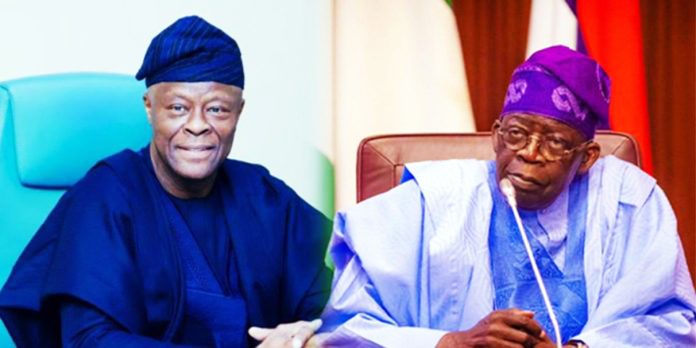
President Bola Tinubu has directed Minister of Finance, Wale Edun, to present a template for a new minimum wage.

Minister of Information and National Orientation, Mohammed Idris, said this in Abuja on Tuesday after a Federal Government delegation on the new minimum wage met with the President.

“The President has directed the Minister of Finance to do the numbers and get back to him between today and tomorrow so that we can have some figures ready for negotiations with Labour.

“Mr President is determined to go with what the committee has set. He is also looking at the welfare of Nigerians,” he said. Idris said the government is not an opponent of labour or wage increase.

The FG delegation includes Idris; Edun; Secretary to the Government of the Federation, George Akume; Labour Minister Nkiruka Onyejeocha; Minister of Budget and Economic Planning, Atiku Bagudu; Chief of Staff to the President, Femi Gbajabiamila; and the Group Chief Executive Officer of the Nigerian National Petroleum Company (NNPC) Limited, Mele Kyari.

Earlier on Tuesday, the Organised Labour suspended its nationwide strike which started at midnight on Monday. Akume had on Monday night said the President was committed to a national minimum wage above ₦60,000.

“The tripartite committee is to meet every day for the next one week with a view to arriving at an agreeable national minimum wage,” Akume had said, adding that the Organised Labour, in deference to the high esteem of the President, agreed to convene a meeting of its organs immediately to consider the commitment of the President.

Credit: channelstv.com

CITI TV rebrands to CHANNELONE TV

0
Mr Samuel Attah Mensah - Managing Director of Channel One

The management of Citi TV has announced a significant rebranding, unveiling the channel’s new identity as ChannelOne TV. This strategic decision aims to provide a more identifiable and cohesive brand presence in the increasingly competitive media landscape.

The rebranding ceremony took place at the ChannelOne TV studio, formerly known as Citi TV, in Tesano, Accra, on Tuesday, June 4, 2024.

Management believes the new name, ChannelOne TV, encapsulates its commitment to delivering top-notch content and positions it as a premier source of news, business and educational programming in Ghana and beyond.

The new logo for the station

The rebranding also promises an enhanced presence, a fresh perspective, an expanded reach and a commitment to excellence.

At the rebranding event, the Managing Director of ChannelOne TV, Samuel Attah-Mensah, shared insights into the reasons behind the change.

As we transition to ChannelOne TV, we are not just changing our name; we are embracing a new identity that reflects our commitment to innovation, excellence and connecting with our audiences on a deeper level.

This transformation represents a new drive to elevate our content, engage with our community in even more meaningful ways and deliver an unparalleled viewing experience,” Mr Attah-Mensah stated.

The event was attended by notable figures from the media industry, including the President of the Ghana Journalists Association, Information Minister Fatimatu Abubakar and Inspector General of Police George Akuffo Dampare.

Attendees witnessed the unveiling of the new logo, symbolising the channel’s fresh start.

ChannelOne TV will continue to deliver the high-quality content that viewers have come to expect, including news, talk shows, documentaries, and entertainment. The rebrand also promises new shows and segments designed to engage and inform a broader audience.

As ChannelOne TV embarks on this new chapter, it aims to solidify its position as a leader in the Ghanaian media landscape, providing viewers with an unparalleled viewing experience.

Bernard Koku Avle- General Manager of Channel One TV

Meanwhile the following is a letter addressed to its stakeholders by the management;

Dear Media and Advertising Stakeholders,

As Citi TV celebrates its sixth anniversary on June 4th, we are embarking on a transformative journey by rebranding ourselves as Channel One TV.

This decision was made with careful consideration and a deep understanding of the evolving landscape of television broadcasting. Channel One TV represents more than just a name change; it signifies our commitment to innovation, creativity and delivering exceptional content to our viewers.

As valued stakeholders in the media and advertising community, we wanted to take this opportunity to share with you the significant value that this rebranding brings to our organization:

Unique Identity: Channel One TV sets us apart from the competition, giving us a distinctive identity that resonates with our audience. This uniqueness will enhance our visibility and attract new viewers, ultimately benefiting our advertising partners.

Enhanced Presence: By rebranding, we are reaffirming our presence in the TV landscape and signaling our dedication to growth and evolution. This strengthens our position as a key player in the industry, offering increased opportunities for collaboration and partnership.

Fresh Perspective: The rebranding allows us to refresh our image and approach, keeping pace with changing viewer preferences and market trends. This fresh perspective will invigorate our content offerings, providing advertisers with new and exciting opportunities to engage with their target audience.

Expanded Reach: With Channel One TV, we are poised to reach a broader audience base, both locally and internationally. This expanded reach opens up new avenues for advertisers to connect with diverse demographics and maximize their campaign impact.

Commitment to Excellence: Throughout this transition, our commitment to excellence remains unwavering. We are dedicated to upholding the highest standards of quality in everything we do, ensuring that our partners receive unparalleled value and return on investment.

We are incredibly excited about the future of Channel One TV and the opportunities it brings for us to collaborate and grow together. Thank you for your continued support and partnership as we embark on this exciting new chapter.

Should you have any questions or require further information, please do not hesitate to reach out to us on 0249950680. Together, let’s continue to innovate, inspire, and make a meaningful impact in the world of media and advertising.

Channel One TV

Telling your story, Empowering change.


President Akufo-Addo Advocates For Stronger Africa-Korea Partnership At 2024 Summit

0

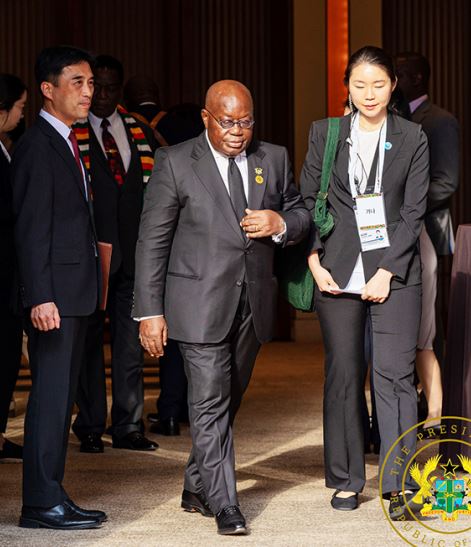
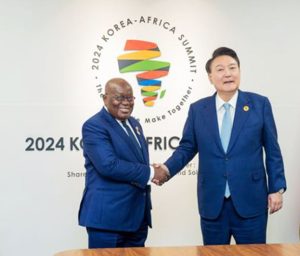
The 2024 Korea-Africa Summit, held in Seoul, Korea, began on Monday, 3rd May, 2024 with a powerful call for deeper collaboration and mutual growth from President Nana Addo Dankwa Akufo-Addo of Ghana.
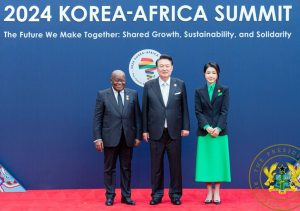
Addressing a distinguished audience, including Korean President Yoon Suk-yeol and other Heads of State and Government, President Akufo-Addo outlined a vision of shared growth, sustainability, and solidarity under the summit’s theme: “The Future We Make Together.”
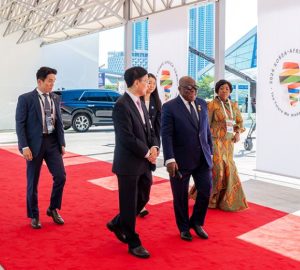
In his remarks, President Akufo-Addo emphasised the longstanding relationship between Ghana and Korea, established nearly fifty years ago in 1977.


“Korea has proven to be a reliable partner and dependable friend of Ghana,” he stated, highlighting the economic, cultural, and political exchanges that have benefited both nations.
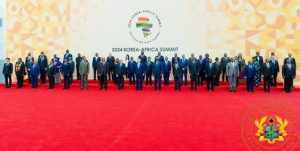
The Ghanaian leader praised the collaborative spirit that has characterised this partnership and expressed hope for its continued strength.

President Akufo-Addo identified three critical pillars for the future of Africa-Korea relations: shared growth, sustainability and solidarity.
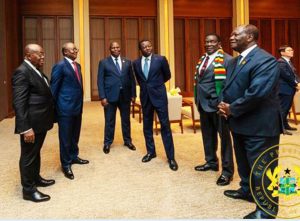
He underscored the importance of economic collaboration, noting Africa’s abundant natural resources and youthful population as key assets.

“By fostering trade, investment, and innovation, we can create a relationship of synergy that benefits both regions,” he said.

He pointed to significant progress in economic cooperation, with increased trade volumes and successful joint ventures in manufacturing, agriculture, and information technology.

However, President Akufo-Addo acknowledged that more work is needed to remove barriers to trade, enhance infrastructure, and promote knowledge exchange to unlock the full potential of this partnership.
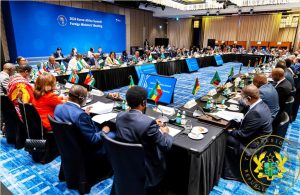
Addressing the global climate crisis, President Akufo-Addo called for sustainable practices to protect the environment and promote renewable energy. He praised Korea’s leadership in green technology and sustainable development, urging Africa to leverage these innovations.

“This is not merely an environmental imperative; it is an economic opportunity that can drive long-term growth and stability,” he asserted.
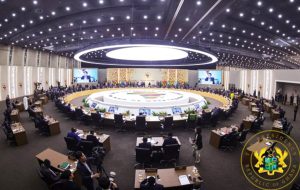
The President emphasized the need for global solidarity, particularly in light of the COVID-19 pandemic and other global challenges.

He highlighted the importance of supporting one another to ensure collective resilience. President Akufo-Addo referenced Korea’s recent trilateral meeting with Japan and China, noting its significance for Africa.

Strengthened relations among these economic powerhouses, he said, should lead to increased investment, new markets for African products, and technology transfer.
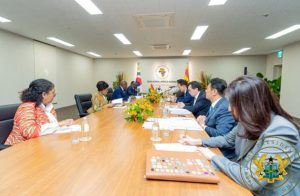
President Akufo-Addo also focused on the potential of innovation and technology to drive sustainable development.

He called for collaboration in research and development, advancing digital literacy, and promoting entrepreneurship to harness the benefits of the fourth industrial revolution.

Concluding his speech, President Akufo-Addo expressed confidence in the future of Africa-Korea relations. “The future we make together should be one of shared growth, sustainability, and solidarity,” he declared.


He urged both regions to seize the moment to deepen their collaboration and build a brighter, more prosperous future.

The 2024 Korea-Africa Summit continues over the coming days, with various sessions aimed at strengthening ties and exploring new avenues for cooperation. Leaders and delegates from both regions are expected to engage in meaningful dialogues to advance their shared goals.

The Ghanaian Chronicle