Home Blog Page 1393

Ofori Asiamah advocates robustTransport System for Africa

0
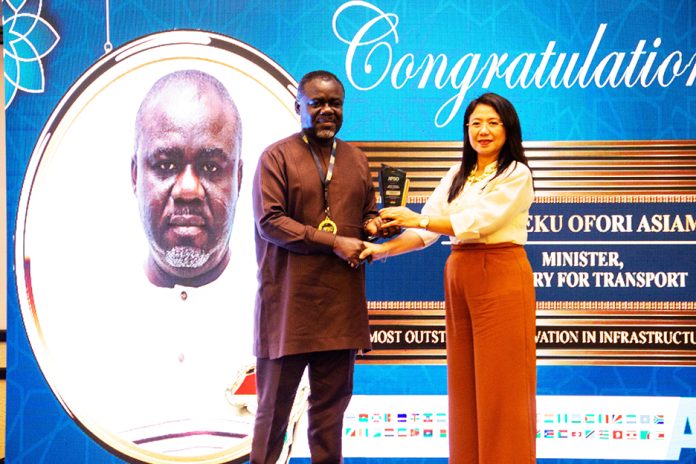
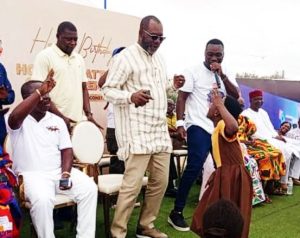
Ofori Asiamah receiving the award

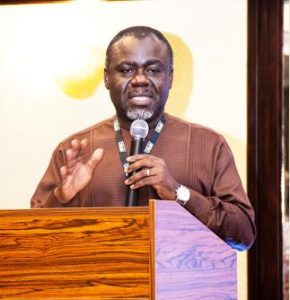
The Minister of Transport, Kwaku Ofori Asiamah, has urged Africa to unite and build a more robust public transport system to facilitate smooth operations to reduce the burden placed on commuters by transport operators.

He said the lack of adequate public transportation systems is a pressing issue plaguing the transport sector in Africa, attributing the challenge to insufficient infrastructure.

This, he noted, could be addressed through legislation, regulation, and laws, emphasising their crucial role in preventing transport operators from overburdening commuters with exorbitant fares.

“We need to establish legislation, regulation, and laws to ensure that commuters are not exploited by transport operators. This doesn’t mean transport operators don’t deserve fair compensation, but without regulation, they may overcharge our people,” he emphasized.

Kwaku Ofori Asiamah

Asiamah made these remarks during an interaction with the press after receiving the ‘Most Outstanding Innovation in Infrastructure Development’ Award at the 2024 African Public Service Optimum (APSO) Conference & Awards night in Accra on June 5, 2024.

The event, themed “Transforming Africa through public service professionalism and excellence,” aimed to recognize outstanding public institutions and public servants who have demonstrated excellence in delivering public goods and services.

It also sought to foster cooperation and working relationships among award-winning institutions and public officials across Africa.In attendance were ambassadors, ministers, traditional rulers, and diplomats from across the continent.

Asiamah further emphasized that unregulated transport operators might exploit passengers, leading to the selfish manipulations that drives up prices of essential goods and services. He cited the Matatus (minibus) industry in East Africa as an example, where safety and affordability are significant concerns.

The minister stressed the need for African governments to strike a balance between allowing transport operators to earn a fair income and protecting commuters from exploitation.

By implementing laws and strengthening institutions, Africa can build a more robust public transport system, he noted while acknowledging that not everyone could afford private vehicles.

This move, Asiamah clarified, is not anti-transport operator, but rather a call for empathy and understanding for the continent’s economically vulnerable populations.

“By prioritizing commuter welfare and safety, Africa can work towards a more equitable and sustainable transportation sector”, he underscored.

By Stephen Odoi-Larbi

Labadi Beach Hotel, Others More Profitable Than Rock City Hotel- Ablakwa

0
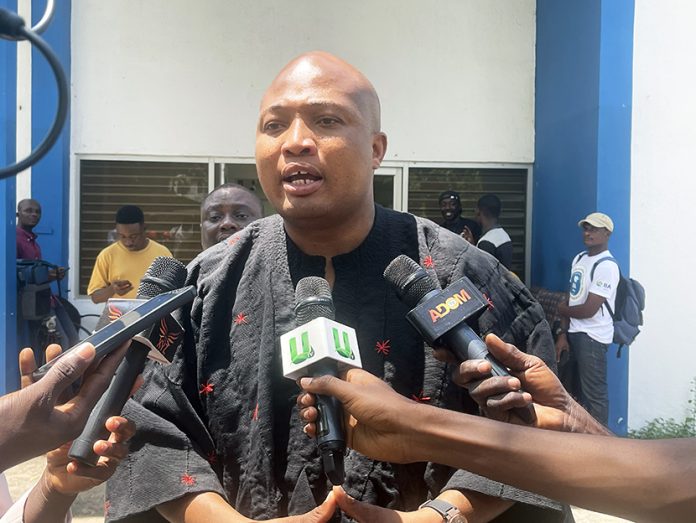
Mr. Samuel Okudzeto Ablakwa

Mr. Samuel Okudzeto Ablakwa, the North Tongu Member of Parliament (MP) and the leader for the “Hands off our hotels demonstration” has disclosed that Labadi Beach Hotel and Ridge Royal are more profitable than Rock City Hotel.

Mr. Ablakwa was addressing the media at a news conference ahead of the ‘Hands Off Our Hotels Demonstration’, scheduled for today, 18th June, 2024 which include the Minority Caucus in Parliament, Representatives of Organized Labour, United GaDangme Caucus, La Youth Groups and Arise Ghana against the sale of the hotels belonging to the Social Security and National Insurance Trust (SSNIT).

“Labadi Beach Hotel and Ridge Royal are more profitable than Rock City Hotel owned by Bryan Acheampong,”he revealed, “Labadi Beach Hotel made a profit of Gh158 million last year. How can anybody claim that these are assets that are not performing, that are making losses, and should be sold? Only last year, Labadi Beach Hotel paid dividends to the government amounting to 25 million Ghana cedis,” he said.

He further disclosed that the campaign to protect these hotels has garnered widespread national support. “This matter, which began in Parliament with the Minority Caucus raising objections, has grown beyond just a minority affair. It has become a national crusade to protect our hotels,” Mr. Ablakwa said

“The SSNIT hotel sales are purely crude state capture,” Mr. Ablakwa said adding, “Labadi Beach Hotel is a thriving business that generates substantial revenue, far outpacing Rock City Hotel owned by Bryan Acheampong. It is wrong for ministers and politically exposed persons to buy state assets, especially when they are profitable.”

“State assets should not be deliberately run down so that politicians can successfully sell them to themselves,” he emphasized. “We need our government to commit to our Private Member’s Bill banning politicians from buying state assets when they leave office.”

“State assets are for all Ghanaians, not a few greedy, unpatriotic politicians. We stand united against the privatization of our national wealth.”

The MP also noted that the group has reached an agreement with the Police to terminate the protest at the Christ the King Catholic Church close to the Jubilee House, contingent upon officials from the presidency meeting the demonstrators to receive their petition for submission to the President.

“We have agreed with the Police on the condition that the representatives of President Nana Addo Dankwa Akufo-Addo will walk from the Jubilee House and meet us at the Christ the King Catholic Church to receive our petition,” he explained.

The protest will begin at 8:00am in front of the Labadi Beach Hotel, proceed to the La Palm Royal Beach Hotel, and continue through Giffard Road leading to the Lands Commission.

Mr. Ablakwa has petitioned the Commission on Human Rights and Administrative Justice (CHRAJ) to investigate the transaction.

Since 2018, the Social Security and National Insurance Trust (SSNIT) has been on a mission to divest a 60% stake in six hotels within its portfolio – Labadi Beach Resort, Elmina Beach Resort, La Palm Royal Beach Resort, Ridge Royal Hotel, Busua Beach Resort, and the Trust Lodge Hotel.

Among the bidders, Bryan Acheampong, the current Minister for Food and Agriculture and owner of Rock City Hotel, reportedly submitted the strongest technical and financial proposal amongst those received to purchase the 60% stake in the hotels.

SSNIT posits that the strongest technical and financial proposal from Rock City Hotel Limited was one of the factors leading to their being chosen as the right firm to purchase SSNIT’s stake in the hotels.

On why the Hotels are being sold, SSNIT indicated that apart from raising capital and finding experts to manage the hotels, the ultimate goal for the sale of its stake was to manage investment risks to improve investment returns.

SSNIT said the key to managing investment risks was the implementation of an asset allocation policy and undertaking investments in line with the policy.

However, the Trust noted that SSNIT restructuring of non-performing companies was a priority in its decision to give out the hotels.

Explaining the rationale for the investment decision for the sale of part of SSNIT’s holdings in the hotels, it cited consistent losses, frequent requests for maintenance funding, capital injections required, high capital expenditures and the need for strategic partnership.

 KATH honours blood donors

0
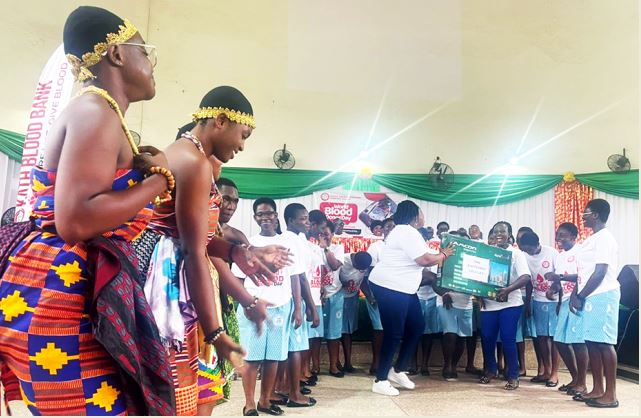
Yaa Asantewaa SHS receive their award as donors amid fanfare

The Transfusion Medical Unit of the Komfo Anokye Teaching Hospital (KATH) last Friday organized an awards ceremony to recognize and appreciate the contributions of blood donors, partners and stakeholders to mark World Blood Donor Day.

The event held at Prempeh College, brought together major stakeholders to deliberate on ways to get more volunteers to donate blood.

Ten media firms, ten senior high schools, and 12 individual voluntary donors also received awards for their contributions.

The awardees received various gifts, including standing fans, television sets and citations in recognition of their contributions.They commended the health facility for the gesture and encouraged others to donate blood to save lives.

The Head of the Transfusion Medical Unit at KATH, Dr Lesley Osei,said the main objectives for this year’s campaign are to thank blood donors and raise awareness of the need to donate blood to save lives.

Prof. Otchere Addai-Mensah, the Chief Executive officer of KATH thanked all selfless individuals who have contributed to saving lives through generous donations of blood over the years.

He noted that the commitment to donating blood was a testament to the power of compassion and solidarity within the community.

Napo fetes 1,200 school kids to mark 56th birthday

0
Selected school kids, party executives help MP Napo to cut his birthday cake

Manhyia South Member of Parliament, Dr Matthew Opoku Prempeh last Friday organized a mega kids’ party at the Jubilee Park for 1,200 school children selected from basic schools in the Kumasi metropolis to mark his 56th birthday, which fell on May 23, 2024.

Napo boogies with a pupil

Dr Matthew Opoku Prempeh who is also the Minister of Energy had fun with the children and presented learning materials and food items to the various basic schools who participated in the party.

Among the schools were; New Amakom Primary School, A.M.E Zion School, St. Augustine’s Anglican Primary School, T. I. Ahmadiyya Primary Schools, Amankwatia M/A Primary School and  St. Peter’s R/C Primary School.

The distributed items included 10,000 exercise book and note books, mathematical sets, pens and pencils to aid the pupils in their studies as well as packs of assorted soft drinks, sweets and biscuits.

The goodies for the kids’ party

The children were treated to snacks and food and had fun dancing to music including King Baluta’s Aseda hit song as well as bouncy castle games, face painting, dancing competition, and trampolines, among others.

Excited children dancing at the party

The Metro Director of Education, Mr. David Oppong,  admonished the students to be encouraged by the impact and good life of Dr Napo and advised them to learn hard especially in numeracy and literacy.

The Metro Education Director also called on parents to invest in the education of their children.

At the fun fair were the Manhyia South Constituency executives of NPP, Nana Kwaku Duah -Chief of Kokoso and Chairman of Council of Elders and friends of Napo.

Editorial: This Rice Importation Conundrum Must Be Solved

0
Editorial

The Member of Parliament for Tamale Central, Ibrahim Murtala Mohammed, has, according to citinewsroom.com, expressed concern over the importation of rice by the National Disaster Management Organization (NADMO) for distribution to disaster victims.

According to him, the government imports over $2 billion worth of rice annually, while local rice farmers struggle to find a market for their produce.

Speaking on the floor of Parliament, the former Deputy Trade Minister described the situation as unconscionable and called for immediate action to address it. He emphasised that supporting local rice farmers is crucial for sustaining the economy and reducing the reliance on imported rice.

“I am a farmer. I still have thousands of bags of my rice at the farm in Yagba. I don’t have a market for them. Honourable Akandoh has rice there, no market for them. Honourable Adongo, including clerks of this House, have rice yet the state is spending over $2 billion on the importation of rice and poultry products into this country.

“I have had a discussion with the Minister for Agric for them to buy the rice we have produced, but as we speak, NADMO is buying imported rice for the people of this country and it doesn’t make sense. It simply doesn’t make sense,” the news outlet quoted him as saying.

First of all, we do not think the government uses $2billion of the tax payer’s money to import rice as claimed by the MP. We suspect he was referring to the general importation of rice by business men and women into the country, which has nothing to do with the government. We, nevertheless, fully associate ourselves with the comments made by the former Deputy Minister in the John Mahama’s government.

Our media landscape is replete with stories about the glut in rice production in the country and how farmers are struggling to get market for their produce. If, in the face of all these challenges, we, as a country, are still importing rice worth $2billion annually, then we have a serious problem as a country.

Since majority of the Ghanaians are engaged in farming, the government of the day has the duty to ensure that there is a ready market for what they produce at the end of the day. Unfortunately, there is no clear cut policy to frustrate the unbridled importation of rice and other agricultural products that are being locally produced.

This, in our opinion, is the source of the problem because the rice importers have the financial wherewithal to embark upon excessive marketing to create awareness for what they are selling but who is doing so for the poor local farmer?

We do not want to believe  what the former Deputy Minister is saying, but if it is true that NADMO, as a state institution,  is also  importing rice for distribution to disaster victims, it tells a story that we do not care about the growth of the local economy. The Chronicle is, therefore, appealing to the government to sit up and urgently address the concerns being expressed by the MP for the betterment of our motherland.

Alan Cash and NPP Running Mate Issue

0
Opinion

On Thursday June 6, 2024, Daniel Owusu’s report on ModernGhana, started by quoting Nana Akomea, saying, Bawumia’s running mate issue would’ve been resolved if Alan is still a member of NPP.

In the story, Nana Akomea, the Managing Director of State Transport Company (STC), expressed sadness over Alan Kyerematen’s departure from the New Patriotic Party (NPP). Believing that had Alan, a prominent figure within the party, remained, he would have been a prime candidate for the running mate position.

Simply put, what Nana Akomea is telling Ghanaians is that the issue of running mate for the NPP, would have been resolved long ago, with Alan as the sole choice, if he had been in the party.

I am very sorry, but Nana Akomea should know that everything is now in the past and Alan is moving on.

The NPP is a party which should not have been lacking any replacement for Alan, if he was the one pencilled for running mate, unless he is saying that there is truly no one with the calibre of Alan Kwadwo Kyerematen to take-over that slot.

If the NPP is facing challenges, Alan should not be blamed at all. Solutions must be found immediately and I mean credible solutions, to put the party on track for Election 2024.

It is not right to be trading blames, long after Alan left the NPP. It is about time for all the political entities in Election 2024, to do clean and respectful campaigning.

I will wish Ghana adopts Section 106 in the UK’s Representation of the People’s Act, 1983, which addresses false statements in campaigning.

Section 106 of the Act, makes it illegal for any person to publish any false statement of fact in relation to the candidate’s personal character or conduct, unless he or she can show that he had reasonable grounds for believing that statement to be true. Similar provisions in previous laws have made this illegal since 1895. It is also illegal to publish a false statement of a candidate’s withdrawal from an election.

In September 2007 Miranda Grell was found guilty under this section when she made allegations of paedophilia and having sex with teenage boys against her gay opponent during the 2006 United Kingdom local elections.

Grell was elected in the May 2006 local election for the Leyton ward of Waltham Forest London Borough Council.

However, in September 2007, she went on trial on charges under the Representation of the People Act 1983 of making a false statement of fact about a candidate’s personal character or conduct for electoral advantage, specifically that she made allegations of paedophilia against her gay Liberal Democrat opponent, Barry Smith. In addition to losing his seat Smith stated he was verbally abused in the street, spat at, and forced to relocate to the north of England as a result of the false allegations, fearing for his life.

Grell admitted to outing her opponent and falsely claiming he had a 19-year-old Thai boyfriend (Smith’s partner was actually 39 and Malaysian), though she denied making the false allegations of paedophilia to four residents. On 21 September 2007, she was found guilty on two counts, fined £1,000 and ordered to pay £3,000 towards the prosecution costs.

She appealed against the verdict. On November 30, 2007, Grell’s conviction for making false statements about another candidate to gain electoral advantage was upheld. She vacated her seat and was banned from holding public office for three years.

On 28 May 2010, Labour MP Woolas’s, Liberal Democrat opponent, Elwyn Watkins, issued an election petition against the result under section 106 of the Representation of the People Act 1983, which makes it illegal to make false statements of fact about a candidate. Watkins claimed that leaflets issued by Woolas falsely portrayed Watkins as taking unlawful foreign donations, and linked him to Islamist extremists.

In November 2010, Labour MP Phil Woolas was found by an electoral court to have breached Section 106. The judges ruled that a by-election for the seat should be held. Woolas said that he would apply for a judicial review into the ruling. In a statement released through his lawyer, Woolas stated that “this election petition raised fundamental issues about the freedom to question and criticise politicians” and that it “will inevitably chill political speech”. The judicial review failed to overturn the ruling of the election court.

As a result, his victory of 103 votes at the election was declared void, he lost his seat in the House of Commons and he was barred from standing again at the subsequent by-election. He was also suspended from the Labour Party until January 2011, when his suspension was lifted.

These two examples show how to conduct a clean and respectful election campaign and this is what Ghana must adopt. The two major political parties, the New Patriotic Party and the National Democratic Congress, must take the lead and do a clean campaign.

Bigotries, blame games, false accusations and statements should not make rounds in this year’s campaign. The NPP want to send a false message to Ghanaians about Alan, but I will suggest that Nana Akomea should leave this Alan’s departure to rest. It is past and gone and with Alan making inroads, let everyone, politicians and the general public, conduct themselves in a manner that will make democracy thrive in this country.

By Hon. Daniel Dugan

The views expressed in this article are the author’s own and do not necessarily reflect The Chronicle’s stance.

Obuasi Bitters CEO contributes GH¢200k to Heal KATH Project

0
Nana Prof. Oheneba Boachie-Adjei, Otumfuo Hiahene receiving the Cheque on behalf of the Heal KATH Project Committee

Dr Collins Amo, an Entrepreneur and Chief Executive Officer of Aduro Ye Herbal Centre, producers of Obuasi Bitters and Obuasi Gringo bitters, has donated GH¢200,000.00 towards the ‘Heal KATH’ project, an initiative of Otumfuo Osei Tutu II, the Asantehene to inject life into the facility.

The ‘Heal KATH’ project is aimed at raising an amount of $10 million to support the extensive renovation of the Komfo Anokye Teaching Hospital in Kumasi.The Asantehene recently launched an appeal to individuals and corporate organizations to help mobilize financial resources to undertake a comprehensive renovation of the Komfo Anokye Teaching Hospital (KATH) to help improve quality healthcare delivery at the only referral hospital in the northern sector of the country.

Dr Collins Amo stated that, as a thriving business operating in the Ashanti Region, the company was motivated to heed the appeal by the Ashanti King.He said his outfit deemed the call by Otumfuo to support the Komfo Anokye Teaching Hospital as a laudable one and a worthy cause hence the decision to also contribute the company’s quota to enhance the operations of the facility.

He commended the Asantehene on his 25th Anniversary of his installation as the 16th occupant of the Golden Stool.According to him, the Asantehene had led by example in terms of championing the welfare of the people as his reign has positively affected many lives in Ghana and the diaspora.

Mr. Sammy Adu Boakye, Chairman of the Heal Komfo Anokye Teaching Hospital project commended Dr Collins Amo and his team for the donation.

He reiterated that the vision of the project was to bring infrastructure at KATH to international standard to enhance healthcare delivery at the facility, which serves about 12 out of the 16 regions of the country.

The project chairman called on other institutions and individuals to also come on board and contribute towards giving Komfo Anokye Teaching Hospital a befitting facelift.

N17bn debt: GTBank drags 60 bank chiefs to court

0
GTBank

Guaranty Trust Bank has dragged no fewer than 60 top executives of 13 commercial banks to court as a pending suit between GTBank and Afex Commodity Exchange over N17bn Anchor Borrowers Programme loan lingers.

The 60 executives including the chairmen, chief executive officers, directors, and company secretaries of the 13 banks are facing contempt proceedings for allegedly failing to implement a No-Debit-Order reportedly placed on the accounts of Afex Commodity Exchange with the banks.

In suit no FHC/L/CS/911/2024 involving Guaranty Trust Bank Limited and AFEX Commodities Exchange Limited, the Federal High Court, Lagos division presided by Justice CJ Aneke signed an order for the bank chairmen, MDs, directors, company secretaries and the liquidator of Heritage Bank (Nigeria Deposit Insurance Corporation) to be committed to jail for failing to obey its May 27, 2024 ruling.

A legal notice titled ‘Order to serve notice of disobedience to order of court vide newspaper publication’ published in some national dailies including The PUNCH on Thursday, partly read, “An order granting leave to the Plaintiff Applicant to serve Form 48 (Notice of Consequences of Disobedience to Order of Court) dated 11th June, 2024 and all other forms and processes that may be issued in this contempt proceedings inclusive of Form 49 on the 1st-60st parties cited for contempt

The matter was adjourned to next Thursday.

Parties cited for contempt include  Access Bank, Citibank, Jaiz Bank, Union Bank, Fidelity Bank, First Bank of Nigeria Plc, First City Monument Bank, NDIC (liquidator for Heritage Bank), Polaris Bank, Stanbic IBTC Bank, Standard Chartered Bank, Taj Bank, United Bank for Africa and Zenith Bank alongside its principal officers.

In the court ruling dated May 27, 2024, twenty banks were directed to transfer monies standing to the credit of the respondent into the AFEX’s account with GTB until the N17.81bn is repaid.

The N17.81bn loans comprise N15.77bn; the amount outstanding and unpaid, as of April 17, 2024, and the cost of recovery and incidental expenses in the sum of N2.04bn.

The court also granted an injunction allowing GTB to take over AFEX 16 warehouses located across seven states and sell the commodities stored in them, which it said were procured with the Central Bank of Nigeria Anchor Borrowers’ loan facility.

Earlier in the month, the court had served contempt proceedings against AFEX and some of its principal officers including Ayodele Balogun, Jendayi Fraaser, Justin Topilow, Mobolaji Adeoye and Koonal Ghandi.

According to court papers, AFEX had sourced the Anchor Borrowers Programme Loan facility from GTB to provide finance for smallholder farmers registered under the CBN Anchor Borrower’s programme.

The loan was expected to be repaid from the sale of commodities. However, AFEX failed to uphold its end of the deal even after an extension.

In a statement following the interim court order, AFEX claimed that it had repaid about 90 per cent of the loan facility.

“However, a portion of the loan remains outstanding with the farmers and while we have paid out a portion out of our own purse, we remain in discussions with CBN over the outstanding amounts of the said facility,” the exchange said.

It also said the full value of the loan was utilised to provide input to farmers in three consecutive seasons, starting in 2020.

The exchange added that it had remained consistent with repaying the loans until economic headwinds impacted the operations of the farmers that they had disbursed the money to.

“Over 800,000 hectares of farmland were financed through the course of the programme’soperationalisation; however, significant macro and policy headwinds, including the cash crunch on the back of the Naira redesign policy, severely impacted the productive capacity and market participation of the smallholder farmers in the 2022/2023 season.

“This resulted in less than 40 cent repayment from farmers on their input loan bundles, down from our 90per cent repayment rates in the previous eight years of providing input financing for farmers. The low repayment rate ultimately impacted on our ability to refund the full value of the loan at the end of Q1 2023 and following a 6-month extension period,” AFEX added.

The commodities exchange also stated that the lingering effects of the cash crunch have continued to impact farmers, who sold at below market value to get immediate cash inflows to sustain their families in the period and remain unable to pay back.

Meanwhile, AFEX has called on the Central Bank of Nigeria to activate the collateral guarantee of up to 70 per cent clause included in the Anchor Borrowers programme.

“Evidenced in the attached letters, our engagements with Guaranty Trust Bank Limited, a Participating Financial Institution in the program, as well as the apex bank have seen us highlight these limitations on the part of the defaulting farmers with suggestions being made to the CBN to activate the risk-sharing structure put in place for the program and release funds accordingly to sustain activities and allow for needed recovery efforts in our agriculture sector.

“In light of these engagements, we consider the recent steps by Guaranty Trust Bank Limited to be premature, coming in the midst of open conversations that are being had with all parties to find a path to resolution that does not unduly punish farmers, who have been the biggest hit by macroeconomic conditions that they had no control over,” AFEX concluded.

CBN at the inception of the programme in 2015 said the broad objective was to create economic linkages between smallholder farmers and processors to increase agricultural output and ensure food price stability.

The Anchor Borrowers’ Programme guidelines stipulate that upon harvest, benefiting farmers are to repay their loans with produce (which must cover the loan principal and interest) to an anchor, who pays the cash equivalent to the farmer’s account.

By 2022, at least 4.8 million people had benefitted from the Anchor Borrowers Programme and the CBN in a 2023 statement said it released N1.079tn under the programme, out of which over N500bn is due for repayment.

The programme has since been discontinued by the CBN as it pivots from development financing interventions to its core duty of price and monetary stability.

Source: Punch

Mile 12 Market Chairman attributes over 500 per cent surge in tomato, pepper prices to insecurity

0
Tomatoes

Shehu Jibrin, the Chairman of Mile 12 International Market Lagos, has blamed insufficient supply, insecurity, and infestation for the more than 500 percent price hike of tomatoes and pepper in Nigeria.

Jibrin disclosed this in an interview on Channels Television, monitored by DAILY POST on Monday.

DAILY POST gathered that three pieces of tomatoes and pepper are now sold for N1000 and N500, up from N100 and N50 a few months ago in most markets across Nigeria. This indicates that the price of tomatoes and peppers increased by 900 percent in the period under review.

Speaking on the price hike, Jibrin noted that the supply of tomatoes and peppers to Lagos from other states dropped significantly due to insecurity and plant diseases.

He said, “Except the government tackles insecurity, the problem of high prices of tomatoes and peppers will remain unsolved.

“This is the off-season now, so we expect tomatoes to come from Ilaro, Ogbomosho, Abeokuta, Osun, and part of Cameroon to come to Lagos. Unfortunately, the ones from Cameroon, Ogbomosho, and Abeokuta are late. The ones from Cameroon cannot feed the nation. The demand is high, but the supply is insufficient.

“We expect tomatoes from the North to be available at this time, but because of the tomato Ebola disease, we cannot have sufficient supply.

“Let’s assume that we have 5000 farmers in the country, less than 1500 are farming with their eyes closed. Most farmers in the North are currently in internally displaced camps. If Nigeria cannot tackle insecurity, the prices of tomatoes, peppers, and other perishables will continue to go up. Farmers are not going to the farm due to insecurity. There is no solution except for farmers going to the farm,” he said.

Earlier, the Minister of Agriculture, Abubakar Kyari, blamed the price hike of tomatoes on its scarcity caused by an infestation of tomato farms known as tomato Ebola or tomato leaf miners.

The Tomatoes Growers Association of Nigeria also blamed Tomatoes Ebola for the hike in the price of the food product.

Recall that the National Bureau of Statistics, in its latest Consumer Price Index and Inflation report, said food inflation increased to 40.66 per cent and 40.53 per cent, respectively.

Source: Daily Post

Labour, Tripartite C’ttee chair trade words over minimum wage

0
Labour

Chairman of the Tripartite Committee on National Minimum Wage, Bukar Goni Aji, has asked Labour to reconsider the amount it demanded as minimum wage, citing the prevailing economic situation in the country.

He listed such incentives as the N35,000 wage award for all treasury-paid federal workers, N100 billion for procurement of gas-fuelled buses and conversion to gas kits, the N125 billion conditional grant, financial inclusion to small and medium scale enterprises and the N25,000 each to be shared to 15 million households for three months as reasons Labour should accept the N62,000 offered by the government, against its demand of N250,000.

But Labour in a swift reaction, accused the Tripartite Committee chairman of lacking knowledge of the hardship and suffering workers and other Nigerians were going through.

Recall that organised labour is a member of the tripartite committee of a new minimum wage.
Labour’s reaction came as Minister of Budget and Economic Planning, Atiku Bagudu, said lean resources were responsible for governors’ rejection of N62,000 minimum wage.

This is even as the Anglican Communion yesterday asked the federal and state governments to pay workers a living wage, charging them to maintain fiscal prudence and accountability.

However, the Tripartite Committee chairman also cited the N185 billion palliatives loans to states to cushion the effects of fuel subsidy removal and N200 billion to support the cultivation of hectares of land to boost food production.

He said there is another N75 billion to strengthen the manufacturing sector and N1 trillion for student loans for higher education.

He cited the release of 42,000 metric tonnes of grains from strategic reserves and purchase and onward distribution of 60,000 metric tonnes of rice to the millers’ association.

Goni urged Labour to consider the recent salary increase of 25 per cent and 35 per cent on all consolidated salary structures for federal workers and the 90 per cent subsidy on health costs for federal civil servants registered on the health insurance programme and accepts the N62, 000 being offered by the Federal Government.

He said the light rail commissioned in Abuja is to relieve transportation costs until end of the year, describing it as a landmark achievement that will cushion the effect of the removal of fuel subsidy.
He said in addition to “the freedom of civil servants to engage in agriculture, the Federal Government has approved the inclusion of ICT services for alternate sources of income”.

Source: Vanguard

The Ghanaian Chronicle