Home Blog Page 134

Editorial: Ghana’s Tomato Crisis Is A Policy Failure!

0
Tomatoes

Over the weekend, Ghana’s media space was inundated with troubling developments from our northern neighbour, Burkina Faso. The country’s transitional military government, led by Ibrahim Traoré, has suspended the export of fresh tomatoes “until further notice”—a move aimed at safeguarding domestic supply and accelerating its agro-processing ambitions.

The directive halts all tomato exports nationwide and prioritises local industry. It is a calculated economic intervention—one that reflects a state determined to retain value within its agricultural sector.

For Ghana, however, the consequences are immediate and revealing. The Food and Beverages Association of Ghana (FABAG)  has described the situation as a stark exposure of structural weaknesses within Ghana’s agricultural framework. That assessment is difficult to dispute. The Chronicle considers the unfolding situation not merely worrying, but emblematic of a long-standing policy failure.

According to publicly available sources online (Google searches), Ghana imports more than 75,000 tonnes of fresh tomatoes annually, with over 90 percent sourced from Burkina Faso. This dependency costs approximately GH¢760 million each year. Inefficiencies across the tomato value chain—including post-harvest losses, underutilised processing capacity, and lost potential wages—are estimated to cost the country up to GH¢5.7 billion in unrealised economic value, according to publicly available sources found online.

Between 2020 and 2024, Ghana also imported an average of 54,361 metric tonnes of tomato paste annually, costing roughly $54.4 million per year, according to Google searches and publicly available trade data. These figures highlight a systemic failure—not of land or climate, but of coordination and execution.

This is not simply an agricultural issue. It is a question of national resilience. Less than two months ago, eight Ghanaians lost their lives in northern Burkina Faso while engaged in the tomato trade—victims of growing insecurity in the region. Their deaths underscored the human cost of Ghana’s dependence on external food systems.

Yet, little appears to have changed. Government’s response—signalling intentions to engage authorities in Ouagadougou while urging calm among traders—reflects a reactive posture that falls short of the urgency required.

The Chronicle will humbly ask: Why does decisive policy action so often follow crisis, rather than anticipate it? A nation cannot outsource its food security; nor can it rely indefinitely on the policy choices of its neighbours, whose primary obligation is to their own citizens.

Burkina Faso’s decision offers a clear lesson: countries that prioritise value addition and domestic capacity reduce vulnerability. Ghana, by contrast, remains trapped in import dependence despite its considerable agricultural endowments.

The causes are well known—post-harvest losses, weak supply chains, limited irrigation, and the absence of enforceable production targets. Compounding this is the market preference for imported tomatoes, often perceived as more durable and less perishable than local varieties.

If so, the response must be rooted in science. Institutions such as the Council for Scientific and Industrial Research must be resourced to develop high-yield, climate-resilient tomato varieties suited to market demand.

At the policy level, the Ministry of Food and Agriculture (MOFA)  must move beyond broad commitments to measurable outcomes. Production targets, irrigation expansion, and post-harvest infrastructure must be pursued with urgency and accountability.

The Chronicle maintains that without enforceable benchmarks, Ghana’s agricultural potentials will remain unrealised.

A deliberate shift towards self-sufficiency in tomato production could stimulate agro-industrial growth, reduce import expenditure, and create jobs across the value chain. It could also shield the country from external shocks such as this.

As Bob Marley observed, “In the abundance of water, the fool is still thirsty.” Ghana must not embody that paradox—rich in resources, yet dependent on others for basic sustenance. Nearly seven decades after independence, the question is no longer whether Ghana can feed itself. It is whether it will.


For more news, join The Chronicle Newspaper channel on WhatsApp: https://whatsapp.com/channel/0029VbBSs55E50UqNPvSOm2z
Kumasi Mayor Urges Muslims to Uphold Peaceful Co-existence for Development

0
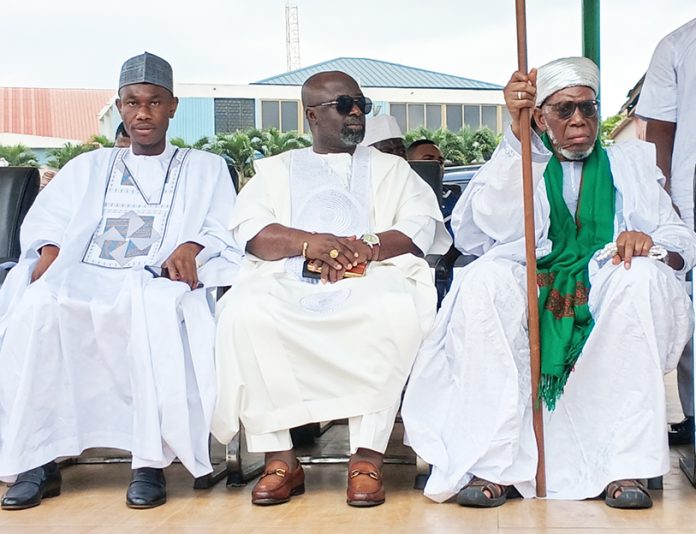
From right Ashanti Regional Chief Imam, Mayor of Kumasi and Asawase MCE

The Kumasi Mayor, Mr Richard Ofori Agyemang-Boadi, has called on Muslim communities to embrace peaceful co-existence and truthfulness as foundations for sustainable development in Ashanti Region.

Mr. Boadi thanked Muslims for their contributions and pledged stronger support for Islamic activities, and highlighted government’s reduction of Hajj fares to ease the pilgrimage burden. He appealed to residents to assist his administration in securing the region’s fair share of national development.

Asawase MCE Ben Abdallah Alhassan, Rev. Fr. Anthony Naah of the National Peace Council, and Otumfuo’s Nsumankwahene, Baffour Kogyawoasu II, representing the Asantehene, Otumfuo Osei Tutu II, all stressed unity, kindness and peaceful co-existence as vital for national cohesion.

The Nsumankwahene commended Muslims for their prayers and good conduct, praised security agencies and the Peace Council for maintaining calm, and urged city authorities to provide dustbins to households to improve sanitation.

The Leaders called on Ghanaians to appreciate diversity and work together for peace and development.


For more news, join The Chronicle Newspaper channel on WhatsApp: https://whatsapp.com/channel/0029VbBSs55E50UqNPvSOm2z
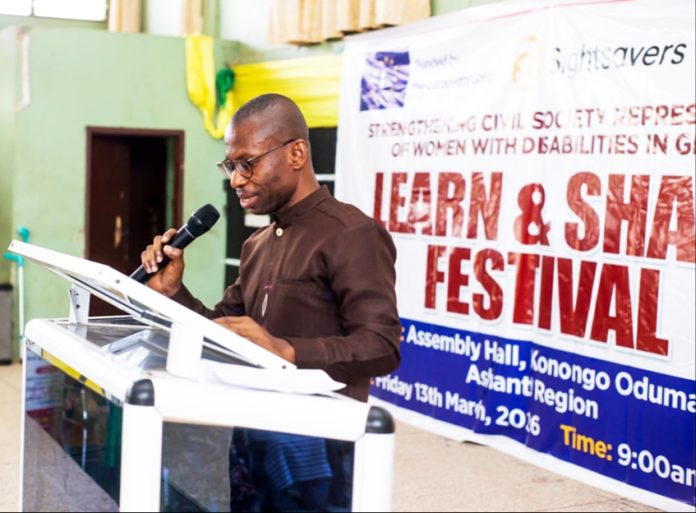
ABAK Foundation, Sightsavers Ireland hold “Learn and Share” Festival for women with disabilities 

0
David Agyemang, Country Director for Sightsavers making his remarks at the festival

ABAK FOUNDATION GHANA has held a Learn and Share Festival to assess the impact of the project dubbed ‘Strengthening Civil Society Representation of Women with Disabilities in Ghana’ at Konongo/Odumasi in the Asante Akyem Central Municipality of the Ashanti region.

Funded by the European Union in Ghana, the two-year project, which started in May 2924 is being implemented by ABAK Foundation Ghana together with Sightsavers Ireland and the Women with Disability Development and Advocacy Organization (WODAO) to build the capacity of organizations working to promote disability rights of women with disabilities at the grassroots level.

ABAK Foundation is a national level NGO which focuses mainly on advancing the rights and welfare of persons, women in the reproductive age bracket, children and marginalized groups through advocacy, partnerships and initiatives targeted at empowerment to building an inclusive society.

Mr. David Agyemang, Country Director for Sightsavers, commended ABAK Foundation for being a dependable organization having always achieved its targets. He said Sightsavers and the sponsors appreciate ABAK Foundation for their good work in the implementation of the project.

A group photograph of participants at the event

He said the ‘Learn and Share’ event is significant because it affords the major stakeholders to understand clearly and assess what the project have been able to achieve, particularly its impact or change on the downstream partners and ABAK Foundation.

The Country Director explained that Sightsavers is an international NGO, which operates in more than 30 countries in Africa and Asia and focuses on promoting the rights of persons with disabilities and also fight against avoidable blindness.

Established in Ghana since 1950, Mr Agyemang said Sightsavers had supported government to distribute the ivermectin drug, which had protected more than five million Ghanaians from river blindness. It had also supported to train medical doctors in hydrocelectomy or hydrocele surgeries – a surgical operation to remove fluid build-up from the scrotum surrounding the testicles across the country.

He said Sightsavers also trained young persons with disabilities in employable and entrepreneurship skills and built capacity of civil society organizations. Significant among the achievements were the elimination of trachoma from Ghana in 2018, which freed some 2.8 million people from blindness, and also supported the Ghana Health Service to establish five eye clinics in the Eastern region, among others.

Mr. Phillip Duah, the Executive Director of ABAK Foundation Ghana explained that the ‘Learn and Share’ festival was to climax the implementation of a two-year EU funded  project, which is being implemented by ABAK Foundation Ghana, Sightsavers Ireland and WODAO in the Volta Region, basically to strengthen the capacity of local based organizations.

He said ABAK had been replicated in 20 districts across four regions in Ghana and had trained 23 downstream organizations as a backup to the capacity of ABAK to be more efficient and also carry out grassroots training activities for the local based organizations.

Mr. Duah explained that ABAK had so far trained about 339 civil society workers, equipping them to carry out with activities, which related to disability inclusion in their respective localities because it was only when CSOs are strengthened that they would be able to carry out interventions that directly benefit persons with disability especially women.

The Executive Director said the Learn and Share festival has brought together beneficiaries from across the four regions comprising traditional, religious and community leaders to be part of the conversation concerning the inclusion of women with disability, and how to sustain the success chalked beyond the EU funding as CSOs.

The Board Chairperson of ABAK, Madam Jessica Ackon-Eghan , in a welcome address disclosed that a total of 409 downstream partner staff and members including women with disabilities directly benefitted from the capacity building and training in advocacy, safeguarding, disability inclusion, gender mainstreaming and climate change,  among others. She emphasized that “ABAK and WODAO have increased knowledge about gender equality and the rights of people with disabilities and thus gained the knowledge and skills to advocate for those rights.”

From Thomas Agbenyegah Adzey, Konongo


For more news, join The Chronicle Newspaper channel on WhatsApp: https://whatsapp.com/channel/0029VbBSs55E50UqNPvSOm2z
KNUST Alumnus donates pickup vehicle to KNUST Hospital 

0
Aboagye Contractor (2nd left) handing over the vehicle to KNUST Hospital MD, Dr. Ayisi Boateng at the presentation ceremony

A Philanthropist and Kumasi-based businessman, Emmanuel Aboagye, has donated a pickup vehicle to support the home care services of the Kwame Nkrumah University of Science and Technology (KNUST) Hospital in Kumasi.

Mr. Aboagye, also known as Aboagye Contractor and an alumnus of the University, made the donation with support from AE Chase Energy Limited. He said during the presentation of the vehicle at a short ceremony that the gesture was motivated by his long-standing relationship with the hospital’s Managing Director, Dr. Nana Kwame Ayisi Boateng, and his commitment to supporting healthcare and vulnerable groups in society.

According to him, the donation also forms part of his broader efforts to give back to the university and support initiatives that benefit the elderly, widows and people living with disabilities.

He noted that his organisation already runs programmes aimed at assisting such groups and saw the hospital’s home care project as an extension of the same cause. The Managing Director of KNUST hospital, Dr. Nana Kwame Ayisi Boateng, who received the vehicle on behalf of the health facility, expressed appreciation for the support, which he said, was timely.

He explained that the pickup would help the hospital reach patients particularly stroke survivors who are unable to travel to the facility for treatment and review. Dr. Ayisi Boateng said the hospital recently introduced a home care programme to provide medical services to patients in their homes, but transportation challenges made it difficult to expand the initiative.

He added that although the hospital had earlier acquired a mini-van for outreach services with approval from the university, some home visits require only a small medical team.

“Sometimes the visit involves just a doctor and a nurse, so a smaller vehicle like a pickup makes it easier and more efficient to reach patients,” he said.

Believing that the vehicle will significantly improve access to care for patients who cannot visit the hospital, especially those requiring regular follow-up treatment at home, the hospital management said more of such donations will help to improve healthcare delivery.

The hospital reciprocated the gesture by presenting a citation to the philanthropist.


For more news, join The Chronicle Newspaper channel on WhatsApp: https://whatsapp.com/channel/0029VbBSs55E50UqNPvSOm2z

Police assault journalist during Bauchi Eid durbar

0

A journalist with Albarka Radio, Mohammed Adamu, was allegedly assaulted by police officers while covering the Eid Durbar celebration in Bununu, Tafawa Balewa Local Government Area of Bauchi State.

WikkiTimes reported that the incident occurred on Saturday when Mr Adamu, alongside other journalists and an information officer, arrived at the venue to cover the event but was stopped by a police officer while heading to the designated media area.

Mr Adamu alleged that the situation escalated after he identified himself as a reporter.

“I tried to identify myself as a journalist, but he started hurling insults at me. Even as I told him I am a reporter, he began beating me. Other officers whom I knew joined in assaulting me,” he said, adding that he later received treatment at a hospital.

He identified the divisional police officer in the area, Jamilu Kabir, as leading the assault and preventing him from carrying out his duties.

According to Mr Adamu, officers used sticks during the attack.

The spokesperson of the police command in Bauchi State, Nafi’u Habib, confirmed that the command was aware of the incident and said it would be investigated, assuring that appropriate action would be taken.

The development comes amid growing concern over attacks on journalists across the country.

JODER recently condemned the assault on an MITV reporter, Habeeb Adejobi, who was attacked while covering an official event at a local government secretariat in Lagos.

The group described such incidents as a violation of press freedom and warned of their implications for democratic governance.

Data from media rights organisations indicate that such abuses are widespread.

A 2025 report by Media Rights Agenda (MRA) documented 86 attacks on press freedom, with none prosecuted.

Arrests and detention accounted for about 44 per cent of cases, while physical assaults ranked among the most common violations.

Further findings by PREMIUM TIMES show that security agencies, particularly the police, remain the leading perpetrators.

The MRA report attributes nearly 48 per cent of attacks to law enforcement, reinforcing concerns about systemic impunity.

Mr Adamu said the incident reflects a broader pattern in Bauchi State, citing previous cases involving journalists who were harassed or assaulted while on duty.

“This is not the first time police in Bauchi are molesting journalists. This is unacceptable. The police are supposed to protect us, not to brutalise us,” he said.

The Chairman of the Nigeria Union of Journalists (NUJ), Bauchi State chapter, Umar Sa’id, said the union was investigating the incident to establish the facts and determine whether the victim is a registered member.

Observers note that repeated attacks on journalists, especially during public events, risk undermining accountability and public trust, particularly as Nigeria continues to face scrutiny over its declining press freedom record.

Source: PREMIUM TIMES

21-year-old allegedly rapes, kills elderly woman in Ondo

0
Arrest

Operatives of the Ondo State Police Command have arrested a 21-year-old boy for allegedly raping and killing an elderly woman, identified as Veronica Anthony, in Iboropa-Akoko in Akoko North-East Local Government Area.

The suspect, identified as Anthony Alabi, was apprehended following the tracking of the phone of the deceased by police operatives.

With the incident heightening tension within the community, security operatives were said to have prevented jungle justice as youths in the community had gathered to descend on the young man.

According to the spokesperson of the Ondo State Police Command, Jimoh Abayomi, the suspect, who is currently in custody, confessed to the crime.

He said, “Following credible intelligence, detectives promptly launched an investigation, which led to the tracking of the deceased’s missing phone and the subsequent arrest of the suspect.

“The case has been transferred to Headquarters, Akure, for further discreet investigation and prosecution.”

Source: DAILY POST

Allow Amotekun to bear sophisticated weapons – Ondo lawmaker begs FG

0

The lawmaker representing Odigbo Constituency 1 in the Ondo State House of Assembly, Olatunji Ifabiyi, has urged the Federal Government to allow Amotekun Corps officials to bear sophisticated weapons to fight insecurity.

Ifabiyi, in a telephone interview with the News Agency of Nigeria on Monday, said that Amotekun would not be effective if left with the usage of outdated arms and ammunition such as Dane guns and pump action.

The lawmaker noted that members of the Corps had absolute knowledge of all the terrain within the state but needed to be equipped with modern security gadgets to fight insecurity.

According to him, if the Federal Government permits Amotekun to operate with sophisticated weapons, insecurity, especially across the South-West, will be reduced to the barest minimum.

Ifabiyi, who is the Chairman of the Assembly’s Committee on Security Matters, said the legislative body had not relented in its efforts to guarantee safety of lives and property in the state.

“Our efforts in supporting the fight against criminality in the state, is not limited to Amotekun, but cutting across all security agencies.

“We have met with heads of security agencies in the state and we have shown our readiness to assist them in whatever capacity within our constitutional power. On Amotekun, there was no bill in strengthening the Corps that was not given speedy passage.

“We’re pleading with the Federal Government to allow them to bear sophisticated weapons in carrying out their duties. They cannot continue to bear old weapons while fighting enemies with lethal weapons and AK-47; we should not deceive ourselves,” he said.

He commended the Federal Government for the initiative of Forest Guards, saying that such a move when implemented fully would flush out criminals from the forest reserves across the states.

Source : DAILY POST

Eight feared dead as terrorists bomb Niger bridge

0
Gunmen

Eight persons lost their lives on Monday after a vehicle they were travelling in was hit by an improvised explosive device IED in Niger State.

PUNCH Online learnt that the IED was planted by terrorists who used a similar IED to destroy a bridge along Luma road, Borgu LGA, connecting Luma-Babana-Agwara communities.

The bombed bridge connected people moving from one town to another, particularly the Babanna major border market that holds every Monday.

PUNCH further learnt that the veĥicle moving between Nuku and Woro stepped on the IED, which exploded and killed the seven occupants and the driver.

The spokesman for the Niger State Police Command, Wasiu Abiodun, confirmed the bombing of the bridge and said a clearance operation was ongoing.

“On 23rd March 2026 at about 6.30 am, a report received revealed that on the same date at about 2 am, suspected terrorists within the park forest used an explosive device and bombed a bridge located along Luma road, Borgu LGA, connecting Luma-Babana-Agwara communities.

“It was discovered that the bridge was damaged by the hoodlums during security operations in the area.

“However, monitoring continues while clearance operation is intensified,” he said.

Source: PUNCH

Feuding parties at 7th Day Pentecostal  Assemblies smoke peace pipe

0
Rev. Micaiah Addai

Two factions at the Association of 7th Day Pentecostal Assemblies in Kumasi have reconciled and expressed their readiness to conduct an election to elect a substantive president of the Church. Pastor Micaiah Addai and Elder Enoch Ofori Jnr, leaders of the two factions, last Thursday met to initiate proactive moves towards the conduct of the elections as ordered by the Court of Appeal.

Elder Enoch Ofori Jnr. – Head Pastor of Seventh Day Pentecostal Assemblies

A Kumasi High Court in December 2025 appointed two church elders as interim leaders to steer the affairs of the church pending proposed elections within six months. Since 2008, the church has faced a protracted litigation brought against Rev. Addai by another faction of the church, who alleged that Rev. Addai had imposed himself as president contrary to the church’s constitution.

The controversy bordered on the claims by Rev. Addai, a nephew of the founder that he was the automatic leader having inherited the founder traditionally, which claim was counted claim by Elder Enoch Ofori Jnr, Son of the founder who argued that Rev. Addai’s actions violated the church constitution, which stipulates that elections should be held to elect a new president.

The Court, presided over by His Lordship Justice Dr. Poku Adusei, Justice of the Appeal Court sitting as an additional High Court Judge removed Rev. Micaiah Addai as leader of the 7th Day Pentecostal Church.

It declared the election of Micaiah Addai as the leader/president of the 7th Day Pentecostal Assemblies null and void and ruled further that Rev. Addai could no longer hold himself as President or Interim leader of the church.

The Court of Appeal also upheld an appeal against a previous judgment, directing the Association of Seventh Day Pentecostal Assemblies to elect a new President within six months.

Following the three decisive court rulings in favour of Elder Enoch Ofori Jnr and his supporters (Plaintiffs), Rev. Micaiah Addai has, at long last, reasoned with the various rulings of the court and agreed to the hold elections as ordered to ensure peace.

Elder Enoch Ofori Jnr spokesperson for the plaintiffs has expressed optimism about the breakthrough and looks forward to  maximum cooperation between the two interim court leaders in the persons of  Elder  Yaw Fosuhene (for Elder Enoch Ofori Jnr faction and  Elder Akwasi Acheampong (for Micaiah Addai’s group).

The spokesperson further emphasized the need to confer with Electoral Commission to fashion out a smooth and successful electoral process.

Elder Enoch Ofori Jnr called on members of the Church to support the successful conduct of the upcoming election towards positive reconciliation and renewed spiritual leadership for the Association of 7th Day Pentecostal Assemblies.


For more news, join The Chronicle Newspaper channel on WhatsApp: https://whatsapp.com/channel/0029VbBSs55E50UqNPvSOm2z
24 Suspects Arrested in major Dawn security swoop at Sampa

0

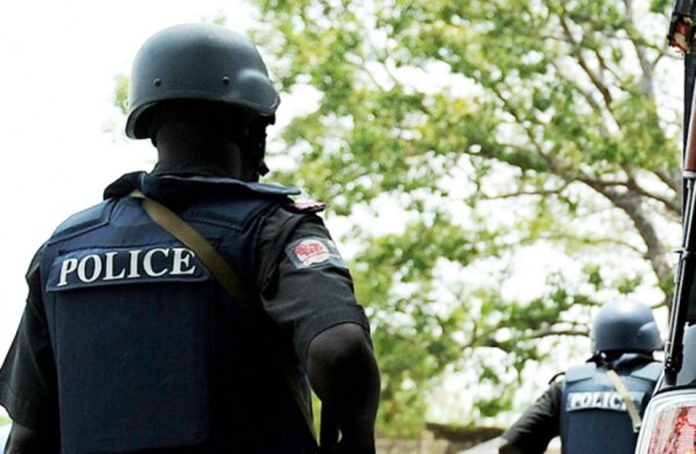
Twenty-four suspects have been arrested in a dawn security swoop at Sampa, with guns and ammunition seized.

The joint security operation involving the Bono Regional Police Command, the 3rd Infantry Battalion (3BN) and the Bureau of National Intelligence (BNI) led to the arrest of the 24 suspects and the retrieval of a large cache of weapons and other items in Sampa Township.

The intelligence-led exercise, carried out in the early hours of March 21, 2026, forms part of renewed efforts by the security agencies to clamp down on the proliferation of illegal arms and criminal activities in the region.

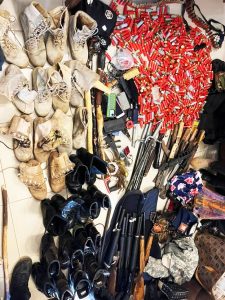
According to a press statement signed by the Bono Regional Police Public Relations Officer, Chief Inspector Thomas Akeelah, the operation yielded eight assorted firearms, including five pump action guns, one Baikal gun and two locally manufactured guns. In addition, the security team retrieved 790 rounds of AAA and BB cartridges, one AK-47 ammunition, 21 machetes, four bayonets, six knives and five clubs.

Other items seized include seven pairs of black desert boots, two foreign military jackets, a pouch, eight motorbikes, six keypad phones and 12 smartphones, as well as tools such as pliers and a chisel.

A ripsaw, torchlight and a quantity of talismans were also found during the operation. Notably, an official stamp bearing the inscription “Nana Samgba Gyafla II, President, Sampa Traditional Council” was among the exhibits.

The suspects, whose ages range from 13 to 78 years, are currently in police custody assisting investigations. Two of them were specifically arrested for breaching curfew regulations. The statement indicated that efforts are underway to process the suspects for court.

The Bono Regional Police Command has meanwhile called on the public to support ongoing security operations by volunteering credible information that could lead to the arrest of persons possessing illegal weapons. The Command reaffirmed its commitment to ensuring safety and maintaining law and order across the region.

The suspects are as follows: Losina Ibrahim (21), Siaka Sirachi (20), Nketia Samuel (58), Wuli Kwabena Mensah (54), Daniel Damoah (16), Sie Mayr Alphonses (17), Musah Shakure (13), Akwasi Bio (16), Mensah Kofi Emmanuel (18), Sie Kwadwo Bright (20), Yunus Mohammed (25), Mohammed Watara (54), Abu Karim (15), Sereboma Latif (13), Sampson Kraa Yaw (44), Issifu Karim (22), Amadu Mahama Subo (25), Okra Marcus Akwasi (17), Sie Emmanuel (28), Amid Issah (56), Abu Amadu (56), Takyi Poku (78), Baba Yeboah Adams (44) and Sah Kwaku Ankamah (33).

By Edmond Gyebi 


For more news, join The Chronicle Newspaper channel on WhatsApp: https://whatsapp.com/channel/0029VbBSs55E50UqNPvSOm2z

The Ghanaian Chronicle