Home Blog Page 1315

Ambulance Contract: A-G criticizes Court of Appeal decision

0
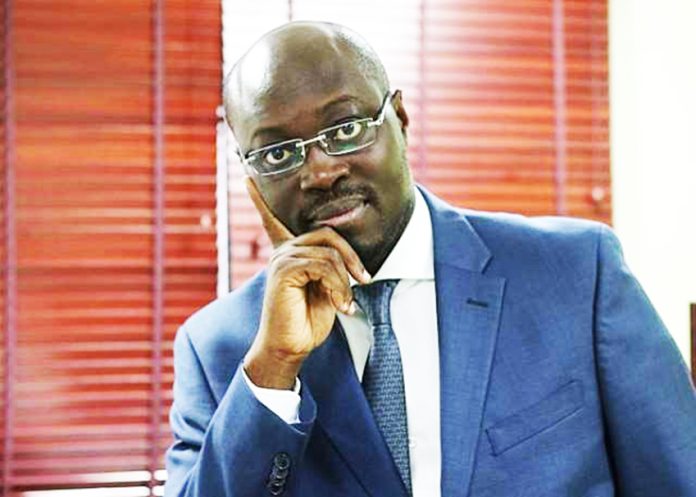
Cassiel Ato Baah Forson

The Office of the Attorney-General (A-G) has criticised the ruling by the Court of Appeal, which overturned a High Court ruling, dismissing a submission of no case by accused persons in the ambulance contract case.

The Court of Appeal’s ruling yesterday has been described as “perverse” by the Attorney-General on the grounds that it undermines public accountability and the rule of law.

The case centres on the alleged misconduct involving the procurement of vehicles purportedly intended as ambulances. The vehicles were imported in December 2014 without allegedly adhering to the contract stipulations governing their procurement.

In a press release signed by the A-G and Minister for Justice, Godfred Yeboah Dame, following the ruling, he said the former Health Minister, late Sherry Aryittey, had warned against importing the vehicles, and there was no official request or authorisation from the Ministry of Health for their procurement.

The AG said Dr Cassiel Ato Forson, first accused in the £2.3 million ambulance case, issued instructions to the Bank of Ghana and the Controller and Accountant-General to establish letters of credit for the vehicles in August 2014, despite no formal request from the Ministry of Health.

According to AG Dame, the vehicles delivered were not in accordance with the contract specifications.

The ambulance lacked essential components and had severe defects, rendering them unsuitable for use as ambulances, as confirmed by a 2015 report from authorised Mercedes-Benz dealers.

The defects were so severe that the vehicles could not be converted into functional ambulances during the tenure of the John Mahama administration.

The following is AG Dame’s full press statement;

RE: REPUBLIC Vrs CASSIEL ATO FORSON & 2 OTHERS

On 30th July, 2024, the Court of Appeal by a split 2–1 decision, allowed an appeal against the ruling of the High Court, Accra dated 30th March, 2023, dismissing a submission of no case filed by the accused persons and ordering them to open their defence.

The Office of the Attorney-General considers the decision of the Court of Appeal to be perverse in the quest for public accountability and the rule of law.

The decision clearly is heavily against the weight of the cogent evidence led by the prosecution in substantiation of all the charges against the accused persons at the trial.

The relevant facts of the matter, as borne out by the undisputed evidence led so far, show that:

(1) Vehicles purporting to be ambulances were imported into the country in December, 2014 in violation of the contract governing the transaction.

(2) The then Minister for Health, Ms. Sherry Aryittey, had cautioned in writing against the importation of the vehicles into the country. There was thus no request by the Ministry of Health for the vehicles to be imported into the country, or for the letters of credit which were the means of payment for the vehicles under the contract, to be established.

(3) With no request from the Ministry of Health or any authorisation whatsoever, and at a time that the period for supply of the ambulances under the contract had even lapsed, the first accused, Cassiel Ato Forson, by letters dated and 7th and 14th August, 2014, instructed the Bank of Ghana and the Controller and Accountant-General to issue letters of credit for the payment for the vehicles.

(4) The letters of credit were consequently established on 18th August, 2014. Big Sea General Trading LLC, the suppliers of the vehicles based in Dubai, whose contract had no parliamentary approval, proceeded to ship the vehicles on receipt of the letters of credit.

(5) When the vehicles arrived, they were not of the kind specified in the contract. Further, apart from the absence of basic parts and equipment required for an ambulance, the National Ambulance Service and the Ministry of Health noted serious defects with every material part of the vehicles.

(6) Such was the fundamental nature of the defects that a former Minister for Health, Dr Alex Segbefia described the vehicles as “ordinary vans” not fit for purpose. In point of fact, a report on the vehicles by the authorised dealers in Mercedes Benz, commissioned by the Ministry of Health in 2015 to assess the vehicles (tendered in evidence by the prosecution), stated that the vehicles could never be converted into ambulances.

(7) The defects were so irremediable that from the time the vehicles started arriving in December, 2014 up to January, 2017 when the erstwhile John Mahama administration left office, they could not be converted into ambulances.

The Office of the Attorney-General considers the decision of the Court of Appeal grossly unfair to the nation and inimical to the fight against impunity and abuse in public office.

The Office will promptly file an appeal in order to erase the effect of this erroneous decision of the Court of Appeal.
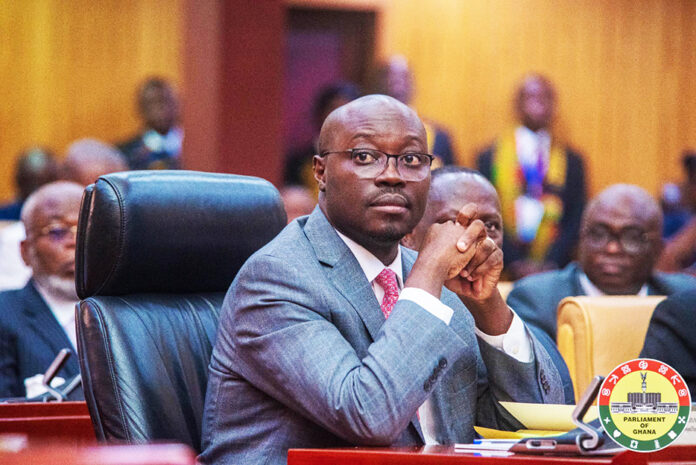
Ato Forson wins ‘submission of no case’

0
Cassiel Ato Baah Forson

In a landmark ruling, the Court of Appeal has acquitted and discharged Dr Ato Forson and others   in the high-profile Ambulance case, overturning the High Court’s earlier decision.

The Minority Leader had gone to the Appeal Court to challenge the dismissal of ‘submission of no case’ argument he made at the lower court.

The Court of Appeal’s panel, which was made up of Justices Alex Poku Acheampong, Kweku Tawiah Ackah-Boafo and Philip Bright Mensah granted the appeal in a 2-1 decision.

The court reached a majority decision to uphold the ‘submission of no case’, with Justices Ackah-Boafo and Mensah in favour, while Justice Acheampong dissented.

Justice Kweku Tawiah Ackah-Boafo, delivering the majority opinion, ruled that the prosecution had failed to present sufficient evidence against the accused.

The court found that the evidence presented was based on impermissible speculations and did not establish a direct link between the evidence and the actions of the third accused.

As a result, the court concluded that there was no reasonable basis for the accused to be compelled to open their defense.

Justice Philip Bright Mensah echoed similar sentiments, emphasising that the prosecution’s case was weak and lacked reliability.

He noted that the delays and issues with the ambulances were not attributable to A1, as the Ministry of Health was responsible for pre-inspection, which it failed to perform.

Consequently, any financial loss should be attributed to the ministry’s mishandling rather than the accused.

In dissenting opinion, Justice Alex Poku Acheampong argued that the trial judge was correct in deciding that the accused should answer the charges. Despite the dissent, the majority ruling prevailed, leading to the acquittal and discharge of all accused individuals.

The Court of Appeal’s ruling marks a significant development in the case, with the appellate court setting aside the High Court’s order and acquitting the accused of all charges.

The decision underscores the appellate court’s finding that the prosecution’s case was insufficient to warrant further defence from the accused.


Duker to Chiefs: Support lithium operations

0
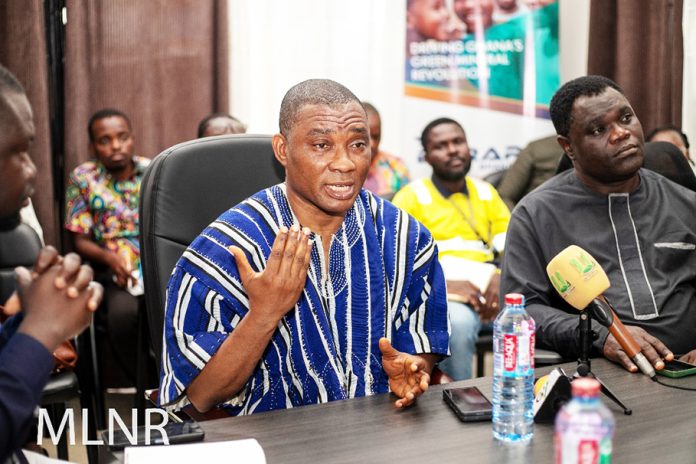
Mr Mireku Duker speaking in a meeting with stakeholders

The Mr George Mireku Duker, Deputy Minister for Lands and Natural Resources responsible for Mines, has called on all mining stakeholders and chiefs to actively support and ensure the sustainability of Atlantic Lithium Limited.

He said, their support will not only trigger the economic progress in the Central region, but also benefit the youth in the community.

The Deputy Minister made the call when he led a delegation from the Ministry and the Minerals Commission on a working visit to the site of Atlantic Lithium on Tuesday 30th July, 2024 in Mankesim Municipality of the Central Region.

Mr Duker, reiterated , that the terms of Atlantic Lithium’s mining lease was one of the best in the world and would deliver prosperity to the country.

He emphasised that, the 13% state carried interest provided for the company’s mining lease was one of the best in the world.

He also said by increasing the royalty regime from the existing five per cent to 10%, the operations of Atlantic Lithium would immensely benefit the country compared with other leases.

Mr Mireku Duker commended Atlantic Lithium for respecting the local content policy that ensures that its managerial workforce is largely Ghanaian.

The Deputy Minister’s entourage included the Advisor of Mines to the Minister, Technical Director of Mines at the Ministry, Mr Peter Awuah and other officials of the Ministry and Minerals Commission.

The General Manager of Atlantic Lithium, Mr Ahmed Salim, in a presentation updated the visiting Team on the operations of the company.

He appealed to government to take steps for Parliament to ratify the lease agreement for the company to start commercial operation next year.

The Team, led by the Deputy Minister, also paid a visit to the bereaved family of the recent accident victim of the mine and presented some items, assuring them of the Government’s support and the company’s efforts to put in place competent and adequate measures to prevent future occurrence.

African athletes to watch out for at Paris Olympics

0
African athletes

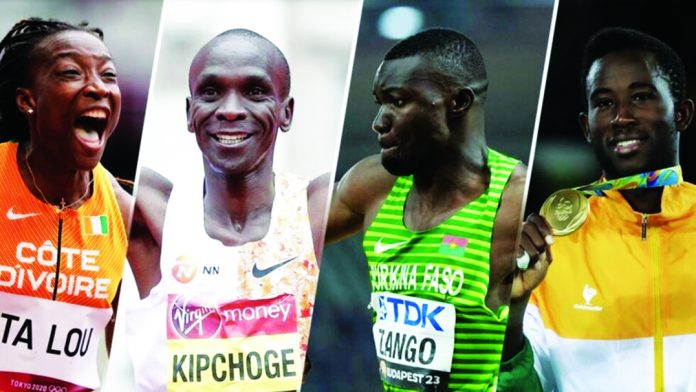
Marathon man Kipchoge eyes third Olympic gold

Kenya’s Eliud Kipchoge is undoubtedly one of the most eagerly awaited African athletes at the Paris Games.

The 39-year-old is already a double Olympic marathon champion, having won in Rio in 2016 and Tokyo in 2021.

He’s currently tied with Ethiopian legend Abebe Bilkila, winner in 1960 and 1964, and Germany’s Waldemar Cierpinski, who won in Montreal in 1976 and Moscow in 1980.

If he secures a hat trick in Paris on 11 August, Kipchoge will be crowned the greatest of all time.

Ta Lou sprints for the podium

Ivorian sprinter Marie-Josée Ta Lou has made it clear this is her last Olympics and last chance to finally get a medal.

The four-time Olympic finalist, now 35, finished fourth in both the 100m and 200m in her Olympic debut at Rio 2016, missing out on the 100m bronze by seven-thousandths of a second.

At Tokyo 2020 she came fourth in the 100m and fifth in the 200m.

Ta Lou was 100m and 200m runner-up in the London World Athletics Championships in 2017.

She wants to break that cycle in Paris and finally climb to the top of the podium.

Faso’s Zango to leap into history books again?

Burkina Faso’s triple jump star Hugues Fabrice Zango made history at Tokyo 2020 when he claimed bronze in the men’s event – becoming the first Burkinabé to win an Olympic medal.

His bronze in Doha in 2019 was the nation’s first World Athletics Championships medal; he took silver in Oregon in 2022 and then gold in Budapest in August 2023.

The 30-year-old, who also has a doctorate in electrical engineering, was crowned world indoor champion in March this year, beating Algeria’s Yasser Triki and Portugal’s Tiago Pereira.

Hopes are high that Zango could bring Burkina Faso its first Olympic gold medal.

South African swimmer Smith

South African breaststroke champion Tatjana Smith (née Shoenmaker) won gold in the 200m breaststroke in Tokyo 2020, beating the world 200m record in 2 minutes and 18.95 seconds.

Smith also took silver in the 100m breaststroke, and laid down a new world record of 1 minute 4.82 seconds during the preliminaries.

She competes in both distances in Paris and expectations are high she’ll go home with a medal. Credit: rfi

‘New Shippers’ Authority law will sanitise shipping industry’ 

0
Mr Kwesi Baffour Sarpong, CEO of Ghana's Shippers' Authority

In a move set to revolutionalise Ghana’s shipping industry, Parliament on Monday, July 29, 2024 passed the Ghana Shippers’ Authority (GSA) Bill, 2024 into law, empowering the state agency to address long-standing issues of unfair charges, lack of transparency, and ineffective regulation that have plagued the blue economy.

“Hon. Members, the Ghana Shippers’ Authority Bill, 2024, duly read the third time and passed”, the Speaker, Alban Sunama Kingsford Bagbin announced the passage, hitting his gavel to signify the end of the processes.

The amended law repeals and replaces the 50-year old establishment law of the organisation, the 1974 Act (NRCD 254).

It addresses gaps identified in the old law, existing Legislative Instrument (L.I) and ensures global best practices.

The new law aims to address the issue of unfair and excessive charges burdening traders who use Ghana’s sea and air ports, as well as land borders to ply their international trade.

The passage of the Bill, presented by the Ministry of Transport, follows concerns over the country’s international transit trade, lack of legal framework and the need to protect shippers from unfair treatment by multinational shipping service providers.

Regulation

It is anticipated that the passage of the Bill would ensure effective regulation of the shipping and logistics sector, guaranteeing fair pricing and charges for all stakeholders.

It would also empower the GSA to control fees at the ports and borders and promote the participation of local firms in the sector.

The new law is further expected to enhance transparency, accountability and invariably, drive improved revenue generation and collection for national socio-economic growth.

Transparency

The Chief Executive Officer of the GSA, Kwasi Baffour Sarpong, welcomed the passage of the Bill into law, saying the new law introduces transparency in port fees and charges determination, ensuring accountability in international trade cargo movement.

“The new law will now empower the Ghana Shippers’ Authority to better adapt to emerging trends and complexities within the shipping and logistics industry, protect the interests of shippers and service providers, and improve its regulatory oversight of commercial shipping in the entire industry”, he noted.

The new law would also enable a more effective regulation of transit trade, thereby balancing the interests of shippers and service providers for enhanced efficiency and competitiveness in international trade.

Background

The Ghana Shippers’ Authority was established in 1974 by the Ghana Shippers’ Authority Act, 1974 (NRCD 254) to organize shippers and equip them with bargaining power.

However, the Act had not undergone significant reviews in 50 years, making it unresponsive to industry transformations.

The Authority has been spearheading transit trade development since 1987, but the legal framework to regulate transit trade and ensure maximum benefits for Ghana is nonexistent.

Justification

The Ministry of Transport is of the view that the exorbitant charges by service providers hinder business growth and contribute to price hikes. The lack of legislation empowering the GSA to regulate port charges worsens this issue.

The Ministry emphasises the need to amend existing legislation to enhance the GSA’s mandate and capacity to regulate and standardise shipping charges.

By Stephen Odoi-Larbi

The real reason why Olympic athletes bite their medals after winning

0
Usain Bolt

Some of the most iconic sports photographs have included athletes biting their medals after clinching glory in their discipline.

From the likes of Usain Bolt to Antoine Dupont, Olympians, footballers, rugby players and athletes from around the world have all participated in the iconic practice.

While it’s unclear where the trend first originated from, many think Team GB’s 1991 gold medal winning 4x400m relay team, which included Derek Redmond, John Regis, Kriss Akabusi and Roger Black, were some of the first athletes to do the trend.

It isn’t, though, perhaps the safest thing to do, with David Moeller, a German Luger who was competing at the 2010 Vancouver Olympics, claiming to have chipped his tooth, after biting down on his silver medal.

THEORIES

But why do athletes participate in the ritual? There are many theories, with some claiming that it comes from how people used to mine gold, while others believe it is a gimmick that athletes are asked to do.

Some claim that because gold is softer than silver or bronze, one way to figure out whether your medal is authentic or not is to bite into it. Should your teeth leave a mark or dent on the precious accolade, you’d know you have a gold medal. During the California gold rush in the 1800s, prospectors would test whether they had real gold by biting into it.

According to Oxford Economics, an Olympic gold medal will cost around £798 – and are not made completely of gold. They contain approximately six grams of gold, with the rest of the medal composed of silver and weigh around 1.17lbs.

Silver medals weigh slightly less at 1.17lbs, while bronze medals weigh 1lbs.

But others believe the phenomenon is driven by photographers, with David Wallechinsky, president of the International Society of Olympic Historians, telling CNN back in 2012 that athletes bite their medals because they are asked to by cameramen. ‘It’s become an obsession with the photographers,” Wallechinsky said.

‘I think they look at it as an iconic shot, as something that you can probably sell.

‘I don’t think it’s something the athletes would probably do on their own.’

Others, including Temple University, Philadelphia professor Frank Farley, believe that biting a medal is a social phenomenon that allows athletes to feel part of the ‘winning zeitgeist’.

‘Sports all have their eccentricities,’ he said, per Lad Bible. ‘If you want to be part of the winning zeitgeist, that winning culture, you participate in that winning practice.

‘It makes your medal yours. It’s an emotional connection with your accomplishment.’

Credit: dailymail.co.uk

Earthquake shakes Los Angeles

0
Earthquake in Los Angeles

An earthquake shook the Los Angeles region Monday afternoon.

The US Geological Survey reported a 4.9 magnitude quake with an epicenter near Barstow, California – about 103 miles northeast of Los Angeles. The quake was at a depth of nearly five miles, according to the USGS.

The magnitude was downgraded from an initial report of 5.1. The USGS also reported quakes of 3.5 and 2.7 magnitude in the minutes following the first earthquake.

At the Warner Bros. Discovery – CNN’s parent company – offices in Burbank, about 115 miles southwest of the epicenter, the quake began as a slow roll and gained in intensity, lasting about 20 seconds.

Most of Southern California felt the earthquake, and the USGS detected shaking as far east as Las Vegas, Nevada.

No immediate reports of damage have surfaced, though assessments are ongoing.

Credit: cnn.com


Ninety-three killed, dozens trapped in India landslides

0
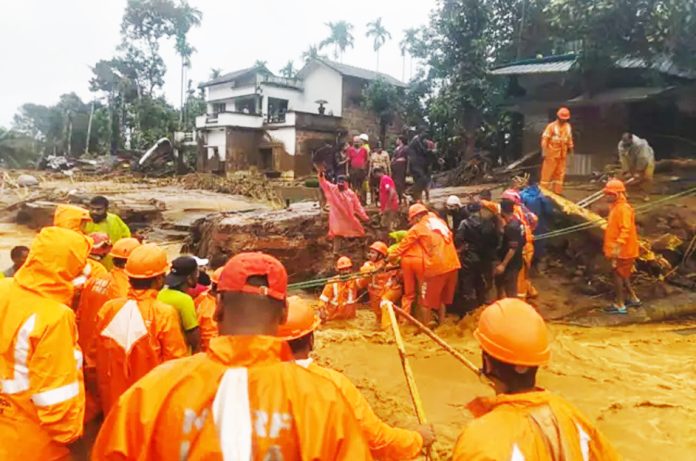
State and national disaster relief teams are conducting rescue operations

At least 93 people have been killed and dozens are still feared trapped after heavy rains triggered massive landslides in the southern Indian state of Kerala.

The landslides struck hilly areas in Wayanad district in the early hours of Tuesday.

Rescue operations are under way, but are being hindered by heavy rains and the collapse of a crucial bridge.

“The situation continues to remain very grave. The causalities may go up,” V Venu, the state’s top civil servant, told media.

The landslides are the worst disaster to hit Kerala since 2018, when deadly floods killed more than 400 people.

Officials say more than 200 army personnel have been deployed to assist security forces in search and rescue efforts.

Chief Minister Pinari Vijayan told a press conference that Tuesday’s “landslide has wiped out an entire area”.

Local hospitals are treating at least 123 injured, and more than 3,000 people have been rescued and moved to 45 relief camps, he said.

Apart from 65 confirmed deaths in Wayanad, 16 bodies have been found in the Chaliyar river, which flows into neighbouring Malappuram district. The body parts of a number other people have also been found.

Wayanad, a hilly district which is part of the Western Ghats mountain range, is prone to landslides during the monsoon season.

The landslides have hit several areas in the district, including Mundakkai, Attamala, Chooralmala and Kunhome.

Videos on social media showed muddy water gushing through unpaved streets and forested areas, washing away homes and leaving people and vehicles stranded.

Credit: bbc.com

Venezuelans take to the streets to protest disputed election

0
Venezuelan President Nicolás Maduro

Venezuelans across the country took to the streets on Monday to protest a disputed election, clashing with police as uncertainty swirls around the results amid allegations of election fraud.

The election on Sunday was the most consequential one in years, with Venezuela’s future on the line.

Many young opposition supporters said they would leave the country if authoritarian leader Nicolás Maduro was re-elected, pointing to the devastating collapse of the country’s economy and violent repression under his rule. But the opposition was also energized, presenting the ruling establishment its toughest challenge in 25 years.

Though Maduro had promised fair and free elections, the process has been marred with allegations of foul play – with opposition figures arrested, the opposition’s key leader banned from running, media outlets blocked and overseas Venezuelans largely unable to vote.

That’s why, even though Maduro was formally named the winner by the country’s electoral body – which is stacked by the president’s allies – the opposition has rejected the results and other Latin American leaders have refused to recognize his win.

Maduro has been in power since the 2013 death of his predecessor Hugo Chávez. If he takes office again, it will be his third consecutive six-year term.

Credit: cnn.com

Thousands of Palestinians return to Khan Younis as Israeli forces withdraw

0
Thousands of Palestinians fled from Khan Younis

Thousands of Palestinians are returning to their homes in Khan Younis, after the Israeli military said it had completed a week-long operation in the southern Gaza city.

Israeli troops re-entered the city last week after officials said that Hamas was attempting “to reassemble its forces there”. Some 150,000 Palestinians were forced to flee their homes ahead of the operation, two UN agencies said.

On Tuesday, Israel Defence Forces (IDF) officials said more than 150 gunmen had been killed during the week long offensive.

But the Hamas-run Gaza media office said at least 250 Palestinians were killed and more than 300 injured during the fighting. Thirty more remain missing, they said.

On Tuesday, aid workers could be seen in the streets of Khan Younis collecting dead bodies and wrapping them in rugs, before transporting them to morgues around the city, the Reuters news agency reported.

Thousands of Palestinians – many carrying their possessions – streamed back into the city as Israeli forces withdrew, with many reporting extensive damage to their homes. Most arrived on foot.

Witnesses told Reuters that the IDF had bulldozed the main cemetery in Bani Suhaila, the town on the eastern outskirts of Khan Younis. Nearby homes and roads had also been damaged, they said.

Elsewhere, Israel has ordered thousands of people to leave their homes in the central al-Bureij area. It comes as strikes have begun ahead of a possible new operation in the area.

Credit: bbc.com

The Ghanaian Chronicle