Home Blog Page 1303

European Leagues Fixtures & Previews

0
Manchester new players Matthijs de Ligt and Noussair Mazraoui

Manchester United welcome Fulham in EPL opening game

Manchester United and Fulham get the 2024-2025 English Premier League campaign under way this weekend. The match will be played at Old Trafford, the home of Manchester United.

United, having lost the Community Shield to rivals Manchester City last week is looking forward to opening their campaign with a win.

Fulham approach this game as the underdogs but they should not be underestimated. The Red Devils have lost three of their last five EPL opening matches and are willing to make it right this time. Upon finishing 8th in the just end season, much is expected of Erik Ten Hag and his boys this time around.

The likes of Matthijs de Ligt and Noussair Mazraoui joining the team have strengthened their defence which was the key reason for their poor performance last season.

Fulhum finishing 13th in the just ended season and much is needed and expected from them this time. Though they did managed to beat Manchester United 2-1 at Old Trafford, they need to

work harder than before to win this match.


ChelseaManchester City begin season with a heavyweight clash

Chelsea and Manchester City begin the new Premier League season with a heavyweight clash on Sunday.

These two sides have already met once this summer on their respective pre-season tours of the USA, with Erling Haaland’s hat-trick helping the reigning champions to a commanding 4-2 victory in Columbus, Ohio earlier this month.

Defending league champions Manchester City

It’s quite the baptism of fire for Enzo Maresca in his first competitive match in charge of Chelsea since being hired from Leicester to replace the one-and-done Mauricio Pochettino in June, with pre-season having been a struggle.

The Blues won just one of their six total friendlies, suffering heavy losses to both City and Celtic as well as being beaten by Real Madrid and failing to defeat third-tier Wrexham as well as Inter Milan.

City also lost to both Celtic and AC Milan and drew with Barcelona to go along with that thumping win over Chelsea, though will be high on confidence after edging out Manchester United on penalties to lift the Community Shield at Wembley last weekend.

Once again Pep Guardiola’s side go into a new campaign as strong title favourites and very much still the team to beat.

Credit: standard.co.uk

Valencia host Barcelona in new La Liga season

Arguably the pick of the matches in the opening game week of the 2024-25 La Liga campaign will take place at Mestalla on Saturday night, with Valencia welcoming Barcelona.

Valencia will be bidding to push for a possible European finish in Spain’s top flight this season, while Barcelona have the incredibly difficult task of challenging reigning champions Real Madrid for the title in the new campaign.

Valencia have made three signings this summer, with Dani Gomez and Rafa Mir arriving on loan from Levante and Sevilla respectively, while Stole Dimitrievski has joined the club on a free transfer from Rayo Vallecano.

Barcelona new signing Dani Olmo

Valencia have managed to keep hold of their key players from last season, though, including Spanish midfielder Javi Guerra, who saw a proposed move to Atletico Madrid break down at the final moment earlier this month.

Barcelona, meanwhile, have only made two new signings this summer, with Pau Victor arriving on a permanent basis from Girona, before the Catalan outfit confirmed a deal for Dani Olmo, with the Spain star returning to Camp Nou from RB Leipzig.

Barcelona have won six of their last seven league games against Valencia, and we are expecting another narrow success for the Catalan outfit this weekend.

Credit: sportsmole.co.uk


Inter Milan get Serie A campaign underway against Genoa

Serie A champions Inter Milan will get the 2024-25 campaign underway in Italy against Genoa as they look to go back-to-back in the top flight.

The Nerazzurri stormed to the title last term, beating rivals AC Milan to the honour and looking unbeatable at times.

Genoa finished a respectable 11th, missing out on Europe by 12 points.

Inter’s main summer signing Mehdi Taremi

That will be the aim for them this season but they must get past the league’s hardest opponent if they want to get off to a winning start.

With few changes to last season’s dominant squad, head coach Simone Inzaghi oversaw a busy summer itinerary, with Inter drawing their final friendly 1-1 against Chelsea on Sunday.

Inter’s main summer signing Mehdi Taremi – who scored five goals in three pre-season friendlies before suffering a thigh injury – should be available after returning to training, but the champions will be without several other players on Saturday evening.

Inter have won each of their last five Serie A openers, and having opted for continuity this summer, they should make it six against a Genoa side lacking last season’s main men up front.

Credit: sportsmole.co.uk


FIXTURES

Premier League

Friday 16th August

Manchester United 20:00 Fulham

Saturday 17th August

Ipswich Town 12:30 Liverpool

Arsenal 15:00 Wolverhampton Wanderers

Everton 15:00 Brighton

Newcastle United 15:00 Southampton

Nottingham Forest 15:00 AFC Bournemouth

West Ham United 17:30 Aston Villa

Sunday 18th August

Brentford 14:00 Crystal Palace

Chelsea 16:30 Manchester City


Spanish La Liga

Friday 16th August

Celta de Vigo 18:00 Deportivo Alavés

Las Palmas 20:30 Sevilla

Saturday 17th August

Osasuna 18:00 Leganés

Valencia 20:30 Barcelona

Sunday 18th August

Real Sociedad 18:00 Rayo Vallecano

Mallorca 20:30 Real Madrid


Italian Serie A

Saturday 17th August

Genoa 17:30 Internazionale

Parma 17:30 Fiorentina

Empoli 19:45 Monza

Milan 19:45 Torino

Sunday 18th August

Bologna 17:30 Udinese

Hellas Verona 17:30 Napoli

Cagliari 19:45 Roma

Lazio 19:45 Venezia

By Jesse Otoo

State Land Capture Tag Is Politically Motivated –Jinapor

0
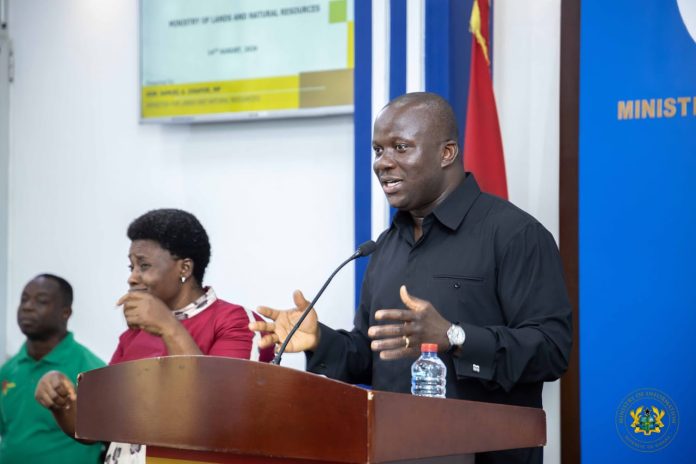
Minister for Lands and Natural Resources, Samuel Abu Jinapor address the press

The Minister for Lands and Natural Resources, Mr. Samuel Abu Jinapor, has said that recent allegations of state lands being captured by persons linked to the ruling government are politically motivated.

In a press briefing at the Ministry of Information on Wednesday, August 14, 2024 Mr. Jinapor addressed these accusations head-on, providing detailed clarifications and reiterating the government’s commitment to transparency and accountability in the management of public lands.

Mr. Jinapor categorically described the allegations as baseless, emphasising that they are politically motivated attempts to undermine the government’s efforts.

He cited specific cases that have been at the center of these allegations, including the controversy surrounding the land that previously housed the Bulgarian Embassy in Accra.

This property, he clarified, was acquired by the state in 1920 and subsequently leased to a private individual in 1977, long before the current administration came into power.

The minister underscored that the government had no involvement in the subsequent transaction between Mr. Leighton and the Bulgarian Embassy, nor in the demolition of the embassy building.

“The government of Ghana had absolutely no role in the demolition of the Bulgarian Embassy,” Mr. Jinapor asserted.

He further explained that the compensation owed to the Bulgarian government for the demolition would not be borne by the state, but by those directly responsible for the incident.

The minister said this, dispelling any notion that the government was using public funds to settle matters arising from private dealings.

Mr. Jinapor also addressed similar allegations regarding public lands at Roman Ridge, the Parks and Gardens site and Judicial Service Bungalows located in Cantonments. He noted that these properties were either sold or leased out long before the current administration assumed office.

“The records are clear,” he said, and added that “the very individuals who supervised these transactions during their time in office are now the ones turning around to accuse this government of the same actions they orchestrated.”

The Minister detailed the policy measures implemented by the government to protect public lands from mismanagement and unauthorised transactions.

He continued that central to these efforts is a policy directive issued on August 17, 2021 which mandates that all transactions involving public lands must receive prior approval from the Office of the Minister for Lands and Natural Resources.

This directive, according to Mr. Jinapor, is a crucial step in ensuring that the President of the Republic, who holds these lands in trust for the people of Ghana, can fulfil his constitutional duties with full awareness of all transactions.

“The directive is clear and unambiguous. No public land can be sold, leased or otherwise disposed of without the explicit approval of the Ministry,” Mr. Jinapor stated.

He added that any deeds executed without this approval would be considered void and several such leases have already been reversed, particularly in the Northern Region, as part of the government’s broader efforts to reclaim public lands.

Additionally, the Ministry has established a Public Lands Protection Team, which works in collaboration with the Lands Commission and the Ghana Police Service to prevent encroachments and recover encroached lands.

This team, he said, is actively monitoring and intervening in cases where public lands are at risk of being unlawfully occupied or sold.

Mr. Jinapor also provided updates on the ongoing digitalization of land records, a key initiative aimed at enhancing transparency and efficiency in land service delivery.

He noted that the government is aggressively pursuing the digitalization of records at the Lands Commission, which will make all land transactions easily traceable and accessible to the public.

“Digitalization is at the heart of our strategy to ensure that land transactions are conducted in a transparent and accountable manner,” he said.

The Minister emphasised that the digitalization process will help curb the issues of double sale of lands, fraudulent transactions, and the overall bureaucratic inefficiencies that have plagued the land administration system in Ghana for decades.

Furthermore, the Minister highlighted the government’s proactive approach to expanding the public land estate through strategic acquisitions.

He mentioned ongoing efforts to acquire lands in areas such as Afienya-Dawhenya for the development of an industrial enclave and in Tamale for the expansion of the University for Development Studies.

These acquisitions, he explained, are part of the government’s long-term plan to support national development goals by ensuring that adequate land is available for key infrastructure projects.

In his concluding speech, Mr. Jinapor reaffirmed the government’s unwavering commitment to managing public lands with the highest standards of integrity and transparency.

He assured the public that the Ministry of Lands and Natural Resources, under the leadership of President Akufo-Addo and Vice President Dr. Bawumia, will continue to safeguard public lands against any form of mismanagement or illegal acquisition.

“The protection of public lands is not just a matter of policy; it is a matter of principle,” Mr. Jinapor declared.

He called on all stakeholders, including the media, civil society organizations, and the general public, to support the government’s efforts in ensuring that public lands are used judiciously and in the best interest of the people of Ghana.

NPP To Launch Manifesto Of Lies -Mahama

0
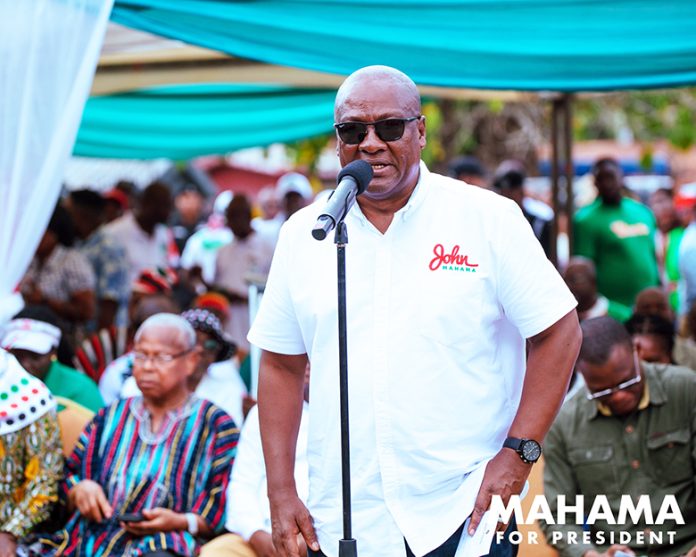
Former President Mahama speaking at the meeting with the Asogli State

Even before the governing New Patriotic Party (NPP) launches their manifesto in the Western region, the flag bearer of the opposition National Democratic Congress (NDC), John Dramani Mahama, has fired salvos, describing the content as lies.

Ahead of the launch on Sunday, August 18, 2024, of the NPP manifesto, John Mahama told the people of the Volta region not to expect anything of substance since the party in government has failed to honour the social contract it had with Ghanaians.

Addressing the Asogli state in the Volta Region as part of his campaign, Mahama accused the NPP of not living up to expectations and subjecting Ghana to uneasy hardship.

“Ghana has never seen this kind of hardship before,” he said.

The former president has therefore asked Ghanaians not to take the upcoming manifesto launch by the NPP seriously since it will be mere rhetoric.

Expressing appreciation of the NDC to the people of Volta for rallying behind the party, John Mahama said, “We want to express our appreciation to the people of the Volta Region for standing behind the NDC over the years.”

“We don’t take your support for granted. We don’t call Volta Region the World Bank for nothing, not because your votes are the highest, but when it comes to voting percentage terms, no region comes close to Volta Region.

Fighting back what he described as NPP propaganda, John Mahama, who is eyeing his comeback at the seat of government, told the Voltarians not to fall for propaganda staged by the NPP in order to sway them into the fold of the NPP.

“Almost every community in the Volta Region got electricity due to the tenure of the NDC. You cannot quantify the level of development the NDC has brought to the NDC,” he said.

According to John Mahama, the NPP has not done anything for the region, emphasizing all the projects initiated by the NDC administration have come to a halt after 2017.

He accused the NPP of colatralizing the source of funding for the projects, adding that all the E-blocks, water projects, roads, and other projects have come to a standstill, adding that the NPP is only doing selective development.

Touting the feats of the umbrella movement in the Volta region, John Mahama stated that in the face of propaganda that the NPP continuously subjects the people of the Volta region, anytime that NDC comes to power, they give the Volta region their fair share of the national cake.

“Anytime that we come to office, we invest in the things that will change the lives of the people,” naming the provision of infrastructure such as senior high schools, buses, and others.

“We provide health facilities such as CHPS compounds, health centres, and hospitals,” he said.

According to John Mahama, when the NDC, under the late John Evans Atta Mills, announced that they were going to build a university for the region, the NPP were making mockery of them, but today, the president has gone for an award.

Prior to his address, President Mahama lauded the overlord of Asogli State, Togbe Afede, describing him as a leader of many branches.

Campaign On Prudence Not Populism -IFS Urges Gov’t

0
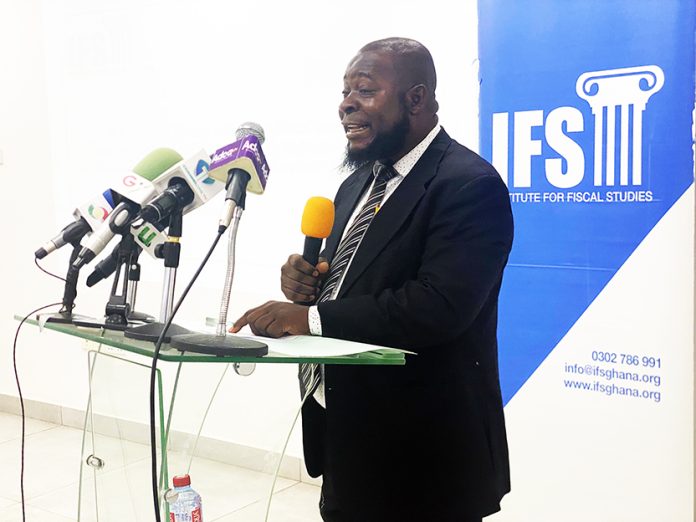
Senior Research Fellow, IFS, Dr. Said Boakye, presenting the policy brief

The Institute of Fiscal Studies (IFS) has urged the government to remain vigilant in its quest to stabilise the hard-hit economy that is still weak and fragile.

According to the IFS, owing to the economic crisis and its attendant negative impact on the economy, the government and political parties, while campaigning, must “choose prudence over populism.”

“Given that the economy remains weak and fragile, this is not the time to celebrate but the time to remain vigilant,” said the IFS on Wednesday, August 14, 2024 at a policy briefing in Accra.

It was the IFS’ review of Ghana’s present fiscal and macro-economic performance with reference to the 2024 mid-year fiscal policy review of the government.

Senior Research Fellow at the IFS, Dr. Said Boakye, who presented the policy brief, outlined some recommendations to the government after demonstrating how weak and fragile the economy is, despite the measures put in place.

Among others, he cited the ease of inflation from what he described as the multi-decade record level in 2022, as well as the cedi avoiding the high volatility, to urge the government not to be self-satisfied.

“As clearly shown, all the relevant macro-economic indicators are still presently performing much below par, relative to recent historical trends. The government should not, therefore, behave as if all is well,” Dr. Boakye suggested.

The IFS said the fragile state of the economy should rather be made to inform policy choices of the government.

“This requires it to choose prudence over populism, even as it campaigns for power in this year’s elections. Thus, politicisation of economic policy decisions and choices must stop,” he opined.

REVENUE POLICY

Dr. Said Boakye recommended to the government to adopt more concrete revenue policies and measures to increase revenue. He argued that the government’s policies so far have not led to a significant increase in revenue, relative to GDP.

He cited taxation and suggested to the government to focus more on plugging revenue gaps, by closing revenue leakages and improving collection, frowning on subjecting the weak economy to more taxes.

On the subject of revenue, Dr. Boakye, in answering a question on the abolishment of the E-Levy and Betting taxes, as promised by the two leading presidential aspirants, Dr. Mahamudu Bawumia and John Dramani Mahama, advocated an alternative.

He stated that, though scrapping E-Levy, for instance, would benefit him, as someone who partronises electronic transactions, his experience as an Economist pushes him to caution those making such pledges.

Dr. Said Boakye would rather they identify another means of generating revenue, arguing that scrapping the existing source with no alternative, may leave a gap.

FISCAL INSTABILITY

The IFS also recommended to the government to address the underlying drivers of fiscal instability and unsustainability to ensure enduring improvements. The institute argued that the debt reliefs due to the debt restructuring are temporary.

The IFS advocated deliberate measures to tackle the negative fiscal fundamentals, like low revenue generation, excessive fiscal rigidities, corruption, and politically induced spending decisions, to ensure in-depth improvement in fiscal performance on a long-term basis.

This, the IFS said, will in turn help minimize the excessive domestic financing of the budget and thus address its concerning growth and unemployment effects.

EXPENDITURE

The IFS also recommended to the government to rein in expenditure to meet revenue performance, despite 2024 being an election year.

Dr. Said Boakye said it should be done by adjusting the spending program in the 2024 budget to always match revenue collections so that fiscal slippage does not occur. The institute made this recommendation, predicting that the total revenue and grants outturn will “most likely” be far below its revised target in 2024.

REVIEW PROGRAMS

The IFS also recommended to the government to speed up the promised review of its flagship programs to reduce expenditure, observing that it was delaying despite the government’s promise to review these flagship programs as part of the IMF program.

“The government should understand that given the temporary nature of the positive effects of the debt reliefs, this measure is needed to help strengthen the fiscal position. A stronger fiscal position, in turn, will facilitate a more robust macroeconomic recovery in the near term,” Dr. Said Boakye stated.

Meanwhile, the IFS could not predict how long it would take the economy to stabilize, suffice it to say, they hinged the duration on the discipline of the government towards prudent measures.

GES Rolls Out New Curriculum For Secondary Education In September

0
NACCA

The Ghana Education Service (GES) is set to fully roll out the new standard-based curriculum for Senior High Schools (SHS) in the country, come September this year, which marks the new academic year.

The curriculum aims to ensure that all learners achieve their potential by equipping them with 21st century skills, competencies, character qualities and shared Ghanaian values, which ultimately will prepare learners to live a responsible adult life, further their education and enter the world of work.

The new Senior High School Curriculum will focus on social, emotional and behavioural issues, as well as values, making room for education to empower individuals and positively contribute to society.

Unlike the old curriculum, where Arts students were not permitted to learn major aspects of Science, the new curriculum removes such barriers, providing SHS students with more comprehensive educational opportunities.

The new curriculum will further allow students to choose a minimum of seven and a maximum of nine subjects, depending on their strengths, while talented students can choose to take more than nine subjects.

The new curriculum was developed by the National Council for Curriculum and Assessment (NaCCA) for Senior High School (SHS), Senior High Technical School (SHTS) and Science, Technology, Engineering, and Mathematics (STEM) Curriculum.

The curriculum has been designed for grammar, STEM, and technical schools across the country and is intended to enable students to pursue any course of their choice at the tertiary level without limitations.

This came to light during the commemoration of this year’s International Youth Day, which was under the theme: “merging values and digitalisation, a prerequisite for youth and national development” at the Okuapemman Senior High School (SHS) on Monday.

The ceremony was attended by other sister schools, such as Mamfe Methodist Girls, Presby Senior High School, Benkum Senior High School, Mampong School for the Deaf, and Accra Academy.

To mark International Youth Day, Ghana Education Service (GES) partnered with T-TEL, Honour Ghana, Lead for Ghana, and NUGS to have a one-day seminar for senior high school learners to share on the secondary education reform and the development of the National Handbook on Values.

Speaking with the media on the sidelines, Professor Jonathan Fletcher, a Curriculum Key Advisor, hinted that the reform is a bold commitment to fully engage the Ghanaian youth and seek their collective and continuous buy-in to ensure the effective implementation of the new curriculum.

Prof. Fletcher, who is also the Founding Dean of the School of Education and Leadership, University of Ghana, continued that it would ensure that young people understand and embody the core values such as honesty, respect, responsibility, and self-confidence into their daily lives and academic activities.

The University of Ghana Professor stated that this is the first time that Ghana has developed a SHS curriculum that focusses on shared national values, attempting to educate a generation of Ghanaian youth who are proud of the country and can contribute effectively to its development.

“Recognising this, a Handbook on National Values is being written in conjunction with the National Union of Ghana Students (NUGS) for use across all Senior High Schools (SHSs), Senior High Secondary Technical School (SHTSs), and STEM schools,” he stressed.

The Founding Dean at the University of Ghana School of Education and Leadership disclosed that this handbook will prioritise learner-centered and practical approaches to complement classroom teachings and foster self-learning skills.

The agencies leading the development of this handbook on values are the Ghana Education Service (GES) and NaCCA, with support from NUGS, Lead for Ghana, Honour Ghana and Transforming Teaching, Education & Learning (T-TEL) in partnership with the Mastercard Foundation.

On the availability of teaching and learning materials for the curriculum, Prof. Fletcher assured Ghanaians, particularly the main actors of the new curriculum, of the availability of materials for smooth implementation.

Dr. Emmanuel Ankrah Odame, Founder and Executive Director of Honour Ghana, a non-governmental organization, that seeks to promote the culture of honour, cried over the spate of corruption in the country.

The Executive Director of Honour Ghana, who doubles as the technical advisor and lecturer at the University of Ghana Medical School, attributed the situation to the absence of cultural values that underpinned the development of every society.

To him, these values outline the acceptable behaviours we need to exhibit to peacefully live with our friends, families, and the society in which Ghana is not an exception.

He therefore called on Ghanaians to reset on a path of restoring the lost glory of the days where cultural values were like second nature, leading to a holistic development of the country.

In his keynote address, the Deputy Eastern Regional Director of Ghana Education Service (GES), Mr. Benjamin Naih, charged the youth, especially students across the country, to intentionally uphold the values of culture.

He indicated that, despite digitalization being the game changer in the 21st century, the full potentials of it could be hugely challenged when it is not merged with values that defined the rich cultural and traditional constructs of Ghanaians.

‘Leaders of today’ or ‘Future leaders’: My reflection on International Youth Day

0
Opinion

As we commemorate International Youth Day, there are two essential things I have elected to reflect on: the relevance and importance of this commemoration and the theme for this year’s celebration; “From Clicks to Progress: Youth Digital Pathways for Sustainable Development”.

In adopting resolution, A/RES/54/120, born out of the recommendations from the World Conference of Ministers responsible for Youth, in Lisbon (8-12th August 1998) the 54 session of the General Assembly of the United Nations proclaimed August 12, as International Youth Day.

To begin with, allow me to unequivocally state that I am a firm and unrepentant believer in the potential of young people as essential contributors to society, so for me, the idea of an International Youth Day is a step in the right direction. International Youth Day emphasises the rights of young people to fully have access to quality education, quality healthcare, decent jobs and employment, and complete participation in public life.

This commemoration also recognises and appreciates the contributions of young activists and young volunteers who do everything possible to accelerate positive change around the world – serving as catalysts for peace and prosperity not only in their communities but regionally and globally.

Young people form the largest and most active workforce in our part of the world; thus, they contribute a lot and significantly in terms of manpower, innovations and diversity to sustainable development.

According to the office of the UN Secretary Generals envoy on Youth, there are more than 1.8 billion young people (between the ages of 10 – 24) making them the largest generation of youth the world has ever seen. This makes it even more advantageous to leverage the abilities and harness the potential of young people towards sustainable development.

According to the UNDP, digital technologies and data have contributed to at least 70% of the 169 Sustainable Development Goal targets with tremendous impacts spanning across environmental, social and economic dimensions, whilst reducing the cost of these goals by up to USD 50 trillion.

It is therefore very evident that young people are leading the charge and transition towards digital transformation with about three-quarters of young people between the ages of 15 to 24 using the internet in the year 2022, a rate higher than all other age groups and a proportion which is expected to grow in subsequent years.

In reflecting on the theme for this year’s celebration I decided to soberly ponder over the youth digital pathways for achieving SDG 3: Good Health and Well-being; and particularly focus on some key ethical issues that must be brought to bear in digital well-being.

There is so much evidence that points to the fact that digital technologies can and have improved access to healthcare services, especially in underserved areas. Ethical considerations like ensuring data privacy and security as well as ensuring equitable access, however, must be looked at. Through SDG 4: Quality Education, young people should be empowered through capacity building on digital health knowledge and skills. Ethical goals may include encouraging positive behaviours and improving health outcomes.

Further, in employing SDG 16: Peace, Justice and Strong Institutions, ethical discussions must include young people and address issues of justice in digital health taking cognisance of the fact that ethical use of technologies requires balancing benefits with potential risks and ensuring that the well-being of people remains a priority. There are so many other SDGs that weave into this subject, however, for this article, I chose to reflect on just these.

It is worth noting that the United Nations Sustainable Development Goals – AGENDA 2030 was adopted based on the principle of leaving no one behind, emphasizing a holistic approach to achieve sustainable development for all.

To wrap up it is further instructive to note that with the largest generation of youth the world has ever seen, it is impossible to achieve the Sustainable Development Goals without the active participation of young people – the largest generation of changemakers.

Happy International Youth Day!

By Charles Lwanga Tengan

Credit: myjoyonline.com

Editor’s note: Views expressed in this article do not represent that of The Chronicle


Editorial: Technical & Vocational Training Is Not For School Drop Outs

0
Editorial

The outgoing Director-General of the Ghana Technical, Vocational Education and Training Service (TVETS), Mawusi Nudekor Awity, has urged the youth to embrace TVET training as a result of its positive impact on the economy. She said the government’s decision to fully embrace and recognise TVET education was the surest way to improve the economy, through the provision of employable skills for the teaming youth who completed their studies.

Ms Awity noted that since 2021 when she took over as the first Director-General of GTVET, she had ensured that most of the TVET institutions across the country had received facelifts in the area of infrastructure, equipment training and quality tuition. That, she said, was a testament that could be verified in almost all the regional capitals.

She noted that currently, TVET training has provided the required opportunities for trainees to further their educational skills and attain tertiary education in the various technical universities in the country.

The notion that technical and vocational education was for those who were not knowledgeable is a thing of the past. Ms Awity further intimated that GTVET had, for the past years, liaised with industry players and given students who enrolled in the sector the needed experience and knowledge to improve and sharpen their skills while on the field. This had created an atmosphere for a great relationship between industry and the institutions where TVET was taught.

The Chronicle agrees with the Director General of TVET on urging the youth to embrace TVET training as a result of its positive impact on the economy. In a rapidly evolving global market where traditional academic routes often lead to saturated job markets and limited opportunities, TVET offers a pragmatic alternative. The provision of employable skills through technical and vocational education directly addresses the growing concerns of youth unemployment in Ghana.

The government’s full embrace and recognition of TVET as an integral part of the educational system is indeed a strategic move. It aligns with global trends where economies that prioritise vocational training experience lower unemployment rates and higher levels of innovation.

For a country like Ghana, which is on the cusp of industrialisation, a well-developed TVET sector can serve as the backbone for economic transformation, fostering the growth of a skilled workforce ready to meet the demands of modern industries.

The facelift of TVET institutions across the country is a testament to the strategic investments made during her tenure. The visible improvements in almost all regional capitals reflect a deliberate effort to make TVET more attractive to the youth, dispelling the long-held misconception that technical and vocational education is a last resort for those who are not academically inclined.

The modernised facilities and upgraded equipment provide students with a conducive learning environment, further validating TVET as a viable and respectable educational pathway.

Moreover, the integration of TVET with tertiary education opportunities in technical universities is a groundbreaking development. It opens doors for TVET graduates to further their education, acquire advanced skills and pursue specialized careers. This integration not only enhances the prospects for TVET graduates but also elevates the overall perception of vocational education in the country.

One of the most profound challenges that TVET has faced over the years is the negative perception that it is only for those who are not academically gifted. The efforts of the outgoing Director-General of TVETS have been pivotal in changing this narrative.

The success of TVET graduates in the job market, coupled with the opportunities for further education, has proven that vocational training is not just an alternative but a strategic choice that can lead to fulfilling and lucrative careers. The notion that TVET is a “second-best” option is rapidly becoming obsolete, as more young people recognize the value of acquiring practical skills that are in high demand in the job market.

Industry-education linkage is a critical component of a successful TVET system. It ensures that the training provided is not only theoretical but also practical, giving students the opportunity to apply what they have learned in real-world settings.

This approach not only enhances the employability of TVET graduates but also fosters innovation and productivity within industries, contributing to the overall economic growth of the nation.

As Ms. Awity exits the public sector, her legacy leaves behind a TVET system that is more robust, more respected, and more aligned with the economic needs of the country. However, the success of TVET in driving economic transformation ultimately depends on the willingness of the youth to embrace it.

Pru West DCE thankful for infrastructural development by gov’t

0
Hon. Emmanuel Manu, DCE Pru West

Emmanuel Manu, the District Chief Executive for Pru West in the Bono East Region, has expressed appreciation on behalf of the District Assembly and Chiefs and people for the level of development in the area by the Akufo-Addo-led government.

He thanked Nana Addo Dankwa Akufo-Addo for giving the people of Pru West their fair share of the national cake.

The DCE made the commendation at the first quarterly sitting of the Assembly, whose meeting was delayed by the inability of the assembly to elect a presiding member to steer the affairs of the House until last month.

He has also commended various contractors for their performance in executing projects awarded to them and their commitment to ensure they discharge their work diligently.

The DCE lauded the rate at which work is speedily going on at the project sites, noting that the development has opened up the district and brought happiness and joy to the people.

Mr. Manu mentioned some of the projects as the new Assembly office complex, town roads, potable drinking water, 1D1F factory, feeder roads, and staff quarters, among others.

He said the Agenda 111 hospital project, an 80-bed capacity, is ongoing and progressing steadily despite initial delays.

The DCE said ongoing projects in the district would be completed and commissioned by the close of the year by Nana Addo Dankwa Akufo-Addo.

Mr. Manu commended the presiding member, Yakubu Mohammed, and the Assembly for their support to move the district forward.

Mr. Yakubu Mohammed, on his part, attributed the assembly’s success story to the cordial relationship, peace and unity among assembly members and management.

He urged his colleagues to get involved in all deliberations of the Assembly.

He noted that once the Prang-Abease-Kintampo road is completed, Prang and Abease would be connected to other parts of the country.

Asanteman Zongo Nkosuohene extols Otumfuo’s leadership

0
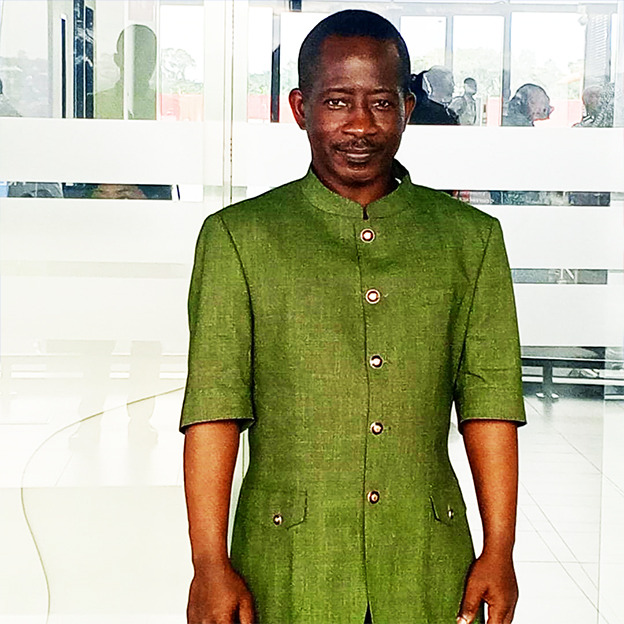
Sarki Abdullai Ali Barry, Asanteman Zongo Nkosuohene

The Asanteman Zongo Nkosuohene, Sarki Abdullai Ali Barry, has lauded the virtues and prudent leadership of Otumfuo Osei Tutu II, for blending divine wisdom, knowledge, education and tradition to reshape the chieftaincy institution, not only in Ghana but across the globe.

By this singular initiative, Sarki Ali Barry, noted that the Ashanti Overlord has put the Ashanti Kingdom on a higher pedestal from its previous position.

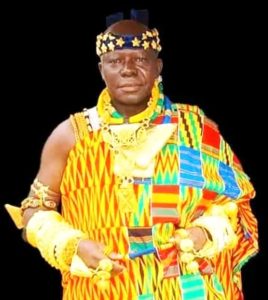
Otumfuo Osei Tutu II – Overlord of Asante Kingdom

The Asanteman Zongo Nkosuohene described Opemsuo Osei Tutu variously as a stabilising force, a great national asset and a mentor to all and sundry, adding his uniqueness and splendor, should make every Ghanaian proud.

Sarki Ali Barry was speaking to a section of the media at the Prempeh I International Airport in Kumasi, on Tuesday, August 13, 2024 on his arrival from the United Kingdom, where he accompanied His Royal Majesty, Otumfuo Osei Tutu II, the Asantehene, to London for the maiden celebration of the Special Akwasidae festival, in commemoration of his 25th anniversary on the Golden Stool.

The Zongo Nkosuohene, a proud member of Otumfuo’s delegation, said “Otumfuo has genuinely and passionately held the people of Ashanti Kingdom and Ghana together, as evidenced in the rich Ashanti and Ghanaian culture in London to the admiration of both blacks and whites.”

He said the London event has fostered unity among Ghanaians and the outside world and strengthened bilateral relations among nations, noting that the desire of world leaders to visit Ghana is an ample testimony of Otumfuo as a symbol of peace.

He commended the Asantehene for ultimately and holistically changing the face of the chieftaincy institution to a new facet and averred that posterity will forever be grateful to him.

Sarki Ali Barry has pledged to continue to promote and contribute to the development of the Zongo communities in the Ashanti Region, the role assigned to him by Otumfuo.

Youth tasked to be at forefront of climate change 

0
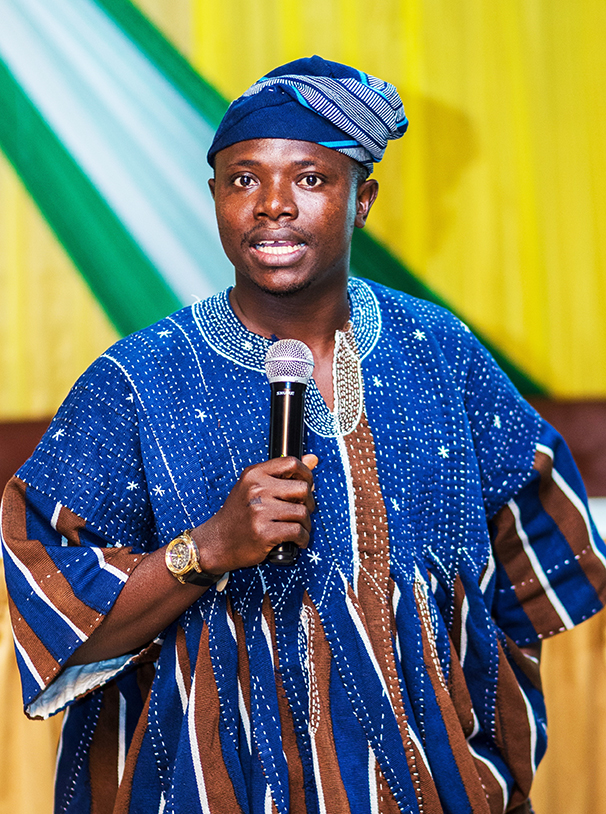
Dr. Simon Boateng

Dr. Simon Boateng, a lecturer at the Akenten Appiah-Menka University of Skills Training and Entrepreneurial Development (AAMUSTED), has reminded the youth to take keen interest in climate change and how it is adversely impacting the earth.

The lecturer said those currently involved in activities fuelling climate change may not be alive to endure its devastating effect, but unfortunately, the young generation appear not to be interested in the issue.

According to him, what is more serious is that by the time we get to the peak of the problem, many of the people who are at the forefront of the environmental degradation might not be alive, and the next generation will face the consequences.

Dr. Boateng was speaking to some university students at a climate change sensitisation forum in Kumasi.

Student participants at the forum

The forum was put together by the Students’ Movement for Climate Resilient Environment (SMovCaRE), with funding from the Global Green Grants Fund, and attended by students from AAMUSTED and the Kwame Nkrumah University of Science and Technology (KNUST).

SMovCaRE seeks to mobilize students to embark on a climate change sensitisation campaign with the objective of addressing climate issues through youth advocacy.

Dr. Boateng emphasized the need for active youth involvement in climate actions as the future leaders destined to inherit the consequences of the wanton environmental degradation.

He cautioned the public to take serious note of the extreme weather conditions with increasing natural disasters now three times more common than 50 years ago, according to the United Nations (UN).

According to him, the effects of climate change had resulted in flooding in parts of the country that were not known to be flood-prone areas, adding that even well-planned cities in the western world were struggling to deal with flooding because of climate change.

He noted that carbon dioxide levels are at record highs globally, and for that matter, heading for more than three degrees rise by the end of this century, according to Science Alert.

The lecture observed that increasing the quantum of carbon dioxide, which generates heat, and cutting down trees whose function is to absorb it means the world temperatures would continue to increase.

Mr. Appiah Bosomtwi, an assistant lecturer at KNUST and environmental consultant, reiterated the need for young people to be active participants in climate change conversations and commit to efforts towards combating the global problem.

He stated that the youth should dedicate most of the time they spend on social media to seek information on climate change and advocate behavioural change among their peers and the larger society on the awareness creation of the effects of climate change.

Mr. Bosomtwi urged them to start at the individual level to desist from practices that drove climate change.

He said it was important for the youth’s voices to be heard in pertinent national conversations as they prepared to take over the leadership mantle soon.

He disclosed that plans were underway to organise debates on climate change as part of strategies for awareness creation among young people.

He said the youth were future leaders and must be interested in such issues, hence the need to target them to ensure a sustainable fight against activities driving climate change.

The Ghanaian Chronicle