Home Blog Page 124

Why Gold has hit its worst weekly drop since 1983 — and why investors should hold steady

0
Edward Nana Yaw Koranteng

When the Safe Haven Breaks. Gold’s recent collapse which is its worst weekly performance since 1983, has sent shock waves through global markets and a drop in.


Introduction: When the Safe Haven Breaks.

Gold’s recent collapse which is its worst weekly performance since 1983, has sent shock waves through global markets and a drop in gold stocks and ETFs.

For an asset long regarded as the ultimate store of value, such a sharp correction appears counterintuitive and inverse, particularly against a backdrop of geopolitical conflict and rising global uncertainty stemming from the Ukraine Russia war, the US/Iran/Israel war and ongoing trade wars.

Yet, this decline is not a contradiction. It is a re-pricing event driven by macroeconomic forces, liquidity pressures, and shifting monetary expectations.

More importantly, it offers a critical lesson. Short-term price volatility does not invalidate long-term structural value and the need for the price collapse to be well understood.

Understanding the Collapse:

The magnitude of gold’s decline is best understood not as a single shock, but as a convergence of powerful drivers.

  1. The US Interest Rate Shock
    The most decisive factor has been the abrupt shift in expectations around U.S. monetary policy. Markets had anticipated multiple rate cuts as seen earlier this year with rate cuts. Instead, inflationary pressures, driven by rising energy prices have forced a “higher-for-longer” interest rate outlook which has led to a Bond yields surge, increasing the opportunity cost of holding gold. Gold, as a non-yielding asset, suffers directly in such an environment.


  1. The Strengthening US Dollar
    A stronger dollar compounds the pressure: The expected higher yields have led investors to the dollar as a safe haven thereby increasing demand for the dollar. Gold therefore increasingly becomes more expensive globally, demand weakens and capital flows shift toward dollar-denominated assets. The simultaneous rise in yields and the dollar created a double headwind for gold prices.


  1. Forced Liquidations and Margin Calls

One of the most underappreciated drivers is liquidity stress. As equity markets declined, institutional investors faced margin calls. Therefore gold being highly liquid was sold to raise cash. This dynamic is critical, gold was not sold because it was weak, but because it was liquid.


  1. Geopolitical Paradox: War That Hurts Gold

Traditionally, geopolitical crises as we are seeing should support gold but this time, the opposite occurred. Why? Because the geographical spectrum of the conflict pushed oil prices higher.


Higher oil → higher inflation
Higher inflation → tighter monetary policy
Tighter policy → weaker gold

This inversion explains why gold fell despite global instability.

  1. Speculation Around Sovereign Selling

Markets also reacted to speculation that some oil-dependent economies facing revenue constraints could liquidate gold reserves. While not fully confirmed, the logic is credible as we saw economies like Turkey and Ghana liquidate gold reserves. Research shows that the confluence of disrupted oil flows, fiscal pressures leading to need for liquidity and even the perception of such selling can accelerate market declines


The 1983 Parallel.


The comparison to 1983 is not incidental. That period was also marked by:

oil market disruption,
forced selling by oil-producing nations leading to sharp, rapid declines in gold prices.

Today’s market reflects a similar structure:

Underlying liquidity pressure, not loss of confidence, is driving the sell-off which means the market or some investors may be getting something wrong.

What the Market Is Getting Wrong:

Despite the sharp decline, the underlying fundamentals of gold remain intact:

Central banks continue to accumulate reserves,
Global debt levels remain elevated,
Geopolitical fragmentation persists
Inflation risks have not disappeared.

Even after the decline, gold remains significantly higher year-on-year, underscoring that this is a correction within a broader bullish cycle, not a structural collapse. This is why it may be good for investors to hold steady.

Why Investors Should Hold Steady

Market history consistently shows that sharp corrections often precede stronger rallies Liquidity-driven sell-offs are temporary and structural demand reasserts itself.

Analysts continue to project strong long-term upside for gold, supported by macroeconomic fundamentals and central bank demand.

For disciplined investors, this is not a moment for panic—but for perspective and positioning. The factors which underpinned the gold price trajectory remains unchanged and and any shift in this Iran war will lead to oil price falling and inflation reprieve for the USA.

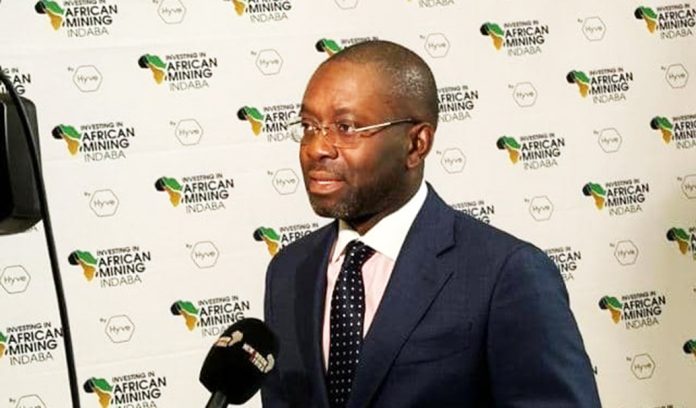
The author, Edward Nana Yaw Koranteng is a mining investment consultant, an advisor to the Africa Mining and Commodities Fund and the former CEO of Ghana’s Minerals Income Investment Fund

Source : Citi News

Editor’s note: Views expressed in this article do not represent that of The Chronicle

Editorial: Ghana’s Looming Tomato Shortage; Government Must Act Decisively

0
Tomatoes

According to a story published by myjoyonline, the Chief Executive Officer of Akuafo Nketewa, Dr Charles Nyaaba, has strongly criticised the Minister for Food and Agriculture, Eric Opoku, over government assurances regarding Ghana’s looming tomato shortage. Speaking on Joy FM, Dr Nyaaba warned that communication alone cannot resolve the anticipated supply gap expected between now and mid-May.

While government has outlined plans under the Feed Ghana Programme to significantly expand tomato cultivation from 1,000 acres to 40,000 hectares, Dr Nyaaba insists that the strategy lacks credibility due to the absence of direct farmer engagement. He noted that farmers, who are central to production, have not been consulted and remain uncertain about implementation details.

He further questioned how Ghana intends to bridge the supply deficit during the lean season, particularly as the country heavily depends on imports from Burkina Faso, where Ghanaian traders are reportedly facing restrictions.

Dr Nyaaba emphasised that infrastructure such as market centres cannot substitute for actual production, warning that without a coordinated approach involving farmers, the shortage could worsen and trigger price hikes. He concluded that a shift from public relations to practical engagement is urgently needed.

The Chronicle finds the unfolding tomato shortage crisis as another test of policy credibility and agricultural governance. At its core, the issue is not merely about food supply; it is about the persistent disconnect between policy pronouncements and realities on the ground.

The assurances offered by the Minister for Food and Agriculture, Eric Opoku, under the Feed Ghana Programme, may appear ambitious on paper. Expanding tomato cultivation to 40,000 hectares is laudable, but ambition without execution is hollow.

The Chronicle takes the view that the current situation exposes a systemic weakness, the failure to place farmers at the centre of agricultural policy.

Tomato production in Ghana is highly seasonal, with a well-known lean period between December and May. For decades, the country has relied on imports from Burkina Faso to bridge this gap. Any disruption to this supply chain whether due to trade restrictions, border tensions, or logistical constraints inevitably results in shortages and price spikes.

This reality is neither new nor unforeseen. Therefore, the current crisis cannot be dismissed as an unexpected development; it is the result of inadequate forward planning.

Government must move beyond assurances and adopt immediate, practical interventions. First, there is an urgent need for direct engagement with farmers. Agricultural transformation cannot be driven from conference rooms or media studios. Farmers require timely access to inputs such as improved seeds, fertilisers, irrigation facilities, and extension services. Without these, production targets will remain theoretical.

Second, we must invest in irrigation infrastructure to enable year-round tomato cultivation. The reliance on rain-fed agriculture continues to undermine food security. Boreholes and small-scale irrigation schemes, if properly implemented and maintained, could significantly reduce seasonal volatility.

Third, the country must rethink its dependence on a single external source for tomatoes. Diversifying import sources while strengthening local production would provide a buffer against external shocks. At the same time, building storage and processing capacity, such as tomato paste factories can help manage surplus during peak seasons and stabilise supply during lean periods.

Equally important is the need for transparency and accountability. Claims of engaging 81 communities and mobilising farmers must be verifiable. Policy credibility depends on trust, and trust is built through consistent and measurable action, not rhetoric.

The Chronicle believes that the tomato shortage is a symptom of a broader structural challenge within Ghana’s agricultural sector. It underscores the urgent need for a coordinated, farmer-driven approach to food production.

Ghanaians do not need reassurances; they need results. Government must act decisively, engage stakeholders meaningfully, and implement sustainable solutions to prevent this recurring crisis from becoming a permanent feature of the national economy.


For more news, join The Chronicle Newspaper channel on WhatsApp: https://whatsapp.com/channel/0029VbBSs55E50UqNPvSOm2z

ECG delivers an impressive operational performance in 2025

0
Eastern Regional General Manager of ECG, Ing. Emmanuel Appoe,

The Eastern Regional office of the Electricity Company of Ghana (ECG) has delivered an impressive operational performance in 2025, underpinned by improved power stability, strategic infrastructure investments, and a renewed crackdown on illegal electricity usage.

Addressing journalists at a media engagement held in Koforidua on March 25, 2026, the Regional General Manager, Ing. Emmanuel Appoe, described the year as “eventful and successful,” highlighting significant strides in ensuring reliable power supply across the region.

He credited the success largely to the implementation of the “Operation Zero Tripping” initiative, which tasked technical teams to conduct routine inspections, fix faults, and carry out rapid interventions across the network.

The initiative, coupled with ECG’s nationwide “Operation Keep the Lights On” campaign, significantly reduced outages and positioned the Eastern Region among the top-performing zones in power stability nationwide.

A key advantage, according to Ing. Appoe, lies in the region’s ring system network, which enables alternative power routing during maintenance work—ensuring that many communities continue to enjoy an uninterrupted supply even when parts of the system are under repair.

To further strengthen reliability, ECG invested over GH¢7.4 million in 2025, which supported the installation of eight new transformers in high-demand areas, the upgrading of five existing units, and the completion of 40 network expansion and improvement projects, measures that have collectively enhanced service delivery.

In addition, all 14 districts in the region are benefiting from the ongoing VIT Project, a flagship initiative designed to detect and isolate faults swiftly, and once fully completed, the project is expected to significantly reduce both the frequency and duration of outages.

Despite these gains, the region continues to grapple with challenges, including vandalism, bushfires, and road accidents involving electricity infrastructure.

In 2025 alone, 54 utility poles were destroyed by bushfires, while 13 transformers were damaged through vehicular collisions. Illegal chainsaw operations also contributed to network disruptions.

Ing. Appoe expressed concern over the growing trend of perpetrators fleeing the scene after causing damage, leaving ECG to shoulder the cost of repairs, and therefore called on the public to help safeguard power infrastructure.

On customer service and metering, the region currently serves over 466,000 active users and through its ongoing Loss Reduction Project, ECG has installed more than 69,000 prepaid meters across seven districts, with an eighth district currently piloting the initiative.

The company also intensified its fight against power theft, recovering over GH¢1.5 million from offenses including meter bypassing, tampering, and illegal connections.

Looking ahead, Ing. Appoe assured customers of continued improvements in 2026, urging timely bill payments and strict compliance with electricity regulations, emphasizing that sustained progress depends heavily on public cooperation.

He further noted that many widespread outages are often linked to supply constraints from the Ghana Grid Company Limited (GRIDCo), which provides bulk power to ECG for distribution.


For more news, join The Chronicle Newspaper channel on WhatsApp: https://whatsapp.com/channel/0029VbBSs55E50UqNPvSOm2z


Former MCE sounds alarm over rising  encroachment on public lands

0
Fleischer Samuel Kwabi

A growing wave of land encroachment and disputed ownership claims is threatening public development at Suhum, prompting a strong warning from former Municipal Chief Executive (MCE), Fleischer Samuel Kwabi.

Mr. Kwabi has raised serious concerns over what he describes as the increasing takeover of lands legally reserved for government projects by some families and private individuals within the municipality.

According to him, these lands have long been properly documented and designated for public use, making the current claims not only unlawful, but also a direct threat to development.

He identified several critical sites currently under pressure, including the Kwasi Larbi Cemetery, the Event Park project site, and the proposed lorry station terminal at the Nartey Anoma Electoral Area.

He warned that continued encroachment on these lands could stall essential infrastructure projects and deny residents access to key public services. Mr. Kwabi issued a firm caution to those involved, urging them to desist immediately or face the full rigors of the law.

He stressed that the Assembly retains legal ownership of the lands and will not hesitate to initiate court action, demolition exercises, or enforcement measures against unauthorized occupants.

He further explained that under Ghana’s land governance framework, public lands acquired and documented for state use cannot be reclaimed by individuals without due legal process, making many of the ongoing assertions of ownership highly questionable.

Reflecting on his time in office, Mr. Kwabi noted that the issue is not new, revealing that land disputes and encroachment were persistent challenges during his administration and even earlier under his predecessor, Margaret Darko Darkwa.

He added that the current municipal chief executive, Lydia Ohenewa Sarah, continues to battle the same problem, raising concerns about systemic weaknesses in land protection and enforcement.

Development at Risk

Urban planners and local authorities warn that unchecked encroachment could delay or completely halt planned infrastructure projects and increase the cost of development due to litigation and compensation claims.

Others are leading to unplanned settlements and poor urban layout and undermine investor confidence in municipal projects.

The situation has reignited public debate on land administration in Suhum and across Ghana. Stakeholders are calling for stronger collaboration between the Assembly and the Lands Commission.

The former MCE further mentioned the digital mapping and proper demarcation of public lands, swift legal action against encroachers, and public education on land ownership laws.

Mr. Kwabi emphasized that protecting public lands was a shared responsibility, urging traditional authorities, families, and residents to support the Assembly in preserving lands meant for the collective good.

As pressure mounts, many residents are now looking up to authorities for decisive action to safeguard public assets and ensure that development projects intended to improve lives are not derailed by unlawful land claims.


For more news, join The Chronicle Newspaper channel on WhatsApp: https://whatsapp.com/channel/0029VbBSs55E50UqNPvSOm2z

Ultra-modern children’s centre  inaugurated at Suhum

0

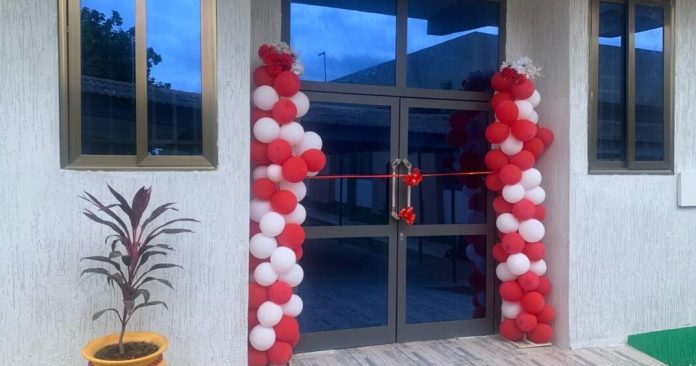
A new chapter in child healthcare has begun in Eastern Region with the official commissioning of a state-of-the-art Children’s Medical and Wellness Center at the Suhum Government Hospital, an intervention widely described as a game-changer for pediatric care.

The ultra-modern facility was fully funded and constructed by Love Without Walls, led by Dr. Hartford Dawson, a Jamaican-born philanthropist based in the United States. His long-standing commitment to improving healthcare delivery has culminated in what many are calling one of the most impactful health investments in the region in recent years.

The commissioning ceremony drew a distinguished audience, including senior officials from the Ghana Health Service, the Municipal Chief Executive, the Member of Parliament, pediatric experts, traditional leaders, clergy, security service commanders, and residents.

A Facility Designed for Excellence

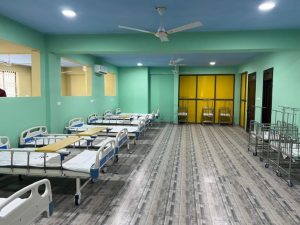
The Children’s Medical and Wellness Centre is purpose-built to provide holistic and specialized care for children. It features a 40-bed children’s ward, a 30-bed Neonatal Intensive Care Unit (NICU), a fully equipped pharmacy and modern laboratory, an Outpatient Department (OPD), dedicated IT and administrative units, and spacious waiting areas and en-suite washrooms.

Health professionals say the inclusion of a well-resourced NICU is particularly critical, as it will significantly improve survival rates for premature and critically ill newborns—an area that has long posed challenges in many regional health facilities.

The project traces its origins to 2014, when Dr. Dawson visited the hospital and was struck by the severe overcrowding in the children’s ward. Moved by the situation, he made a bold commitment to build a modern facility that would ease congestion and elevate the standard of care.

Over a decade later, that vision has been realized, symbolizing not just infrastructure development but the power of sustained humanitarian partnership.

The new center is expected to reduce congestion in existing wards, improve emergency response for child health cases, enhance staff efficiency and service delivery, and serve as a referral hub for neighboring districts.

Medical practitioners at the event noted that the facility aligns with Ghana’s broader healthcare goals, including reducing child mortality and improving maternal and neonatal outcomes.

Call for Sustainability

While celebrating the achievement, stakeholders emphasized the need for proper maintenance, staffing, and continuous support to ensure the facility operates at full capacity. Community members were also encouraged to take ownership by safeguarding the infrastructure and utilizing services responsibly.


For more news, join The Chronicle Newspaper channel on WhatsApp: https://whatsapp.com/channel/0029VbBSs55E50UqNPvSOm2z

Health Sector Crisis: Unions protest ‘Power Grab’ reform bill in Abuja

0

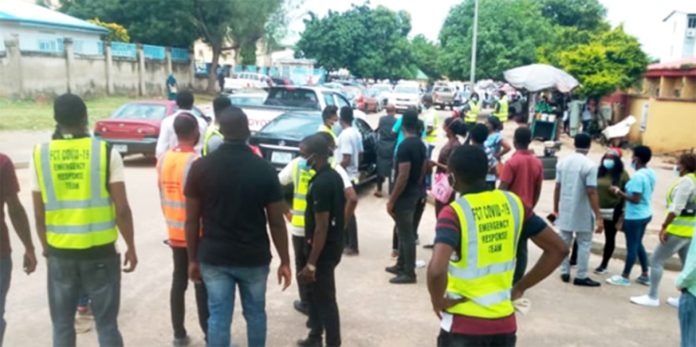
Tension escalated in Nigeria’s health sector on Thursday as hundreds of healthcare workers under the Joint Health Sector Unions and the Assembly of Healthcare Professional Associations staged a protest in Abuja over what they described as a “dangerous power shift” in a controversial reform bill before the National Assembly.

At the centre of the dispute is a provision that, according to the unions, seeks to centralise regulatory authority by placing all healthcare professions under the Medical and Dental Council of Nigeria.

The demonstrators argued that such a move would undermine the autonomy of existing professional councils and tilt the sector in favour of medical doctors at the expense of other healthcare professionals.

“This is not reform; it is domination,” a protest leader said, reflecting widespread concerns among participants who fear the bill could relegate non-physician health workers to subordinate roles within the system.

The unions maintained that Nigeria’s healthcare framework is designed as a multi-professional system, with each cadre regulated by its own council. They warned that dismantling this structure could breed inequality, weaken collaboration, and ultimately affect service delivery nationwide.

Amid chants and placards, the protesters vowed to escalate their action by marching to the National Assembly Complex to formally present their grievances and demand an immediate review of the bill.

The protest follows an earlier notice issued by the unions calling for nationwide mobilisation against the proposed legislation.

Stakeholders say the unfolding standoff could have far-reaching implications for healthcare governance in Nigeria, particularly in areas of professional autonomy, workforce harmony, and the quality of patient care.

Source: Vanguard

2027: It will be immoral, improper for PDP to endorse Tinubu – Turaki faction

0
PDP

The National Publicity Secretary of the Taminu Turaki-led Peoples Democratic Party, PDP, Ini Ememobong, says it will be immoral and unjust for the party to endorse President Bola Tinubu in the 2027 general elections.

Ememobong made the assertion on Thursday on Arise Television’s ‘Morning Show’.

He expressed optimism that during the PDP reconciliation process, reason will prevail over emotions.

According to him, the Turaki-led faction would insist that the reconciliation strengthens the party as an opposition, not an appendage.

“It is improper, it is immoral, it is unjust, it is unfair for an opposition party of the standing of the Peoples Democratic Party to endorse the presidency or the presidential candidature of President Bola Tinubu of the All Progressives Congress, APC.

“So it’s part of the underpinning principle. We are hoping that reason will prevail over emotions,” he said.

Source: Daily Post

Army urges Gombe residents not to panic, begins shooting exercise Monday

0
Gombe State map

The Nigerian Army has announced that the 301 Artillery Regiment (General Support) will conduct its first range classification exercise of 2026 in Gombe State.

According to a statement issued on Thursday by the acting Assistant Director, Army Public Relations of the regiment, Lt. Kingsley Ugwuoke, the exercise is scheduled to take place from Monday, March 30 to Tuesday, March 31, 2026, at the regiment’s Small Arms Range in Liji, Gombe State.

Ugwuoke explained that the exercise is part of the Army’s routine training programme aimed at enhancing operational efficiency.

“The exercise is a major training requirement for troops of the Nigerian Army, conducted twice a year across units and formations nationwide,” he said.

He added that the training is designed to sharpen the skills of personnel in weapon handling and improve their overall combat readiness.

“It is aimed at refreshing the skills of professional soldiers, thereby enhancing their proficiency in weapon handling to achieve effective results during military operations,” he stated.

Ugwuoke further noted that the exercise would also help assess the troops’ level of preparedness for battle and other assigned duties.

While appealing to residents of nearby communities, the Army urged calm during the period of the exercise.

“All communities situated around Liji, particularly those near the shooting range, are advised not to panic on hearing gunshots during the exercise,” he said.

He also warned farmers and hunters operating within the vicinity to steer clear of the range area throughout the exercise period for their safety.

“We urge members of the public, especially those farming or hunting within the range area, to avoid the location during this period,” he added.

The Army called on the media and community leaders to help disseminate the information to ensure compliance and public safety.

Kano woman who delivered quintuplets dies

0
The quintuplets delivered by Hafsatu Yusuf receiving medical care at Murtala Muhammad Specialist Hospital, Kano.

A Kano woman, Hafsatu Yusuf, who recently gave birth to quintuplets at Murtala Muhammad Specialist Hospital, has died.

Confirming the development in a telephone interview with PUNCH Online on Thursday, the Public Relations Officer of the Kano State Ministry of Health, Nabilusi Abubakar K/Na’isa, said the woman died around 2am at the hospital.

He disclosed that the woman experienced persistent bleeding after delivering the five babies — three boys and two girls — and efforts by medical personnel to stabilise her were unsuccessful.

“She had been bleeding since after delivery, and all efforts by doctors to control the situation were unsuccessful,” he said.

K/Na’isa added that the deceased had since been buried in accordance with Islamic rites at her residence in Hotoro.

“We are appealing to the public to support the babies with milk and other essential items,” he said.

He, however, confirmed that the newborns are in stable condition and are currently receiving medical attention at the hospital.

PUNCH Online reports that the incident comes barely a day after the Kano State Government announced that it had taken responsibility for the medical care of the mother and her babies following the delivery at the facility.

In an earlier statement, the ministry disclosed that the quintuplets were delivered successfully and that both the mother and the newborns were placed under special care by medical personnel.

The husband of the deceased, Malam Salisu Nufi’u, had expressed appreciation to the state government for the intervention, describing it as timely support.

The government also reiterated its commitment to improving maternal and child healthcare services and reducing mortality rates across the state.

Source: Punch

Exim Bank resets to intensify Ghana’s export capacity 

0
`GEXIM

Mr. Sylvester Adinam Mensah, Chief Executive Officer (CEO) of the Ghana Export‑Import Bank (GEXIM), says the bank is resetting its investments to transform Ghana’s industrial and export landscape.

Delivering a keynote address at the GEXIM @10 International Conference in Accra on Wednesday, He said the reset would involve strengthening partnerships and introducing tailored financial products, including export credit guarantees, concessional working capital, agribusiness funding, blended finance and equity investments.

The two‑day conference held on the theme: “A Decade of Enabling Trade and Industrial Transformation: Resetting GEXIM for the Next Frontier,” provided a platform to assess progress, exchange ideas and plan for the bank’s future.

Mr Mensah said the new strategy for 2025 to 2030 would be anchored on five pillars: deepening solutions‑oriented financing; focusing on scalable sector platforms; enhancing Micro, Small and Medium‑sized Enterprises (MSMEs) competitiveness and export readiness, strengthening market access and trade facilitation and modernising the institution.

He explained that priority sectors would include agro‑processing, garments, pharmaceuticals, industrial oils and food value chains such as rice and poultry, aimed at building competitive production ecosystems.

The goal, he said, was to boost non‑traditional exports, enhance food security, create jobs and increase foreign exchange earnings.

The CEO of GEXIM called for strong partnerships with government, regulators, investors and industry players to address challenges such as high capital costs, weak logistics systems and limited market information.

“As GEXIM reflects on its achievements, the focus now turns to leveraging innovative solutions, partnerships, and policy alignment to propel Ghana’s trade and industrial transformation in the coming decade,” he said.

Mr. Sylvester Adinam Mensah noted that the bank had expanded its loan portfolio from under US$70 million to nearly US$300 million by the fourth quarter of 2025, supporting hundreds of businesses nationwide.

He emphasised that Ghanaian enterprises required a complete support system, “not just financing,” and pledged that GEXIM would ensure businesses received appropriate and timely financial support while linking production, processing, logistics and market access.

Mr. Sylvester Adinam Mensah said the bank would also enhance advisory services, mentorship, digital tools, financial literacy and market preparation to help businesses transition into global value chains.

He said that reforms would be implemented to improve operational efficiency, governance structures, and service delivery.

By Francis Ntow 

GNA 

The Ghanaian Chronicle