Home Blog Page 1103

Positions on ballot paper won’t change —EC

0
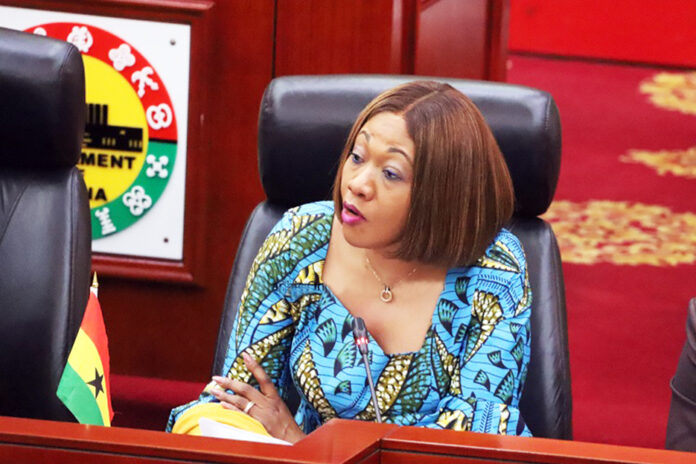
Madam Jean Mensa, EC Chairperson

The Electoral Commission (EC) of Ghana has announced for the information of the general public that it would not alter positions of the presidential candidates on the ballot paper for the December 7 elections.

“Our task here this morning is very simple. We are not here to change positions. We are not here to re-ballot,” she informed the parties. The Chairperson of the EC, Jean Adukwei Mensa, made the announcement on Tuesday, November 12, 2024, during an Inter-Party Advisory Committee (IPAC) meeting.

The announcement followed speculations that the demise of the presidential candidate of the Ghana Freedom Party, Madam Akua Donkor, would result in altering the positions, particularly the candidates below the  number three position that she picked.

However, the EC during the meeting was emphatic that no changes would be made and announced further that the Commission would inform all printing houses to resume work that was 90% complete before the death of the GFP candidate.

“This morning, we are here to inform you of the commission’s decision to maintain the presidential ballot as it is. As you may be aware, and I believe all of you have representatives in the printing houses, we are almost 90% complete with the printing of presidential ballots,” Jean Mensa said.

REPLACEMENT

The Commission, after being officially informed about the death of the GFP presidential candidate, allowed a 10-day window for the party to submit a replacement in accordance with law. However, the EC boss at the meeting yesterday announced the replacement had been disqualified due to “errors” detected on the nomination forms.

She said the errors were communicated to the party and candidate, but they were not corrected. However, in the interest of time, she said the commission decided to disqualify the candidate and has officially written to inform him.

NAME AND IMAGE

The electoral stakeholders and the general public have expressed concerns over possible confusion in the minds of the voters should the GFP withdraw its nomination, at a time the presidential ballots had been printed.

The conversation was that should the party successfully field a new candidate, the papers that had already been printed would be discarded and a new one done with the name and image of the GFP replacement.

Though 90% of the presidential ballots have been printed with the image and name of the late Akua Donkor, the EC says it would go ahead to complete the exercise to save money for the nation.

Jean said, “And you are also aware that following the passing of Madam Akua Donkor, we requested the printing houses to cease printing until the law had taken its course. Now that the presidential candidate or the nominee has been disqualified, the commission would like to inform you that the printing would proceed on the current ballot as is, in the interest of time, and to save this country millions of cities.”

“It will proceed with the ballot that bears the name and the image of the name of the Ghana Freedom Party, their symbol, and the image of Madam Akua Donkor,” she added.

Meanwhile, in order to prevent some voters casting their ballots for the dead, the EC chair said, “We believe that a lot of discussions and advertisements will go out to prevent the citizenry from voting for her.”

Supreme Court settles impasse over 4 vacant seats in parliament

0
CJ, Torkornoo, and Speaker Bagbin

The Supreme Court of Ghana, in a 5-2 majority decision, has declared Speaker of Parliament Alban Sumana Kingsford Bagbin’s pronouncement of four parliamentary seats as vacant unconstitutional.

The ruling came in the case of Afenyo-Markin v. Speaker and Attorney-General (AG), with the Court stating that the Speaker’s action overstepped constitutional bounds.

Chief Justice Gertrude Sackey Torkornoo, along with Justices Mariama Owusu, Samuel Asiedu, Ernest Gaewu, and Yaw Asare Darko, formed the majority opinion. Justices Amado Moro Tanko and Avril Lovelace Johnson dissented.

The Court’s detailed judgment and the full rationale behind the decision are expected by the end of the day.The case was brought to the Supreme Court by Alexander Afenyo-Markin, with former Attorney-General Joe Ghartey representing him.

Both Afenyo-Markin and Attorney-General Godfred Yeboah Dame were present for the proceedings, though Speaker Bagbin and his counsel were notably absent.

Following the session, Attorney-General Dame addressed the media, underscoring the finality of the Supreme Court’s ruling.


 “The Supreme Court has delivered its decision with remarkable clarity, leaving no room for misinterpretation,” Dame said.

He emphasized that “with a decisive 5-2 majority, there is no basis for any review or reconsideration; the court has spoken, and that judgment must be respected.”

Mr. Dame warned against any efforts to undermine the Court’s authority, stating that “failure to comply with a Supreme Court order would lead to a breakdown of democratic order and societal decay—an outcome that no one should entertain.”

He criticized calls by some political figures for negotiations or alternative solutions to the Court’s decision, asserting that the appropriate venue for legal issues is the judiciary.

The Attorney-General further stated the importance of the Court’s interpretation of Article 97(g)(h) of the Constitution, which he said provided a necessary resolution to a contentious issue.

“Respect for court orders is non-negotiable in any lawful society,” Dame affirmed. “Regardless of rank, all must abide by the rule of law.”

Former Attorney-General, Joe Ghartey echoed Dame’s sentiments, declaring that the Constitution was the true victor of the ruling. “Nobody has lost; it is the Constitution that has won,” Ghartey, who is also the Member of Parliament for Essikado-Ketan, told journalists.

In his own response to the ruling, Majority Leader Alexander Afenyo-Markin expressed hope that Speaker Bagbin and the National Democratic Congress (NDC) members in Parliament would respect the decision, emphasizing its significance for Ghana’s democratic integrity.

“We expect our colleagues, including Mr. Speaker, to respect the outcome of this case so we can move on as a nation,” Afenyo-Markin said. “Ghana shines in the eyes of the people in terms of democracy, and this is another feat we have achieved. It is a matter of constitutional interpretation; we should all respect it and move on.”

FREE TERTIARY EDUCATION FOR COCOA FARMERS’ CHILDREN: A CALL TO SUPPORT DR. BAWUMIA AND THE NPP

0
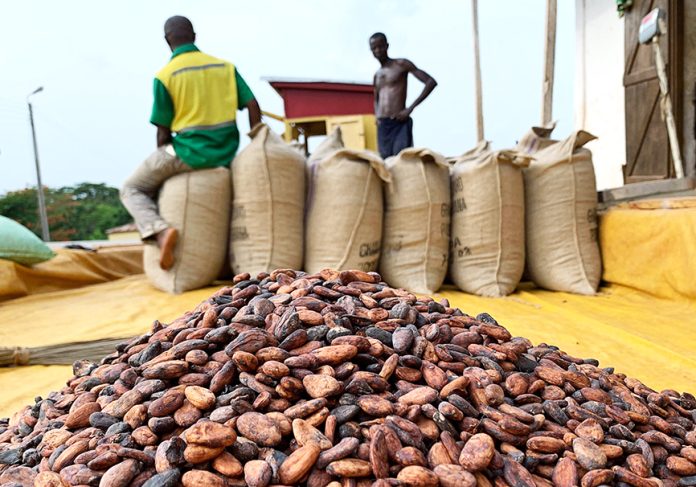
Dried cocoa beans


By Nana Asare Baffour

The recent announcement by the Ghana Cocoa Board (COCOBOD) to provide free tertiary education for the children of cocoa farmers marks a significant shift in educational and social policy. This landmark initiative recognizes the substantial contributions of cocoa farmers and ensures their children have the opportunity to access quality higher education at no cost. Such a bold move demonstrates the government’s commitment to equity and support for the farming community in education and economic development, championed under the current administration’s vision of transforming Ghana’s educational landscape.
Cocoa farmers have long been the backbone of Ghana’s economy, generating billions in revenue annually and making the country one of the leading cocoa exporters globally. Despite their dedication and hard work, cocoa farmers have often lacked access to the full benefits their contributions warrant. This new initiative seeks to address that imbalance by offering substantial support to their families, providing a significant and well-deserved incentive for farmers.
The promise of free tertiary education stands as an impactful upgrade from the previous cocoa scholarship program. By extending full coverage to tertiary education, the government takes a progressive step that will empower future generations, bringing economic stability and social mobility to cocoa-growing communities.
For this program to succeed, robust systems of data collection and management are essential. Accurate data on farmers and their children will ensure that the initiative reaches its intended beneficiaries. Through systematic data collection, COCOBOD and government bodies can prevent any manipulation, guaranteeing that the program remains a transparent, corruption-free effort solely for the benefit of cocoa farming families. By prioritizing accountability, this initiative is designed to inspire trust and confidence in the government’s administration.
This historic intervention speaks volumes about the NPP’s commitment to social equality and educational opportunity, underlining Dr. Mahamudu Bawumia’s role in advocating innovative policies that address the core needs of Ghanaian families. Dr. Bawumia has consistently emphasized policies that drive digital transformation, transparency, and economic inclusivity. His leadership represents a blend of visionary policy-making with a deep understanding of how to leverage Ghana’s resources to create practical benefits for all.
A vote for Dr. Bawumia is a vote for continued transformation and progress. His leadership, along with the parliamentary candidates representing the NPP, promises to extend similar opportunities across various sectors, ensuring that no Ghanaian is left behind. This program is one of many initiatives that emphasize the NPP’s prioritization of rural and underserved communities, delivering tangible benefits that will reshape Ghana for generations to come.
As Ghanaians, we have witnessed the positive changes and development efforts driven by the NPP administration. The introduction of free tertiary education for children of cocoa farmers illustrates the NPP’s commitment to equitable growth, ensuring that the country’s prosperity reaches every family, contributing to Ghana’s progress.
This is a time for Ghanaians to rally behind leaders who deliver on their promises and innovate for the future. By voting for Dr. Bawumia and NPP parliamentary candidates, we endorse a vision of fairness, opportunity, and sustainable development for all. Let us stand together and ensure that this progress continues, casting our votes for the leaders who are ready to transform Ghana’s future.

Bagbin Runs Away From Afenyo? …Fails To Make Appearance At Supreme Court Yesterday

0
Alban Sumana Kingsford Bagbin, Speaker of Parliament

Alban Sumana Kingsford Bagbin, Speaker of Parliament of the Republic of Ghana, did not appear before the Supreme Court on Monday, November 11, 2024 despite prior adjournment allowing him two weeks to file a response in a legal challenge regarding the declaration of four parliamentary seats as vacant.

The absence of both Speaker Bagbin and his Counsel, Thaddeus Sory, who had been given until this date to submit necessary legal documents, raised strong reactions from the Attorney-General, Godfred Yeboah Dame.

The suit, filed by Effutu MP, Alexander Kwamina Afenyo-Markin, contests Speaker Bagbin’s declaration of the four seats as vacant.

On October 30, 2024 Mr. Sory had informed the court that he needed further instructions from his client before proceeding.

The Supreme Court, presided over by Chief Justice Gertrude Sackey Torkornoo, granted Bagbin’s legal team a two-week extension to file their submissions.

Yet, on the return date, neither Bagbin nor his Counsel appeared, and no documents were filed.

Attorney-General Godfred Yeboah Dame, who is also a co-defendant in the suit, argued that the absence and failure to file submissions showed “disrespect” toward the court.

The Attorney-General and leader of the Bar brought this up because such incidents should be deemed disrespect to the honourable court and must not be tolerated.

Mr. Dame had previously questioned the legality of Mr. Sory’s ongoing engagement as Bagbin’s Counsel.

The Bench speculated that Bagbin may have ceased instructing Sory or had not yet provided further directives on the matter.

The case centers on whether Parliament’s composition can be altered by a declaration of vacant seats.

Mr. Dame argued that Parliament, as a representative body of elected MPs, should not be subject to any alteration by an external power.

He referenced the 1992 Constitution, emphasising that Article 97(2) protects MPs from losing their seats even if political parties merge, and that Article 47(5)(5) maintains Parliament’s composition despite any new boundary delineations.

In a detailed interpretation, Mr. Dame argued that Article 97(g)(h), which addresses MPs who cross political lines, serves to prevent elected officials from shifting party affiliations mid-term, thus maintaining the integrity of voter mandates.

He elaborated that aside Ghana’s First Republic, provisions have prohibited MPs from crossing the floor or switching parties during their tenure.

This constitutional restraint was strengthened in the Second Republic (1969), Third Republic (1960) and Fourth Republic (1992).

Mr. Dame pointed to past cases of MPs who were removed under similar conditions, such as Andrew Asiama Amoako, who was ousted in both the Seventh and Eighth Parliaments under different Speakers.

According to the Attorney-General, while former Speaker Prof Mike Quaye’s decision to remove MPs was unconstitutional, Bagbin’s repetition of this precedent does not legitimise it.

Plaintiff’s Counsel, Joe Ghartey, argued that Article 97(g)(h) impacts MPs’ freedom of association and should be carefully applied.

With arguments completed, the seven-member Supreme Court panel, led by Chief Justice Torkornoo, is expected to deliver its judgment today, potentially shaping how constitutional interpretations of parliamentary representation will impact Ghana’s democratic structure going forward.

Alan Storms North & Ahafo -Gains Ya-Na’s Blessings

0
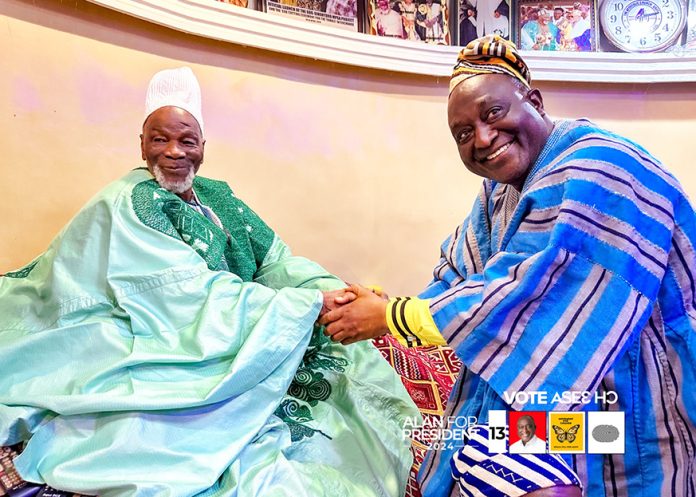
Ya-Na welcoming Alan Cash to his Palace

The Ya-Na Abubakari Mahama II has expressed strong support for Alan Kyerematen’s independent presidential bid, telling him, “Ghanaians have endorsed your candidacy.”

Speaking to Mr Kyerematen and his entourage when they paid a courtesy call on his last week Thursday, Ya-Na, who described his guest as his “friend and son,” urged him to stay resolute in his pursuit of the presidency.

“Even if you don’t win this year, never give up, you will be president one day,” he assured him.

Ya-Na, who spoke through an Interpreter, encouraged Alan’s supporters to rally behind him with financial, psychological and moral support.

Alan acknowledges cheers from fans

“Emphasising that Ghana’s greatest need was development, Ya-Na urged Alan Kyerematen to keep pushing till he leads the country. He presented him with a smock as a token of friendship and expressed his hope that, with Allah’s grace, Alan would one day lead the country. He also prayed for his good health and long life to carry out his vision for the nation.”

Alan Kyerematen on his part outlined his ambitious plan to transform the Northern Regions into the “food basket” of West Africa, aiming to bring economic prosperity to the area through agriculture and industrialisation.

“With my agricultural policies, there will be massive production across these regions, creating numerous job opportunities for our young people,” he said, emphasising the region’s potential as a vital contributor to Ghana’s economy.

To address unemployment in the North, Alan outlined a strategy that combines industrial expansion with agricultural development, aimed at creating stable income sources for young people.

“It’s unfortunate that many of our youth have no chance to earn a living,” he remarked, warning that the lack of jobs could become a security concern if left unaddressed.

Alan also highlighted infrastructure projects like a proposed railway from Kumasi to the North and trade expansion through Tamale international airport.

“This railway will open doors for business and trade, making Northern Ghana a hub for agricultural exports to the West African market,” he explained, adding that enhanced transport networks would ensure more efficient distribution of farm produce, locally and internationally.

Central to Alan’s agricultural plan is the provision of free, improved seed varieties and organic fertilizers to boost yields.

“If we use the right seeds and fertilizers, our farmers will see results far beyond what we achieve now,” Alan noted, aiming to remove the cost barriers preventing many farmers from accessing quality seeds.

Mechanisation is another key aspect of his vision, and he announced plans to establish the Ghana United Farmers Association to help farmers access essential machinery. He criticised current mechanisation policies, saying they limit farmers’ capacity to scale up production.

“With the right support, our farmers can transform their livelihoods and contribute significantly to our economy,” he asserted.

Alan’s job creation vision struck a chord with the Yendi community, who welcomed his approach as a solution to economic stagnation in the North. They praised his commitment to agricultural reform, recognising the job opportunities it could generate for the youth.

“With this plan, our youth will have meaningful jobs and a future in farming,” remarked a local resident.

Alan, accompanied by Alhaji Boniface Sadique Abubakar, Yaw Buaben-Asamoa, Alhaji Hindu and other senior members of the Movement, called for unity and support for his campaign. He pledged to bring lasting prosperity to Ghana’s Northern Regions.

“Together, we can build a region that not only feeds Ghana but all of West Africa,” he declared, leaving the community hopeful for a brighter future.

Since joining the Caravan Tour in the Northern Region, the euphoria and momentum surrounding Alan’s campaign have been phenomenal, energising communities across the region.

Immediately after the northern regional campaign, Alan also toured the Ahafo region.

From Murtala Mohammed, Yendi 

Korsah Commissions Modern Markets In Techiman, Nkoranza

0
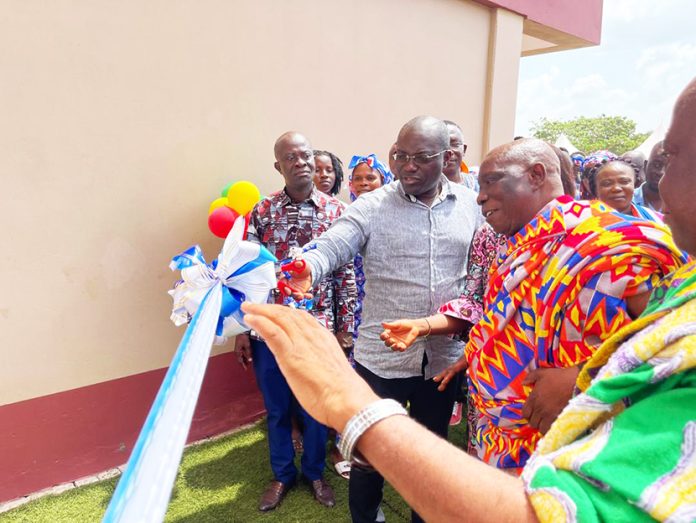
Mr. Martin Adjei-Mensah Korsa together with other dignitaries cutting the sword to officially open the markets.

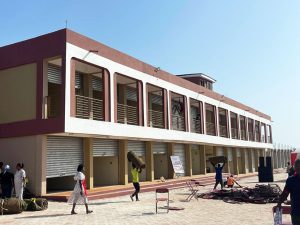
Minister for Local Government, Decentralisation and Rural Development, Martin Adjei-Mensah Korsah, has officially commissioned the Nkoranza Market, as part of the Ghana Secondary Cities Support Program (GSCSP).


One of the Market Commissioned

Speaking at the commissioning ceremony at the Nkoranza South Municipal Assembly, Mr. Korsah highlighted the importance of the GSCSP, a $245 million initiative launched in partnership with the World Bank in 2019, to address the challenges of rapid urbanisation.


With Ghana’s urban population surpassing 50% in 2021, the increased demand for services has strained existing infrastructure and impacted the quality of life in many municipalities.


Techiman South Metropolitan Assembly

The newly completed Nana Abena Market in Techiman now features an array of facilities designed to serve both vendors and the broader community. The Highlights of the project include; 122 lockable stores and 68 market stalls to accommodate diverse commercial activities.


Key service structures, including an administration block, creche, restaurant and dedicated meat shop. Critical safety and health infrastructure, with a new fire post, police post and health post on site.

Enhanced sanitation through modern washrooms and an integrated drainage system, comprising 300 meters of 0.9-meter U-drain, 710 meters of 0.6-meter U-drain and 900 meters of internal drainage.


Additional improvements include a 100-meter road junction upgrade, 1,900 square meters of paved walkways, perimeter fencing for security and 28 streetlights to ensure safety and accessibility throughout the market area.


Nkoranza Municipal Assembly

In Nkoranza, the development features a two-storey block with 50 lockable stores and 100 market stalls, designed to expand local commerce.


Other key facilities include; police and health posts to ensure a safe trading environment, a 6-seater WC facility along with two mechanised boreholes for consistent water supply, a two-unit creche with an office to support families using the market.


 Strengthening Local Economies through Modern Infrastructure

 Speaking at the commissioning, Mr. Korsah emphasised the transformative impact of these facilities. “These projects are a testament to our commitment to creating vibrant, resilient communities.


By modernising our markets and improving infrastructure, we are laying the foundation for sustainable growth and supporting local livelihoods.”

He encouraged municipal authorities to maintain these facilities and ensure they continue to meet the needs of the communities they serve.


The projects reflect the Ministry’s dedication to sustainable urban development in partnership with the World Bank and local stakeholders, bolstering economic resilience in Ghana’s secondary cities.

KON advocates dedicated funds to finance affordable housing projects

0
Oppong Nkrumah speaking at the conference

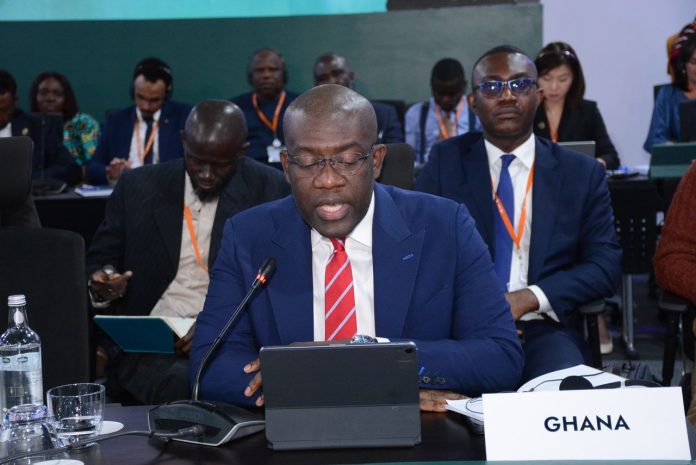
The Minister for Works and Housing, Mr Kojo Oppong Nkrumah has called for an urgent focus on sustainable financing mechanisms to fund affordable housing projects across the country.

He made the appeal during a strategic meeting with the Deputy Executive Director of the United Nations Human Settlements Programme (UN-Habitat), Michal Mlynár, on the sidelines of the World Urban Forum held in Cairo last week.

Minister Oppong Nkrumah, who led a high-level Ghanaian delegation, comprising officials from his Ministry and the Ministry of Local Government and Rural Development, highlighted Ghana’s pressing need for innovative and robust financing solutions that would accelerate housing delivery and ensure long-term urban sustainability.

“Our commitment is to make affordable housing accessible to Ghanaians in both urban and rural areas. However, to succeed, we need to embrace new, sustainable financing models that leverage both private and public sector partnerships,” he stated.

In his discussions with Mr. Mlynár, the Minister emphasised that while Ghana has made strides in infrastructure and economic growth, the housing sector remains underserved, with a persistent housing shortfall affecting millions.

He stressed that sustainable financing would not only address this deficit but would also align with global sustainable development goals (SDGs) by promoting resilient, inclusive and eco-friendly urban communities.

Minister Oppong Nkrumah used the platform to call upon international organisations, development banks and private investors to consider Ghana’s housing sector as a viable, impactful investment opportunity.

“We are actively seeking partnerships that can bring in both technical expertise and financing structures to support our housing agenda. This is not only about providing homes but also about enhancing our communities and ensuring that urban growth is balanced with environmental preservation,” he noted.

The Minister pointed to ongoing initiatives in Ghana aimed at bolstering the housing sector, such as the government’s recent affordable housing projects and district-level housing programmes. He acknowledged the challenges the country faces, including limited access to affordable credit for developers and homebuyers, as well as the high cost of construction materials.

“Addressing these issues requires more than just government intervention; it requires a holistic approach where stakeholders at all levels are committed to a shared vision,” he remarked.

Mr. Mlynár expressed his support for Ghana’s efforts and commended the government’s proactive steps in addressing urban development challenges.

He noted that UN-Habitat stands ready to support countries like Ghana by providing guidance on best practices, technical assistance, and platforms for dialogue with potential funding sources. “The World Urban Forum serves as a hub for knowledge-sharing and partnerships, and we are encouraged by Ghana’s dedication to sustainable urban development,” Mr. Mlynár said.

Meanwhile, Ghana has to accelerate efforts toward the New Urban Agenda through strategic partnerships and local innovation.

Speaking at the twelfth Session of the World Urban Forum, Minister Oppong Nkrumah reaffirmed Ghana’s commitment to implementing policies that foster social inclusion and resilience in housing, with a particular focus on low-income groups and the informal sector.

“Housing is a basic human right and our role as leaders is to ensure that every Ghanaian has access to safe, affordable housing. This is integral to our national development goals,” he said.


The World Urban Forum offered Ghana a unique opportunity to connect with global thought leaders and potential investors.

As discussions unfolded in Cairo, the Ghanaian delegation stressed the importance of proactive, sustainable solutions that would not only alleviate the housing shortage but also promote job creation and economic growth.

This, Minister Oppong Nkrumah concluded, by reiterating the government’s resolve to “redefine the future of housing in Ghana, transforming it into a model for sustainable urban development in Africa.”

Sekondi Court Vacates Its Order Against NDC PC

0
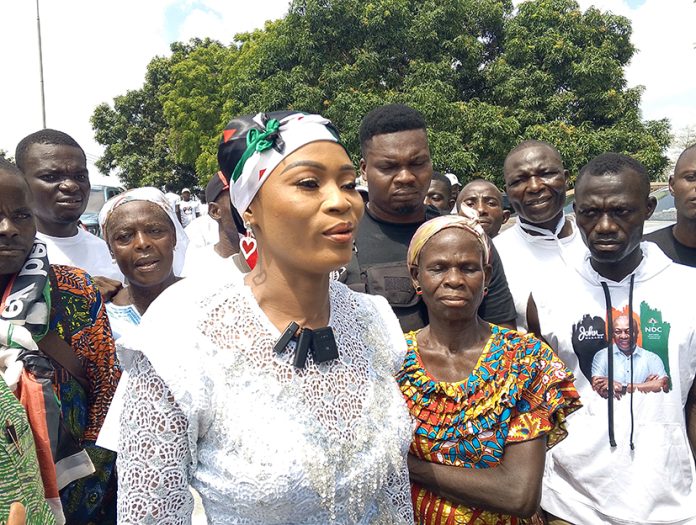
victorious Joana Gyan speaking to the media

The road has now been cleared for Madam Joana Gyan, a Parliamentary Candidate on the ticket of the National Democratic Congress (NDC) in the Amenfi Central constituency of the Western region to contest the December 7 Parliamentary election.
This follows a decision by a Sekondi High Court B, presided over by Justice G.K. Gyan Kontoh to vacate its earlier interlocutory injunction slapped on the candidate.

The court had slapped the injunction order on the candidate as a result of a case brought against the candidate and the National Democratic Congress over the former’s eligibility to contest the internal primary of the party.
Plaintiffs who initiated the suit against the candidate (1st respondent) and the NDC (2nd respondent) sought several reliefs including an annulment of the election that declared the 1st respondent winner plus a perpetual injunction restraining the candidate.

The court subsequently granted an interlocutory injunction against the candidate on 31st May, 2024.
Dissatisfied, Counsel for both the 1st and 2nd defendants filed processes before the same High Court to vacate the interlocutory order.

Counsel Thaddeus Sory, who represented the 2nd Defendant applicant, filed a process to have the whole suit dismissed whilst Godwin Edudzi Tamekloe, representing 1st respondent applicant filed motion to have the Court vacate its earlier injunction order.
Counsel Sory argued that the court inherent jurisdiction have been properly invoked over the application before it to dismiss and set aside the entire suit.

He averred that the question the application first raises was whether there have been a justiciable cause of action and this he answered in the affirmative.
He further argued that the election of 1st defendant, which was a subject of the suit, however, has become moot because it has now been overturned by a new election.

He contended that in political election, it is the party that presented the candidate so the question over who was eligible was a matter of determination by the political party.
As a result, what the plaintiff respondents were seeking to do by this suit was to go into the internal party issue of the political party.

But Counsel for plaintiff respondent, Gregory Kojo Asiedu, opposed the application. He argued the purported annulment of the said election did not resolve the issue of eligibility of the candidate.
As a result, the argument that by holding a new election made the suit moot did not arise because the eligibility of the candidate was still in contention. He quoted a Supreme Court case in support of his argument.

Justice Gyan Kontoh, after listening to both parties, dismissed six out of the seven reliefs being sought by the plaintiff respondents, leaving only one relief – the eligibility of the candidate.

On the application to vacate the court earlier injunction, Counsel Edudzi Tamekloe argued that a court of competent jurisdiction could visit its orders until final judgement quoting an authority in support of his argument.
On the interlocutory order, Counsel argued was not a final judgement for the court not to revisit its order.

That aside, Counsel went on to argue that the plaintiff respondents have not deposed anywhere that the court could not visit its earlier orders, and they do not deny the fact that the court could re-evaluate the balance of hardship.

Counsel Asiedu opposed the application on grounds that there was eligibility issue the Court ought to go into in order not to render the final decision of the court a nullity. As a result, it was proper the interlocutory injunction order remained so.
He reminded the Court that there have been application to stay the order of the court which has been unsuccessful.

Consequently, 1st applicant/respondent could not come to the court to ask it to vacate its earlier order. The application counsel argued was without merit because it defeated the purpose of the entire suit.
Ruling on the application, Justice Gyan Kontoh indicated that a court could anytime vacate its order if there have been a changed event.

In this instance, it was obvious there have been a change event of the re-run of the election where nomination was opened.
The plaintiff/respondents, the Court indicated, did not contest the election when nomination was opened. A fair play field was thus accorded the parties in the fresh election.

For this reason, the court held that application was made bonafide on grounds that there have been a change event and this should warrant the earlier order vacated. The order consequently is vacated.

The substantive case on the eligibility of the candidate the Judge indicated would take its normal course.

GHA Workers begin nationwide strike to demand reforms

0
Ghana Highway Authority

Workers of the Ghana Highway Authority (GHA) have initiated a nationwide strike, effective today, to protest the implementation of the National Roads Authority Act, 2024 (Act 111) and call for urgent reforms.

The strike, organised by the Union and Senior Staff Association of the GHA, follows the lack of response from the government to a petition submitted on October 21, 2024.

The strike notice, which was widely distributed to media outlets, outlines key demands, including a halt to the National Roads Authority Act, 2024, until further consultation with stakeholders, especially GHA workers.

The Act, workers argue, threatens the autonomy of the GHA by positioning it as a division within a larger National Roads Authority.

GHA employees have voiced concerns that the new structure will increase bureaucracy, weaken institutional efficiency and worsen conditions for staff.

In addition to suspending the Act, the union is calling for the revocation of recent appointments made under it, alleging that these appointments violate Article 195 of the 1992 Constitution, which mandates the President to appoint public officers based on the advice of the governing board and in consultation with the Public Services Commission.

According to the union, these appointments bypassed this legal requirement, rendering them invalid.

The workers’ demands also include agency-wide consultations aligned with the World Bank-funded Diagnostic Study for Transforming Ghana Highway Authority (GHA), 2022, which outlined recommendations for institutional reforms.

The study emphasised the need for a more autonomous GHA to drive operational efficiency within the Ministry of Roads and Highways, rather than further integrating it into a broader agency.

The GHA union also seeks the immediate removal of Board Chairman Ing. I.K. Mensah and Chief Executive Ing. Collins B. Donkor, accusing them of disregarding staff input during the drafting and enactment of the National Roads Authority Act.

The union alleges that both officials were instrumental in pushing for the act’s implementation without adequate structural, technical, or human capital preparations, including essential consultations with human resource and change management experts.

This action comes after a staff durbar held on October 16, where GHA workers unanimously voiced their opposition to the act. According to workers, the current structure proposed under the act undermines GHA’s mission, reducing it to a subdivision rather than enhancing its efficiency and autonomy.

Editorial: The Dollarization Of African Economy: Mustapha Hamid Has Hit The Nail…

0
Editorial

According to the official figures from the Bank of Ghana, the US dollar to the Ghanaian cedi, as of Monday, November 11, 2024 was US$1 to GH¢16. This means, in order to get one dollar, you need 16 Ghana cedis. For £1, you need GH¢21.

This is the harsh reality of the currency crisis Ghanaians are currently experiencing. The situation, to a greater extent, explains the rising cost of virtually every commodity in Ghana.

Even though businesses and consumers complain that the exchange rates have a toll on prices, Ghana as a nation has not dealt decisively with pricing in dollars even for some local products and services.

The Chronicle is worried that the reason former President John Agyekum Kufuor introduced the policy to redenominate the cedi has been rendered useless. We appreciate the geo-politics that comes with that bold step, but that will be a subject for comment in future.

What is more worrying is the situation where African countries depend on the US dollar to trade among themselves. We think this must stop. If Western countries will trade with Africa in their currencies, Africa should also be able to trade in their local currencies.

This is one of the gaps the African Continental Free Trade Area (AfCFTA) agreement aims to close. This is very commendable, and all countries on the continent must back this with political will.

We carried a story on our front page of Monday, November 11, 2024 where the President of the African Refiners and Distributors Association (ARDA), Dr. Mustapha Abdul-Hamid, asked the 54 African countries to stop the dollarisation of petroleum products on the continent.

Mr. Mustapha Hamid, who is also the Chief Executive of the National Petroleum Authority (NPA), was speaking at the African Energy Week in Cape Town, South Africa.

He argued that by reducing reliance on foreign currencies for energy transactions, African countries could better stabilise their economies, reduce energy import costs and foster long-term energy security.

Dr. Hamid was spot on with his advocacy. We cannot make our currencies robust if we continue to rely solely on foreign currencies for our trading.

He recommended that the continent should harmonise policies and adopt a regional currency to reduce the dependence on the US dollar. We agree to this, except to add that this will require a strong political will from the various governments on the continent. For years, even ECOWAS is struggling to implement one currency for its members – the ECO.

Dr. Hamid was quoted as saying that, “Currently, oil marketers in Ghana require $400 million each month to import refined petroleum products – a demand that constantly pressures the Ghanaian Cedi.”

He further opined that “developing a shared currency within regional blocs like West Africa could reduce these pressures and allow us to strengthen our economies.”

The amount quoted above is what the petroleum sector drains from the national reserves. Other sectors that use the US dollar, like agriculture, textiles, transport, aviation and real estate have not been mentioned. Most of these sectors import some of their materials from other African countries.

This trade in dollars also breeds money laundering and evidence abounds about how people under the cover of such trades launder money outside Ghana. It is also the reason why the black market is booming, because they entice customers with higher rates than the banks. The effect is that they launder the dollars and other foreign currencies purchased here in Ghana without paying taxes.

If our dependence on the US dollar and other foreign currencies is reduced, importers would not rush for the dollar to bring about scarcity, which in turn increases the rate.

The advocacy by Dr. Hamid, in our opinion, could supplement a policy like gold for oil. Instead of African countries using dollars to purchase oil from abroad, they could use their gold reserves to purchase oil and sell it to the oil marketing companies in their countries with the equivalent of the local currency.

It should not necessarily be gold only. Any natural resources of the country can be used for that purpose if there is demand for it by foreign countries. This would not put pressure on the dollar, as OMCs would not need to look for dollars to import the product. A word to the wise is enough!

The Ghanaian Chronicle