Home Blog Page 1096

Massive Russian strikes across Ukraine trigger blackouts and kill at least five people

0
Russian rocket attack in Lviv, Ukraine

Russia launched its largest aerial attack on Ukraine in months, hitting energy infrastructure across the country, killing at least five people and causing widespread damage.

Strikes were reported in several major cities, from Odesa in the south, Dnipro in the east to Rivne in the west. In the capital Kyiv, which has seen near-daily strikes since the start of September, residents were forced to shelter in the metro network.

Two people were killed in a drone strike in the Mykolaiv region, while six others including two children were injured. A further two were killed in Odesa in an attack which also injured a 17-year-old boy, and a woman was killed in her car in Lviv region, the governor said.

The last comparable attack happened on August 28, when Russia launched 127 missiles and 109 attack drones at Ukraine, the Ukrainian Air Force said.

The overnight strikes triggered blackouts in several regions, including Odesa where heating, water and electricity supplies have been cut and hospitals are running on power from generators.

Ukrainian energy company DTEK said its thermal power plants were attacked and equipment was “severely damaged.”

The war – now nearing its third year – has reached a critical point for Ukraine, with Russia making gains across the frontlines and Donald Trump retaking the White House, which could mean the end to vital US support.

Ukraine’s energy supplies have been repeatedly targeted by Russian attacks since its full-scale invasion in February 2022, causing rolling blackouts. Bombardments have intensified in recent months, leaving the country in a precarious position as the war grinds into its third winter.

“This is war criminal Putin’s true response to all those who called and visited him recently. We need peace through strength, not appeasement,” Foreign Minister Andrii Sibyha wrote on X.

Credit: cnn.com

Israeli strike in Beirut kills Hezbollah spokesman

0
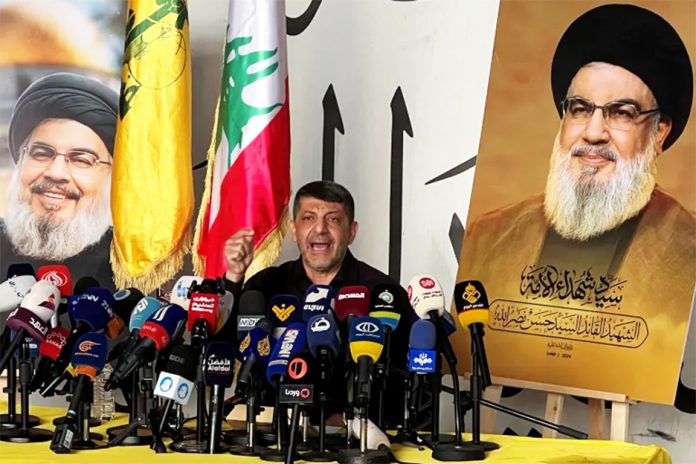
Hezbollah’s spokesman Mohammad Afif

An Israeli strike targeting a building in central Beirut has killed Hezbollah’s spokesman Mohammad Afif, according to officials from the Lebanese armed group.

Three other people were injured in the strike in the densely populated Ras al-Nabaa district in the Lebanese capital, officials said on Sunday, adding that the building was targeted without warning. Many Lebanese displaced by Israel’s ongoing strikes in Beirut’s southern suburbs had taken refuge in the neighbourhood.

The Israeli military had not officially ordered the area to be evacuated ahead of the deadly strike on its handle on X.

Afif managed Hezbollah’s Al-Manar television station for several years before taking over as the top media relations officer for the armed group.

He hosted several press conferences amid the rubble in the southern suburbs of the capital devastated by weeks of Israeli bombardment.

In his most recent comments to reporters on November 11, he said that Israeli troops had been unable to occupy any territory in Lebanon and that Hezbollah had enough weapons and supplies to fight a “long war”.

His killing is the latest in a string of assassinations of top Hezbollah leaders, including its chief Hassan Nasrallah, since Israel dramatically intensified its attacks across Lebanon in late September after one year of fire exchanges along the border.

Credit: aljazeera.com

Work on Takoradi Agona Nkwanta dual carriage way is progressing -GHA

0
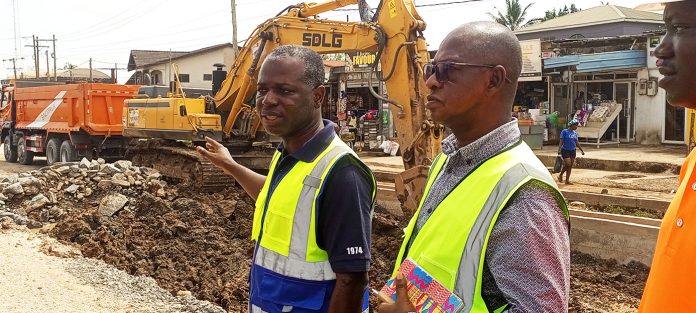
Ingineer Kofi Adjei Frimpong at the project site speaking to journalist

The reconstruction of the 23 kilometer Takoradi-Agona-Nkwanta road into a dual carriage one, which began in March 2024 is about 35% complete, Takoradi Area Manager of Ghana Highway Authority (GHA), John Essah Amissah, has disclosed.

“Work is about 35 percent and progressing, and we hope to complete it on schedule”, he said.

He, however, called for patience and public support as the Authority works to address the challenges that have been encountered.

The Takoradi Area GHA Manager made the appeal in an interview with journalists recently.

A bridge under reconstruction at Apremdo

There have been public uproar, most particularly about the dust emanating from the construction site, especially from Kwesiminstim through Apremdo, Apowa and beyond.

Giving an update on the project, Mr Amissah reported that it is being executed by Justmoh Construction at the cost of $108.6 million and would be completed by March 2027.

Presently, he indicated, the Contractor had rehabilitated 3.8 kilometers, which stretches from Takoradi to Apremdo, adding “we are not changing any alignment”.

Mr Amissah said “So far, the Contractor has done some concrete works and more earthworks were also coming up”.

The Apremdo-Agona Nkwanta section, he told Journalists, would involve the dualisation to expand and improve the existing single lane into a two -lane highway, with additional links including two concrete bridges at Apremdo and Ewusiejoe.

The existing steel bridges, Mr Amissah indicated would give way for the construction of a new concrete bridges to enhance the problem of maintenance of the steel bridges.

“The new bridges are going to ease traffic congestion in this corridor and ensure the free-flow of goods and services along the ECOWAS corridors,” he stated.

Responding to public concerns, Mr Amisaah appealed to residents and motorist to exercise patience and also observe the traffic regulations on the project sites.

The highway project, he said, carried huge economic importance, serving as an internal catalyst for hauling of bauxite and manganese to the Takoradi Port.

“One challenge is the driver behavior. They should slow down when asked to do so. There is a also lot of rainfall at the project sites,” he said.

Meanwhile, Engineers, Consultants and Management of Justmoh Construction Ltd are soliciting public support for the smooth execution of works.

Reacting to concerns of residents along the projects sites, the team assured that, the project was progressing steadily to deliver volumes of economic prospects for the Western Region and the West African sub-region.

Resident Engineer and Consultant, Kofi Adjei Frempong, also assured that they would deliver quality services to ensure value for money.

Chief Executive of Justmoh Construction, Justice Amoh assured journalists that they would complete the project on schedule for the benefit of the communities, Western Region and the nation.

He, however, asked the media to feel free to approach the team to clarify any questions to ensure smooth and successful execution of the project.

On dust suppression, Dr Amoh observed that for the past one month, the weather has been good, but gave assurance that the engineers would do periodic watering of the project sites.


“We will appeal to the public to exercise patience. We’re working on a 23-kilometer stretch. There is the need for sensitisation because at the same time, traffic is going to increase. Again, if you want to put traffic on one leg, you can understand the mode of operation, but we ensure traffic management,” he said.

The project, when completed, Dr Amoh maintained, has huge economic value for the communities, saving traveling time, energy and fuel cost.

He stressed that “At the commercial level, you can’t even quantify it. The Western Region also brings in a lot to the national basket. This is not only number one, it’s also going to improve on national income.”

What to Know About a Hump Behind Your Shoulders

0

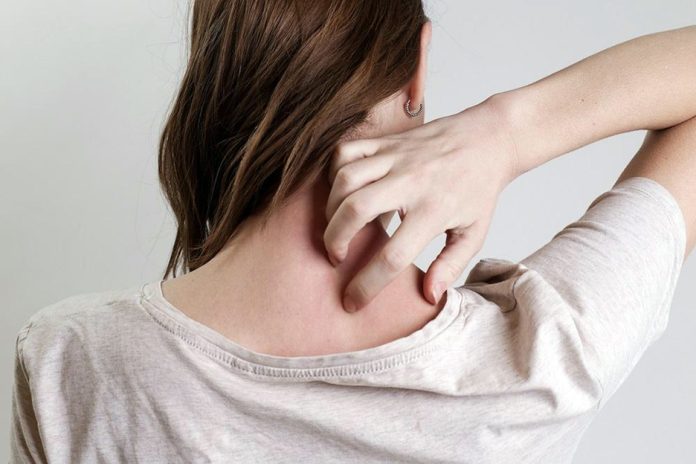
A hump behind your shoulders, sometimes called a buffalo hump or a dorsocervical fat pad, is a buildup of fat behind and slightly below your neck. It is one sign of lipodystrophy, which is the medical term for a problem with how your body makes, uses, and stores fat. A hump by itself doesn’t always need to be treated, but it could be a sign of a serious underlying medical issue.

What Can Cause a Hump Behind Your Shoulders?

A hump behind your shoulders is usually caused by a condition or medication that affects your hormones, including:

Medications. Long-term use of corticosteroid medicines such as prednisonecortisone, and hydrocortisone can cause a redistribution of fat that accumulates behind your shoulders. These medicines are used to treat inflammatory conditions because of their anti-inflammatory effect.

A hump behind your shoulders may also be caused by some medicines that are used to treat human immunodeficiency virus (HIV). This buildup of fat is called lipohypertrophy and is more common with older medicines. Newer HIV medicines are less likely to cause this side effect.

Cushing’s syndrome. This is a condition that occurs when your body makes too much cortisol. It can be caused by a tumor that affects your production of certain hormones. It can also develop as a side effect of taking steroids. Other symptoms of Cushing’s syndrome may include:

  • Absent or irregular menstrual periods in women
  • Excess facial or body hair in women
  • Decreased sex drive in men
  • Erectile dysfunction in men
  • Decreased fertility in men
  • Headaches
  • Muscle weakness
  • Fatigue
  • Anxiety
  • Depression
  • Irritability
  • Trouble thinking
  • High blood pressure
  • Difficulty controlling emotions
  • Infections
  • Skin darkening
  • Impaired growth in children
  • Bone loss


Madelung’s disease. This is a rare condition that affects your fat metabolism. It can cause an unusual buildup of fat around your neck, shoulders, trunk, hips, upper arms, and thighs. Madelung’s disease usually affects men between the ages of 30 and 70 who have chronic alcohol use disorder. However, women and people who don’t drink alcohol may get it as well.

The fatty tumors of Madelung’s disease are generally benign and painless. But they may compress important structures in your neck such as the airway, voicebox, esophagus, or carotid blood vessels. This can cause you to have problems with swallowing, breathing, or speaking. It may also cause peripheral neuropathy, which is when the nerves that run to your arms and legs are damaged.

Obesity. A hump behind your shoulders may be related to excess fat accumulation from obesity. Obesity causes many of the same symptoms as Cushing’s syndrome.

What’s the Difference Between a Buffalo Hump and a Dowager’s Hump?

Kyphosis is the medical term for a dowager’s hump. This is a rounded hunch that occurs at the base of your neck. It’s usually caused by chronic forward-leaning posture. Over time, this can cause you to develop a curve in the bones in your upper spine and a mass of tissue at the bottom of your neck.

A dowager’s hump can also be caused by osteoporosis. A compression fracture may cause an increased forward curve in your upper spine. This can cause you to drop your head forward more than normal. It can also be caused by a problem with how your spine formed before you were born. Another type of kyphosis, Scheuermann’s kyphosis, happens in teenagers when the spine doesn’t develop properly.

How Is a Hump Behind Your Shoulders Treated?

The treatment for a hump behind your shoulders will depend on the cause. Some treatment options may include:

Medication adjustment. If medicine is causing the hump behind your shoulder, your doctor may stop or change your medicine. You may need to take medication to help with the effects of the underlying condition causing your hump. You shouldn’t change your medicine without discussing it with your health care provider.

Credit: webmd.com

Editorial: COCOBOD Has Taken The Right Decision But…

0
COCOBOD

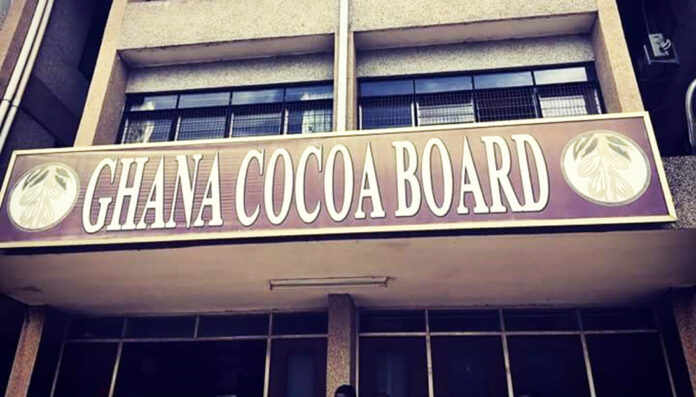
The Ghana Cocoa Board (COCOBOD) has announced a GH¢2,000 incentive package for informants on every bag of cocoa retrieved from smugglers, according to a Graphiconline report.The package would be shared by the informants and security officials who effect the arrest of culprits of cocoa smuggling.

The Chief Executive Officer (CEO) of the COCBOD, Joseph Boahen Aidoo, who made the announcement, has consequently called on farmers to report cocoa smugglers to the law enforcement agencies for arrest and prosecution.He stressed that the action had become imperative as the activities of the smugglers were depriving the nation of the necessary revenue.

Mr Boahen Aidoo made the announcement at an engagement with over 3,000 cocoa farmers at separate functions at Akyem Oda in the Birim Central Municipality, Akyem Abenase, in Akyemansa and Asuokaw in the Upper West Akyem districts, all in the Eastern Region last Tuesday.

The Chronicle supports Mr. Boahen Aidoo on his idea of giving incentives to informants who help retrieve smuggled cocoa. For a very long time, cocoa smuggling has been very rampant in the country. Cocoa is not just an agricultural product; it is an economic lifeline.

As one of the country’s leading foreign exchange earners, cocoa contributes approximately $2 billion annually to the national economy, underpinning rural livelihoods and generating government revenue.

However, the illicit smuggling of the commodity to neighboring countries is eroding these gains, posing a significant threat to economic stability and the sustainability of the sector.

The scale of cocoa smuggling is staggering. In 2022, an estimated 150,000 metric tons of cocoa beans valued at approximately $600 million were illegally transported out of Ghana to markets in neighboring countries such as Togo and others.

These losses are primarily driven by price disparities between Ghana and its neighbors. While the government this year increased the producer price of cocoafrom GH₵3,000 to GH₵3,100 per bag and GH₵48,000 to GH₵49,600 per tonne, the neighbouring countries often offer even higher rates, incentivising farmers to bypass the formal market for more lucrative, albeit illegal, alternatives.

The consequences of cocoa smuggling extend beyond lost revenue. For a country heavily reliant on cocoa exports for foreign exchange earnings, smuggling disrupts critical financial inflows, worsening Ghana’s balance of payments challenges. It also deprives the government of taxes and levies that are essential for funding public infrastructure and services.

The country’s cocoa sector, already grappling with challenges such as illegal mining, climate change and declining productivity is further weakened by these illicit activities. For example, cocoa production dropped significantly in the 2022/2023 crop season to 750,000 metric tons from over one million tons just two years earlier.

The Chronicle is also of the view that smuggling also jeopardises the country’s international reputation as a leading cocoa producer.

Moreover, smallholder farmers who form the backbone of the industry suffer indirect consequences. While some may benefit temporarily from higher prices, their participation in smuggling often excludes them from government incentives such as subsidies and extension services designed to enhance productivity and long-term sustainability.

The need for decisive action is urgent. The Ghana Cocoa Board (COCOBOD) incentive package to reward informants who help prevent smuggling is a step in the right direction.

While this initiative is commendable, it cannot, in our view, wholly address the systemic factors fuelling the crisis. Smuggling is driven by a combination of economic incentives and governance gaps, requiring a holistic approach to tackle the issue effectively.

Addressing cocoa smuggling requires aligning local cocoa prices with regional markets to eliminate the economic disparity that incentivizes illicit trade. Enhanced border surveillance and investments in technology can aid in detecting and intercepting smuggled cocoa beans.

Also, collaborative frameworks with neighbouring countries could harmonize pricing structures and reduce the market allure of smuggling. Additionally, empowering farmers through improved access to credit, training, and support services can address the root causes driving them towards illegal activities.

However, this strategy, while commendable, should not be limited to cocoa. Other sectors, particularly gold mining, also suffer from smuggling and mismanagement, resulting in significant revenue losses.

For example, in January 2019, it was reported that over ¢30 billion worth of gold had left the shores of Ghana without official knowledge.

These examples highlight a troubling trend of resource leakage, which calls for the need for comprehensive reforms across multiple sectors to protect national assets and revenues.

If these smugglings are left unchecked, it risks destabilizing a critical industry, eroding public trust in governance, and exacerbating poverty in rural communities.

The government, industry stakeholders, and international partners must collaborate to implement sustainable solutions that prioritize fair pricing, robust surveillance, and the empowerment of cocoa farmers.

Undermining of Democracy, Can the US Accuse Ghana?

0
Opinion

Recently, the US Ambassador to Ghana, Virginia Palmer justified a new visa restriction policy targeting individuals involved in undermining democratic processes. Explaining that the new policy pursuant to Section 212(a)(3)(C) included such individuals who undermine democracy through the manipulation or rigging of the electoral process; the use of violence to intimidate, coerce or prevent people from exercising their rights to freedoms of association and peaceful assembly, the use of measures designed to intimidate, coerce or prevent political party representatives, voters or members of civil society or the media from voicing or disseminating their views. Ghana is the fourth country in Africa where this restriction has been announced.

This may sound good news, since prior to every election in Ghana there are speculations of acts of violence and lawlessness. It is a fact that the first elections of this Fourth Republic, in November 1992, witnessed acts of institutionalized lawlessness and mass rigging by the PNDC government led by Flt. Lt Jerry John Rawlings which resulted to the opposition NPP writing a bestseller, The Stolen Verdict.

Post elections violence was recorded in places like Cape Coast in 1992, where an NDC executive member was murdered in an internal affair. In 2000, about thirty people died in Bawku during a dispute over results of the polls.In 2020 elections, five people were killed during an election related violence in this country.

Ghana has its share of violence, especially institutionalized violence in the past but the US never descended on us, so why now? I am not in any way defending violence in whatever form it takes. I am only asking, why now?

But most importantly, is America the one to stand up for people denied of their rights in their countries, when it denies the rights of some of its citizens?Even women’s rights cannot be guaranteed in the US, with the case of two women, whose only crime was that they were beautiful.

In August 2009, DebrahleeLorenzana, a business banker and staff of Citibank, New York, was fired for looking too attractive in her outfit. Even though other female staff members wore more risqué outfits than she did, Lorenzana was told by a manager, that her body was very different from the others. This is democracy in the land of freedom, called USA. What will be the US’ reactions if any of these two examples occurred in a developing world, like ours? Must a woman be punished for being attractive and beautiful?

In January 4, 2010 in Iowa, Mellisa Nelson, a dentist assistant who worked for dentist James Knight for ten years, was fired because she was too attractive. Her resignation letter was read to her in the presence of a pastor, who approved and endorsed this. Mr Knight thought that she was getting too irresistible and could wreck his marriage, so he sacked her and gave her only one month salary as ex-gratia. Mellisa never made sexual advances at Knight but always considered him a father figure. An all-male panel of justices of the Iowa Supreme court upheld Knight’s decision.

In the USA, only 7.1% of its citizens are LGBTQ+ but their rights seem to override that of the straight and godly 92.9% citizens. Is this what democracy, is about?

In 2018, Jack Philips the owner of Masterpiece Cakeshop in Colorado refused to bake wedding cake for gay couples. He did this based on his strong Christian belief.

He was fined $500.00 and he appealed against this but lost. The Appeal Court judge, Timothy Schutz said the colour of the cake, a pink cake with blue frosting requested by the LGBTQ+ customer expressed no message or imagery with any inherent meaning that would violate Jack’s rights in his strong Christian beliefs. This is America. Should this happen in a developing country like Ghana, what will the US say? And all these happened in a Democratic party era.

The US held its General Elections almost two weeks ago. Events leading to the US elections witnessed two assassination attempts on Donald Trump. And during the November 5, elections, there were cases of bomb threats and violence in states like Georgia, Michigan, Wisconsin and Washington, DC and EVM (voting machines) malfunctioning at a Pennsylvania station.

Are these not the same acts the US is warning Ghana and others about? I will reiterate that I do not and will not support any acts that will undermine our democratic process, but for the US, coming down on us to behave ourselves, when it is liable to these acts of undermining democracy and people’s rights, begs the question.

Post elections disturbances by the Democrats in the aftermath of the elections, are attempts to undemocratically create unrests.For how can Kamala and the Democrats demand that people should fight for the promises she made?

Kamala and the Democrats should understand that Americans have democratically rejected her promises and so they should leave Trump alone.

If the US have good information that some people supported by some countries in Eastern Europe and Asia, want to use violence to topple our constitution, it should come out openly. But threatening to issue visa restrictions will never help. After all such people will not go to the US for anything.

May the Good Lord God, send His angels to guard and guide us, before, during and after December 7, 2024.

Hon. Daniel Dugan

The views expressed in this article are the author’s own and do not necessarily reflect The Chronicle’s stance.

Young Apostles stun Samartex in Samreboi

0
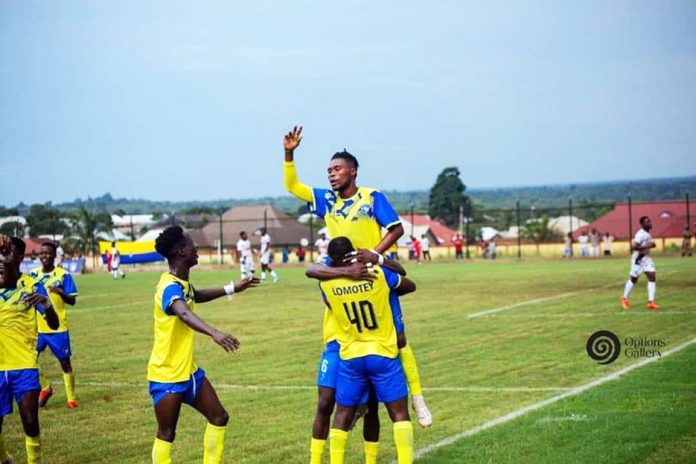
Young Apostles celebrate win

FC Samartex fell to a rare defeat against visiting Young Apostles at the Nsenkyire Sports Arena yesterday.

The defending champions’ unbeaten run since March 2024 was halted by the premier league newbies.

Samuel Prempeh’s second half strike ensured Young Apostles returned to winning ways after parting ways with their head coach, Asare Bediako.

The visitors showed resilience to keep the game scoreless in the first half.

After recess, the visitors struck when a chance fell to Prempeh, who punished Amadu by scoring in the 48th minute.

Apostles staved off waves of attack from the hosts as they protected their narrow lead.

The visitors hanged on to claim a famous victory in Samreboi, which moves them 10th position on the league standings with 13 points.

Samartex drop to 6th position on 17 points and will aim to bounce back when to travel to Basake Holy Stars.

Young Apostles return to Wenchi to host Medeama for their next match.

Credit: ghanasoccernet.com

Nsoatreman held at home by Aduana; Accra Lions drop points at home

0
Heart of Lions pvs Accra Lions

Nsoatreman FC were held 1-1 at home by Aduana FC in the Bono derby on Sunday while Accra Lions dropped points at home as their struggles continue in the 2024-25 Premier League campaign.

Nsoatreman shot into the lead in the 22nd minute after Anokye Morrison slotted home the opener before Abdul Latif Bamba pulled parity in the 40th minute for the visitors.

Both sides had chances during a balanced game at the Nana Kronmansah Park as the two teams shared the spoils, and tied on 12 points each.

Nsoatreman FC lie 12th while Aduana FC occupy 10th position with 12 points.

Elsewhere, Heart of Lions continued their fine form with a 0-0 draw at Accra Lions FC on Saturday November 16, 2024.

The result has left the Kpando-based side in third place while Accra Lions remain in the bottom three.

Credit: ghanafa.org

Dreams in narrow win over Vision FC

0
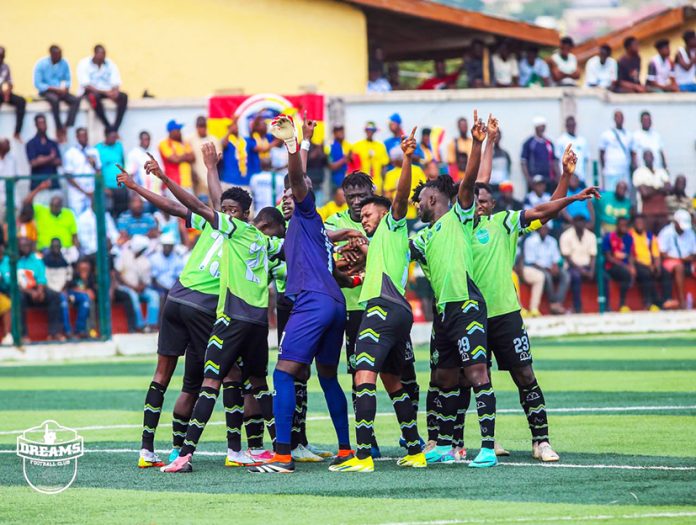
Dreams players

Vision FC succumbed to a narrow defeat against Dreams FC at the Nii Adjei Kraku II Sports Complex at Tema.

Razak Salifu scored late in the second half to make it two wins on the spin for the visitors.

An evenly contested first half ended in a goalless draw and continued in similar fashion after recess.

Salifu showed brilliance by scoring what proved to be the winner for Dreams FC in the 85th minute to earn his side their second consecutive win.

The Still Believe have now lifted themselves out of the relegation zone with this vital win as they climb to 14th position, level on 11 points with Vision FC.

The hosts have lost two games in a row and will to bounce back when they travel Bibiani Gold Stars.

Dreams FC would want to keep up the momentum when they host Karela for their next match. Credit: ghanasoccernet.com

Hamza Issah’s magic sinks Karela in Tamale

0
Karela United vs Hearts of Oak

The resurgence of Hearts of Oak continues as a powerful strike from in-form striker, Hamza Issah, earned the capital city club a vital away win over Karela United in far away Tamale.

A 2nd minute goal from the striker proved decisive for the Phobians as it took their winning streak to three and leaped over their bitter rivals, Asante Kotoko on the league log.

The win has obviously restored the confidence of coach Ouattara Aboubakar who has been under intense pressure in recent times, following the former champions poor start in the league.

Karela’s call for a penalty to give them a last minute hope was ignored by the referee as Hearts remained resolute and protected their solitary lead till the end of the game.

However, goalkeeper Benjamin Asare stood tall, making crucial saves to deny the hosts.

The second half saw Karela intensify their search for a goal, but the well-organized Hearts defence successfully neutralized their threats.

With this victory, the Phobians climb to fourth on the league table, reinvigorating their campaign as they aim to challenge the title.

The Ghanaian Chronicle