Home Blog Page 1077

Akufo-Addo Commissions Ezinlibo Forward Operating Base for Armed Forces

0

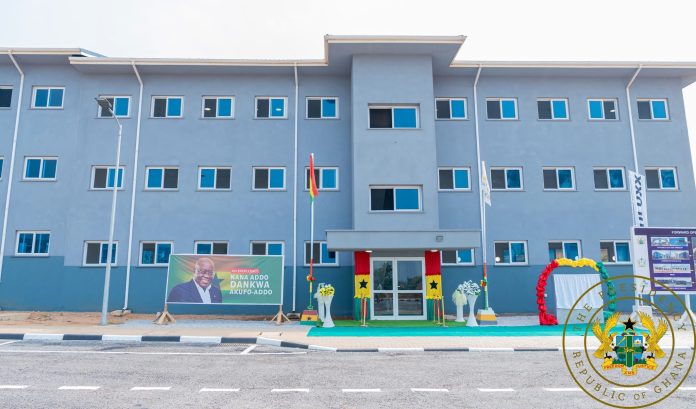
Ezinlibo, Western Region – In a historic stride towards safeguarding Ghana’s territorial waters and ensuring national security, President Nana Addo Dankwa Akufo-Addo commissioned the Forward Operating Base (FOB) at Ezinlibo on Monday, December 23, 2024. The facility stands as a testament to the government’s commitment to strengthening the nation’s defense infrastructure and protecting its economic assets.

During the ceremony, President Akufo-Addo reflected on a promise made in 2018 to equip the Ghana Armed Forces to tackle modern security challenges. “Today’s commissioning marks the realization of that pledge,” he said, lauding the unwavering dedication of the Defence Ministry under Hon. Dominic Nitiwul and his deputy, Hon. Kofi Amankwa Manu, in bringing the vision to life.

The FOB at Ezinlibo joins a growing network of bases across the country, including those at Tilli, Bui, Sankore, and Kenyase, with additional facilities planned for Keta, Ada, Winneba, and Elmina. Strategically positioned, the Ezinlibo base bolsters Ghana’s naval capacity to combat piracy, illegal fishing, and transnational crimes within the Gulf of Guinea.

The new base is seen as a critical response to the complex security threats plaguing the Gulf of Guinea. It provides the Navy with the tools to monitor and safeguard Ghana’s offshore oil and gas resources while enhancing regional security cooperation. President Akufo-Addo underscored its importance, saying, “This facility symbolizes progress, security, and national resolve. It enables the Navy to act swiftly and precisely in protecting our maritime interests.”

The base will also serve as a logistics hub, enhancing operational readiness and facilitating training. This investment aligns with Ghana’s broader aim to maintain peace and stability in West Africa, fostering economic growth and regional cooperation.

President Akufo-Addo expressed gratitude to the Western Nzema Traditional Council, led by Paramount Chief Awulae Annor Adjaye III, for their instrumental role in providing land for the project. Their generosity was described as a selfless commitment to national development.

He also commended the Ghana Armed Forces for their dedication and sacrifice, reaffirming his pride in their efforts to maintain peace and stability. To the contractors and consultants who brought the project to fruition, the President offered his congratulations: “Ayekoo! Your commitment to excellence has ensured this project was delivered on time and to the highest standards.”

As Ghana moves forward with plans for additional FOBs, the Ezinlibo facility represents a step towards modernizing the nation’s defense capabilities. President Akufo-Addo called on all Ghanaians to unite in the spirit of patriotism and hard work, emphasizing the collective effort required to secure a safe and prosperous future.

The commissioning of the Ezinlibo FOB not only strengthens Ghana’s maritime defenses but also reaffirms the government’s commitment to the Armed Forces and the country’s security. As President Akufo-Addo declared the facility officially commissioned, he closed with a prayer for Ghana’s continued growth and strength, echoing the hopes of a nation poised to meet its challenges head-on.

The Ezinlibo Forward Operating Base stands as a beacon of progress, symbolizing Ghana’s readiness to tackle the evolving security threats of today. As the nation fortifies its maritime domain, the commissioning of this strategic facility underscores the essential role of collective effort, investment in modern infrastructure, and unwavering commitment to national security.

Preacher jailed 28 Years for Vandalizing Vehicles in Parliament

0
Law Court Complex, Accra

Christopher Kofi Okyere Sorkpa, a 33-year-old preacher, has been sentenced to a cumulative 28 years in prison for vandalizing vehicles at the Parliament House premises.

The court, presided over by Mr. Samuel Bright Acquah, handed down the sentence after Sorkpa pleaded guilty to six charges, including conspiracy to commit crime and five counts of causing unlawful damage.

The court sentenced Sorkpa to three years for conspiracy and five years for each of the five counts of causing unlawful damage.

However, the sentences will run concurrently, meaning Sorkpa will serve a maximum of five years in prison.

His accomplice, Wisdom Ahli, 41, also a preacher, was remanded for further investigations. The prosecution, led by Superintendent Augustine Yirinkye, informed the court that Ahli’s charges would be amended before the next hearing, scheduled for January 9, 2025.

The Incident

On December 18, 2024, at about 11:00 a.m., Sorkpa and Ahli entered the Parliament House car park in Accra. Sorkpa used an earth chisel concealed in a handbag to vandalize the windscreens of five vehicles, including:

A Toyota V8 (GW 1905-21) valued at GHC 120,000, belonging to Hon. Kwaku Okyere Agyekum.

Another Toyota V8 (GS 5055-17) valued at GHC 120,000, owned by Hon. Eugene Boakye Antwi.

A Toyota Camry (GB 7539-21) valued at GHC 7,000, the property of Jessica Mensah.

Another Toyota Camry (GS 9605-21) valued at GHC 7,000, owned by Sena Atsu.

A Toyota Rav4 (GN 9605-12) valued at GHC 7,000, the property of Gifty Gbah.

Witnesses reported that Ahli praised Sorkpa as he committed the acts of vandalism.

Court Proceedings

During the trial, it was revealed that the accused had admitted to the crimes in their caution statements given to the police in the presence of an independent witness.

The charges against Sorkpa included conspiracy to commit crime and causing unlawful damage, contrary to Section 172(a) of the Criminal Offences Act, 1960 (Act 29).

Ahli, who has yet to enter a plea, remains in police custody pending the amendment of his charges and further investigations.

The court adjourned the case to January 9, 2025, for further proceedings.


IGF 2024: How DPI is Shaping the Future of Financial Inclusion and Global Connectivity

0

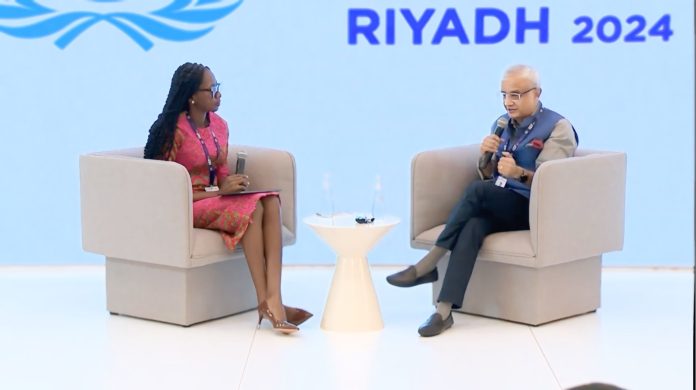
At the United Nations Internet Governance Forum in Riyadh, Shivnath Thukral, Vice President of Public Policy (India) at Meta, shared his insights into the revolutionary role of Digital Public Infrastructure (DPI) in driving global innovation, inclusion, and sustainability.

His discussion underscored DPI’s transformative potential, especially in bridging gaps in socioeconomic development in emerging economies.

“Digital Public Infrastructure is like a national highway built by the government, where private entities drive the innovation,” Mr. Thukral explained. “In India, this basic digital layer allows a billion people to transact using their phones, fostering financial inclusion and driving cashless payments.”

India’s DPI Success: A Blueprint for the World

Thukral pointed to India’s success in leveraging DPI to tackle pressing challenges, particularly during the COVID-19 pandemic.

“India was among the few countries where citizens didn’t need to carry physical vaccination certificates,” he said. “Everything was accessible digitally, thanks to our DPI ecosystem linking health delivery systems with identity layers.”

India’s DPI is built on a foundation of identity (Aadhaar), linked to phone numbers and bank accounts. This structure enables seamless digital transactions, integrating financial systems and reducing barriers for those previously excluded. The result? Enhanced mobility of money and broader inclusion in financial networks.

“DPI amplifies opportunities,” Mr. Thukral emphasized. “It allows governments to focus on creating a strong infrastructure while enabling private companies like Meta to deliver innovative solutions that reach the last mile.”

Meta’s Role in DPI’s Evolution

Meta has been instrumental in harnessing DPI to deliver scalable solutions. Platforms like WhatsApp integrate seamlessly with India’s DPI, enabling users to access government services, make payments, and even download health certificates—all through a familiar app.

“WhatsApp has become an enabler for DPI delivery,” Mr. Thukral said. “For example, during the pandemic, vaccination certificates could be downloaded directly through WhatsApp. It’s about leveraging the tools people already use to make services accessible.”

Thukral also highlighted Meta’s commitment to open-source technologies, which align with the principles of DPI. “Our AI models, like NLLP200 (No Language Left Behind), enable real-time translation of low-resource languages, ensuring that no community is excluded from the digital transformation journey.”

Global Collaboration: A Path to Inclusivity

Mr. Thukral underscored the potential of DPI to foster global collaboration, particularly between countries in the Global South. He cited ongoing exchanges between India and African nations, including Ghana, aimed at exporting India’s DPI expertise.

“Imagine a Ghanaian identity layer linked to phone numbers, like Aadhaar in India,” he suggested. “This foundation could transform sectors like health and banking, delivering services efficiently and transparently.”

According to Mr. Thukral, DPI transcends geopolitical boundaries and fosters resilience. “DPI belongs to the world,” he said. “It ensures that countries are not held hostage to external disruptions, making it a vital tool for sustainable development.”

Challenges in Scaling DPI

Despite its potential, scaling DPI is not without challenges. Security, privacy, and trust between governments and the private sector remain critical concerns. “Meta’s approach to open architecture ensures security is embedded at every level,” Thukral noted. “For example, payments via DPI require two-factor authentication, adding layers of protection.”

Building trust is equally crucial. “As companies, we must demonstrate transparency and engage with regulatory environments,” Thukral said. He cited India’s transparent consultation process for its Digital Protection Act as a model for fostering trust between stakeholders.

DPI as a Force for Peace and Sustainability

Thukral believes DPI can contribute significantly to global peace and sustainability. By enabling transparency and efficient service delivery, DPI fosters good governance and inclusivity. “DPI empowers governments to leapfrog traditional development stages, learning from global best practices,” he said.

He also pointed to the role of AI in bridging digital divides. “AI tools can translate indigenous languages into digital scripts, ensuring that marginalized communities are not left out,” Mr. Thukral explained. “This is particularly relevant in multilingual societies like India, where local language models are being developed to support inclusivity.”

Meta’s Vision for a Connected World

Mr. Thukral’s optimism about DPI’s future is grounded in its ability to transform lives and economies. “Whether it’s delivering financial services, enabling education, or ensuring health access, DPI is a game-changer,” he asserted.

Meta’s open-source philosophy, coupled with its commitment to supporting governments in adopting DPI, positions it as a key player in the digital governance landscape. “We’re not competitors; we’re enablers,” Mr. Thukral said. “Our tools and technologies are designed to complement DPI, ensuring that its benefits reach everyone.”

A Call to Action

As the world grapples with challenges of digital governance, Thukral sees DPI as a unifying solution. “We need platforms like the IGF to share experiences and build case studies,” he concluded.

“DPI is not just a technology; it’s a philosophy of inclusion, innovation, and sustainability. It’s up to us to embrace it and shape a better future for all.”

Through his insights, Mr. Thukral painted a compelling picture of how DPI, coupled with private-sector innovation, can drive meaningful change on a global scale.

As countries like India lead the way, the world has much to learn and gain from embracing this transformative infrastructure.

Joe Wise Endorses Afenyo-Markin as Minority Leader

0
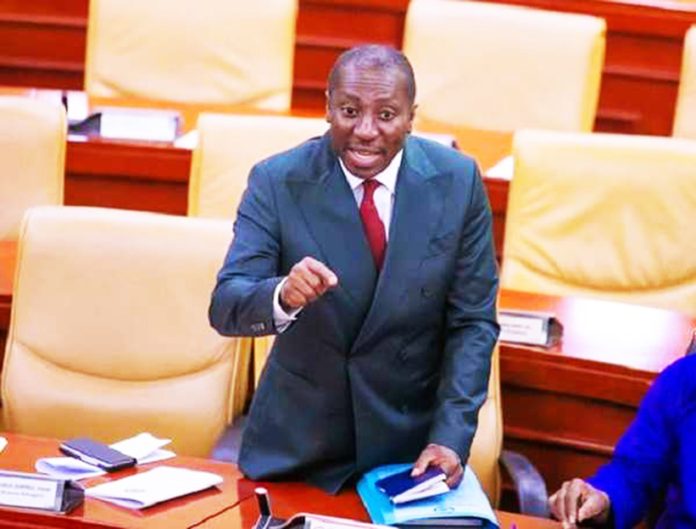
Mr Afenyo Markin- Majority Leader in Parliament
The First Deputy Speaker of Parliament, Joseph Osei-Owusu, popularly known as Joe Wise, has called on the New Patriotic Party (NPP) to appoint Alexander Afenyo-Markin as leader of the minority caucus as the party transitions from majority to minority status in the coming weeks.
Joe Wise, a four-term Member of Parliament, expressed confidence in Afenyo-Markin’s ability to effectively steer the minority caucus in Parliament.
Speaking to journalists recently, he described the Effutu MP as possessing the necessary qualities of experience, longevity, and the resilience needed to lead in challenging times.
“This is my view, and nobody has asked me to say anything about the Ninth Parliament,” he clarified. “But as someone who has worked in the House for four terms, I strongly believe that longevity and experience matter. Afenyo-Markin fits the criteria perfectly.”
Joe Wise emphasized that among the current crop of NPP MPs, Afenyo-Markin stands out, second only to Osei Kyei Mensah-Bonsu, the immediate past Majority Leader.
“When Kyei was the Minority Leader and later the Majority Leader, his leadership was evident, but it didn’t happen by accident. He started as a Chief Whip and built his way up. Longevity and experience brought him clarity and strength,” he said.
The Deputy Speaker acknowledged the challenges posed by the NPP’s loss in the December 7 elections, which has left the party with diminished influence in the House.
 Despite this, he argued that a strong leader like Afenyo-Markin could galvanize the caucus to make a significant impact.
“Where we are now, we need to be combative. We cannot change decisions with our numbers—at best, we’ll have 91 MPs—but our voices must be loud enough to resonate both in and out of the chamber,” Joe Wise noted.
He stressed that the minority needs a leader who is strong-willed, resolute, and unafraid to face challenges head-on.
 “What is required is somebody who is strong, hot-headed, and willing to stand the heat. Afenyo-Markin is the right person to lead us through this critical period,” he concluded.
As the NPP prepares for its new role in opposition, the call by Joe Wise opens the Pandora box over who will best represent the party’s interests and navig

Delay in Presenting Mini Budget: Financial and Governance Realities – Prof. John Gatsi

0
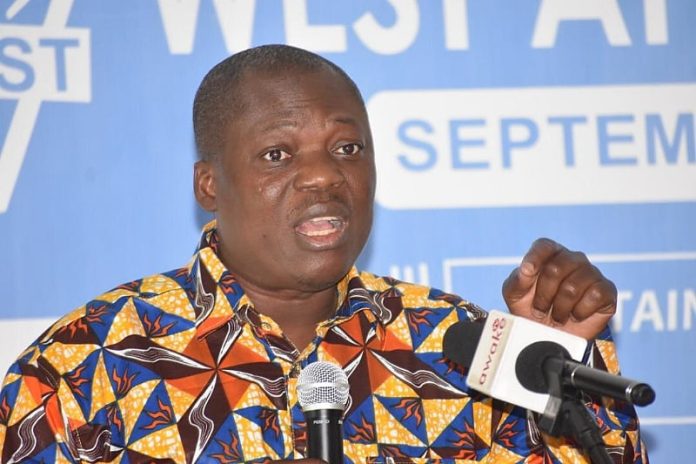
Prof. John Gatsi
Ordinarily, in an election year, the full budget for the next fiscal year is not presented because the outcome of the elections is unknown. The winner of the elections must have the mandate of the people to govern and derive authorization to spend.
Therefore, the provisions of the Constitution and the Public Financial Management Act allow for a request to spend on statutory obligations, such as emoluments of public sector workers, debt services, and other strategic expenditures, in the first quarter of the following year— in this case, 2025. This is referred to as expenditure in advance of appropriation, which must be approved by Parliament before December 31 of the election year, i.e., December 31, 2024.
Currently, Parliament is on recess without the presentation and approval of this expenditure. I believe, upon reflection, the President may call for an emergency recall of Parliament to present and approve the mini budget before the end of the year.
If the President fails to take advantage of the remaining days to present and approve the mini budget, a government shutdown will be triggered. This implies that, although the outgoing government has the mandate to govern and spend from January 1 to January 6, 2025, it will lack the statutory and constitutional approval to do so.
Furthermore, the Controller and Accountant General will not be permitted to effect any payments. Any breach of this provision becomes punishable. No civil or public servants, including institutions such as public educational institutions, Parliament, the Judiciary, and the Bank of Ghana, will be permitted to spend. Any expenditure on the inauguration of the President, which is not already approved, will also become illegal.
Since this is a new experience, the temptation may arise for some institutions to spend, assuming they are functioning and can regularize the expenditure later. However, such actions may lead to sanctions.
What Can the New Government Do on or After January 7, 2025?
On or after January 7, 2025, the new President will receive the mandate to govern and spend in the name of the Republic. The President can delegate one of his appointees to present the mini budget for approval.
The reality, however, is that on January 7, 2025, there will be no vetted appointees. The Vice President, who does not require vetting, will therefore be the only official eligible to present the mini budget. The choice of the Vice President shows respect for the doctrine of separation of powers, where each branch – the Executive, Parliament, and Judiciary – serves as a check on the others unless appointed by the Executive and vetted in line with constitutional provisions.
For the first time, a Vice President will present the mini budget to Parliament. If assigned, the first female Vice President, HE Naana Jane Opoku-Agyemang, will make history by becoming the first Vice President to present a mini budget to Parliament on behalf of the President.
Indeed, HE John Dramani Mahama and HE Naana Jane Opoku-Agyemang have enriched the democratic history of Ghana.

Mahama can build on my anti-graft efforts -Akufo-Addo

0
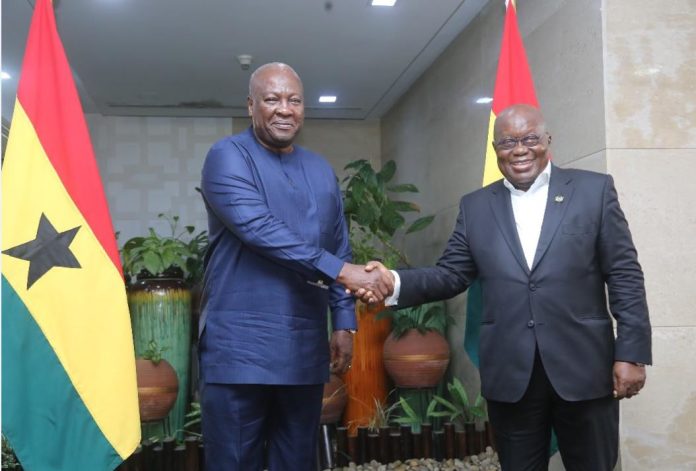
President Akufo-Addo welcoming the president Elect, John Mahama to Jubilee House
The President, Nana ADDO Dankwa Akufo-Addo, has said that his government laid a solid foundation to fight corruption that the incoming administration can build upon.
Though the president admitted that the road ahead to fight graft would be tough, he hoped the Mahama government would bear the torch of accountability.
“I prepare to leave office, I am filled with a mix of pride and hope. Pride in what we have achieved together, and hope that the fight against corruption will not lose momentum,” President Akufo-Addo said.
He continued that President-elect John Dramani Mahama and his incoming administration now have the opportunity to build on these efforts. Whilst I do not doubt their capability, I do know that the road ahead will not be easy. It is my sincere hope that they will carry forward the torch of accountability, strengthening the institutions and framework we have put in place.”
President Akufo-Addo made these remarks on Friday, December 20, 2025, when he

receive the National Anti-Corruption Report at Jubilee House from the National Anti-Corruption Action Plan High-Level Implementation Committee.
EFFORTS
President Akufo-Addo indicated that his government initiated a holistic program of legislative, administrative, financial, and technological reforms to tackle corruption.
According to him, one of his proudest moments as president was when he established the Office of the Special Prosecutor.
He described the OSP as a symbol of Ghana’s determination to tackle corruption head-on.
He mentioned that during his first term in office, the Corruption Protection Act in 2018 was passed. The Act, he explained, created a framework to safeguard individuals who cooperate with law enforcement, especially in corruption cases.
Furthermore, the Criminal Offences Amendment Act of 2020 elevated corruption from a misdemeanour to a felony, with harsher penalties of 12 to 25 years of imprisonment.
The government also enacted key laws, such as the Fiscal Responsibility Act, the Revenue Administration Amendment Act, and the Anti-Money Laundering Act.
He remarked that budgetary support for accountability institutions has also witnessed unprecedented increases.
“For instance, from 2017 to 2023, Parliament’s budget increased by 100 percent, the police by 274 percent, and the Audit Service by 258 percent. These investments reflect my administration’s commitment to empowering these institutions to discharge their mandates effectively,” Akufo-Addo stated.
RESULTS
“I remember the early days of these reforms when scepticism abounded. People asked, will this really make a difference? Today, the numbers speak for themselves. The Auditor General’s report for 2023 showed a reduction of 5.2 billion CDs in financial irregularities, a 32 percent drop from the previous year,” he said.
TECHNOLOGY
President Akufo-Addo, whose government championed the use of digital systems to run the economy, said that technology has been the cornerstone of the anti-corruption efforts.
He said the introduction of digital platforms for public procurement has minimised human intervention, increased transparency, and reduced opportunities for corrupt practices.
Additionally, he said the passage of the Right to Information Act in 2019 was a milestone in ensuring government transparency.

Revealed: President Akufo-Addo owns no property in the UK

0
President Akufo-Addo

Eugene Arhin, has described the accusations by Kevin Taylor as completely false and baseless and should be treated with utmost contempt.

Caustic social media firebrand Kevin Taylor, who has been consistent in his attacks against President Nana Akufo-Addo, has, in his latest attack on his platform, Loud Silence, falsely accused the President of owning several properties outside of Ghana.

The Director of Communications at the Presidency, Eugene Arhin, has described the accusations “as completely false and baseless and should be treated with utmost contempt.”

In his latest sensational monologue video, the US-based Kevin Taylor claims that President Akufo-Addo owns as many as 15 properties in the United Kingdom (UK). He promised to share the documents with the public on his social media page, but that has not happened.

Meanwhile, checks made by Asaase indicate that the President has no interest in any property in the United Kingdom.

After whetting the appetite of his audience that he had information on 15 properties connected to President Akufo-Addo, Kevin Taylor went on to name but only one property, but provided no supporting evidence linking the President to it.

His focus was on 75 Nottingham Terrace, London, City of Westminster, Greater London, NW1 4QE, owned by Stratton Enterprise Holding Limited, which was last sold in 2020 for £3,350,000.00.

Without providing any supporting evidence, Mr Taylor told his worldwide audience that Stratton belongs to Nana Akufo-Addo and, therefore, the property too.

In his attempt to show evidence in support of this allegation, he projected onto the screen a cropped property search document, which contained the names of Mr Edward Akufo-Addo and Mrs Irene Akufo-Addo, which also indicated a property that was sold in 2005 for £350,000.

Kevin Taylor, in an attempt to confuse his audience, described that document as covering the sale of 75 Nottingham Terrace and went on to falsely attribute that 2005 sale price to 75 Nottingham Terrace. He even added that the said property which sold for £350,000 has been since bought by the President, 15 years later, for £3.3m.

However, public documents readily available and obtainable from the database of His Majesty’s Land Registry, UK, show that in 2005, 19 years ago, Edward, the younger brother of Nana Akufo-Addo, and his wife Irene Akufo-Addo jointly acquired 32 Nottingham Terrace, London, Greater London NW1 4QB, for £350,000.00. Not 75 Nottingham Terrace.

A closer look at the document provided by Kevin Taylor in his attempt to indict President Akufo-Addo, in fact clearly indicates that it is rather the President’s brother and his spouse who own a property in the area, specifically 32 Nottingham Terrace, London, Greater London NW1 4QB.

As bold as the allegation was, not a shred of information was provided to support the allegation against the person of the President of the Republic as being the owner of a single property in the UK.

When we first reached out to Eugene Arhin, Director of Communications at the Presidency for his comments, he was hesitant to “dignify this completely false allegation with a comment.”

When pushed, Mr Arhin said, “I can tell you that President Akufo-Addo does not own any property in London or any part of the UK.”

He said, “In fact, a simple check on the ownership of the said properties in question will confirm that they do not, and have never, belonged to the President.”

These claims, he said, “are nothing more than a fabrication designed to deceive the public and tarnish the President’s image as he prepares to leave office after his rather successful tenure as President of the Republic the last 8 years.”

Mr Arhin described as unfortunate and sad deliberate lies being manufactured against the President as he leaves office. “President Akufo-Addo is a man who has dedicated his life to serving the people of Ghana with honesty and integrity,” Mr Arhin said.

Pushed further to comment on the claim that President Akufo-Addo was the owner of Stratton Enterprise Holding Limited, Mr Arhin noted, “I can categorically tell you that President Akufo-Addo has no knowledge of it, let alone own a company by the name Stratton Enterprise Holdings.”

He stressed, “This accusation is equally baseless and malicious.” He described President Akufo-Addo as having no need to hide or misrepresent anything about his life or his dealings.

“It is unfortunate that such baseless accusations are being used to create unnecessary distractions at a time when our collective efforts should be focused on building a prosperous, progressive Ghana,” Mr Arhin said.

Source: Asaaseradio.com


NESTF Urges Political Party Supporters to Stay Away from Collation Centres

0
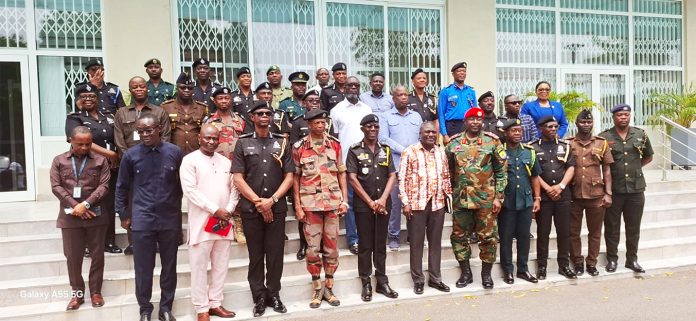
A group photograph of the election security taskforce and EV officials

The National Election Security Task Force (NESTF) has called on supporters of the two major political parties, the National Democratic Congress (NDC) and the New Patriotic Party (NPP), to avoid gathering at collation centres during the ongoing election collation process.

Speaking at a press briefing today, ACP Grace Ansah-Akrofi, Director-General of the Public Affairs Directorate of the Police Service, emphasized that only accredited individuals designated by the Electoral Commission (EC) will be granted access to the centres.

“This arrangement is part of our efforts to ensure election security and maintain order during the collation of results,” ACP Ansah-Akrofi said.

The NESTF, composed of personnel from the police, military, fire service, prisons, immigration, and Customs Division, has been working closely with the Electoral Commission to finalize security arrangements for collation centres across the country.

At a meeting held on December 9-10 at the National Police Headquarters in Accra, the EC informed the task force of its readiness to proceed with the outstanding collation processes and requested security support.

The task force assured the EC of its preparedness to provide the necessary security, including a joint police and military deployment.

The EC also reiterated that only individuals accredited by the commission should be present at the collation centres.

“We urge the public to respect this directive. Non-accredited individuals will not be permitted to access the centres under any circumstances,” ACP Ansah-Akrofi warned.

The leadership of the NDC and NPP have also been advised to actively discourage their supporters from attempting to gather at the collation centres, as their presence could disrupt the process and compromise security.

NESTF’s actions aim to ensure a peaceful and transparent conclusion to the election collation process.

The public is urged to cooperate with authorities and respect the security measures in place to safeguard the integrity of the electoral process.

Post-Election Matters: Police Restraint & Tact Have Saved Ghana … Says Prof Kwasi Aning

0
Prof Kwesi Aning

Dr. Emmanuel Kwesi Aning, Director of the Faculty of Academic Affairs & Research (FAAR) at the Kofi Annan International Peacekeeping Training Centre (KAIPTC), has lauded the efforts of the National Election Security Taskforce in effectively managing post-election matters.

George Akuffo Dampare

Dr. Kwesi Aning, a recognised authority on security issues, praised the taskforce for its professional and strategic handling of critical situations, particularly regarding the security of collation centers for some outstanding constituencies.

Speaking to some media outlets in Accra yesterday, he emphasised that their efforts were instrumental in averting a potential crisis.

“First of all, it is imperative that we commend the Inspector General of Police and the National Election Security Taskforce for the professional manner in which they have handled post-election affairs. Their restraint and tact have saved the country,” Dr. Aning stated.

He underscored the critical role of security agencies in supporting democratic processes and maintaining peace in the face of electoral tensions.

Dr. Aning further urged the Electoral Commission (EC) to pause the collation of results for the outstanding constituencies until a consensus is reached with all political parties involved.

According to him, it was essential for the EC to ensure that all stakeholders are on the same page to maintain trust and avoid unnecessary confrontations.

The National Election Security Taskforce deployed various strategies, including engaging stakeholders, conducting timely briefings and using de-escalation tools to maintain law and order during this transition period. These measures were crucial in diffusing tension and ensuring public safety.

The security taskforce’s approach highlights the importance of collaboration, patience and professionalism in safeguarding the integrity of the electoral process and fostering national stability.

Asian African Consortium Rebranded …It’s Now African Agribusiness Consortium

0
African Agribusiness Consortium

The Asian African Consortium (AAC), a key player in advancing agribusiness across Africa, has officially rebranded as the African Agribusiness Consortium (AAC) Limited.

This transformation represents a bold step in the organisation’s ongoing commitment to fostering growth, innovation, and sustainability in the African agribusiness sector.

By aligning its name with its core focus, the African Agribusiness Consortium underscores its dedication to creating impactful solutions for farmers, agribusiness stakeholders and communities across the continent.

The rebranding also signals the Consortium’s intent to expand its influence and develop initiatives that directly address the challenges and opportunities within African agriculture.

With a renewed focus on building strategic partnerships and delivering sustainable practices, the African Agribusiness Consortium is poised.

About African Agribusiness Consortium Limited 

The African Agribusiness Consortium is dedicated to empowering Africa’s agribusiness sector through innovative solutions, strategic partnerships and sustainable practices.

Its mission is to transform agriculture across the continent and drive economic progress.

For more information, visit www.aacint.org.

The Ghanaian Chronicle