US President Donald Trump has signed an executive order to begin the process of withdrawing the US from the World Health Organization (WHO).
“Oooh, that’s a big one,” the newly inaugurated US president said as he approved the document after arriving back at the White House. It was one of dozens of executive actions he put his signature to on day one in office.
This marks the second time Trump has ordered the US be pulled out of the WHO.
Trump was critical of how the international body handled Covid-19 and began the process of pulling out from the Geneva-based institution during the pandemic. President Joe Biden later reversed that decision.
Carrying out this executive action on day one makes it more likely the US will formally leave the global agency.
“They wanted us back so badly so we’ll see what happens,” Trump said in the Oval Office, referring to the WHO, perhaps hinting the US might return eventually.
The executive order also said the withdrawal was the result of “unfairly onerous payments” the US made to the WHO, which is part of the United Nations.
When Trump was still in office the first time around, he was critical of the organisation for being too “China-centric” in its tackling of the Covid-19 pandemic.
Trump accused the WHO of being biased towards China in how it issued guidance during the outbreak.
Under the Biden administration the US continued to be the largest funder of the WHO and in 2023 it contributed almost one-fifth of the agency’s budget.
The organisation’s annual budget is $6.8bn (£5.5bn).
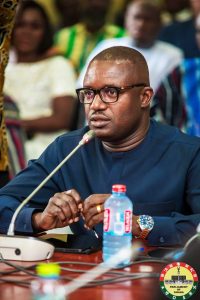
Dr Mark Darko, Chief Executive Officer, Chamber of Cannabis Industry
The Chamber of Cannabis Industry has urged the Government to invest in the cannabis industry as part of its policies to diversify Ghana’s cash crops and generate revenue to support the economy.
The Chamber said Ghana had one of the best climates in the world to cultivate cannabis and that the country had the potential to generate about $1 billion dollars from the $50bn dollars global cannabis market.
Dr Mark Darko, Chief Executive Officer, Chamber of Cannabis Industry made the call at the launch of the Chamber of Cannabis Training Centre and Sky Bridge Pharmaceuticals in Accra.
He said Ghana must leverage its cannabis resource for medicinal and industrial purpose following the passage of the Narcotics Control Commission Bill, 2023 that grants permission for the cultivation of cannabis for industrial purposes.
“One can make not less than $10,000 from just one hectare of cannabis. This is a $50bn industry. If Ghana is able to make at least $1 billion annually from cannabis, you can imagine what that can do for our country. Cannabis will reset Ghana’s economy,” he said.
Dr Darko said the medicinal cannabis sector was a cornerstone to the growth of the sector, due to its usefulness in chronic pain management and epilepsy treatments among other benefits.
“The United States recorded over $11 billion in medicinal cannabis revenue in 2021 and that’s set to more than double by 2025.
“Europe, projected to be the largest medicinal cannabis market in the world, is expected to reach $45 billion within the next five years,” he said.
Dr Darko said the Chamber’s Training Centre with support from the Sky Bridge Pharmaceuticals would equip farmers and processors with the tools and techniques to cultivate and process cannabis and hemp sustainably.
He said the Centre would also foster research and innovations to develop products that cater to global markets as well promote ethical practices.
Dr Samuel Twumasi, Group CEO, Sky Bridge Group, said the company’s decision to invest in the cannabis sector was intended to produce world-class cannabis-based medicines that met the highest global standards.
He appealed to the Government to expedite passage of fees and charges for the acquisition of licenses for the cultivation of cannabis to facilitate investments in the sector.
Cannabis, popularly known as marijuana, is a herbal medication made from plants in the Cannabis species that is used to treat a variety of symptoms and diseases, including cancer, chronic pain and mental disorders.
According to Allied Market Research, the global cannabis market size was valued at $25.7 billion in 2021 and is projected to reach $148.9 billion by 2031.
Mr James B. Mwinyelle, Ashanti Regional Commander of Prisons
The increasing number of inmates at the Kumasi Central Prisons is becoming a serious concern to the managers of the facility.
The prisons facility, which was constructed in 1901 and expanded in 1935 to accommodate 500 inmates, now has 1,627.
Among them are 1,214 convicts and 230 offenders who are on remand.
Feeding this huge number of inmates has become a huge burden on the authorities, who rely on a feeding grant of GH¢1.80 per inmate per day, to prepare food for them.
This has resulted in a poor feeding regime, which is having a serious health issue for the inmates.
Mr James B. Mwinyelle, Ashanti Regional Commander of Prisons and Officer In-charge of the Kumasi Central Prisons, told the Ghana News Agency in an interview in Kumasi that, excessive congestion, poor feeding, ill-health among inmates and high cost of medical treatment for inmates, had become a serious headache to the authorities of the facility.
He said the congestion, poor feeding, and lack of space for exercise among inmates needed urgent attention to protect the health of the inmates and thereby, reduce the high cost of medical treatment which had become a burden for the Prison Service.
He said bathing soap for the inmates is also a major challenge, adding that, the facility needed an amount of GH¢8,000.00 every month to purchase a carbolic soap for each one of the inmates.
Mr Mwinyelle pointed out that ‘Banku’ and ‘Keta boys’ soup was the daily meal for the inmates, adding that rice was served once a year, especially during the Christmas festivities.
He said it was important for the State to take a second look at the state of affairs in the country’s prisons and come up with urgent measures to address them.
He said the feeding grant to inmates needed urgent review to reflect on the current cost of living and the prices of food items on the market.
The Regional Commander said the Prisons authorities had already proposed between GH¢7 to GH¢10 per each inmate per day and this needed to be looked at urgently to address the challenges facing the prisons.
He stressed the need to bring the prisons closer to society since the inmates were part of the society.
He said it was important to reform the country’s criminal justice system to promote non-custodial sentences such as community service to help reduce congestion at the prisons.
MrMwinyelle said reformation was part of the mandate of the Prisons Service, adding that everybody deserved a second chance, no matter his or her current situation.
He called on Ghanaians to take keen interest on issues affecting the country’s prisons system and support it to make the place friendly since everybody could be part of it.
Nana Ama Amissah, a former Queen-Mother of Mankessim, in the Central Region, along with four co-accused persons, made their first appearance before the Weija District Court yesterday.
They face charges of conspiracy, murder and the use of offensive weapons, in connection with the death of Samuel Ampofo, Municipal Director of National Intelligence Bureau (NIB) and another.
The accused persons, including James Kofi Obosu (A1), Nana Ama Amissah (A2), Robert Gardiner (A4), John Eric Kofi Turkson (A5) and Clement Kwesi Owusu (A6) appeared before the Presiding Magistrate, Mrs. Ruby Ntiri Opoku.
However, the third accused, Joseph Kobina Ansah (A3), was absent due to ill health.
The court adjourned the case to February 27, 2025, for the commencement of committal proceedings.
The charges include conspiracy to commit murder, murder and the use of offensive weapons, all contrary to the Criminal Offences Act, 1960 (Act 29).
Charges and Offences
Count 1: Conspiracy to Commit Murder
The accused, on December 7, 2019 in Mankessim, allegedly acted together with a common purpose to commit murder. This is contrary to sections 23(1) and 46 of the Criminal Offences Act, 1960 (Act 29).
Count 2: Murder of Kofi Yamoah
James Kofi Obosu, also known as Nana Obosu Amissah, is accused of intentionally causing the death of Kofi Yamoah through unlawful harm.
Count 3: Murder of Samuel Ampofo
James Kofi Obosu is further accused of intentionally causing the death of Samuel Ampofo on the same date.
Counts 4 & 5: Use of Offensive Weapons
The accused are charged with using a gun to intentionally and unlawfully cause harm to Detective Inspector William Arko Nyarko and Kwesi Owusu on December 7, 2019.
The court noted the absence of the third accused due to health reasons, and directed legal teams to ensure his presence during the next sitting.
The case, which stems from events in Mankessim, has drawn significant public attention due to the involvement of a former Queen-mother and other prominent individuals.
The accused persons remain in police custody as investigations and legal processes continue.
Insomnia makes it hard to fall asleep or stay asleep. Women are much more likely to live with this sleep disorder than men. About 1 in 4 women have it, compared to 1 in 5 men. Studies show that in general, women tend to take longer to fall asleep, sleep for shorter periods, and feel more tired once they’re up than men.
Women also typically have more than one symptom of insomnia, such as trouble falling asleep, trouble staying asleep, and waking up too early in the morning. Men, on the other hand, tend to complain of only one.
Why does this sleep disorder hit women harder than men? Experts say it’s a combination of hormone differences and health conditions that are more common in women.
Hormonal Causes
Most women need at least 7 hours of sleep at night to feel rested. But certain hormone-related issues can get in the way, such as:
Your period. It’s most common to face sleep issues in the days leading up to your period. This is when progesterone levels dip and premenstrual syndrome (PMS) symptoms hit. You’re even more likely to struggle with sleep if you have premenstrual dysphoric disorder (PMDD), a more severe type of PMS.
What you can do: Make sure you get exercise in the days before your period, so you feel more tired at bedtime. Prioritize your wind-down routine on those nights, so your body gets the message that it’s time for sleep.
Pregnancy. Your hormones are in constant flux during the first trimester of pregnancy. You may actually be drowsier — and even sleep more — than usual at this time. By the third trimester, your estrogen and progesterone levels calm down right as your physical discomfort is at its highest. It’s this discomfort that can keep you up at night. You may have to pee more often; have restless legs; or just feel too uncomfortable to sleep well.
What you can do: You can’t control your hormones during pregnancy, so you may have to just wait it out. But you can try pregnancy pillows to help cradle your belly. You could also try to sleep with your head elevated if snoring or reflux is your problem.
Menopause. Most women go through menopause, when they stop having periods, by their early 50s. Perimenopause is when your body starts the transition to menopause. You can start it as early as your 30s, but it’s more common in your 40s. Both perimenopause and menopause involve big shifts in estrogen and progesterone. These hormone changes cause night sweats and hot flashes, which can keep you up.
What you can do: Your doctor may recommend hormone replacement therapy to help relieve your symptoms. You can also try boosting your soy intake. Soy mimics estrogen. You can get soy from edamame (soybeans) or soy-based dairy alternatives like milk and yogurt. Skip spicy foods, which can trigger hot flashes. Also wear lightweight, breathable clothes to sleep in.
Health Conditions
Women are more likely to have certain health conditions that make sleep difficult. These include:
PCOS. Polycystic ovary syndrome causes irregular periods. It also leads to higher testosterone and lower progesterone levels. These hormone imbalances make sleep woes worse. If you have PCOS, you’re also at higher risk for sleep apnea, a sleep disorder that makes you stop breathing for short periods while you sleep. This can wake you multiple times throughout the night.
Urinary incontinence. Twice as many women as men have urinary incontinence, or the loss of bladder control. This is because of the many changes to the reproductive system during menstruation, pregnancy, childbirth, and menopause. The urge to go to the bathroom can wake you several times a night.
Depression and anxiety. Women are more likely to have symptoms of depression than men. Trouble getting to sleep or staying asleep is one of those symptoms. On the flip side, if you have insomnia, you’re 10 times more likely to have depression and 17 times more likely to have anxiety. To top it off, these conditions can make insomnia worse. And insomnia can make these conditions worse.
If you can’t sleep, talk to your doctor about whether one of these causes could be behind it. Your doctor can help you find solutions to the specific cause or help treat the insomnia itself. Treatments may include cognitive behavioral therapy (CBT), or “talk therapy”; prescription medications; or lifestyle changes to help you get better sleep.
Many would have expected this to be a dead rubber at the beginning of the competition, but it has since taken on huge importance for both after dreadful starts on the continent.
Despite winning away to Red Bull Salzburg on matchday six, PSG still find themselves in a perilous position ahead of facing the Premier League champions this week.
The Parisians have only won of their seven meetings with Man City, but that came in their last meeting at the Parc des Princes, winning 2-0 despite registering just six shots all evening – the lowest in a home match in their Champions League history.
Manager Enrique also has a fine record against his opposite number Pep Guardiola, losing just two of their five previous clashes, and being one of only two managers (along with Jurgen Klopp) to have beaten the City boss by three or more goals on multiple occasions.
Once City get back into their groove, they are a formidable opponent for anybody, and when push comes to shove, they usually deliver, and they will fancy their chances of virtually confirming a playoff place this week with a game to spare.
PSG will be no pushovers by any means though, despite sitting down in 25th, as their eight-game winning streak shows, but City will be a level above all of the opponents they have faced during that run.
On the cusp of sealing their place in the last 16 of the Champions League, Arsenal‘s final home match of the league phase sees the Gunners take on Dinamo Zagreb in Wednesday’s Emirates encounter.
The Gunners have only been out-performed by Liverpool and Barcelona in this season’s league phase so far, while their Croatian visitors sit just inside the unseeded playoff positions and are now under the wing of a World Cup-winning captain.
William Saliba suffers hamstring injury
Gooners may also feel that the UCL represents their side’s best chance of silverware after Saturday’s disheartening 2-2 draw at home to Aston Villa in the Premier League, where Arteta’s men blew a two-goal lead to fall six points behind Liverpool.
The Arsenal medical team are certainly earning their keep this season, as the Gunners’ latest crushing blow comes in the form of William Saliba‘s hamstring injury, one that will supposedly sideline him for a couple of weeks.
Arteta’s men may be going through a sticky patch at the minute, but they will surely take care of business without a fuss on Wednesday evening, as Cannavaro is subjected to a losing start as Dinamo Zagreb boss.
Hovering just outside the coveted top eight spots in the Champions League league phase table, Bayern Munich square up to Feyenoord at De Kuip in Wednesday’s intriguing showdown.
Vincent Kompany‘s men strolled to a 5-1 crushing of Shakhtar Donetsk in their final European engagement of 2024, while their hosts have 10 points to their name and also occupy a playoff place.
Joao Palhinha, Bayern Munich
Kompany’s troops are one point adrift of the automatic qualification spots on account of their defeats away to Aston Villa and Barcelona, which they have since responded to with three straight successes over Shakhtar, Benfica and Paris Saint-Germain.
Either side of the Bundesliga’s international break, Wednesday’s visitors have beaten RB Leipzig, Borussia Monchengladbach, Hoffenheim and Wolfsburg in consecutive contests, thus maintaining a four-point lead over holders Bayer Leverkusen at the summit of the table.
Bayern also have an unbeaten 21st century sequence to prolong in Rotterdam this week, as since going down 2-1 to PSV Eindhoven in October 1999, the Bavarians have navigated each of their last eight Champions League games against Dutch sides without losing.
Goals at both ends of the field are a guarantee whenever Feyenoord play in the Champions League, and that theme should continue on Wednesday, albeit more to Bayern’s benefit.
Kompany’s men are facing off against a side with a ravaged midfield and low confidence stores amid a difficult domestic period, and the Bundesliga leaders have our backing to win this one with ease.
Still in the mix for a precious top-eight finish, AC Milan will aim to continue their Champions League success streak at Girona‘s expense on Wednesday.
Four straight wins have taken the Italian giants onto 12 points with two games to play, while Girona’s meagre tally of three sees the debutants languishing in the elimination places.
Viktor Tsygankov, Girona
Though Milan looked to be in trouble after losing both of their first two league-phase fixtures, a subsequent run of wins – against Club Brugge, Real Madrid, Slovan Bratislava and Red Star Belgrade – has essentially booked at least a playoff place.
European debutants this season, Girona have never previously faced Italian opponents in a competitive contest, so starting with a trip to the iconic San Siro represents quite an introduction.
The Catalan club have lost five of their six games so far, and last month’s defeat to Liverpool means that only two wins and a prayer can extend their campaign beyond January.
Realistically, a place in the knockout rounds is already beyond them, but they will want to restore some pride and avoid becoming just the second Spanish team to lose six times in one Champions League season – Villarreal previously did so in 2011-12.
Both sides will keep travelling in opposite directions, as Milan have won their last four Champions League games and Girona have lost the last three.
The hosts may be hit-and-miss, but they are always tougher to beat at San Siro, where the home fans should celebrate another victory.
A Special Investigative Team (SIT) has been constituted by the Inspector-General of Police (IGP), Dr George Akuffo Dampare, to probe the killings that occurred during the 2020 and 2024 general elections.
The move follows a directive from President John Dramani Mahama, who on January 10, 2025 requested a thorough investigation into the incidents that happened four years apart.
According to a deep throat at the police headquarters, the IGP has responded to the President’s directive by establishing a team of highly skilled officers at the Criminal Investigations Department (CID) Headquarters in Accra.
The SIT, chaired by Chief Superintendent Joseph Nanegbe, has been tasked with submitting a detailed report within a specified timeline.
In a letter to the President, Dr. Dampare reportedly assured that all necessary resources would be allocated to the team to ensure a comprehensive and transparent investigation.
The Chronicle’s third eye within the Ghana Police Service disclosed that the investigation would build upon previous efforts by the IGP since assuming office in 2021.
It said the Cold Case Unit, established by Dr. Dampare, has been actively investigating unresolved crimes, including those related to the 2020 electoral violence.
The Cold Case Unit is reported to have made substantial progress in probing the 2020 election-related deaths, with some suspects already facing prosecution.
The IGP’s office is believed to have expressed confidence that the new SIT will further advance these efforts, bringing clarity and justice to the victims and their families.
President Mahama’s directive underscores the need for accountability and full closure for the families affected by the tragic events during the elections.
This is also uncovering the truth behind the violence and ensuring that those responsible are brought to justice.
The killings during the 2020 and 2024 elections have been a source of public concern, sparking calls from various civil society groups, human rights organisations and citizens for thorough investigations.
There were scenes of grandstanding at the Appointments Committee of Parliament during its public sitting on Monday, January 20, 2025 to vet ministerial nominees of President John Dramani Mahama.
The situation resulted in the chairman, Bernard Ahiafor, reluctantly suspending the proceedings, and upon resumption, the Minority Leader accused the chairman and the majority side of being “rude” to him.
“Chairman, all your colleagues, including you, have been rude to me this morning. You have been very rude. You have been extremely rude,” the minority leader, Alexander Afenyo-Markin, lamented.
His outburst took close to a two-hour period when members of the Appointments Committee engaged in what could literally be described as a show of bravado between the majority and the minority sides, over aspects of the minority leader’s opening remarks.
The Honourable Members of the Appointments Committee used that period to settle the issue of what could be said by the minority or not.
While at it, the first nominee for the day, the Minister-designate for Roads and Highways, Kwame Governs Agbodza, was seated waiting for the first question to be posed to him.
The problem of the majority was that the minority leader, Alexander Afenyo-Markin, while exercising a conventional courtesy to give opening remarks at the commencement of the proceedings, veered off to unrelated matters.
The objection raised against the minority leader yesterday was not different from what was witnessed last week, at the vetting of the first three nominees, where he spoke about other matters in his opening remarks.
Kwame Governs Agbodza in a pensive mood as the banter continued
The majority last week raised concerns that he was using the Appointments Committee sitting to hold a press conference. But unyielding, the Effutu legislator managed to make his remarks, amidst the incessant interruption from the majority.
Yesterday’s sitting
During his opening remarks, the minority leader, who is the ranking member on the Appointments Committee, raised some concerns about the revocation of appointments of chief executives to state-owned institutions appointed by the previous government.
Jubilee House, sometime last week, issued a letter to revoke their appointments.
In his remarks, the minority leader stated that the matter he raised was rooted in the case of Theophilous Donkor versus the Attorney General, decided on June 12, 2019 by lawyer Edudzi Tamakloe.
He said the background to this matter was as a result of some revocation of appointments that took place in 2017, in which the court held that some Chief Executives, who were appointed by the government and, for that matter, under Articles 191 and 195 ought not to be sacked by mere operation of a change of government.
OBJECTION
The majority members on the committee raised objections to that part of the minority leader’s remarks, arguing that it was outside the remit of the Appointments Committee.
Mahama Ayariga particularly raised the point of order, drawing strength from Order 267 of the Standing Orders of Parliament.
His position was reinforced by the Deputy Majority Leader, Emmanuel Armah Kofi Buah, who said the minority leader was out of order in his attempt to introduce matters outside their mandate.
“And so, Chairman, I’m calling on you to rule respectfully the ranking member, that he is completely out of order,” Armah Buah prayed the chairman.
REBUTTAL
While both sides were arguing their case, Mahama Ayariga and the chairman, in their quest to have the minority leader stay within his mandate, also quoted a Supreme Court ruling.
The minority leader, in his response to the objection, attempted quoting a Supreme Court ruling but was not allowed, as he was unceasingly interrupted.
His case was that if the majority members could rely on a court decision to raise an objection, why he could not do the same, arguing that by the time he was done, the chairman would have a basis to overrule the objection.
In the midst of the charged atmosphere, the chairman suspended proceedings for five minutes and returned to continue when the minority leader, his deputy, and the minority chief whip were not seated.
The ranking member shortly entered the meeting room and opened his microphone to register his displeasure. According to him, during the suspension, the chairman called for him, but he asked to be excused as he was meeting his caucus, only to return to see proceedings ongoing.
“Chairman, I want to register this protest that you have proceeded in bad faith. It is not the understanding we had. We got to a point where I was responding to a point of order. You came in rudely to say that you have ruled,” Afenyo-Markin said.
WITHDRAW
Meanwhile, the use of the word rude did not sit well with the chairman and the majority members on the committee.
The chairman called on the minority leader to withdraw the word he said was unparliamentary. He stated that he had waited for the minority after announcing the five-minute suspension, but upon exhausting the time and not seeing the minority leader, he returned to continue the proceedings because he did not want to keep the public waiting.
The minority leader said he did not mean to disrespect the chair and thus retracted what he said.
“Chairman, the rate at which I get interrupted is very unacceptable. However, if, as you sit to my right as a chair, you feel that the phrase is unacceptable, I think that it’s appropriate that the same is taken back,” he said.
The chairman subsequently directed that the word ‘rude’ be expunged from the records.
Though the matter was not resolved, the vetting started after nearly two hours of back and forth.
Hon Haruna Iddrisu answering questions at the PAC sitting yesterday
The Education Minister Designate, Haruna Iddisu, has pledged a commitment to preserving Ghanaian cultural values through education.
He made this known during his vetting at the Parliamentary Appointments Committee on Monday, January 20, 2025 where he outlined his policy priorities and responded to questions on various educational issues, including Free education, school feeding, employment for teachers and the contentious LGBTQ+ debate.
“We will preserve our values. We are a country and we define our values, both social and cultural. We should expect all other persons to respect those values,” Haruna Iddisu stated.
He aligned with President John Mahama’s position that the existing curriculum does not adequately teach Ghanaian values to children.
“The curriculum and teaching materials in our schools do not sufficiently inculcate our value systems in our children,” he said.
Free Tertiary Education
Addressing questions about the NDC’s manifesto promise of free tertiary education, Education Minister-Designate clarified that the policy focuses on covering admission fees for first-year students in public tertiary institutions.
This, he said that the research budget of the government, will include some provision of some 345 million Ghana cedis to cater for admission fees for students undertaking courses in the normal and not professional courses like Medicine.
“This model is experimental. President Mahama sees it as an opportunity to test the viability of free tertiary education, starting with admission fees for first-year students undertaking regular courses,” Mr. Iddrisu explained.
In addition, Mr Iddrisu assured that students who have already paid their admission fees would be refunded. He emphasised that the program offers flexibility, as parents who can afford to pay are still encouraged to do so.
“The beauty of this is that it’s open. Even parents who are still willing to pay can do so under this principle that has been introduced by the NDC,” he said.
School Feeding
On school feeding under the Free Senior High School (SHS) program, Mr. Haruna Iddisu proposed a significant policy shift to empower head teachers to manage procurement processes.
He explained that under the current centralised model, delays in fund disbursement from the Ministry of Finance have caused disruptions in school feeding programs, risking food shortages and affecting the school calendar.
To address these challenges, Haruna Iddrisu suggested transferring funds directly to schools, enabling headmasters to procure food items locally.
“Certainly, the GES and headmasters will have a role. We will work with those institutions but define a role for headmasters in a phased-out process,” he said. However, he acknowledged that this change must be carefully managed to ensure efficiency and avoid further disruptions.
Licensure Exam for Teachers
Haruna Iddrisu addressed concerns about the licensure examination policy introduced by the previous government, indicating plans for a systematic review to integrate the exam into the curricula of teacher training institutions.
“We will incorporate the licensure examination as part of the program that students will undertake in Colleges of Education and the Faculty of Education of universities,” he explained.
This, according to him, will streamline the licensing process and eliminate the need for a separate examination after graduation.
Unemployment among Graduates
Mr. Iddrisu highlighted the plight of unemployed graduates, particularly in his constituency, where many Bachelor of Education (B.Ed.) holders remain jobless.
“Employment in the Ghana Education Service (GES) is a function of available funds, vacancies, and willingness of graduates to accept postings to certain areas,” he stated. He emphasised that resolving this issue depends on the availability of funds, identification of vacancies, and the Ministry of Finance’s clearance to recruit more teachers. “As and when we get the clearance, we will honor those numbers,” he assured.
The Future of STEM Education
The Education Minister Designate also outlined his vision for advancing Science, Technology, Engineering, and Mathematics (STEM) education in Ghana.
He emphasized the critical role STEM plays in national development and the preparation of students for the future workforce.
“The significant thing for the NDC and President Mahama, as far as education is concerned, is for it to contribute meaningfully to our national sustainable development efforts,” he stated.
He highlighted the importance of focusing on access, quality, and relevance at the tertiary level, while strengthening foundational learning at the secondary level to produce critical thinkers for the future.
He revealed plans to establish a model STEM school in every region of Ghana, spanning from kindergarten to senior high school.
“These schools will be designed to train the next generation of professionals in science, information and communication technology, and engineering. We will ensure that the curricula align with the aspirations of the country and contribute meaningfully to our national development,” he said.
Mr. Iddisu further emphasized the importance of connecting tertiary institutions with industry to ensure that STEM graduates acquire skills relevant to the job market. Reaffirming the NDC’s commitment to STEM, Mr. Iddisu praised the progress already made in this area, but stressed the need for a more robust approach.
“We appreciate that going into the future, Ghana must train more people in STEM disciplines to remain competitive and sustainable in a rapidly changing global economy,” he concluded.
Rural-Urban Educational Disparities
Haruna Iddrisu identified significant disparities in education quality between urban and rural areas, as well as between the northern and southern regions of Ghana. To address these inequalities, he proposed reallocating funds to build teacher accommodations in rural areas and improving conditions of service to attract teachers to underserved communities.
He proposed dedicating at least 5-6% of GDP to education over a decade to expand access and improve infrastructure.
Technical and Vocational Education and Training (TVET)
He highlighted that TVET was essential for equipping young people with the practical skills needed to meet the demands of a dynamic and evolving economy.
“We have to be careful that we are not producing unemployed graduates from free senior high school who would become a threat to society because they are unemployable. This is why we must improve employability through technical and vocational training,” he stated.
He also acknowledged the past challenges in adequately funding TVET initiatives, citing capped resources under the Ghana Education Trust Fund (GetFund) as a major constraint.
“I am aware that some of your [previous] initiatives were implemented at only 30%, 20%, or 40% because of funding limitations due to the capping of GetFund,” he explained.
To address these challenges, he pledged that under President Mahama’s administration, all stalled or incomplete TVET projects would be completed, and the necessary resources would be allocated to ensure their expansion.
“President Mahama and the NDC are committed to completing all those TVET institutions, respecting the directive principles of state policy, which obligate the government to continue every good initiative of the previous administration,” Mr. Iddisu emphasized.
Furthermore, he stressed the need for TVET programs to align with industry needs to ensure relevance and effectiveness. He reiterated the NDC’s vision of integrating vocational training into the broader education system to produce skilled graduates who can contribute meaningfully to Ghana’s economy.
“Expanding access to TVET is not just a policy objective; it is a critical strategy for addressing unemployment and ensuring that our young people are prepared for the future of work,” he concluded.
Energy Minister-Designate John Abdulai Jinapor swearing the oath
Chairman, Bernard Ahiafor, MP, Akatsi South: You may now proceed to swear in the nominee.
John Jinapor takes the oath: I, John Abdulai Jinapor, swear by the almighty God that the evidence I shall give before this committee touching the matter in issue shall be the truth, the whole truth, and nothing but the truth. So, help me God.
Energy Minister-Designate John Abdulai Jinapor answering a question from the Appointments Committee
Chairman: Thank you very much. Honourable John Abdulai Jinapor, you are most welcome.We shall proceed with the vetting taking questions from the subject matter of the Committee Members from the minority side. So, if I have honourableJohn Darko, you may have your turn. The floor is yours.
John Darko, MP, Suame: Honourable nominee, good afternoon. So, honourable nominee, could you please tell this committee what was the energy debt in 2017 at the time the NDC government which you were part was leaving office, and do you know what the debt level is as at today?
John Jinapor: Thank you very much, Mr Chairman. Mr Chairman, when we were leaving office, the debt stock consolidated was close to 2 billion. Fortunately, I have a document, Summary of Energy Sector Debts and Lenders. In August 31, 2017, the ESLA PLC got a full audit of the entire energy sector debt. Mr Chairman, I refer to page 17 of the document. The total energy sector liability at the time was GH¢9.4 billion.They themselves used an exchange rate of 4.4.
If you use this exchange rate of 4.4, the debt had then moved from about 2 billion to 2.1 billion. So, let me put on record that as of this time when the debt was validated, the debt was 2.1 billion. Mr Chairman, with the greatest of respect, I am happy this question has come up, because I have heard some people bundling together 5 billion dollars. That is inaccurate.
This public record is before Parliament and can be verified. Currently, I had the opportunity to chair the Energy Subcommittee of the Transition Team.At the last meeting, it came to light that the debt had ballooned to 2.5 billion as of 30th September 2024. Yesterday, we had a final meeting and the reconciled figures, as I had it, was 3 billion dollars.
And so, as we speak today, the official figure I got from the Ministry of Energy, the Energy Commission, and ECG indicates that the debt has ballooned to 3 billion.But let me quickly add that the Energy Sector Levy Act raked in about 45 billion cedis. And so, that paid part of the interest on the principal of 9.4 billion. But then, it comes to that.
John Darko: Mr Chairman, sometimes he uses dollars and cedis. Can you be very consistent so that when he says 9, you know you are talking about either 9 billion dollars or cedis?
John Jinapor: Thank you, Mr Chairman. Like I said, when we are leaving office as of 31st August 2017, the debt in dollars was 2.1 billion.As of yesterday, the outstanding debt is a little over 3 billion dollars. Thank you.
Chairman: Any further questions?
John Darko: Yes, Mr Chairman.I would like to know from the Honourable Nominee what he considers to be the implications for signing PPAs. And whether at the time he was at the Ministry of Energy, they signed PPAs which happened to be take or pay. And whether the Honourable Nominee is aware that these agreements which were signed under his regime is the reason why the debt for the energy sector has ballooned to this level.
John Jinapor: Thank you, Mr Chairman. It is true that some PPAs were signed during our time. It has some take or pay clauses. Even under the MPP, they’ve signed about six PPAs. All of them were take or pay clauses. Aksa 370, Aksa 370, Aksa 900, CENIT 110, TEMA LNG, which is the most expensive LNG. All of them under the NPP regime, just like the NDC regime, has take or pay.
And take or pay in the energy language is what we call capital recovery. The developer would have borrowed money to set up the plant. So, every financial institution would require some element of guarantee. And so that is a fact, it’s not an opinion. Two, as to whether these take or pays contributed to these debts, I’ve done a careful analysis of the debts.
If you take the gas debt, for instance, our contractual volume with ENI is 270 mmscf. For four years now, they’ve been supplying 340 mmscf. So, we are consuming way above our contractual volumes.So, take or pay couldn’t have been an issue. If you take most of the debts, a chunk of them are power-delivered, sold, but revenues not collected.
When we were leaving office, what you call the ATCNC, that is the Aggregate Technical Collection and Commercial Loss, was 22%.At the transition committee, it came to light that it ballooned to 40%. And so out of every GH¢100 you sell, GH¢40 is unaccounted for.
And that is largely due, or that’s what largely accounts for this huge debt.In fact, I’m leaving Accra today as part of the technical team to meet LITASCO. LITASCO supplied heavy fuel oil between 2017 to 2021. All that money has not been paid.And so, there’s a debt of 270 million on account of some of these fuels and guarantees.
If you consume fuel, it means there’s no take or pay. It means the plant is running.So yes, some element of capacity charge will contribute to your debt. But the chunk and the bulk of the debt is on account of power produced and consumed, but not paid for. Thank you.
John Darko: Mr. Chairman, you spoke about EMI. Would you say that the negotiated part at a time of negotiation price at a time was good for the country? And before you answer that, I also want you to have a look at your CV. On your CV, you say that you were the general manager of a company.
Well, it’s all over the place.I mean, it’s not numbered. What I have is not numbered, but it’s on his professional resume, non-political experience. The general manager of Sophie Fisheries Ltd.And I don’t know whether it’s a mistake, because you say that you worked from 2005 to 2000. And so, if you can have a look at that and see if you intended to actually tell us or that was a typo.
And then the same on the CV.When you look at the leadership position here, or the membership of professional bodies, you say you were chairman of a nuclear energy programme implementing organisations at the Ministry of Energy until 2017. I don’t know whether you want to confirm to the committee that at 2017, when Nana Addo was the president, you were the chairman of this committee. Thank you.
John Jinapor: Mr. Chairman, I left office on the 6th of January 2017. So, 2017, I would have been in office. Except that I left on the 6th of January 2017. The other one is 2008. So, I guess when they were typing the 8, they made that zero. So, thank you very much for that observation. I’m grateful. I guess your question is on whether the E&I price is not too expensive.
John Darko: Yes.
Appointments Committee members
John Jinapor: Okay, I have in my hand what you call the Weighted Average Cost of Gas, which we in the industry call WACOG. And I have the latest of them. If you take the price, which is the cost.So, you have what you call the commodity cost, the transportation, and everything. What then becomes commingle gas, and it’s piped. But then you can get the individual prices.
So, if you take ENI, which is Sankofa, you have the cost to be 6, TEN to be 5, EN gas is 7.2. And gas is 7.2. Thermal LNG, which was signed by the NPP, is 8.3. So I am of the view that Ghana gas is zero, because Jubilee was zero rated for a period of time. So I am of the view that a Sankofa price of 6 is not the most expensive.
That is one.Two is that you just don’t look at the price of a field. Is it associated gas? Is it mainly crude oil production or mainly gas? If it’s mainly gas, then the gas has to compensate for the cost of the development. And if you read the 2022-2023 report by the upstream players, they confirmed that in 2022 alone, we consumed 107 BCF of gas from our fields.
If you did not consume that gas, you’d have consumed 20 million barrels of light crude oil. If you do what you call import substitution or parity, this country saved 1.2 billion dollars from consuming that gas. So, I hold the view that you might have an opinion that the gas is expensive.Another one might have an opinion that it’s not expensive.
But if you are saving 1.2 billion from import substitution from light crude when using gas, I hold the view that that gas is competitive. It came before this house.This house debated it and approved it. Thank you, Mr. Chairman.Chairman: Thank you very much.It’s now the turn of Dr. Kabiru.
Dr. Kabiru Mahama, MP, Walewale: Thank you very much, Mr. Chairman. And I would just, before I start, congratulate my senior brother and alumni of the University for Development Studies for such an achievement.That said, I also want to seek the guidance of the Chair as to whether I will be allowed a follow up question.
Thank you very much. HonourableJinapor, you on 18th September, 2024, alluded to the fact that when the matter of ECG was up for discussion you stated that the decision to have a private sector participation wasn’t what was good for ECG. However, you were of the candid and considerate opinion that the interference by politicians and the fact that we need to weed off political interference was the way to go.
Fast forward on the 7th of January, you were heard again on radio stating that you think that the only way forward was to have private sector participation, especially in the metering and collection sector of Ghana Electricity Company. Now, my question to you is, and you back this particular position with the fact that ATC&C, which you just alluded to, and for the benefit of Hansard, we are talking of Aggregate Technical, Commercial and Collection losses, was 40%. Could you please give this committee the breakdown of these 40% losses in terms of ATC&C in the various sectors of that particular aggregate figure?
John Jinapor: Mr. Chairman, first of all, I’m surprised that this allegation has been levelled against me. I have remained consistent that there should be a private sector participant in the distribution, especially, like you said, billing and collection.
When I was deputy minister, I led the process. When Honourable Seth Terkper became my supervising minister, he made lay the process for privatisation. I led the team to India, I led the team to Uganda, I led the team to Kenya to learn from best practises.
So, I’m surprised. And let me put on record that I’ve been very consistent that we need private sector participation at the distribution level, except that I disagreed with the format of the PDS, and I maintain that we can do it better. The ATC&C, I think it’s about 23% for the technical, and the remaining is the commercial, which sums it up to the 40%.
Chairman: You said you have a follow-up? Okay, go ahead.
Dr. Kabiru: During transition, you were handed over with the KPMG report of the audit of the operations of ECG, and that report puts the figure at 37.7%, and if you, the committee will be guided, it is the product of the billing efficiency and the collection efficiency.Can you confirm that to the committee?
John Jinapor: I was not handed over a KPMG report, but 37 and 40, the difference is not that much. But I wasn’t handed over a KPMG report. I asked a direct question as co-chair to ECG, and they told me that the losses was around 40%. But if you have a KPMG report, I would like to read it to enrich my knowledge. Thank you.
Chairman: Honourable Minority Leader has a follow-up question on that.
Alexander Afenyo-Markin, MP, Effutu: Honourable Nominee. Listening to your answer to Dr. Kabiru’s question, the impression you create on our minds is that you are not against the privatisation of ECG. From what you said, you are against the PDS in terms of the approach.So, can you tell us then whether your government is for the privatisation, I mean the full privatisation of ECG?
John Jinpaor: We believe that it should be private sector participation. What we intend to do is to form a seven-member committee, chaired by technical experts, legal experts, financial experts, and some industry players, and even somebody from the consumer side.
What we want them to do is to get us a framework, looking at best practises, with a concession approach work or a full privatisation work. We will stay off as politicians. Let them get the framework in a more transparent, open, frank manner.
Then, when we get the buy-in of Ghanaians, then we can set the standards using an RFQ or an RFP, and then a competitive tender process. Let me make this clear. We are not going to do sole sourcing when it comes to the ECG private sector participation. Competitive tender process with some element of private sector participation using local content, and then we set the KPIs so we make progress. So, we are clear in our minds what we intend to do. Thank you very much, Mr. Chairman.
Chairman: Thank you, too. He has a further follow-up question.
Afenyo-Markin: Honourablenominee, so can you let us know the time frame for this engagement? Because Ghanaians will be anxious to know. What is the time frame you are looking at?
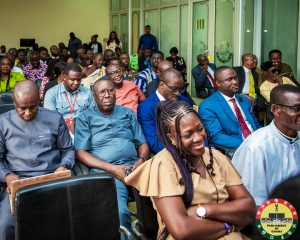
Some members of the Appointments Committee
John Jinapor: The preliminary work we have done, my target is to push for six months, but I do not want to stampede the committee if I am fortunate to get your approval. But give and take within this year, we should be able to do that. Because there are lessons that we have learned from the previous concession, and so that will be the building block. But as I said, we want to do that in a very transparent, open manner, and get the best for this country. Thank you.
Chairman: Thank you very much. We now take a question from Honourable Isaac Adongo. It’s now the turn of Honourable Isaac Adongo.
Isaac Adongo, MP, Bolgatanga Central: Thank you very much, Chairman. First, I want to congratulate my younger brother and to commend him for the speed with which he supported the President to resolve this issue. I have heard you mention some numbers.You said the bill we left was about $2.1 billion, and you translated that to about GH¢9 billion. But you say today it’s about $3 billion. Can you situate that in our reporting currency? What does that mean? $3 billion means what in cedis?
John Jinapor: Mr. Chairman, when you use a exchange rate of, say, 15, that’s 45 billion. So, in Ghana cedis, we’ve moved from about 9 billion to 45 billion. It would have been worse. What is even kept at the 45 billion is that another 45 billion has been collected on account of the Energy Sector Levies Act. So, but for the 45 billion that has accrued to the President Akufo-Addo government, the debt would have compounded, and that would have been much, much higher. But despite that, the debt today is about GH¢45 billion.
Chairman: I’m sorry. May I give the floor to Rockson-Nelson, Dafaemakpor.
Rockson-Nelson, Dafaemakpor, MP, South Dayi: Chairman, thank you very much. Let me use the opportunity to congratulate my brother.We entered Parliament together. We worked together. And we constituted the famous seven.And I know that he will deliver. Thank you very much, Mr. Chairman.
Chairman: Thank you very much. Let me give the floor to Agyinsam. One question.
Lawrence Agyinsam, MP, Hemang Lower Denkyira: Thank you, Mr. Chair.And congratulations to JJ. I come from a rural area. Till date, there are communities that do not have metres.And therefore, I want to find out from you. What will you do to improve ECG revenue collection?And will you support a proposal to phase out all postpaid metres to prepaid ones? Thank you.
John Jinapor: Thank you, Mr. Chairman. Mr. Chairman, the ideal way, like you said, is to get prepaid metres. Especially smart metres that can mimic all the requirements that you need. My meeting with ECG indicates that they have about 5.2 million metres. 4.8 are active. About 3 million of them are not working properly.
So, of the 4.8, 3 million metres are not working properly. So, they will need to change a minimum of 2.9 million metres in order to satisfy the market. Two, like you said, people want metres. They are unable to get the metres.Technology is advancing. So, we are exploring the possibility of selling the metres. Let people buy the metres. The true smart technology will licence some people to install the metres.
But you will need to send a code. Once you send a code, your mobile money is activated. And automatically, you are registered onto the system. Because sometimes it costs people more than four or five times to spend money to get a metre. So, if we make it readily available and use economics of scale, I’m sure the price will come down. So, it’s something we are working on. And we intend to roll that out as soon as we get your nod. Thank you.
Chairman: Thank you very much. It’s now the turn of Honourable Agnes Naa Momo Lartey
Agnes Naa Momo Lartey, MP, Krowor: Thank you very much, Mr. Chair. Let me take the opportunity to also congratulate the Honourable Member on his nomination. There’s something that is on the hearts and minds of most Ghanaians. And if we all have a way, we will contribute to ensuring that it doesn’t become a headache again.The issue of the inconsistency in the power supply.
Given the nod, what are you going to do? I have seen you take some pragmatic steps to aid the President. In the long term, what will you do to ensure that our power and our electricity supply stays on? Thank you.
John Jinapor: Thank you, Mr. Chairman. We have a current installed capacity of about 5,360 megawatts.A dependable capacity of about 4,800 megawatts. We’ve just hit a new peak demand of 4,100 megawatts. Our grid system is very, very resilient.
We’ve upgraded a lot of our lines from 161 to 330 and 331 KV lines. They are quite robust with a lot of injection of primary substations. The first problem we need to address is the issue of fuel. Fuel supply is a major, major problem confronting the sector. Currently, we have a deficit of about 40 to 60 mmscf of gas. If you take the gas from ENI, gas from Jubilee TEN, and then gas from NGAS, and you put it all together, you still have a deficit.
And so, you have to be depending on some level of light crude oil, some level of heavy fuel oil, and some level of diesel fuel oil. Our immediate objective will be to bridge that gap. We’ve met Jubilee partners.We’ve spoken to the partners and their operators, Tullow. We’ve also spoken to Ghana gas. They are currently doing 100 mmscf.We are confident that if they do some reconditioning, they can increase it to about 35 more. And that will give us a lot of buffers.
So, once we solve the fuel situation, and we have some liquid fuel reserves as a backup, we should be okay.The next one will be to deal with the financial challenges. I’ve gotten a letter from Karpower. We owe them $377 million. They are threatening to shut down. Tullow, a $100 million, they are threatening to shut down. ENI is threatening.
So, we need to deal with the financial challenge. So, these two, if we can get them right, we should be home and dry. Last year alone, Ministry of Finance spent about $28 billion on energy sector-related payments.That’s more than your capital expenditure, including even your goods and services. So, we have to look at how to drill down and bring about efficiency and be able to pay for what we consume. Thank you.
Chairman: Thank you very much. Minority leader, have a follow-up question.
Afenyo-Markin: Chairman, thank you so much. Honourable nominee, though the letter was Minister of Energy, but if you look at the Executive Instrument, it’s adding something to your portfolio. Are you aware of that?
John Jinapor: Leader, with the greater respect, I’ve seen it, but I’m only a nominee.
Afenyo-Markin: No, no, I’m saying whether you’re aware.
John Jinapor: I’m aware.
Afenyo-Markin: We’ll deal with it later. Let me go ahead with my follow-up question.So, on the 7th of January, 2025, I am reliably informed that on the said date, the light crude oil at Cenpower was for a period of 23 days. Do you agree to that?
John Jinapor: Yes, Leader.
Afenyo-Markin: Very well.If it was for 23 days, as you agree, then are you equally aware that GNPC, which has a contract with Stratcon for the supply of 12 million litres of HFO, is still supplying this to Aksa? Are you aware?
JohnJinapor: I’ve checked on that, and GMPC has indicated that they don’t have a contract with Stratcon to supply those litres. Thank you.
Afenyo-Markin: But do they take such supplies if they don’t have such contracts? Is there an arrangement where these supplies are delivered to them?
John Jinapor: I’ve done my check, and I can tell you that based on my check, there’s no such arrangement.
Afenyo-Markin: Now, would you be surprised to hear that on the 6th of January, they supplied 19,561 tonnes?
John Jinapor: I would not be surprised, and that’s one of the issues I intend to investigate when you approve me. It’s a subject matter for investigation.
Afenyo-Markin: So, have you become aware?
Chairman: Leader, you know the rules. A follow-up question must not exceed a certain limit, so I think, if you wouldn’t mind, I can give you the floor now to ask your questions.
Afenyo-Markin: Chairman, you see, the nominee in response to Honourable Momo Lartey’s question had made certain pronouncements. I only was breaking it down because I didn’t want to put it all together.I know I have to act within the rules, so please indulge me most respectfully. Indulge me. I only wanted to break it down, or else I could have put it all together as a composite question.
I didn’t want to do that because there are specific deliveries on certain dates, so please bear with me. Since you are aware that on the 6th of January, 19,561 tonnes worth of HFO was supplied, but your issue is that there was no contract for it to be investigated, but that was supplied? John Jinapor: No, I didn’t say that, Mr. Chairman. I didn’t say that.
Afenyo-Markin: Okay, no problem. Now, on the 8th, would you be surprised to hear that on the 8th of January, 44,124 was also supplied?
John Jinapor: Mr. Chairman, with the greatest of respect, I need your guidance. Leader, I respect you.The leader is asking me whether I would be surprised to hear that fuel has been delivered.
Afenyo-Markin. Okay, no problem. Let me put it differently.Have you become aware that on the 8th of January, 44,124 tonnes was supplied?
John Jinapor: Mr. Chairman, to answer this, on the 8th of January, this is official record, and I would respectfully make a copy available to the committee. And so, the HFO issue you are talking about, on the 8th of January, Cenpower, light crude oil, 260,000 tonnes, enough to cater for 23 days. Sunon-Asogli, DFO, which is diesel fuel oil, zero, KTPP, diesel fuel oil, enough to cater for 1.5 days.
Now, the HFO. On the 8th of January, Aksa, 440-metre Q, enough to cover for only 6 hours.So, officially, I wasn’t aware that some so-called 40,000 had been deposited. But let me be quick to say that the next day, I got to know that…
Afenyo-Markin: I don’t want to take you back. Please, can you avoid the use of the word so-called.
John Jinapor: Oh, I’m sorry. I’m sorry. Thank you for the guidance.
Afenyo-Markin: You’ve done well so far.
John Jinapor: Thank you, thank you. So, on the 9th of January, I got information that some people were discharging some heavy fuel oil into the tanks at Aksa.And already, the chief of staff had tasked me to lead a technical team to avoid this looming challenge in respect of these shortages of fuel. And like I told you, on the 8th of January, we had only 6 hours.
In fact, they said that taking it in the minimum requirement, it could last for only 5 hours.When I heard of it, I enquired. And then the Aksa MD told me that some people had come to deliver HFO. I asked him on whose authority.Leader, with the greatest of respect, I do not want to mention people’s names here. And you know why. I made it clear to them that those people were no longer in office.
And they had no mandate on the 9th of January to issue orders to him to receive those fuels. I called ECG. ECG was not aware.I called VRA. They were not aware. I called the ministry.Solomon is here. They were not aware. I called GNPC.They were not aware.
So, I advised the chief director to ask for a cessation of the delivery. And we reported to the chief of staff. It’s a matter of further investigation and an assumption of office, with your kind leave, we shall investigate that matter. Thank you very much.
Afenyo-Markin: So, they delivered it or they couldn’t deliver at all? Are we in receipt of that at the time you became aware?
John Jinapor: As far as I’m concerned, officially, government is not in receipt of any such delivery. They were in the process of delivering.But without any authorisation to deliver, we thought that they should hold on and let’s do what is right and proper. Thank you.
Afenyo-Markin: So, the five days that was originally out, you know, when the inauguration took place at the Independence Square, the media reported that you had alleged or you had said that we had only some five days of work, five hours.Yes, five hours.
Considering the fact that in your answer to me, you had indicated that Cenpower, hard fuel, that could last us for 23 days, would you want to reconcile the five hours and the 23 days, or would you want to shed some more light on it for clarity’s sake?
John Jinapor: There’s nothing to reconcile. I was specific.I said we have five hours of HFO. And it’s true. We have five hours of HFO.I said we had zero hours of DFO for Sunon-Asogli. And it’s true.
I gave a breakdown.But I don’t develop the headlines. I don’t write the stories. The recording is there.And the truth is that we have five hours of HFO. And if there’s any problem with gas supplies, we are going to lose as much as 370 megawatts in five hours’ time, which will lead to load shedding. So as far as I’m concerned, that is the fact.Thank you.
Chairman: Honourable Shaibu it’s now your turn. You have the floor.
Mahama Shaibu, MP, Daboya-Mankarigu: Thank you very much, Mr. Chairman. Mr. Chairman, let me use the opportunity to congratulate my younger brother for this great feat, the position he has achieved. Mr. Chairman, I mean, listening to the Honourable nominee, the biggest challenge he is coming to face.
Of course, let me put on record that the ministry you left eight years ago, you will not meet the same thing when you get there tomorrow. I’m sorry. The energy sector debt alone is so enormous.Now, we’ve zeroed down to zero. Now, in the value chain, you have a very critical player there, which is ECG, which unfortunately is the weakest link. And that’s the reason why we have this challenge.
To quote your own words, the power is produced and delivered. It is sold, but the revenue is not collected as efficiently as you said. Clearly, it boils down to accountability and efficiency.
Now, we have also zeroed down to the fact that you are not averse to privatisation. Indeed, His Excellency, when he met the World Bank a week ago, he made it clear that privatisation was the way to go. Would you consider taking into account we have been preaching about local content would you consider looking at institutional investors like SSNIT, like GNAT, and the rest? Would you consider them when you want to do the privatisation?
John Jinapor: Thank you very much, Mr. Chairman.Mr. Chairman, that would be the most ideal. If we could get institutions in Ghana taking up shares and getting a technical competent company, even from outside, it means that there will be a lot of value retention.
The main problem with ECG is not just the collection, but even how they spend or administer what they collect.They collect on average about GH¢1.3 billion every month. Only GH¢850 million or GH¢900 million goes into the cash waterfall mechanism.
So, what it means is that almost GH¢400 million does not find its way into the cash waterfall mechanism because they’ve signed all kinds of contracts. Yesterday at the meeting, it came to light that they have 2,500 containers sitting at the ports.
Contracts worth 9 billion have been signed. And because the containers are sitting at the port, the mortgage alone is 1.2 billion.So, beyond the collection, we also have to drill down on efficiency and ensure that they stick to the cash waterfall mechanism. Thank you.
Chairman: Thank you very much.May I give the floor to the Honourable Umar.
Alhassan Umar, MP, Zabzugu: Thank you, Chairman. Nominee, I want to use this opportunity to congratulate you, and I wish you well. Thank you.
Chairman: Thank you. It’s the turnoff, Michael, Aidoo.
Michael Aidoo, MP, Oforikrom: Thank you, Mr. Chairman. Honourable Nominee, congratulations. Looking at your CV, with your experience and vast background in the energy sector, I believe you’ll be conversant with the questions I’m going to ask.
Chairman: Are you saying questions?
Michael Aidoo: Yes.
Chairman: Please, you are entitled to a question.
Michael Aidoo: Okay. One of the major challenges in the downstream petroleum sector is the issue of forex. On the 11th of January, 2023, you published a post on Facebook, which you said that the G4O, that is the gold for oil policy, was opaque, clandestine, and a charade.
And then you also said that it’s going to promote smuggling of gold across Ghana’s borders. And then, in the same post, you said from your analysis, it is obvious this policy is not well thought through.Now, Mr. Nominee, I believe after your nomination, you’ve had calls to meet the management from BOST and NPA and other stakeholders in the industry.
Upon hindsight, do you still hold the same opinion. And then, if you are given the nod to lead the ministry, what will be your position on the gold for oil, taking into consideration that most of the importers who are bringing fuel to Ghana, one of the issues they look at is the issue of forex…
Chairman: Honourable Member, his position on gold for oil. Is that not the question?
Michael Aidoo: I’m not done, chairman. I’m not done, Chairman. I’m rounding up.
Chairman: Is that the question? I’m asking
Michael Aidoo: No, I’m not done. The question is coming.
Chairman: So, what do you mean by what is your position on gold for oil?
Mchael Aidoo: It’s the same question, so let me round up. Thank you, Chairman.
Chairman: I will forgive you because you are a first timer.
Michael Aidoo: So, considering that most of the importers consider the issue of forex as an issue when dealing with BOST, and the gold for oil came to mitigate that issue, and there is scarcity of forex, and in a month we need about 400 million USD to import petroleum products. So, what will be your position on the gold for oil policy, and how are you going to fix the issue of forex for importers?
Chairman: Honourable nominee, I believe the question is what is your position on gold for oil? You can ignore the commentaries and proceed to answer the question.
John Jinapor: Mr. Chairman, I refer to the 28th of November, 2023 publication, Bank of Ghana to phase out gold for oil policy, Bank of Ghana Governor announces.And so, I think that they are rather vindicating my position that it was not well thought out.
Family and Friends giving moral support to the minister-deesignate
If it was that good and it was solving the problem, you don’t phase out a policy, that is yielding result. What we will do, we will review it, we will analyse it, and ensure that we come out with a model that is fit for purpose, that ensures that we account for the gold.Honourable Ato Forson has already indicated that we want to form a gold board, which will aggregate all the gold.
We have an escrow account where the products or the hard currency will move into, so that we will use that to support fuel imports, but also support the payment of IPPs and the payment of gas. So, we are looking at a holistic, well-encompassing approach, rather than a narrow approach.Thank you.
Chairman: Thank you very much. It is now the turn of HonourableAyariga.
Mahama Ayariga, MP, Bawku Central: Congratulations. Dr. John Jinapor.Not many people know you are a doctor. You have a PhD now.Congratulations. Some people envy your CV, but it is a very rich CV. I had the opportunity to work with you during the transition exercise.You actually, on my behalf, led the Energy and Natural Resources Subcommittee.
During that process, I became totally convinced and satisfied that you are not just a walking encyclopaedia on all information relating to the energy sector, but that your capacity to think on your feet and devise solutions to the numerous challenges. So, on the basis of my observations, I have no questions for you, because I know you will answer all the questions satisfactorily. I can only wish you well, and I assure you of the support of this House, and I believe that you definitely will make a mark in the energy sector of Ghana. Thank you.
Chairman: Thank you very much, Honourable Charles Forson. One question, please.
Charles Forson, MP, Tema Central: Mr. Chairman, Honourable nominee, my good friend, this is from the good people of Tema Central and the management and staff of TOR.A direct question. What is there for TOR? And also, we do extract crude, but yet we have refinery corporations here, and they are begging for certain parcels to be given to them while they go out to struggle for dollars. What is the way forward? Thank you.
Chairman: Well, Honourable Member, is your question saying what is there for TOR, or what is he intending to do for TOR?
Charles Forson: The plan. The plan. He understands it.
Chairman: Honourable nominee, you may answer the question the way you understand it. John Jinapor: Thank you, Mr. Chairman. Honourable members, you may be aware that there is a Petroleum Revenue Management Act, and when you take crude, it makes it a limited period of time.You have to pay the money into the petroleum holding fund. So, for a refinery to take that, that refinery must satisfy that condition. TOR is a hydro-headed problem.
It’s a 45,000-barrel capacity refinery. The norm is that these days people are moving to huge refineries. If you take Dangote, it’s 650,000, and it’s even number seven. So, 45 is quite small. But our objective is to seek a strategic partner, refence the liabilities, and then use the assets as our capital injection and look for a strategic partner who is prepared to also inject some money.
Normally you need a staff of about 250 for such a refinery. Currently their staff are over 700. So, these are issues that we’ll have to sit and see how we can deal with them so that we bring the refinery back.Because since 2021, four years now, the refinery has not been working, and something must be done about it. Thank you.
Chairman: Thank you very much.I will now give the floor to Honourable Yaw Patrick Boamah.
Patrick Yaw Boamah, MP, Okaikoi Central: Thank you very much. Let me congratulate my very, very, very good brother, JJ.Congratulations. JJ, a lot of questions have been asked of you on the downstream. Let me take you to the upstream sector.And I’m sure as a man who grew up in Mampong, you know about the Voltarian Basin Programme.
I know you’ve been briefed by the Ministry and officials from GNPC about the programme around the Mampong-Agogo area. What do you know about the Voltarian Basin Programme, and how do you intend to add value to what your predecessors did, and how do you intend to ensure that it comes on full scale to add to the revenue base of the country in the energy sector? Thank you.
John Jinapor: Thank you, Mr. Chairman. You are right, because in the upstream sector, crude oil volumes are declining rapidly. From a peak of 71 million barrels in 2019, 2023, we did only 48 million.So, there’s a sharp decline of 32 percent. And if nothing is done, the upstream sector will collapse.
In the Voltarian Basin, I’m told they shot or shoot some QD seismic data.I’m also told that they’ve done some parcels of allocation, which ought to come to filaments. I intend that we’ll review that immediately, within days or weeks, if I get your Northern arms thrown in. If we review them and we find those agreements satisfactory, we’ll immediately come to filaments.
But I hold the view that we should relook Act 919. All our neighbours, their current and participating interest is 10 percent. And as we move through the energy transition, we must quickly, quickly tap your stranded assets. So, we will do a stakeholder engagement and get a buy-in of Ghanaians and incentivise the upstream players to invest, because it’s very expensive. And that is something that we intend to pursue aggressively, even as we go through the energy transition. Thank you.
Yaw Boamah: Yes, Minister. This is also on the upstream sector, which has seen some little or no investment in the sector.I wanted to tell Ghanaians some of the strategies you want to put in place to attract some of the big players in the upstream sector, like ExxonMobil. They came in and left Guyana.
We all know the issues around it.So, what are some of the steps that your good self will be putting in place? You just mentioned that you are going to Dubai to meet with LITASCO. And we want to find out what strategies you are going to put in place to attract some of the big players, since investments in that sector have gone down a bit. Thank you.
John Jinapor: Thank you. So, first is the incentives. We have a standard incentive for all the fields.That cannot work, because you have deep water, you have ultra-deep, and you have shallow water. It’s more expensive and technologically demanding to do deep water. So, the incentives for deep water should be different from that for shallow water.
Then the acreage, the size. Our information is that it’s too small, so we need to increase it. And some other incentives, but more importantly, is the posturing of government.These legal cases that we are losing in court, it hurts us a lot. The first option should be to negotiate. ENI went to court, we lost, Tullow went to court, we lost.
Energy Minister-Designate John Abdulai Jinapor answering a question from the Appointments Committee
GPGC went to court, we lost. Sahara went to court, we lost.It’s just one too many. So, we intend to sit around the table and dialogue. The trip, we are meeting Luke Oil, to work on the vacant fields with AFC, and the others.So, the first option is to try and sit around the table, find out the real problems, and try to resolve them. I’m sure some of these basic, basic interventions, if we can put them right, we can turn the clock around, and attract the oil majors. Thank you.
Yaw Boamah: Honourable Minister-designate. My last question.What are your primary objectives, or what do you want the country to remember you for within the next four years? I pray to God you are not reshuffled in the energy sector. That during John Jinapor’s era, issues of power theft, issues of transmission losses, no metre, arbitration issues in the power sector. What do you want Ghanaians to remember you for within the next four years as one of the youngest ministers of energy in the Republic of Ghana? I wish you the very best, my good friend.
John Jinapor: Mr. Chairman, I must admit that it’s a very difficult job. And as I get a briefing every day, I’m reminded that I’m stepping into a very, very difficult job. I want you to remember as a young minister who insists on discipline.And I tell you, I insist on discipline. I know we step on some toes, but we step on those toes gently. More importantly, honesty.
And then, I want to approach this work with integrity, hard work, but with humility. I will do my best. I know it’s difficult but I’m convinced that given the array of people around including those of you on the table, I will consult all of you and do what is right and proper. But let me make it clear that we will ensure that there is discipline in that sector. Thank you.
Kwame Governs Agbodza, MP, Adaklu: Chairman thank you very much. I want to take the opportunity to also congratulate my good friend, our principal voice on energy-related matters. I must say the caucus is proud of you.You have been an excellent choice for our caucus on energy.
And I have no doubt the president got that right by nominating you. I don’t have a question for you.All I have to say is that those of us who dwell in the villages, in the past four years particularly, many of us anticipated extension of electricity to cover many of our villages to take advantage of the new ICT revolution in the world. We never got it because we don’t have power.
So, if you were to give us laptops, those laptops in many of our communities are not used in the schools because we can’t charge them.And so, I also noticed that a colleague has already raised it. Many communities we all share have problems where half of the town uses one metre.
And they don’t benefit from the threshold to build to support vulnerable people because their consumptions have gone beyond what was anticipated.Not because they are individually consuming more than they are consuming, but because they are clustering around one metre.
I just want to remind you of this and say that the rural people have trust that you can make an intervention that brings electricity to their communities and also those who have electricity also can have the metres they deserve so everybody can take responsibility for whatever he consumes and pay rightly for it so we can mitigate these unreasonable distribution losses which is piling up the debt that we all have. I wish you very well and I have no doubt you will excel with the support of the caucus, the parliament and the country.Thank you very much.
Chairman: Thank you for the compliments. It’s now the turn of Honourable Deputy Leader.
Patricia Appiagyei, MP, Asokwa: Thank you very much Honourable Jinapor. I wish to take this opportunity to congratulate you for your appointment as the minister-designate for energy. I’d like to commence this interrogation by going through your CV on item number 6V. Item number 6V.
I notice that you’ve been the Chairman for Nuclear Energy Programme Implementing Organisation.As a Minister-designate, I know that you have been adequately informed about the progress so far made in trying to introduce the use of nuclear power in the country.
If you don’t mind, if you can apprise us, as other people in the country are listening to you, of where we are with the promotion of the use of nuclear power, and what will be your commitment to ensure that the future, in the next four years, we’ll be commencing the implementation of nuclear power. Thank you.
John Jinapor: Thank you. Deputy Leader, it’s true, I chaired in the bill. So, at my last briefing, they’ve identified two sites. They’ve also identified two countries, China and the USA, and they’ve identified two technologies. The bigger nuclear plant, which can give you about 1,200 to 1,400 megawatts.
And the modular plants, which gives you just 100, 100, 100, 100. And so, in South Africa, they use what they call pebble bed. So, the option is to look at the smaller ones. They are easier to manage, they are modular, and they can deal with the red light. Like you said, I asked them a specific question.
Can we switch power on before we leave office? And nuclear has serious milestones. And so, the information I have is that the earliest we can get power from nuclear is six years. That is, even if we tick all the boxes. And so, we have a lot to do. And we’ll try and push it to the best of our ability. Thank you.
Patricia Appiagyei: Thank you very much. There is a proposed merger between the VRA and the Bui Power Authority. The proposed merger, if you have to well briefed, we will like to know what the timeline will be and how are we going to implement that kind of merger? Thank you.
John Jinapor: Thank you, Chairman. That proposed measure is on our table. Except that our approach is different.We believe that we can merge Bui Power and VRA so that you have something like Ghana Power Company or whatever. We do not intend to privatise.
So, when you merge them, you have a holding company and three subsidiaries.Hydro components, thermal components, and renewable components. All under one umbrella. But controlled by both VRA and Bui.They will determine how they want to run it. They will determine how they want to move with it. We do not intend to privatise any of those plants.Because they produce about 45% of our national requirement.
And as a strategic step, you do not put all your energy assets in private hands. So let me assure the workers.We’ll consult them. This is just an idea that we intend to implement. If we need to tweak it, we will do that with them.And bring about efficiency. Thank you.
Patricia Appiagyei: Thank you very much.Do I get that understanding that currently, the VRA is responsible for both hydro and gas. Does it mean that you are leaving everything for them, for both Bui and VRA, and will be operating alongside if you are having just one company as an energy? Thank you.
John Jinapor: What we intend to do is to consolidate them.And then increase specialisation and efficiency. Because there are some hydro people at Bui. There are some renewable guys at Bui. There are some hydro people at VRA. They are also doing renewables.
So why don’t we bring all the renewable people under one umbrella? So that their expertise is renewables.Especially as the ministry’s mandate focusses more on green transition. Then the hydro, bring all the hydro technicians under one.So that procurements and all that, they can reduce losses and increase efficiency.
The same with thermal plant but then is the same company that get the receivables and they can then apportion them base on how they believe will bring about efficiency and net gain. Thank you.
Patricia Appiagyei: I have just one further question which is of interest. How do you intend to ensure that energy prices remain affordable for the ordinary Ghanaian?
John Jinapor: The first requirement of this sector is the anchoring of the currency. A lot of the receivable, a lot of the expenditure is dollar denominated. So, the economic section at the Ministry of Finance and the Bank of Ghana will have to work very hard to anchor the currency.
Because ECG alone has a forex loss of 1.5 billion. Somebody has to pay for that. So, we have to ensure that we anchor the currency. Then on our side, from the technical side, we have to ensure that we bring about efficiency. Because if you increase the collection then there will be no need to increase the tariffs. Because there will be enough in the pot.
So, it has to be two-side approach; the economic side has to increase the collection, and then from where we are, we have to increase efficiency, consume more gas, reduce the loss and increase the resilience of the grid. When you do that you make a lot of saving and when you make a lot of savings you can pass it on to the consumers.
Chairman: Honourable leader has one supplementary question.
Afenyo-Markin: Yes, Honourablenominee. This is not really a question. You had made a point earlier that ENI, Vitor, disputeGhana lost the case. I just wanted to get a clarification. Whether perhaps you slipped, or I didn’t hear you correctly.
Because I know for a fact that in that international arbitration, the tribunal dismissed the 950 million claim against GNPC and Ghana. So, I just wanted for the record. Maybe I didn’t hear you right in your earlier response.
John Jinapor: Chairman, ENI went for two reliefs. There was an order of unitisation from government. ENI went to the court of arbitration that government did not follow due process.Two, ENI then asked for compensation in terms of monetary compensation. So, the first issue of government issuing that directive, the court of arbitration agreed with E&I and disagreed with government.
So that directive, which is the substantive issue, as far as I’m concerned, ENI had its way, is the next leg, which is to say, compensate me.That the court of arbitration thought that there was no need to compensate them. But the substantive issue of the directive, the court of arbitration has insisted. And because of that, Springfield has now drilled a well.And we are waiting for the results of the appraisal to determine the way forward. Thank you. Thank you very much.
Afenyo-Markin: You are bringing out an important matter. Are you saying that in the issue one, where the court of arbitration, the tribunal, agreed with the issue raised by ENI, it resulted in any financial or resulted in any financial loss to the state. The public is listening and watching. So, I just want us to have clarity. According to you, the compensation bit, their claim was dismissed.Which is a matter of public record.
But then, you are also telling us that there was an issue as to decisions that government had taken. And whether or not those decisions were right.You are saying that their question on those decisions was upheld by the tribunal. My question then to you is this. Was there any cost to government as a result of that relief? Was there any loss to the state as a result of that relief? That is what I wanted to know.
John Jinapor: So, in simple terms, the only loss is that the state was directed to make some payments in respect of legal matters. So, for instance, if you go to court, the cost of arbitration, the cost for legal services, the state was directed to pay that. Whether that is cost or not, I leave it for you, the lawyers.But I’m saying that this is what the court decided. I don’t want to put interpretation on whether those payments constitute cost or not. Because I’m not a lawyer and I do not want to step into that arena.Thank you.
Afenyo-Markin: Honourable nominee, I will land on this very important point. You see, we are talking about a ruling of a tribunal, a judgement, the outcome of a case.I don’t want us to be rhetorical about it or be hypothetical or whatever. A fact remains a fact. Was there any order made against government in that arbitration? And if so, and you have reference to that, can you tell us exactly the orders that were made against the government of Ghana and GNPC? Respectfully, sir.
John Jinapor: Thank you, Mr. Chairman. So, government of Ghana issued an order that two parties unify.So, let’s put it in single terms. It says that male and female marry. That’s the order from the father.
Then one party goes to court and says that no, government is wrong. You can’t just access to marry. You are jumping the gun.And arbitration upheld that. And says the government was wrong in asking the two parties to marry or unify. That’s all.It’s as simple as that.
Afenyo-Markin: Chairman, I’m reading from the website of City FM which website is hostingIt is hosting the ruling. And it’s quoting the full ruling.It’s not their write-up. I just want to read that.
The tribunal denied the claimants, ENI and Vitor, their monetary damages which initially stood at $7 billion but were later reduced to $950 million plus interest by the end of the procedure.The tribunal dismissed all claims, all claims against GMPC entirely. Additionally, the tribunal rejected the claimants’ request to declare that Ghana breached petroleum agreement by refusing to withdraw or prevent reliance by third parties on the unitisation directive.
The tribunal also dismissed the claimants’ request for Ghana to notify the High Court, Court of Appeal, and Supreme Court of Ghana that the unitisation directive were issued in breach of the petroleum agreement.I mean, this is a matter that I’m lifting directly from the ruling. I just want to bring it to our collective attention. So, I’m just saying that there was no such claim, such order made against any of the respondents from the ruling.
John Jinapor: Honourable Afenyo-Markin, it does appear that maybe because you were in a hurry you jumped one line. Let me just read that for you. However, the tribunal find that in the circumstances in which they were issued, the unitisation directive breached the petroleum agreement.Simple. It’s on the City FM. It’s there.The very one you are reading. It’s there.
Afenyo-Markin: Colleague, colleague, I this a is a legal matter.The last I will do is to trade my profession. I will not.I will not. I am reading up to the end. I am reading up to the end respectfully.It’s reached that the tribunal dismiss all claims against the GNPC entirely in the minimum. My law is okay.
Additionally, the tribunal rejected the claimant’s request to declare that Ghana breached the petroleum agreement by refusing to withdraw or prevent reliance by third parties on the unitisation directives.The last paragraph, and I’m not running away from any paragraph.
I wouldn’t want to put my reputation on the line on this. The last paragraph reads, the tribunal also dismissed the claimant’s request for Ghana to notify the High Court, Court of Appeal and Supreme Court of Ghana that the unitisation directives were issued in breach of the petroleum agreement.
John Jinapor: Mr. Chairman, thank you very much for the education. Once you give me the nod, I will consult the Attorney General. The Attorney General will guide me.
Chairman: Thank you very much. In the midst of the disagreement, I’ll give the opportunity to HonourableAyariga to read what he’s also had to say.Please go ahead and read.
Mahama Ayariga: No, it’s not about opening the Pandorax box. He’s read something he claims to be the outcome of the litigation. This is the report.It says that Ghana has suffered a setback in an international arbitration case concerning its attempt to unitise offshore oil fields but avoided potentially significant financial damages.
So, there were two issues. Ghana sought to get them to unitise.And in that respect, Ghana suffered a loss because the court did not agree with Ghana. But then Ghana avoided financial loss, that is payment of damages or any compensation. And that is exactly what he has reported.So please, why?
You can read from a website. I cannot read from a website. Please.It’s here. We are both reading from the website. We’re all reading from the website.Yes. It’s here. You can take it.I’m giving it to you. Take it.
Chairman: We cannot allow the contradictions.If you have any doubts, you can take it and read it. It is the publications at the website. So, we may progress.Honourable Deputy Majority Leader, you have your turn. HonourableBuah, you may have the floor.
Emmanuel Armah Kofi Buah, MP, Ellembelle: Honourable John AbdulaiJinapor, congratulations. You first walked into the ministry of energy as my deputy and I am very proud of you. I think that you are sitting in that chair because you have dedicated youron humility and worked your way up.
You became our ranking and you led the team very, very well. And so, there’s no doubt in my mind that you’re going to be a very successful energy minister.I have three things that I want to guide you. You may not even answer them. But you know that the upstream sector is in complete disarray.With all the big players gone, oil production has declined by 37%.
And continuing the last eight years, the three producing fields that we brought on stream, nothing has been added. You talked a lot about the challenges and the court cases you lost.And so, I hope that that will really engage your attention in the strategies to increase oil production and bring the big boys back. And I know that you talked about that. We need to really get to gas efficiency and make sure we get gas security.That is the key to the energy sector.
And I’m very sure that you focus on that as well. I think you talked about the indebtedness.I’m sure you will tell us that when we were leaving power, how much we left in debt. And whether or not it’s true that we left $5 billion. The issue of renewable energy in an energy transition is critical.And that’s probably why the energy sector is now energy and then the transition.
And so, I believe that you really add the issue of renewable energy as well. The last point is the issue of SML and all the issue of transparency that came up.I believe that we will look into that issue so that it doesn’t happen again. Honurable Dr. I wish you all the best and there is no doubt that you will be successful.
John Jinapor: Mr. Chairman, I cannot but thank HonourableBuah. I stepped into that Ministry knowing nothing about energy. But he’s been very useful as a mentor. The only thing I’ve learnt from him is hard work. And so I thnk him very much.
Chairman: Thank you. Any closing remarks from the Minority Leader?
Afenyo-Markin: Chairman, we experience ups and downs in this. I believe that the matter that came up we would have another opportunity to discuss it on the floor. And I would also want to plead with colleagues that if you didn’t get the opportunity to raise any issue by way of question, the next stage of this pre-approval process would be the debate on the report of the committee.
So, you would have the opportunity to raise all other issues for Hansard to capture your views. I would want to thank you for indulging us on these two nominees. And we see what next to be done.Thank you so much indeed, Chair.
Chairman: Thank you very much, Minority Leader. Let me use the opportunity to sincerely thank the nominee for attending upon the committee and providing answers to questions posed.And to say that Honourable Minister-designate, you will surely hear from the committee. Thank you very much.
John Jinapor: Thank you, Mr. Chairman.I’m most grateful. You are discharged.

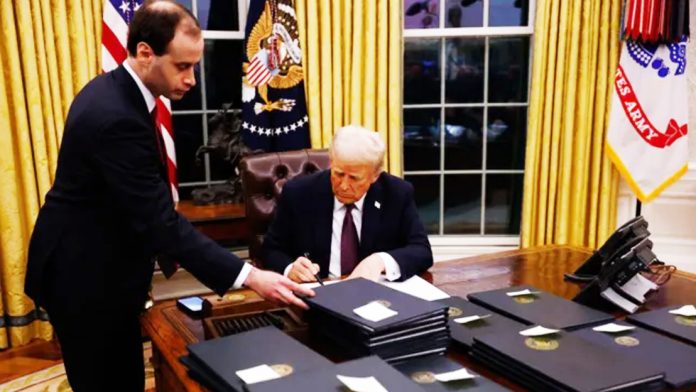

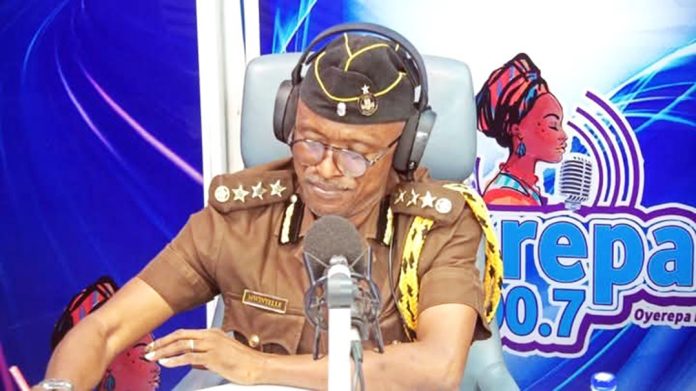



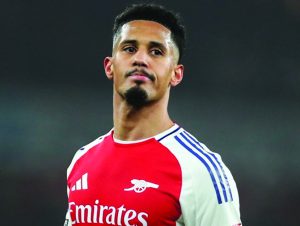
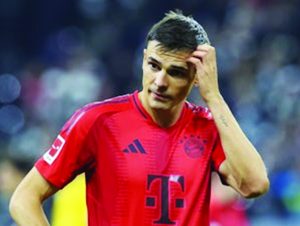

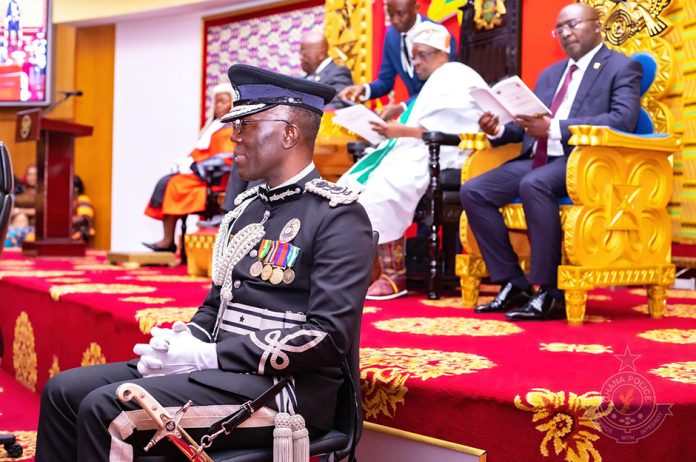
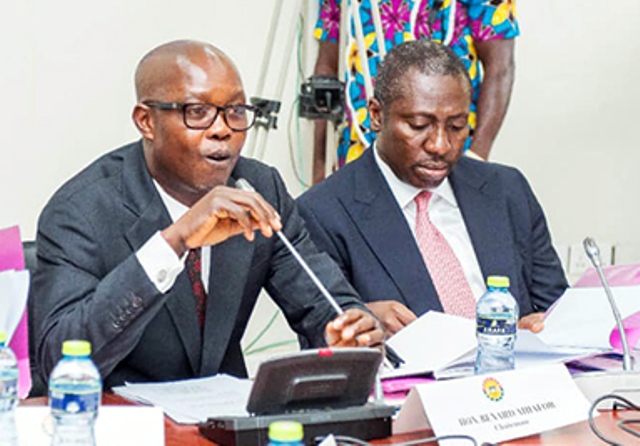
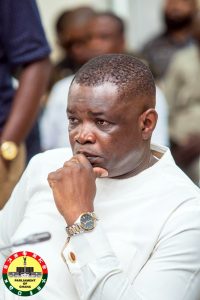
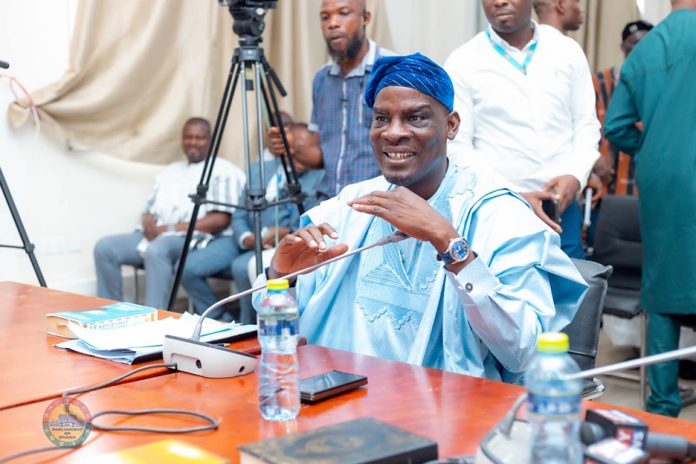
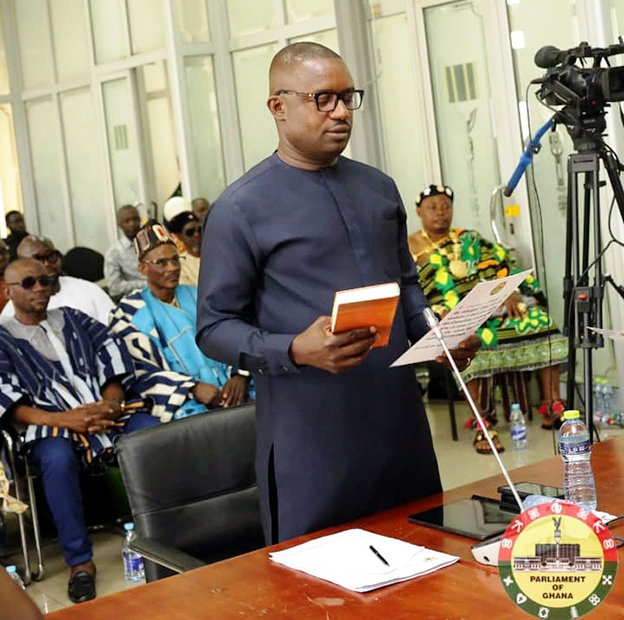
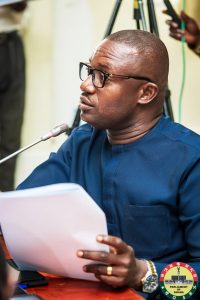
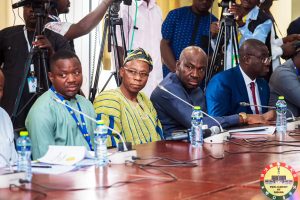
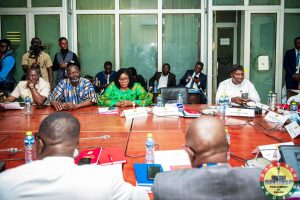
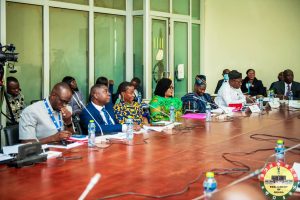 Afenyo-Markin: Now, would you be surprised to hear that on the 6th of January, they supplied 19,561 tonnes?