Home Blog Page 1021

Parliament Approves Six Ministers

0
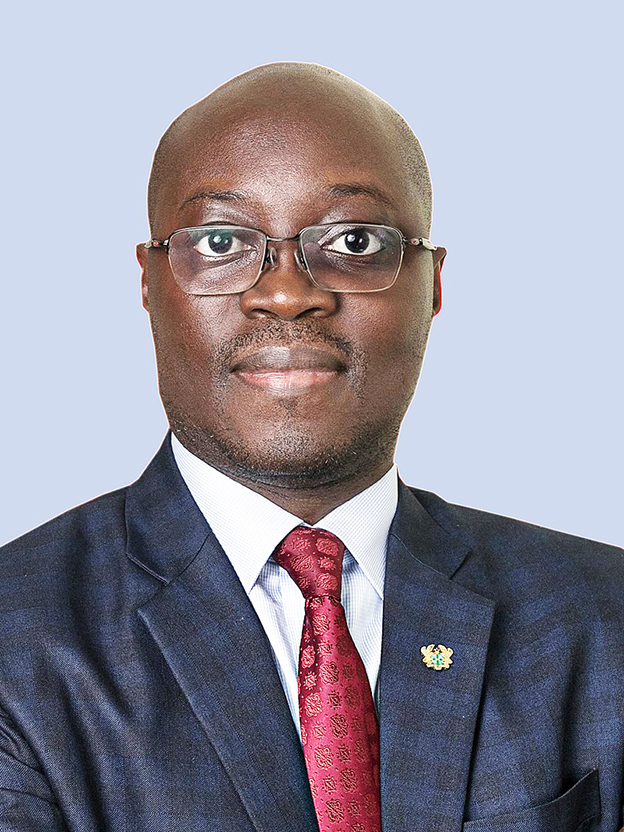
Dr Cassiel Ato Baah Forson – Minister for Finance

Parliament has approved by consensus six ministerial nominees of President John Dramani Mahama. The nominees approved include Dr. Ato Forson, John Jinapor, and Dr. Dominic Ayine for the positions of ministers for Finance, Energy and Attorney General and Minister for Justice.

The rest are Kwame Governs Agbodza for Roads and Highways, Eric Opoku for Food and Agriculture and Haruna Iddrisu for the ministry of Education.

The parliamentary approval was given on Tuesday, January 21, 2025 following the adoption of the two separate reports of the Appointments Committee on the vetting of these ministers-designate.

The motions for the adoption of the committee’s reports, moved by the Chairman of the Appointments Committee, Bernard Ahiafor, were seconded by the Ranking Member, Alexander Afenyo-Markin.

The Second Deputy Speaker, Andrew Amoako Asiamah, who was in the Speaker’s chair, allowed submissions from members on the report, which recommended approval of the House by consensus.
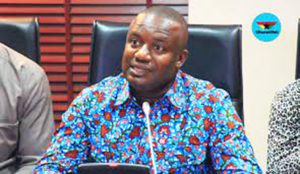
Mr John Abdulai Jinapor – Minister for Energy

Members from both sides described the nominees in very profound manner, urging the House to approve all of them.

“Honourable members, at the conclusion of the debate, as many as are in favour of the motion listed in today’s order paper say Aye; all those against say No. Honourable members, it is obvious the Ayes have it.

“The motion is here adopted. And that this Honourable House has adopted” the President’s nominations as minister-designate for the Office of the Attorney General and Minister for Justice,” the Speaker announced for the first part.

DEBATE

The competences of all six were not in dispute, as all those who made comments alluded to that fact, particularly as some were deputy ministers and now to be substantive ministers, pending swearing in by the president.

The Minority Leader, Alexander Afenyo-Markin, in seconding the two reports separately, indicated that his side would hold the feet of the ministers and by extension the government to fire.

He raised concerns about the promise of free first year tertiary education, the taxes promised to be abolished, the energy sector and reminded government not to relent on its promises.

“We will hold your feet to the fire. You say we are micro-minority. You will see. When you were on the campaign promising, you thought it was just that, now you are in government. Very soon Ghanaians will see the true picture,” the Effutu MP put the majority on notice.

The Members of Parliament for Pusiga, LaadiAyiiAyamba and Cape Coast South Kweku Rickett-Hagan, indicated that the minister-designate for finance would excel in his position, particularly to deal with the E-levy.

On his part, he said he had confidence in the three nominees that the president had appointed and had no doubt that they would excel.

“I would only say that they should not disappoint when given the nod. Mr. Speaker, thank you,” he added.

The Member of Parliament for Ofoase-Ayirebi, while urging the House to approve the nominees, stated that the finance minister, if approved, should not abolish the e-levy and betting tax and “introduce new ones or rename new ones.”
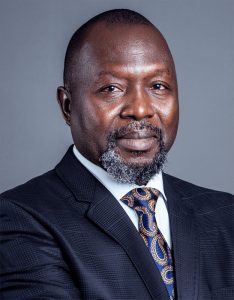
Dr Dominic Akuritinga Ayine – Attorney-General and Minister for Justice

The Member of Parliament for Takoradi, Kwabena Okyere-Darko-Mensah, while urging the House to also approve John Jinapor for the Energy Ministry, his prayer was that “dumsor does not come back.”

He said the Attorney General nominee was competent enough to assume the position he had been appointed for. The Member of Parliament for Tano South, Dr. Gideon Boako, spoke highly of the competences of the nominees.

On the finance minister-designate, he reminded him that he was going to take investment decisions, financing decisions and budgeting decisions. He indicated that as a country, “we need to enter into a contract with value for money for the country.”

He mentioned that the loan for the Terminal 3 project was with over 8% interest, but the previous government of Akufo-Addo renegotiated to 5%. He mentioned the Pokuase Interchange and others.

The Member for Parliament for Bosomtwe, Dr. Yaw Osei Adutwum, in his submission indicated that Ghanaians look forward to the government fulfilling the promise of free tertiary education. He urged the government that considering that people had already applied on the assurances of free first year fees, if the government is committed to its promise, should direct the tertiary schools to allow the student to start the school as it readies itself to pay the fees as promised, instead of asking the students to pay and be reimbursed later, as stated by the Education Minister-designate at his vetting.

Eric Edem Agbana, MP for Ketu North said that he was confident that the minister-designate for Roads and Highways would improve on road networks in Ghana, and thus should be approved.

The Member of Parliament for Assin South, John Ntim Fordjour, in urging the House to approve the nominees, also urged the minister-designate for Agriculture, Eric Opoku, to ensure that cocoa farmers are paid GH¢6,000 per bag as the government promised.
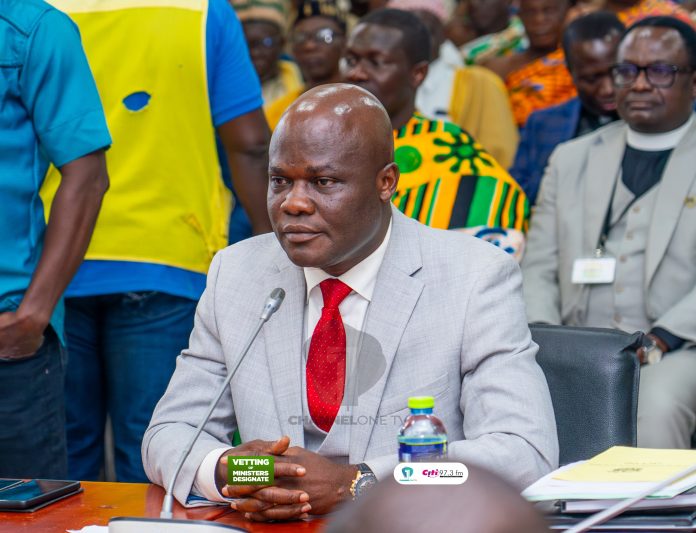
DRIP was politicised & destroyed at birth, but we will restore it -Ahmed Ibrahim

0
Ahmed Ibrahim

The minister-designate for Local Government, Chieftaincy and Religious Affairs, Ahmed Ibrahim, had bemoaned that the District Roads Improvement Programmes (DRIP), even though a good initiative, was politicised and destroyed at birth.

He said this during his appearance before Parliament’s Appointments Committee on January 21, 2025.

“Mr Chairman, the DRIP contract was politicised and destroyed at birth, but we can rejuvenate it,” he said.

He explained that while the idea behind the program was excellent, it suffered from missteps when it was procured by the Office of the President instead of the Ministry of Local Government.

He clarified that the DRIP machines, which were meant to improve road conditions across districts, were not fully paid for and the administration was unaware of the details of the procurement.

“The money that was supposed to be given to the administrator to procure the machines never fully reached its intended destination,” he explained.

Mr. Ibrahim committed to reviving the program, ensuring that the machines are put to use to serve the intended purpose.

“We must put the machines into good use with proper structures, agreements, monitoring, and systems,” he emphasised.

Mr Ibrahim revealed the Ministry lacks any documentation or inventory of DRIP machines procured through the Office of the President.

“No District Chief Executive or ministry worker can show you any agreement of the DRIP project,” he told the committee.

He acknowledged that the lack of management contracts, spare parts and committees to oversee the program was a significant challenge.

Nevertheless, he reassured the committee that if given the nod, he would work with his team and the broader ministry to restore DRIP to its full potential, ultimately benefiting the communities it was designed to serve.The DRIP initiative, which was commissioned under the Nana Addo Dankwa Akufo-Addo administration, aims to improve road networks across districts in Ghana to enhance accessibility and foster economic development. Another question raised during the vetting was the position of the District Assembly Common Fund (DACF) administrator and whether the minister would have oversight over the role.

The query referenced the differing constitutional provisions on the appointment of the DACF administrator, citing both consultation with the Council of State and parliamentary approval as required by Articles 70 and 2524 of the 1992 Constitution.

In his response, Mr. Ibrahim clarified that while the law has changed since 2016, creating confusion about the administrator’s accountability, he believes the DACF administrator should report to the minister.

He cited previous challenges in the practical implementation of the law and argued that the law needed revisiting. “The law must be revisited to correct the defects and address the practical challenges we’ve encountered,” he stated.

He emphasised that the minister for local government should have a supervisory role to oversee the functioning of the DACF and ensure that funds are properly allocated to the various district assemblies.

Local Governance

When asked about improving the local economy within the Metropolitan, Municipal and District Assemblies (MMDAs), he emphasised the importance of leveraging the comparative natural advantages of each district.

“Development of the local economy is one of the core mandates of the MMDAs and we need strategies to improve the local economy in every district,” he said.

He proposed working collaboratively with former ministers and other stakeholders to formulate strategies that would empower MMDAs to contribute meaningfully to the national economy.

When asked about the lack of adequate human resources in the local governance sector. Mr. Ibrahim acknowledged this issue, noting the shortage of skilled professionals and the need for more educational opportunities.

He reassured the committee that he would prioritize efforts to address this by pushing for the establishment of more universities to meet the growing demand for higher education in local governance.

Property Rate Collection

He pointed out that property rates were a major source of revenue for the MMDAs and criticized the centralization of property rate collection.

“We must decentralise property rates collection and allow MMDAs to retain control over this vital source of revenue,” he argued. He noted that previous efforts to centralize property rate collection had not been successful and emphasized the need for more effective local management of property taxes.

He also suggested exploring other avenues to boost local revenue, including utilising the comparative advantages of different districts to attract investment and enhance economic activities at the local level.

Mr Ibrahim stressed the importance of collaboration in tackling the challenges faced by the local governance sector. He expressed confidence that by working together with past ministers, local governance practitioners, and parliamentarians, progress could be made in addressing the issues at hand.

“We have the men on both sides. If we put everything together, we will solve Ghana’s problems,” he concluded.

Mr. Ibrahim pledged to end the persistent tensions between Members of Parliament (MPs) and Metropolitan, Municipal, and District Chief Executives (MMDCs).

“There is always this tough war between MMDCs and MPs. Even political parties have had to intervene to stop MMDCs with parliamentary ambitions from destabilising sitting MPs,” he remarked.

He explained that these conflicts often arise when both sides fail to respect their distinct roles. To address this, he proposed regular meetings to clarify job descriptions and foster cooperation.

“As a minister, I will not allow any DCE to disrespect an MP, and MPs must also respect DCEs. When everyone focuses on their jurisdiction, there will be peace,” he assured the Committee.

Editorial: Obuasi Violence: There Was A Swallow, Period!

0
Editorial

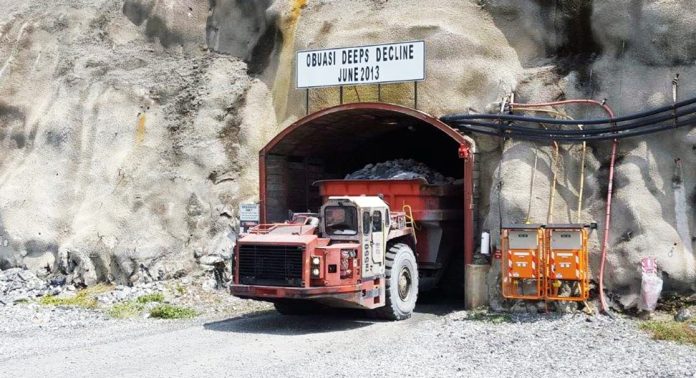
Soldiers stationed at AngloGold Ashanti (AGA) Obuasi mines reportedly opened fire on some illegal miners who had entered the concession of the mining giants to mine for gold without approval from any authority. Nine people have so far been confirmed dead when the bullets stopped flying at the spot the confusion erupted.

The miners claim AGA had stopped mining in the pit they had wanted to enter to mine for gold and that they did not understand why the military personnel on duty should open fire and kill some of them when they did not confront them. Both the Member of Parliament for the area on the ticket of the New Patriotic Party (NPP) and the National Democratic Congress (NDC) parliamentary candidate for the same area seem to be supporting the miners.

The military high command on the other hand has explained through a statement that the illegal miners came to the protected concession well-armed with cutlasses, guns and other offensive weapons. The Military further claimed that it was the miners who first opened fire on their troops without any provocation. Looking at their sheer numbers and for the fact that these miners were firing at them, they (military) were left with no option than to return fire, resulting in the death of the nine miners.

To the Military High Command, their personnel acted in self-defence and advised the civilian population to stop firing at troops who are well armed for no reasonable cause. First of all, The Chronicle extends its heartfelt condolences to the families of the deceased miners because human life is simply irreplaceable.

We dare, however, say that the military cannot this time be blamed for what has happened. When military personnel from the Burma Camp went and attacked the residents of Ashaiman some two or so years ago, over the killing of a soldier, we used this very column and our front pages to condemn the conduct of the officers.

We made it clear that what happened to the deceased soldier was a pure criminal conduct perpetrated by certain individuals and that the people of Ashaiman should not suffer collective punishment for it. We went further to state at the time that the fact that they (military) have access to weapons and also the monopoly over the use force does not mean they should abuse their powers or act capriciously.

But the Ashaiman case cannot be equated to what happened at Obuasi on Sunday, this week. This time the military personnel, in our view, did not act ultra-vires but acted within the ambit of the law. Though the miners claim they did not provoke the soldiers before they fired to kill some of them, we will not, though not right at the spot, accept this alibi. Yes, we admit that soldiers are usually trained to kill, but no sensible soldiers will just pick up a gun and start firing at human beings just because he or she has been trained to kill.

The mining company deployed the soldiers to the mines for a purpose – to protect its assets against intruders. The military men cannot, therefore, sit idle when large number of illegal miners had invaded the mines without any reaction from them.

It was, therefore, wrong for the miners to claim that they did not provoke the military personnel, when their going there in the first place was an illegality. Ghana is not a banana republic – it is a country governed by a constitution – and it is the same constitution that has given AGA right to own the concession. It was, therefore, wrong for the illegal miners to have invaded the legally acquired concession in search of gold.

We must sometimes be bold to call a spade a spade and not a big spoon. The fact that the youth are looking for jobs does not mean that they should forcibly take over one’s property.

In Our opinion, whether it was Jonah who swallowed the whale or the whale that swallowed Jonah, the truth is that there was a ‘swallow’.  The illegal miners entered into a private property without any legal authorisation, period!

We nevertheless welcome President Mahama’s order to investigate the matter for the truth to come out.  Our hard stance should, however, not be misconstrued to mean that we are supporting the killing of fellow human beings.

That certainly is not our position – what we want Ghanaians to understand is that the miners acted illegally, but because of the casualties they have suffered, they are courting the sympathy of the public, which is wrong.

PMMC’s boss pledges inclusive approach to mineral wealth management  

0
Mr Sammy Gyamfi, Acting Managing Director of PMMC

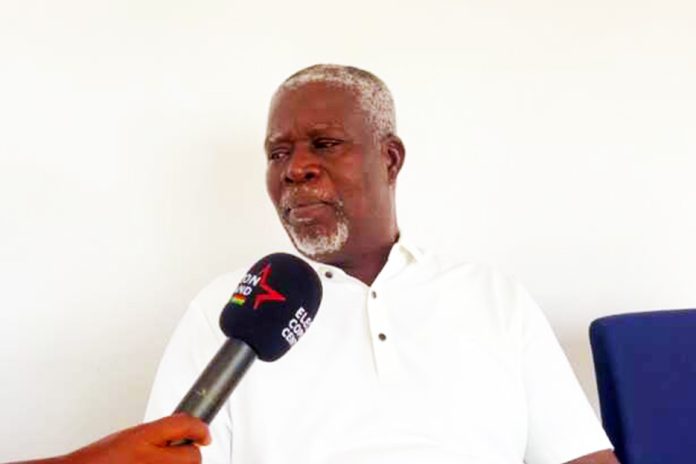
Mr Sammy Gyamfi, the Acting Managing Director of the Precious Minerals Marketing Company (PMMC), has vowed to prioritize transparency, stakeholder engagement, and the equitable distribution of the country’s mineral wealth.

Mr Gyamfi, a seasoned legal professional with extensive experience in the minerals sector, has officially taken the helm of PMMC, succeeding the outgoing Managing Director, Nana Akwasi Awuah.

During his formal introduction to the company’s staff, Mr. Gyamfi outlined his vision for the way forward, emphasizing the need for a collaborative and inclusive approach.

“PMMC’s role as the custodian of Ghana’s precious mineral resources is of paramount importance, and I am committed to ensuring that we fulfill this responsibility in a manner that benefits all Ghanaians,” he said.

He said this would require strengthening the Company’s partnerships with local communities, mining companies, and regulatory bodies, as well as enhancing the overall governance and transparency of our operations.

The transition at PMMC comes at a critical juncture, as the country grapples with the complexities of resource governance and the need to ensure that the benefits of mineral wealth are equitably distributed.

Mr. Gyamfi’s appointment is a demonstration of the government’s commitment to professionalizing and strengthening the management of state-owned enterprises, a key priority in the pursuit of inclusive and sustainable development.

Mr. Gyamfi, who brings a wealth of legal expertise, and a deep understanding of the minerals sector pledged to work tirelessly to uphold the core values and objectives of PMMC, which include the effective regulation and marketing of Ghana’s precious minerals.

“My primary focus will be to ensure that PMMC remains a trusted custodian of the country’s mineral wealth, while also exploring new avenues for growth and diversification. We have a responsibility to the people of Ghana to maximize the benefits of our natural resources and to do so in a manner that is transparent, accountable, and aligned with the national interest,” he added.

He said collaboration and open communication would be at the heart of his approach.

“We cannot achieve our objectives in isolation, and I am committed to fostering an environment of mutual understanding and shared purpose with the people who live in the shadow of these lucrative mining operations,” he said

Mr. Gyamfi promised to work closely with the relevant government authorities to align PMMC’s operations with the broader initiatives to enhance the governance and management of the country’s extractive industries.

Mr. Awuah, the outgoing Managing Director, commended the efforts of the PMMC team, highlighting the significant strides made in recent years in areas such as financial management, operational efficiency, and the protection of the company’s core mandate.

“The success we have achieved is proof of the hard work and dedication of each and every one of you. I have no doubt that with Sammy at the helm, this company will continue to thrive and reach new heights,” Mr. Awuah said.

Madam Joycelyn Mends-Ainoo, the Director of Human Resources and Administration at PMMC, expressed her confidence in the new leadership, emphasizing the importance of maintaining a seamless transition for the benefit of the company’s operations and its employees.

“We are excited to welcome Mr Gyamfi to the PMMC family. His expertise, coupled with his dedication to the company’s mission, make him the ideal candidate to lead us into the future. We pledge our full support and commitment to working alongside him to achieve our shared goals,” Mrs. Mends-Ainoo said.

As the new Managing Director takes the helm, PMMC employees have expressed their optimism and eagerness to contribute to the company’s continued growth and success.

Mr Ernest Asiedu-Odei, Director of Corporate Planning, said, “This is a new chapter for PMMC, and we are ready to embrace the challenge. With Mr. Sammy’s leadership and our collective efforts. I am confident that we will strengthen PMMC’s brand as a vital institution in Ghana’s minerals sector.”

He said the transition at PMMC comes at a critical juncture, as the country grapples with the complexities of resource governance and the need to ensure that the benefits of mineral wealth were equitably distributed among all Ghanaians.

He said Mr. Gyamfi’s appointment was a testament to the government’s commitment to professionalizing and strengthening the management of state-owned enterprises, a key priority in the pursuit of inclusive and sustainable development.

President John Dramani Mahama appointed Mr Gyamfi as the acting MD of the P PMMC with a crucial mandate to oversee the establishment of the Ghana Gold Board (GOLDBOD), a new entity dedicated to gold trading.

He is a lawyer and Economic Policy Analyst with a BSc in Environmental Science and a Bachelor of Law from Kwame Nkrumah University of Science and Technology.

GNA

Concerned Small Scale Miners condemn Obuasi killings

0
AngloGold Ashanti, Obuasi Mines

The National Concerned Small Scale Miners Association of Ghana (NCSSMAG) has condemned the tragic loss of lives following recent shootings at Obuasi.

While extending its condolences to the families of those affected in their quest to earn a living, the association stressed that these actions are unacceptable and called for justice for the victims.

In a statement issued and signed by its President, Michael Kwadwo Peprah, the Association said no one should lose their life in such circumstances and called for thorough investigations into the incidents leading to their loss of lives and justice for the victims.

The association has, however, attributed the persistent challenges of illegal mining (galamsey) to the failure of past administrations to implement sustainable solutions adding that previous governments had ignored the well-crafted recommendations of the Dr. Anyimadu-Antwi-led committee, which had proposed a relocation plan that would have relinquished 60% of mining concessions to indigenous small-scale miners.

The association noted that instead of supporting this initiative, these concessions were handed over to politicians, businessmen, and foreign entities, including Chinese companies thus contributing to the proliferation of illegal mining and the social and environmental crises facing Ghana now.

It noted that in Ghana these opportunities were squandered unlike other countries like Peru, Brazil, Ecuador, South Africa, and Zimbabwe that have implemented such policies to regulate and manage small-scale mining effectively.

The association cited Kingasini, where small-scale miners were successfully relocated and created peace and stability in the mining community and urged Ghana to learn from these examples to resolve ongoing conflicts and mitigate the effects of illegal mining.

Meanwhile, NCSSMAG has called for investigations into the misallocation of the 60% relinquished concessions meant for small-scale miners and hold the individuals and entities who facilitated these decisions accountable and ensure the implementation of Sustainable Policies as recommended by the Dr. Anyimadu-Antwi-led committee.

It also wants authorities to ensure that mining concessions are fairly allocated to indigenous miners to promote inclusivity and local economic growth as well as support Small-Scale Miners by providing technical, financial, and logistical support for indigenous small-scale miners to operate sustainably and responsibly.

The association also proposed that clear policies are established to curb illegal mining while creating legitimate opportunities for small-scale miners.

It suggested that Reports and Prosecution of Perpetrators as well as all findings related to the illegal allocation of mining concessions are published and those who misused their positions to benefit at the expense of Ghanaian miners and communities are prosecuted.

The National Concerned Small Scale Miners Association has, therefore, assured its commitment to engaging stakeholders to find lasting solutions to the challenges facing the sector and urged the government and relevant authorities to act swiftly to address these pressing issues since “the future of Ghana’s mining communities depends on the decisions we make today”.

Battle for MMDCEs positions in Western Region begins

0
Nana Kojo Toku -Western regional chairman of NDC

The RACE for selection and appointment as Metropolitan, Municipal and District Chief Executives (MMDCEs) for the fourteen Metropolitan, Municipal and District Assemblies (MMDAs) in the Western Region has begun with key three personalities slugging it out for the SekondiTakorad Metropolitan Assembly (STMA) seat.

Though, the STMA race has nine NDC stalwarts putting forward their names for the position and same vetted, it is believed the race is between three of the applicants.

The nine applicants are:

Frederck Faustinos Faidoo, the 2024 Parliamentary Candidate for the NDC in Takoradi, who lost the Parliamentary seat by less than 1000 votes; Victor Henry Abbey-Hart, a two time former Parliamentary Candidate for Essikado Ketan and Kwesi Addey-Blankson, a known and former Chairman of Communication for the NDC.

The rest are Ebenezer Tetteh Azu, Sumalla Mohammed,Horatius Cobbinah, Rashid Adamah and Armah Nyamekeh.

A five member panel has consequently kick-started the process to vet the applicants who have put forward their names for consideration, to serve as MMDCEs in the region.

The 5 Member panel is chaired by Nana Kojo Toku, regional Chairman of the ruling National Democratic Congress and has other members like former DCE for Ellembelle, Daniel Eshun, Joseph Nelson, Regional Secretary and the Regional Minister designate for Western region, Papa Asan, a former public servant and other two members.

Speaking to the media, Joseph Nelson indicated that the committee has activated the process to select MMDCE nominees for the 14 MMDA’s in the region.

The mandate of the committee, he said, was to interview the applicants and shortlist three people for the president to decide which of them merits appointment as MMDCE.

He said for now, Amenfi East, Amenfi Central and Amenfi West have been catered for by way of interviewing the applicants.

He added that no hindrance was put in the way of the applicants for consideration for the position and that they would be fair to all of them.

Given the overwhelming number of the applicants, it is expected that the committee would take more than a week to vet them.

This paper can report that, a total of 130 people have put forward their names for consideration to be vetted and eventually appointed as MMDCE.

Jomoro District recorded the highest number of applicants putting forward their names for consideration as MMDCE. A total of 14 applicants have applied for the position. Mpohor District follows next with 11 persons applying.

Effia-Kwesiminstim Municipal, Shama District, Amenfi East and Amenfi Central, Ahanta West Municipal and Tarkwa follow respectively, as Districts with third highest applications.

In the Ahanta West Municipal for instance, Ebenezer Essien, a former Assembly Member for Aboade and former Finance Committee Chairman of the Assembly is the surest bet for consideration as MCE for the Municipal.

However, he would have to slug it out with nine other applicants, especially Engineer Ebenezer Aidoo for the Municipal seat.

In Prestea Hunni-Valley, the Constituency Secretary, Matthew Ayeh was the only person who put forward his name for the consideration for the position.

In the Efia-Kwesimintsim Municipal (EKMA), it a straight fight between Michael Otoo, a two time former PC for Effia-Kwesimintsim, Musah Adamu, a Teacher and Assembly Member, Abdul Majeed Iddrisu, the 2024 PC for Effia who lost his seat by less than 500 votes difference.

Meanwhile, party executives in Mpohor convened a meeting with the applicants for the DCE position at the party office last Sunday.

In a statement signed by the party communication officer, Alexander Ofori, he reminded the applicants that only one person would be selected after the vetting process has been exhausted.

As a result, the applicants must accept the outcome and not incite their supporters against each other. That aside, the statement cautioned the successful candidate to work in the interest of the party and Mother Ghana.

Notorious bandit leader, Bello Turji frees captives amid military pressure

0
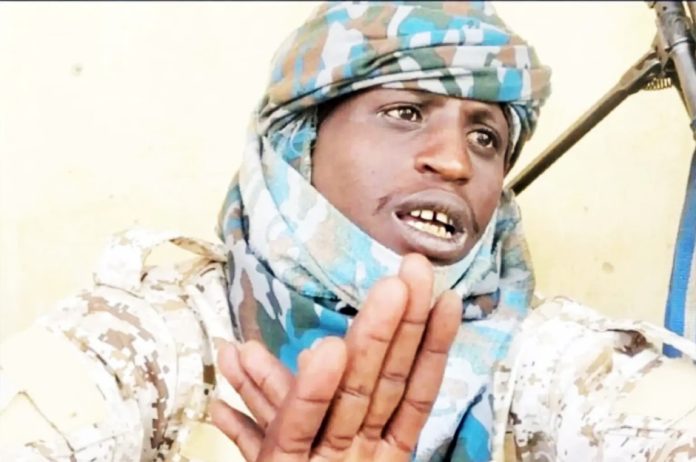
Notorious bandit leader Bello Turji

Notorious bandit leader Bello Turji has reportedly released all captives held by his group.

This comes amid intensified military operations aimed at apprehending the fugitive and dismantling his network in Zamfara State and neighboring regions.

Sources informed Zagazola Makama that Turji’s decision to free the hostages is a response to mounting pressure from the Nigerian Armed Forces under Operation Hadarin Daji and Operation Forest Sanity.

Recent airstrikes and ground offensives targeting his strongholds in Fakai, Shinkafi, and nearby areas have severely weakened his group, forcing them to retreat.

Observers believe the release of the captives is a calculated move by Turji to de-escalate tensions and avoid a direct confrontation with advancing security forces. Meanwhile, troops have reaffirmed their resolve to capture him, dead or alive.

Credit: dailypost.ng

Cross River Assembly amends LG laws to increase political appointments

0
Cross River Assembly

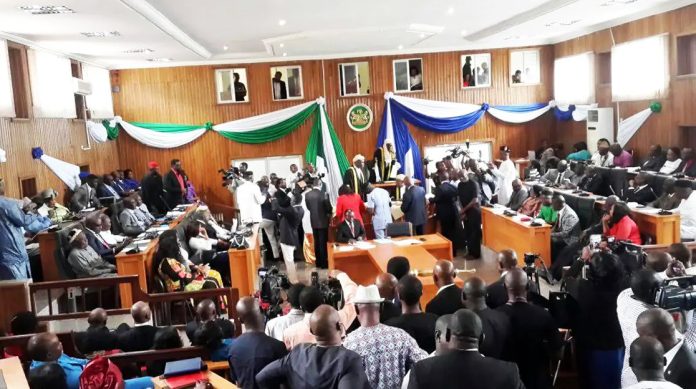
The Cross River State House of Assembly is currently amending some local government laws of 2007.

Member representing Abi State Constituency, Davies Etta, sponsored the bill to amend the laws.

The bill proposes an increase in the number of appointees in each LGA to 50, including 16 Special Adviser positions and the creation of a new cadre of officials known as Ward Relation Officers, WROs.

According to the provisions of the amended law, Ward Relation Officers will hold ranks equivalent to Special Advisers and will report directly to the Chairman of the respective Local Government Councils.

This initiative aims to enhance grassroots engagement and governance at the ward level.

The bill states in part: “The Chairman of Council may appoint such number of Special Advisers to assist him in the discharge of his duties, provided that appointments, when added to other statutory appointments, shall not exceed a total number of 50.”

The bill also seeks to elevate the office of the Head of Local Government Administration, HOLGA, to the status of a Permanent Secretary in the state public service.

“HOLGAs will enjoy all rights, privileges, and entitlements associated with Permanent Secretaries, including pensions.

“The office of the HOLGA shall be equivalent to the Office of a Permanent Secretary of the State Public Service and shall enjoy all rights and privileges of the Permanent Secretary, including pensions.”

Speaker of the Assembly, Elvert Ayambem, noted that it aims to strengthen local government administration by fostering inclusivity and empowering grassroots leaders to contribute more effectively to governance.

Credit: dailypost.ng

World Bank bans two Nigerian companies, CEO over alleged fraud

0
World Bank

The World Bank has imposed a 30-month debarment on two Nigerian companies, Viva Atlantic Limited and Technology House Limited, alongside their Managing Director and Chief Executive Officer, Norman Didam over alleged corrupt practices.

The 30-month debarment bars Viva Atlantic Limited, Technology House Limited, and Didam from participating in World Bank Group-financed projects and operations.

A statement by the Washington-based bank said the sanction follows findings of fraudulent, collusive and corrupt practices connected to the National Social Safety Nets Project (NSSNP) in Nigeria.

The statement reads: “The World Bank Group today announced the 30-month debarment of two Nigeria-based companies, Viva Atlantic Limited and Technology House Limited, and their Managing Director and Chief Executive Officer Mr Norman Bwuruk Didam.

“The debarment is in connection with alleged fraudulent, collusive and corrupt practices as part of the National Social Safety Nets Project in Nigeria.”

The NSSNP was established to enhance Nigeria’s social safety net systems by providing targeted financial transfers to poor and vulnerable households.

However, the bank said investigations revealed serious breaches of its Anti-Corruption Framework in the 2018 procurement and subsequent contract processes involving Viva Atlantic Limited, Technology House Limited, and Didam.

According to the World Bank, the companies and Didam misrepresented a conflict of interest in their Letter of Bids and improperly accessed confidential tender information from public officials, constituting fraudulent and collusive practices.

Also, Viva Atlantic Limited and Didam were said to have falsified the company’s experience records and submitted forged manufacturer’s authorisation letters. They also provided inducements to public officials involved in the project, which qualified as corrupt practices.

The bank said these violations directly contravened the principles outlined in the World Bank’s Anticorruption Framework, prompting the sanctions.

Credit: channelstv.com

Visa applications to go online before March 1, says government

0
Minister of Interior, Olubunmi Tunji-Ojo

The Federal Government has said all visa applications will go online before March 1.

Minister of Interior, Dr Olubunmi Tunji-Ojo, disclosed this on Monday when he was hosted on ‘X Spaces’ by an Influencer, Dr Segun Awosanya.

According to him, there is also now a centralised visa approval centre that has merged the visa regime to ensure uniformity, enhance national security, and reduce corruption.

“The visa approval centre is also an achievement for this administration because we also now have a centralised visa approval centre.

“This will stem corruption, ensure national security, and merge the visa regime to ensure uniformity. Before March 1st, all visa application systems will be online to ensure proper vetting,” he stated.

The minister reiterated the existence of a harmonised data centre at the Bola Ahmed Tinubu Technology Innovation Complex (BATTIC) domiciled at the headquarters of the Nigeria Immigration Service (NIS) in Sauka, Abuja.

He said, “We were able to build one of the biggest data centres in the history of Nigeria, which is the 8.3-petabyte centre. Before then, we had an issue because we inherited a Nigeria Immigration Service that had no data centre, where the data of Nigerians was obviously being saved in private capacities with various contractors, and that was a gross contravention of the Data Protection Act.

“Nigeria cannot proliferate the issuance of its security document because it is a gross violation of due process, and so, we decided to find a lasting solution to that, and we started by promising Nigerians a 1.4-petabyte data centre, but we ended up delivering an 8.3-petabyte data centre—one of the largest in the world.”

Credit: channelstv.com

The Ghanaian Chronicle