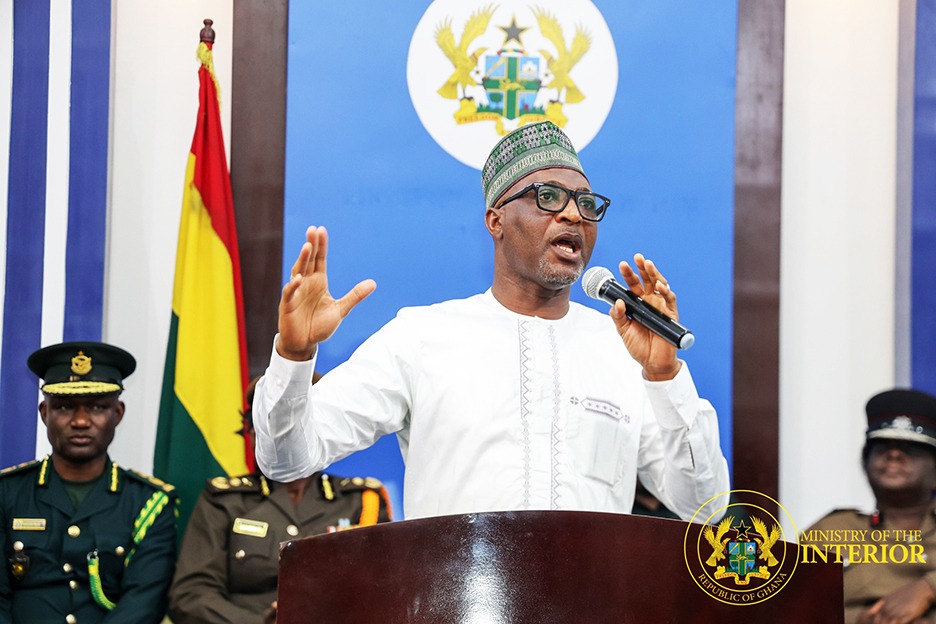
Ghana’s internal security landscape is facing renewed scrutiny after the Minister for the Interior, Muntaka Mohammed-Mubarak, disclosed worrying national crime statistics that point to an escalating trend in violent criminal activity.
As of July 2025, the country has recorded 628 robbery incidents and 340 murder cases, raising widespread concern about public safety and the effectiveness of national crime-prevention measures.
Speaking at a news conference in Accra on Tuesday, November 18, 2025 the Minister described the figures as “alarming and unacceptable,” noting that although the year has not ended, the data already paints a disturbing picture.
According to Muntaka Mohammed-Mubarak, 2024 closed with 1,219 reported robbery cases and 552 murders, making this year’s mid-term numbers a signal that Ghana may surpass last year’s totals if immediate and decisive action is not taken.
“The statistics are not looking good at all. Crime is becoming more complex, more violent, and in some cases more organised. We cannot allow these numbers to define the future of our country,” he emphasised.
Government Responds With Nationwide Gun Amnesty
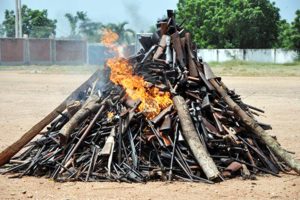
To confront the surge in violent crime, particularly gun-enabled robberies and homicides — the government has rolled out a Gun Amnesty Programme, following extensive consultations with major security and governance institutions.
The consultations included: The Ghana Police Service, National Commission on Small Arms and Light Weapons, National Security Secretariat, Local and regional security agencies, traditional authorities, religious organisations and civil society groups working on peace and security.
The Minister for the Interior described the amnesty as a “bold and compassionate initiative” that offers individuals in possession of unlicensed or illegal firearms, a chance to surrender them without fear of arrest, interrogation or prosecution.
Authorities believe that widespread access to illicit weapons has significantly contributed to the rising number of robberies, contract killings, chieftaincy-related violence, land-guard operations and communal conflicts.
“We are encouraging citizens to take advantage of this window. The goal is simple: remove illegal guns from circulation and reduce their use in violent crimes,” the Minister for the Interior said.
Illicit Firearms: A Growing National Threat
Security experts say Ghana’s porous borders, underground black-market supply chains, and weak community reporting mechanisms have contributed to the proliferation of illegal firearms. Studies by the National Commission on Small Arms estimate that over one million small arms may be in circulation in the country, with a significant percentage unregistered.
The Minister appealed to Ghanaians across all communities to actively support the disarmament process, stressing that public participation will determine the success or failure of the amnesty.
“Our collective cooperation is crucial. If our communities truly want safer markets, safer roads, and safer homes, then we must all work together. Security is not the responsibility of the police alone, it is a shared duty,” he urged.
Mohammed-Mubarak also assured the public that guns submitted during the amnesty will be handled transparently and securely, with strict procedures to ensure they are permanently removed from circulation.
The Minister for the Interior encouraged the public to report suspicious activities, armed individuals and criminal networks anonymously through police hotlines and community watch committees.
The government is also considering additional interventions such as expanding CCTV surveillance and intensifying intelligence-led policing to complement the amnesty.
For more news, join The Chronicle Newspaper channel on WhatsApp: https://whatsapp.com/channel/0029VbBSs55E50UqNPvSOm2z