Ghana’s Long Search for Power
Ghana’s search for reliable electricity has been shaped by recurring power crises, rising demand, industrial expansion, and the need for economic growth. Repeated blackouts have hurt businesses, households, and productivity, pushing successive governments to look beyond hydroelectric power.
Nuclear energy has long been presented as one option. Ghana’s interest is not new. It dates back to Dr Kwame Nkrumah, who believed industrialisation would need a diversified energy base, and so launched the Ghana Atomic Energy Project. On 25 November 1964, at its inauguration, he declared that Ghana had been compelled to enter the field of atomic energy because it promised the most economical source of power, and could help solve the many-sided problems of development in Ghana and Africa.
Later crises revived the debate. The 2007 power crisis, caused by lack of funds for light crude oil, deteriorating thermal plants, and insufficient gas through the West African Gas Pipeline, exposed Ghana’s vulnerability. A presidential committee then examined nuclear power, and the government decided to pursue a 400 MW plant, initially targeted for 2018. Since then, nuclear has remained part of Ghana’s long-term strategy.
But Three Sixty argues the question has changed. It is no longer simply: does Ghana need more electricity? It is: is nuclear the safest, most economically sensible, environmentally responsible, and human-rights-compatible way to get it?
The 2,000 MW Promise
On 29 October 2026, President John Dramani Mahama told the Russia-Africa Summit in Moscow that Ghana had begun discussions with Russia’s state-owned nuclear corporation, Rosatom, on establishing the country’s first nuclear power station.
That is double the earlier 1,000 MW target. Yet key details remain missing: total cost, reactor technology, financing, implementation schedule, waste management strategy, and long-term liabilities.
A project of this size cannot be treated as ordinary infrastructure. It affects public health, environmental protection, national sovereignty, intergenerational justice, and long-term economic commitments. A 2,000 MW promise deserves more than an announcement. It demands rigorous public debate, transparent decision-making, independent scrutiny, and informed participation by Ghanaians.
We welcome transparency, parliamentary oversight, independent regulation, and public participation. But transparency alone cannot resolve the fundamental concerns about nuclear energy. The existence of regulatory institutions does not prove a project is safe, necessary, or in the public interest. Our concern goes beyond how Ghana will procure and manage a plant. It is whether Ghana should pursue nuclear at all.
Why Nuclear at All?
A bad energy choice cannot become good policy through transparent procurement or good administration alone. Even if Rosatom was chosen competitively, even if Parliament scrutinised every contract, and even if the regulator was fully independent, fundamental questions would remain. How will Ghana manage radioactive waste? Who will pay for decommissioning? What guarantees protect host communities? What happens if there are cost overruns, technical failures, or financial problems? Who bears responsibility for future generations?
Radioactive waste is particularly concerning because some materials remain hazardous for hundreds of thousands of years. These are not ordinary infrastructure problems. They are responsibilities that outlive any government or company. Communities around Nsuban and Obotan must not be treated as passive recipients of decisions made in Accra or negotiated with foreign corporations. Their health, livelihoods, land rights, environmental security, and right to participate must be central.
The Renewable Alternative
Nuclear is promoted as low-carbon baseload power. Its low operational emissions are recognised, but that does not make it the only low-carbon pathway. Solar, wind, and other renewables can expand generation while reducing dependence on fossil fuels. Ghana has abundant sunshine, with opportunities for decentralised generation, community projects, rooftop solar, and utility-scale farms. Unlike nuclear, solar does not create high-level radioactive waste needing isolation for geological timescales. It also avoids the need for nuclear emergency preparedness, heavy security, or specialised waste infrastructure.
The question is not whether nuclear can generate electricity. It can. The question is whether it is the most appropriate option when alternatives deserve greater investment.
Institutions Are Not Consent
Ghana’s programme is linked to the IAEA Milestones Approach, the Nuclear Regulatory Authority, and Nuclear Power Ghana. Those institutions matter, but institutional preparedness must not be confused with public consent.
We must ask: Have those institutions meaningfully engaged farmers, residents, and traditional authorities in Nsuban and Obotan? Have communities received independent information about health, environmental, economic, and social consequences? Have consultations been held in Fante and other local dialects, not only in technical English? Have people had a genuine chance to question, challenge, and influence decisions? Have their objections been documented?
Credible consultation must go beyond informing communities about decisions already made. It must allow them to decide whether a project should proceed. Development without meaningful participation becomes imposition.
The Missing Dimension: Human Rights
The most troubling gap is the lack of attention to human rights. Debates focus on procurement,
financing, technology, regulation, and generation targets. Those matter, but they cannot replace a human-rights assessment.
Five rights must be central: the right to life, the state must protect people from foreseeable threats; the right to health, including protection from radiation and contamination; the right to a clean, healthy and sustainable environment; the right to information and participation; and the rights of future generations, who must not inherit disproportionate waste and financial burdens.
These rights are not afterthoughts. They must be the foundation of energy policy. The experiences of Germany, Belgium, and Spain show nuclear remains contested. Germany’s phase-out shows a country can reconsider its pathway based on technological, environmental, and societal priorities. If wealthy countries debate the risks, Ghana must be especially careful. Why should Ghanaian communities accept risks other societies have chosen to avoid?
Our Position: Nuclear-Free Ghana
Three Sixty Human Rights Ghana is clear and unequivocal. We are not calling for a better-managed nuclear plant. We are calling for reconsideration of Ghana’s nuclear ambitions. We call for a comprehensive national conversation on a nuclear-free future, including a Nuclear-Free Ghana Act. Transparency without willingness to reconsider the policy is insufficient. Participation must mean a real voice in deciding the energy future.
Ghana’s energy future must be renewable, sustainable, decentralised, community-centred, and human-rights-based. It must prioritise people over corporate interests, environmental protection over political expediency, and intergenerational justice over short-term promises.
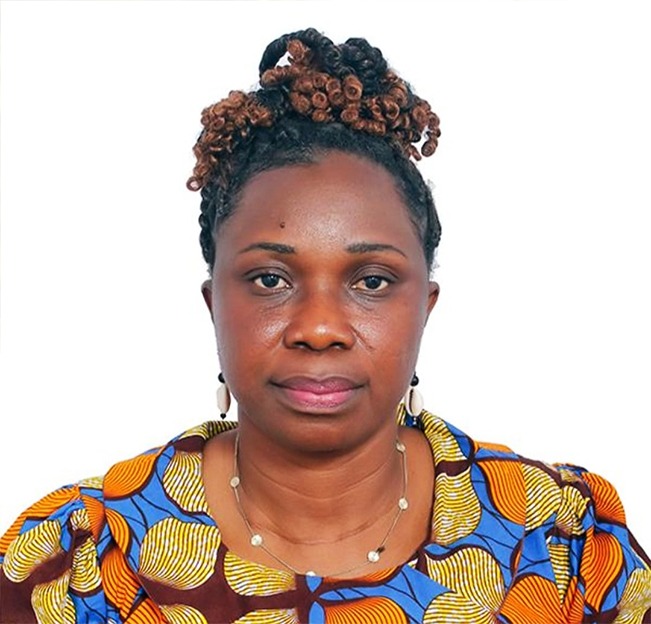
By Alberta Kpeleku (PhD candidate, Peace and Development, UCC)
Executive Director, Three Sixty Human Rights Ghana.