Ghanaians must begin to have an honest conversation about its economic priorities. We cannot continue to measure national development by the number of programmes announced, the size of government expenditure or the political popularity of social interventions.
The real measure of development is whether the economy is creating opportunities, improving livelihoods and building a prosperous future for the next generation.
The 2027 Budget presents an important opportunity to confront some of the structural weaknesses holding our economy back. Yet, beyond the political excitement surrounding the budget, there are fundamental questions that the government and the Parliament must answer.
Are we building an economy that produces wealth, creates jobs and adds value to our natural resources? Or are we simply managing economic challenges from one budget year to another? These are not academic questions. They concern the future of millions of Ghanaians.
SANITARY PADS ARE IMPORTANT, BUT WHAT ABOUT THE BIGGER ECONOMIC PICTURE?
Government has allocated GH¢292 million towards the provision of free sanitary pads for school girls in the 2027 Budget.
Let me make one thing clear: providing sanitary pads to school girls is a worthwhile social intervention. No girl should be denied her right to education because her family cannot afford sanitary products. Menstrual health, dignity and equal access to education are important components of national development. However, we must not confuse a good social policy with a comprehensive economic development strategy.
Keeping girls in school is important, but what happens after they graduate? Where are the jobs? What opportunities exist for young women entering the labour market? How many graduates can find decent employment? How many can establish businesses without being suffocated by the cost of credit, unreliable infrastructure and limited access to capital? These are the difficult questions that deserve equal attention.
We must not create a situation where government becomes increasingly successful at keeping young people in school but fails to build an economy capable of absorbing their talents and skills. Education without economic opportunity creates frustration. Education supported by productive industries creates prosperity. The sanitary pad allocation should, therefore, be defended as a legitimate social investment, but it must also be accompanied by investments that create a productive economy.
WE CANNOT BUILD PROSPERITY ON CONSUMPTION ALONE
One of our greatest economic weaknesses is our inability to translate our enormous natural and human resources into sufficient domestic production.
We export gold, cocoa, timber and other raw materials, yet we continue to spend substantial resources importing finished products that could be manufactured locally. We have the land, minerals, labour force and entrepreneurial potential to build a stronger industrial economy. What appears to be missing is the consistency, discipline and long-term commitment required to transform these resources into productive industries. Why should a country with significant natural resources struggle to maximise the value through local processing?
Why should a country endowed with rich natural resources continue to have limited domestic capacity for refining and manufacturing gold-related products? Why should we import so many agricultural and manufactured products when local businesses and farmers need markets to survive? These are not merely trade questions. They are questions about economic sovereignty.
In my last article, I asked governments to move beyond the celebration of GDP growth percentages and begin measuring development by the strength of domestic production, the quality of employment and the incomes of ordinary citizens.
AGRICULTURE MUST BECOME A NATIONAL ECONOMIC PRIORITY
The difficulties facing our agricultural sector deserve serious attention. Cocoa, once a major pillar of our economy, faces production and sustainability challenges. Farmers are confronted by rising production costs, ageing farms, environmental degradation and other structural problems.
Our dependence on gold and other extractive industries also raises questions about the sustainability of our economic growth. We cannot build a resilient economy by depending excessively on commodities whose prices are determined largely by international markets. Agriculture must become more commercial, technologically advanced and competitive.
Government should prioritise irrigation, mechanisation, improved seedlings, affordable agricultural financing, storage facilities, food processing and reliable access to markets. Farmers must be supported not simply to produce more food but to earn better incomes. The objective should be to reduce food imports, strengthen local supply chains, create rural employment and make agriculture a major contributor to industrialisation.
THE YOUTH EMPLOYMENT QUESTION CANNOT BE IGNORED
One of the most serious challenges confronting our economy is youth unemployment and underemployment. Every year, thousands of young people complete universities, technical institutions and other educational programmes. Yet many struggle to find meaningful employment. We cannot continue telling young people to acquire qualifications without creating an economic environment in which those qualifications have value.
Government must move beyond employment promises and invest in sectors capable of generating sustainable jobs. Manufacturing, agro-processing, technology, construction, pharmaceuticals, tourism and the creative industries must become engines of employment. The private sector must also be supported through affordable credit, predictable taxation, reliable electricity and policies that encourage business expansion.
The success of the 2027 Budget should not be determined by how many employment programmes are announced. It should be determined by how many sustainable jobs are actually created.
THE DEBT QUESTION: HOW MUCH OF OUR NATIONAL WEALTH GOES INTO SERVICING DEBT?
The 2027 Budget projects expenditure of approximately GH¢389.2 billion, with GH¢61 billion allocated to interest payments and GH¢100.4 billion for capital expenditure. These figures demonstrate the enormous responsibility facing government in managing public finances.
Although the projected capital expenditure is encouraging, Parliament must demand clarity on the projects to be funded, their implementation schedules and their expected economic returns. It is not enough to allocate billions of cedis to infrastructure. Roads must be completed. Hospitals must become operational. Irrigation projects must support farmers. Industrial investments must create jobs.
We have experienced too many situations where public projects are announced with great enthusiasm but suffer from delays, cost overruns and inadequate supervision. The country cannot afford another cycle of ambitious promises followed by disappointing implementation. Every cedi borrowed or spent must produce measurable national value.
WHAT SHOULD BE THE REAL PRIORITIES?
The 2027 Budget should be judged against a clear set of national development priorities:
- Agricultural transformation: Modernise farming and strengthen local food production.
- Industrialisation: Process our natural resources locally and expand domestic manufacturing.
- Youth employment: Create sustainable jobs through productive industries rather than temporary political programmes.
- Education and technical skills: Align education with the needs of the modern economy.
- Healthcare and sanitation: Strengthen healthcare delivery and improve access to essential services.
- Energy and infrastructure: Provide reliable electricity, transport networks and irrigation facilities to support economic activity.
- Fiscal discipline: Reduce waste, strengthen public accountability and ensure value for money in government expenditure.
These priorities should complement one another. Social protection must continue, but it must operate alongside a serious national strategy for wealth creation.
PARLIAMENT MUST DO MORE THAN EXCHANGE POLITICAL ACCUSATIONS
Perhaps the greatest disappointment in our budget debates is the tendency for parliamentary discussions to become extensions of party politics.
The Majority must not assume that every government proposal deserves automatic approval simply because it comes from its own administration. Equally, the Minority must not oppose policies merely to demonstrate political resistance. Both sides have a responsibility to the Ghanaian people.
Parliament must scrutinise the assumptions behind the budget, demand evidence of expected results, question questionable expenditure and monitor implementation throughout the financial year.
Where government proposes GH¢292 million for sanitary pads, Parliament should ask how many girls will benefit, how many sanitary products will be supplied, how procurement will be conducted and how the programme’s effectiveness will be measured.
Where billions are allocated to agriculture and industrial transformation, Parliament must demand specific production targets, employment projections and clear implementation arrangements.
Where government promises economic growth, Parliament must ask how that growth will translate into better living conditions for ordinary Ghanaians. Parliament is not simply an institution for approving expenditure. It is a constitutional institution of accountability.
THE REAL TEST OF THE 2027 BUDGET
The real test of the 2027 Budget will not be the number of impressive figures presented to Parliament.
It will be whether the farmer in the village earns a better income, whether the young graduate finds meaningful employment, whether the local manufacturer can expand production, whether the cost of doing business becomes more manageable and whether ordinary families experience a genuine improvement in their standard of living.
We must stop treating economic growth as a statistical achievement and start treating it as a national responsibility.
We should be able to provide sanitary pads for school girls while investing in factories that will employ them in the future. We should be able to fund education while creating industries that will make education economically meaningful. We should be able to protect vulnerable citizens while strengthening the productive capacity of the nation.
There is no contradiction between social development and economic transformation. The failure is when one receives political attention while the other is neglected.
We do not have a shortage of economic potential. What we urgently need is a consistent national commitment to turning that potential into productivity, employment and prosperity.
The government must, therefore, be judged not by the promises it makes but by the results it delivers. Parliament must be judged not by the arguments its members make but by the accountability they demand. And ultimately, the 2027 Budget must answer one fundamental question: Are we preparing Ghana for a prosperous future, or are we simply preparing another budget to manage the problems of today? That is the debate we deserve. And that is the accountability Ghanaians must demand.
Important figures behind this editorial. These figures are drawn from the published 2027 Budget and related reporting.
Budget item Allocation
Total government expenditure GH¢389.2bn
Capital expenditure GH¢100.4bn
Interest payments GH¢61bn
Education GH¢48bn
Health GH¢40.3bn
Free sanitary pads GH¢292m
New Economy programme GH¢30bn
Sources: Ministry of Finance’s [2027 Budget Speech]
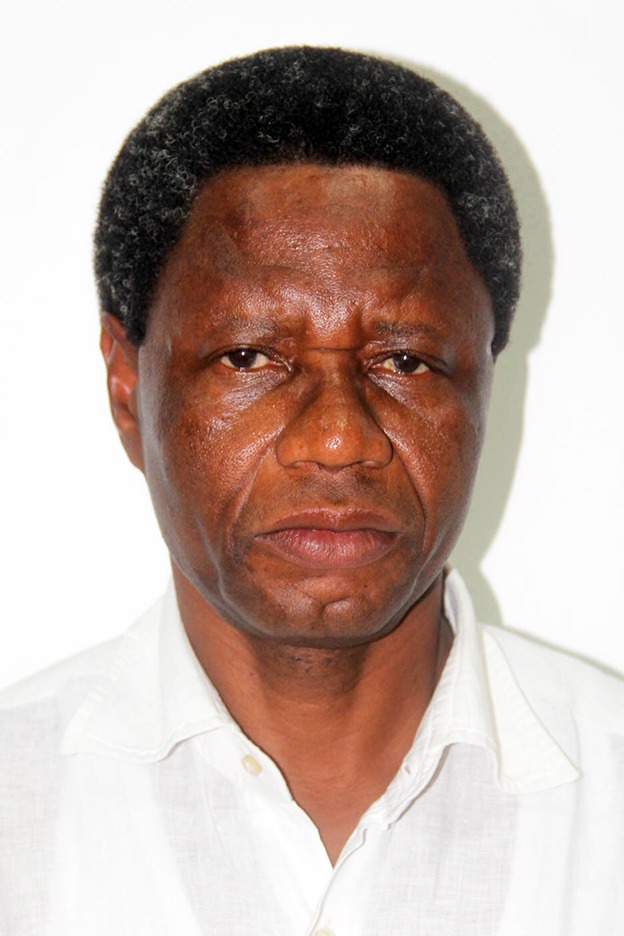
By Dr. Edward Kwadwo Yeboah
For more news, join The Chronicle Newspaper channel on WhatsApp: https://whatsapp.com/channel/0029VbBSs55E50UqNPvSOm2z