A delegation of United States scientific experts has concluded a two-week visit to Ghana to strengthen cooperation on water resource protection, mercury pollution mitigation and sustainable mining practices, amid growing concerns over the impact of illegal small-scale mining on the country’s freshwater systems.
The delegation, comprising experts from the US Department of the Interior (DOI), the US Geological Survey (USGS) and the US Environmental Protection Agency (EPA), visited Ghana from November 7 to 21, 2026, under the Ambassador’s Water Experts Program (AWEP).
The initiative, a joint programme of the US Department of State and Department of the Interior, seeks to strengthen scientific collaboration and support efforts to protect freshwater resources.
According to a statement issued by the US Embassy in Accra, the experts held technical consultations with Ghana’s Environmental Protection Agency (EPA) on water quality, mercury contamination and laboratory capacity development.
The discussions focused on the growing threat of mercury pollution in freshwater systems affected by illegal small-scale mining, popularly known as galamsey, as well as the need for standardised testing methods to improve the reliability of water quality assessments.
The engagement also explored opportunities for strengthening scientific cooperation between American and Ghanaian institutions.
Pra, Ankobra Rivers Under Scrutiny
The visit builds on a 2024 baseline assessment conducted by USGS scientist and former Embassy Science Fellow, Dr Grace Armstrong, which identified elevated mercury levels in water and sediments in the Pra and Ankobra river systems.
However, the finding of elevated mercury levels does not, on its own, establish that all water in the affected river systems is unsafe for human consumption.
Determining the potential health risks requires information on the actual mercury concentrations, specific sampling locations and the relevant drinking-water standards against which the results were assessed.
The distinction is particularly important because mercury detected in river sediments does not necessarily indicate the same level of contamination in water used for drinking.
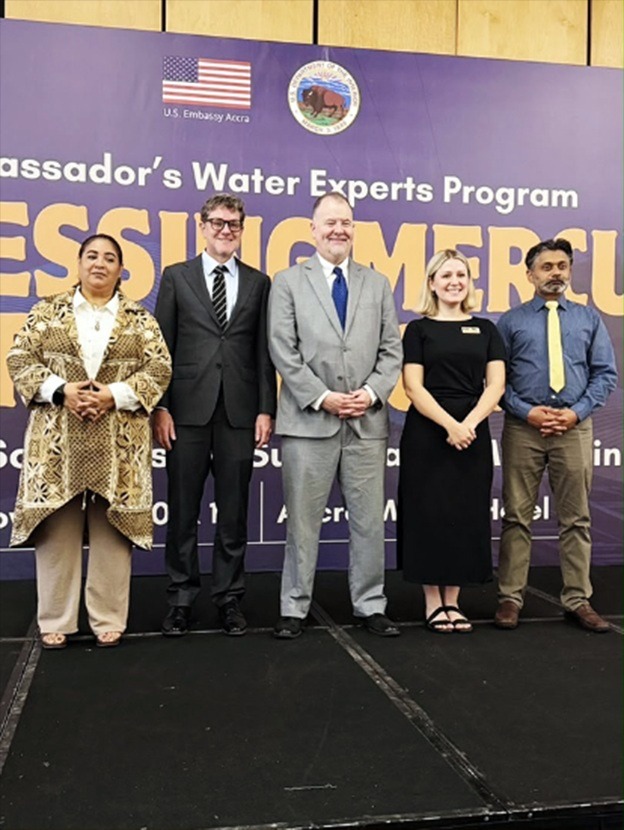
Dr Armstrong returned to Ghana as part of the latest scientific engagement, which included a two-day symposium held from November 10 to 11 under the theme, Addressing Mercury Pollution: Collaborative Solutions for Sustainable Mining in Ghana.
The symposium brought together American and Ghanaian experts, civil society organisations, academic institutions and industry stakeholders to examine the environmental, public health and security implications of mercury use in mining.
Participants also explored practical and commercially viable mercury-free mining technologies that could support the transition towards more environmentally sustainable mining practices.
Speaking at the symposium, the then Chargé d’Affaires of the US Embassy, Rolf Olson, said protecting Ghana’s freshwater resources was essential to safeguarding public health, food security and long-term economic development.
He reaffirmed the United States’ commitment to supporting Ghana through scientific capacity development, responsible mining practices and technological solutions.
Focus On Scientific Capacity
Beyond the technical consultations and symposium, the visiting experts engaged academic institutions, civil society organisations and youth groups to promote water awareness and encourage scientific collaboration.
Students from the University of Ghana, Kwame Nkrumah University of Science and Technology, the University of Environment and Sustainable Development, and Accra STEM Academy participated in the engagements.
The interactions also provided opportunities to discuss training and field research aimed at strengthening Ghana’s capacity to monitor water quality and detect mercury contamination.
Dr Armstrong said addressing mercury pollution required coordinated scientific approaches and reliable partnerships between institutions. She noted that the collaboration would help ensure that data collected in Ghana met rigorous scientific standards and informed effective environmental protection decisions.
A US EPA expert, Dr Chris Eckley, said American experience in assessing and remediating mercury-contaminated sites could help Ghanaian institutions address their own environmental challenges.
The latest engagement comes amid persistent concerns about the environmental consequences of illegal mining, particularly the pollution of rivers and other freshwater sources that support domestic water supply, agriculture and aquatic ecosystems.
As Ghana and the United States approach 70 years of diplomatic relations, the embassy said the visit reflected their shared commitment to addressing environmental challenges with implications for public health, security and economic prosperity.
The US Embassy’s Chargé d’Affaires, Rolf Olson (middle) with (from right) Dhaval Vyas (DOI), Dr Grace Armstrong (USGS), Dr Chris Eckley (EPA) and Madam Ilham Ait Addi Dienta (PACT), pose for a photograph at the mercury pollution symposium in Accra.
For more news, join The Chronicle Newspaper channel on WhatsApp: https://whatsapp.com/channel/0029VbBSs55E50UqNPvSOm2z