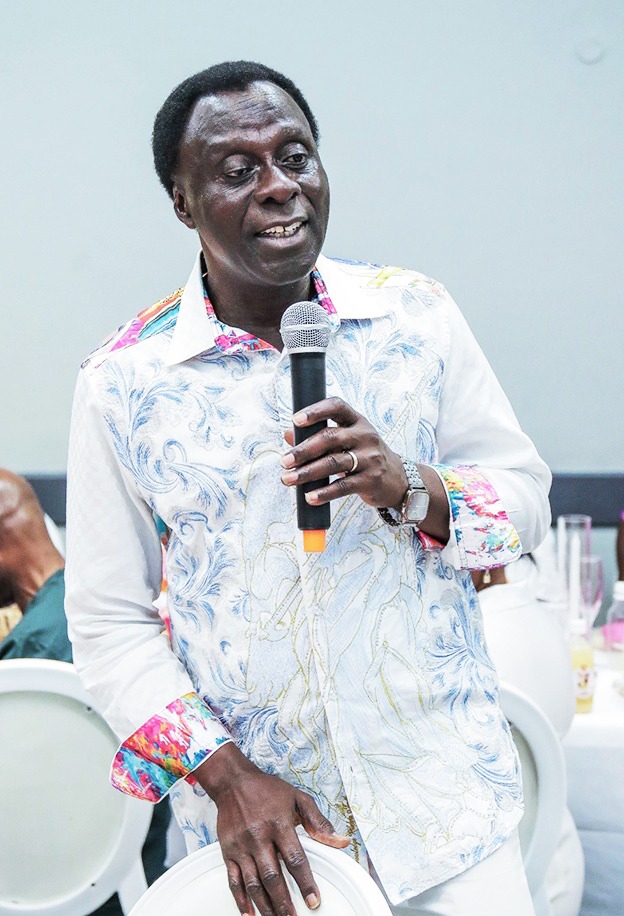
The President of Friends of Rivers and Waterbodies, Nana Dwomoh Sarpong, a businessman and manufacturer with over 30 years of experience, has called on Ghanaian banks to redirect lending towards agriculture, manufacturing, industry and start-ups to accelerate local production and create jobs.
Speaking on Okay FM’s morning show on Tuesday, November 17, 2026 Nana Sarpong said the banking sector needed a fundamental reset to support productive sectors of the economy and help deliver the private-sector-led objectives of the 2027 Budget.
“The banking sector needs a reset with focus on supporting critical areas of the economy, including agriculture and industries,” he said, warning that the lack of viable economic opportunities could push more people into illegal mining, popularly known as galamsey.
He criticised banks for concentrating on import financing and a few large companies, particularly foreign-owned businesses, at the expense of local entrepreneurs and producers.
“The banks should be industrially minded, not focusing on buying and selling, which cannot give jobs. They are only supporting imports and some few big companies which are foreigners,” he said.
He further challenged banks to change their attitude towards small and medium-sized enterprises (SMEs), arguing that they should not automatically regard smaller businesses as too risky to finance.
He expressed concern that SMEs are often charged significantly higher interest rates than larger companies, making it difficult for them to compete, expand and create jobs.
“Why should a bank charge a small business a higher interest rate simply because it is small? Such businesses are already operating with limited resources. By imposing higher borrowing costs on them, banks make them less competitive and undermine their chances of survival and growth,” he argued.
He stressed that Ghana’s economic transformation depended on expanding domestic production and processing rather than relying heavily on imported finished goods.
“When you import something and eat, it will not bolster the economy; it is when you produce that it does,” he added.
Nana Sarpong warned that the government’s economic agenda could be undermined if businesses, particularly small enterprises and start-ups, continued to struggle to access affordable credit.
“If the banks decide not to give loans to businesses, then the 2027 Budget presented by the Finance Minister, described as private sector-led, may not achieve its objective,” he stated.
He urged banks to ease access to financing for young graduates, farmers and emerging entrepreneurs through more flexible lending arrangements, including credit guarantees and cash-flow-based financing, and stronger collaboration with institutions such as Development Bank Ghana and GIRSAL.