The Wassa Professionals Network (WPN) has called on the Government to make host-community ownership and direct revenue participation a condition in future mining lease arrangements in Wassa, demanding a ten per cent equity stake and a two per cent share of gross mineral sales revenue for local communities.
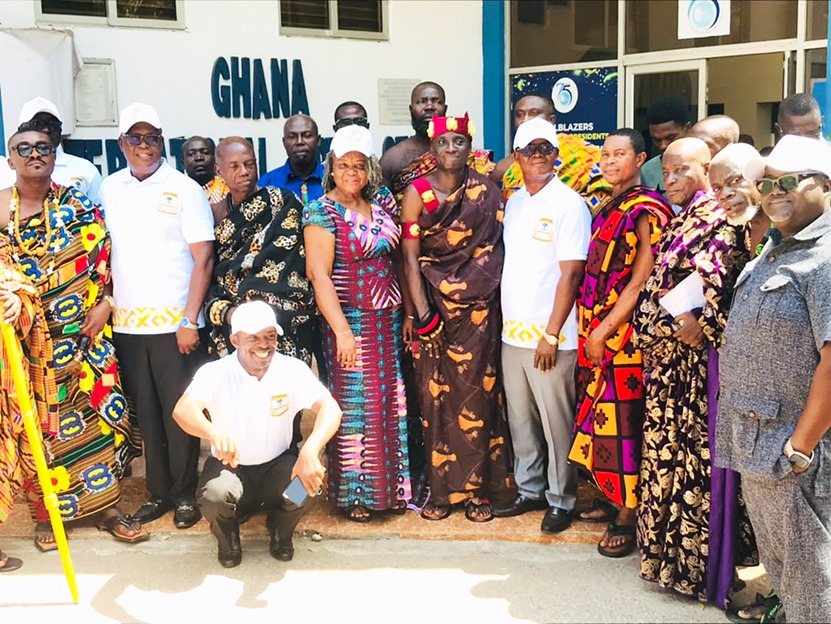
The demand was made at a news conference in Accra on Tuesday by Justice Cobbina, President of the Wassa Professionals Network (WPN), who described the upcoming renewal of the Gold Fields Tarkwa mining lease as a “historic opportunity” to redefine the relationship between mining companies, the State and host communities. The event was attended by chiefs and people of Wassa Fiase.
Presenting what the group has branded “The Wassa Reset”, Mr Cobbina said communities that host mining operations and bear their social, economic and environmental consequences should have a direct ownership stake in the wealth generated from their lands.
“Our position is straightforward. If the gold beneath Wassa creates wealth for Ghana and investors, the people whose ancestral lands host that wealth must also own a meaningful part of the prosperity it creates,” he said.
According to WPN, any renewal, reallocation or renegotiation of mining leases in Wassa should include three key conditions: a ten per cent free-carried equity interest for host communities through a Wassa Trust Fund; a direct allocation of two per cent of gross mineral sales revenue paid quarterly into the same fund; and formal community representation in mining governance and lease transition arrangements.
The group said the proposed benefits should complement, rather than replace, existing royalties, taxes, compensation payments and community development commitments required under Ghanaian law.
Mr Cobbina argued that while mining companies have made significant contributions to the national economy through taxes, royalties, employment and procurement, host communities remain largely excluded from ownership of mining assets.
Citing publicly available industry figures, WPN noted that the Gold Fields Tarkwa mine remains one of Ghana’s most valuable mining assets, with substantial mineral reserves and an estimated mine life of about 17 years. The group said the mine’s importance made it necessary to rethink how the benefits of mineral extraction are shared.
The WPN intervention comes amid growing national debate over the future of the Gold Fields Tarkwa Mine, whose mining leases are due to expire in April 2027. The company applied for renewal in November 2025 and subsequently submitted proposals to Government for the continuation of its operations.
At the centre of the debate are questions about ownership, community benefits, local participation and the broader national interest.
In May this year, the Sophia Akuffo-led Institute of Economic Affairs (IEA) publicly opposed the renewal of the lease, urging Government to use the expiry of the concession to secure greater Ghanaian ownership and control of the strategic mining asset.
The IEA argued that the renewal presented a unique opportunity for Ghana to reset its approach to natural resource governance and ensure that a larger share of the benefits from the mine remained in Ghanaian hands.
The former Speaker of Parliament, Prof. Aaron Mike Oquaye, and IEA Board Chairman, Charles Mensa, also backed calls for a new ownership framework centred on greater local participation.
However, the position of the IEA has been challenged by the Ghana Chamber of Mines, which has strongly defended Gold Fields’ application for renewal.
The Chamber argues that the company has substantially complied with the terms of its lease and has played a significant role in developing Ghana’s mining industry. It has warned that uncertainty surrounding lease renewals could affect investor confidence and Ghana’s reputation as a stable destination for mining investment.
Government officials have meanwhile indicated that any decision on the Tarkwa lease will not be automatic. The Chief Executive Officer of the Minerals Commission, Isaac Andrews Tandoh, has stated that the company will be required to undergo a fresh technical and ministerial review process before a final determination is made.
The Minister for Lands and Natural Resources, Emmanuel Armah Kofi-Buah, has also stressed the need for mining partnerships that promote skills transfer, local participation and broader economic benefits for Ghanaians.
Against this backdrop, WPN’s proposals add another dimension to the evolving conversation over how the benefits of Ghana’s mineral wealth should be shared among investors, the State and host communities.
The organisation also highlighted what it described as the long-term costs borne by communities in mining areas, including the loss of farmlands, displacement of settlements, environmental degradation and the disruption of cultural heritage sites.
Mr Cobbina said compensation payments alone could not adequately address the sacrifices made by mining communities over several decades.
“The people of Wassa deserve more than compensation for what they lose. They deserve an enduring stake in the wealth their lands produce,” he said.
WPN further pointed to examples from several mining jurisdictions around the world, including South Africa, Papua New Guinea and Canada, where host communities or indigenous groups participate more directly in the ownership and benefits of mineral projects.
The group proposed a revised ownership structure in which mining investors would retain a 60 per cent stake, Government would hold its existing ten per cent interest, host communities would own ten per cent through a trust fund and the remaining 20 per cent would be listed on the Ghana Stock Exchange.
By Stephen Odoi-Larbi