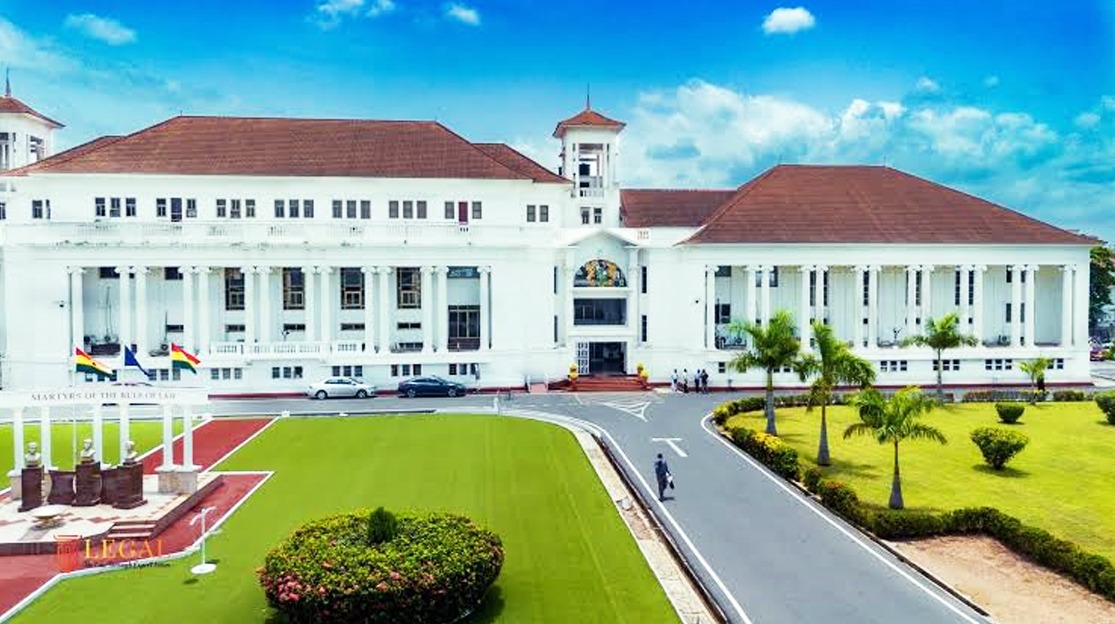
The Supreme Court has adjourned indefinitely a lawsuit challenging the Ghana Revenue Authority’s (GRA) power to determine the number of mobile phones and personal effects travellers can bring into the country without paying customs duties.
The decision followed an application by the Attorney-General and the GRA seeking an extension of time to file their respective responses to the suit.
A seven-member panel of the apex court, presided over by Justice Avril Lovelace, consequently adjourned the matter sine die, pending further steps by the parties.
The case was brought by lawyer Jonathan A. Alua, who on September 4, 2026, invoked the original jurisdiction of the Supreme Court to challenge the constitutionality of Regulation 18(2)(b) of the Exemptions Regulations, 2025 (L.I. 2514).
The regulation, made under Section 17(3) of the Exemptions Act, 2022 (Act 1083), empowers the Commissioner-General of the GRA to determine the quantity of a passenger’s baggage that qualifies for exemption from customs duties and taxes.
The provision forms the legal basis for customs officers at the Accra International Airport to assess whether mobile phones and other items carried by arriving passengers are for personal use or commercial purposes. The lawsuit comes amid public controversy over the treatment of travellers arriving in Ghana with multiple mobile phones.
In August 2026, the Commissioner of Customs, Aaron Kanor, warned that passengers carrying more than two phones could be required to pay import duties. The GRA subsequently issued a clarification on September 3, explaining that carrying more than two phones does not automatically attract duty, as customs officers assess each case based on factors including whether the devices are new, packaged or intended for personal use.
However, the plaintiff argues that allowing customs authorities to make such determinations on a case-by-case basis amounts to an unconstitutional exercise of the power to waive or vary taxes.
He contends that under Article 174(1) and (2) of the 1992 Constitution, any waiver or variation of taxes requires prior parliamentary approval by resolution, except where Parliament has expressly provided otherwise under Article 174(3).
According to him, Regulation 18(2)(b) effectively grants the Commissioner-General discretionary authority to determine tax exemptions for individual passengers without the constitutionally required parliamentary approval.
Court proceedings
At the hearing on Tuesday, November 17, 2026, the plaintiff withdrew an application seeking directions from the court after lawyers for the Attorney-General and the GRA informed the panel that they had filed applications for extension of time to respond to the substantive action.
Senior State Attorney, Akawari Atindam, represented the Attorney-General, while Ibrahim Mohammed appeared for the GRA. Although the extension applications had been filed, they were yet to be brought to the attention of the court.
The plaintiff’s application for directions was subsequently withdrawn and struck out, paving the way for the indefinite adjournment of the substantive case.
The other members of the panel were Justices Amadu Tanko, Emmanuel Yonny Kulendi, Richard Agyei Frimpong, Senyo Dzamefe, Rosetta Bernasko Essah and Amoako Asante.
Reliefs sought
The plaintiff is asking the Supreme Court to declare that the power granted to the GRA Commissioner-General under Regulation 18(2)(b) amounts to an exercise of the power to waive or vary taxes in favour of individual persons, which requires prior parliamentary approval under Article 174(2).
He further wants the court to declare the regulation unconstitutional and void to the extent that it allows the Commissioner-General or customs officers acting under his authority to grant or refuse exemptions on an individual basis without parliamentary approval.
Additionally, he is seeking an order restraining the GRA from exercising the disputed discretionary power until the constitutional requirements are met or Parliament expressly exempts the exercise of that power under Article 174(3).
The plaintiff is also asking the court to make any further orders necessary to give effect to the declarations sought.
For more news, join The Chronicle Newspaper channel on WhatsApp: https://whatsapp.com/channel/0029VbBSs55E50UqNPvSOm2z