The government has launched a 14-year national foundational learning agenda aimed at improving literacy and numeracy among Ghanaian children, in a renewed effort to address weaknesses in basic education and ensure pupils acquire essential skills from their early years of schooling.
The agenda, covering 2026 to 2040, seeks to ensure that every child develops the ability to read, write and count confidently, recognising foundational learning as a critical requirement for academic progression and the country’s broader development ambitions.
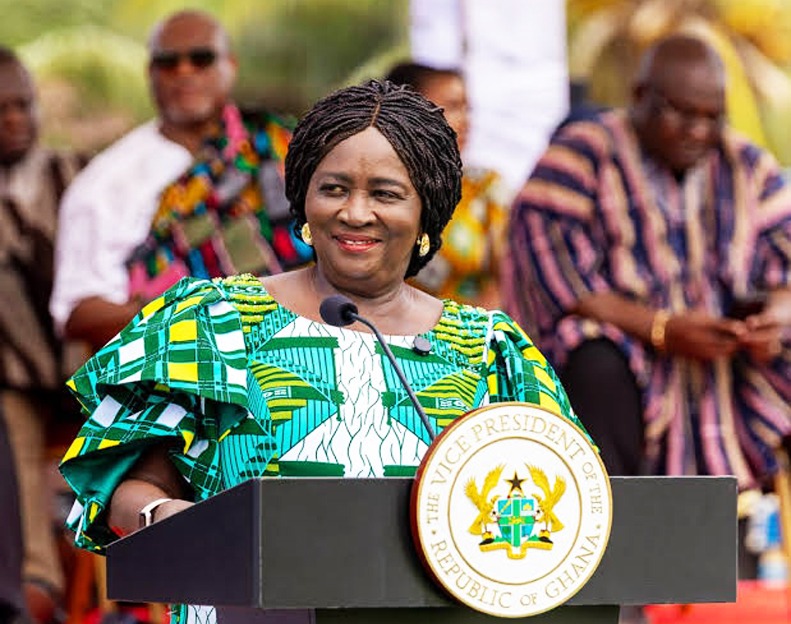
Launching the initiative, Vice President Professor Jane Naana Opoku-Agyemang stressed that the country’s education system would not achieve meaningful success if children fail to acquire basic literacy and numeracy skills.
“A fundamental truth is that our education cannot succeed if our children cannot read, write or count confidently,” she said.
She explained that although successive governments had invested in educational infrastructure and expanded access to secondary and tertiary education, getting children into school was only part of the responsibility.
“Attendance is only part of it,” she stated, emphasising the need to focus on the actual knowledge and abilities children acquire as they progress through the education system.
According to her, the early years of education are particularly important because they provide the foundation upon which children’s subsequent learning depends.
“A pupil who learns to read with understanding and who develops a sound grasp of numbers and basic mathematical concepts can acquire knowledge independently, explore new subjects and engage more confidently in the world,” she said.
The Vice President further noted that children’s natural curiosity and eagerness to learn must be encouraged through appropriate instruction and support.
She said: “Education must return that curiosity and give them the instruction and support to develop knowledge and skills, even in a world where technology and work demands are changing.”
Linking the initiative to Ghana’s economic development ambitions, Professor Opoku-Agyemang said the country needed an educated population capable of adapting, reasoning and applying knowledge to practical situations.
“We want an economy that produces more affordable consumer goods, processes more of agricultural outputs, develops competitive industries, and creates better employment opportunities,” she stated, adding “this requires investment in infrastructure, technology and enterprise. It also requires people who can reason, adapt and apply knowledge in practical ways.”
She also highlighted the inequalities that affect children’s educational experiences, observing that pupils begin school with different levels of preparation and support.
“Children arrive at school with different levels of preparation and support. Some have learning support systems, while others depend much more heavily on what the schools provide,” she said.
She argued that strengthening foundational education was necessary to prevent a child’s background from determining their future opportunities.
“Strong foundational education tells us that a child’s future opportunities are not determined so heavily by the circumstances into which that child was born,” she added.
Professor Opoku-Agyemang said the implementation of the agenda must produce measurable improvements in foundational learning, with particular attention to differences across gender, geographical location, ability and socioeconomic circumstances.
She called for sustained collaboration among teachers, educational authorities, parents and development partners, stressing that the initiative required consistency and continued attention over the years.
She also urged relevant institutions to monitor results closely and make the necessary adjustments during implementation to address shortcomings and avoid duplication of efforts.
The 2026–2040 agenda is expected to provide a long-term framework for improving foundational literacy, numeracy and children’s overall development, with the government looking to strengthen learning outcomes across the country.
By Jesse Otoo
For more news, join The Chronicle Newspaper channel on WhatsApp: https://whatsapp.com/channel/0029VbBSs55E50UqNPvSOm2z