Ghana’s efforts to tighten gold traceability, formalize mineral trading and improve accountability in the mining sector are attracting regional interest, with Malawi seeking lessons from the country’s experience to guide reforms in its own mining industry.
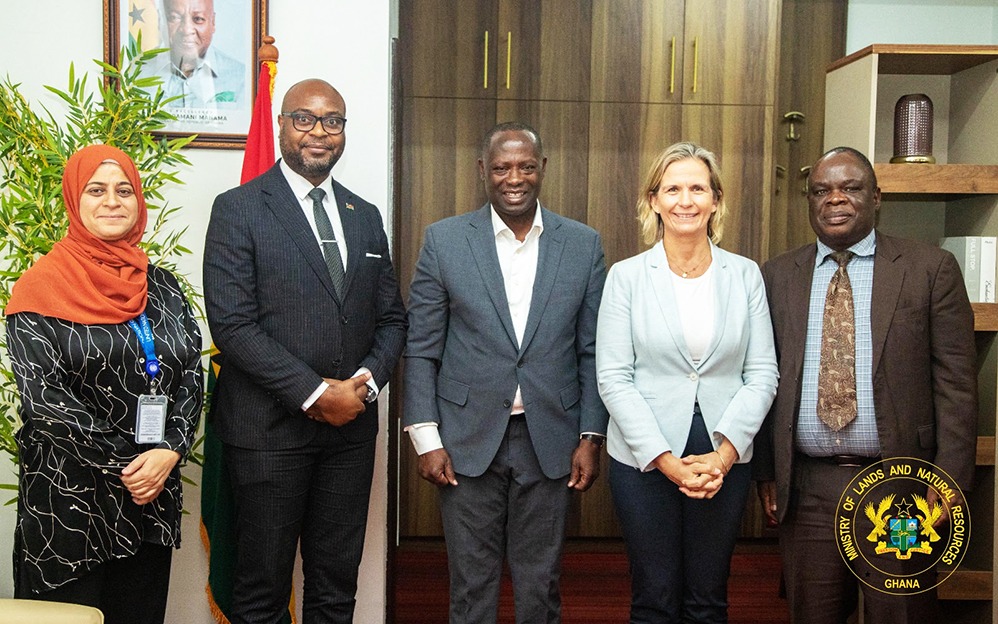
Malawi’s Minister of Mining, Thoko Tembo, has led a delegation to Ghana to study its mining governance framework, including measures aimed at strengthening responsible mineral sourcing, improving gold purchasing systems and ensuring mining communities benefit from the exploitation of natural resources.
The visit, supported by the United Nations Development Programme (UNDP), brought together representatives of Malawi’s banking sector and artisanal and small-scale mining industry for discussions with Ghanaian officials on regulatory reforms and the management of mineral resources.
Welcoming the delegation, Ghana’s Minister for Lands and Natural Resources, Emmanuel Armah-Kofi Buah, said Ghana’s more than a century of mining experience offered valuable lessons, while acknowledging the need for continuous policy improvement.
He said the timing of the visit was particularly significant as Ghana pursued reforms to strengthen gold purchasing, improve traceability and ensure that mineral production and revenues were properly accounted for.
The reforms, he explained, were intended not only to improve governance and accountability but also to address environmental concerns and strengthen the participation of mining communities in decisions affecting their lands and livelihoods.
For resource-dependent economies, the effectiveness of such measures has implications for revenue mobilisation, investor confidence, environmental protection and the extent to which mineral wealth translates into broader economic benefits.
Mr Buah also outlined proposed changes to Ghana’s mining licensing regime, including clearer timelines and performance requirements for companies holding mining rights.
The proposals are intended to strengthen regulatory oversight and establish clearer expectations for mining companies operating in the country.
He further highlighted plans to involve district-level mining committees in assessing proposed concessions before licences are issued, a measure expected to broaden local participation in decisions concerning mineral development.
The involvement of local-level institutions could also provide an additional layer of scrutiny in the allocation of mineral rights and help ensure that proposed mining activities are assessed against the interests of host communities.
The Chief Executive Officer of the Minerals Commission, Mr Isaac Tandoh, gave the delegation a presentation on Ghana’s mining governance framework, outlining the country’s regulatory approach and efforts to develop a more responsible, inclusive and well-regulated minerals industry.
He also responded to questions on Ghana’s experience with domestic gold purchasing, the formalisation of mineral markets and the development of responsible sourcing systems.
These issues are particularly relevant to countries seeking to strengthen oversight of artisanal and small-scale mining, where formalisation, access to finance and traceability can influence the ability of regulators to monitor production and improve accountability across the gold supply chain.
For Malawi, the engagement offered an opportunity to examine Ghana’s policy approaches and identify practical lessons that could inform the development of its own mining sector.
Mr Tembo expressed appreciation for Ghana’s hospitality, describing the mission as an opportunity to learn from both the country’s achievements and the challenges encountered in managing its mineral resources.
He said the delegation was keen to draw practical lessons that would help Malawi avoid similar pitfalls as it develops its mining industry, particularly in artisanal and small-scale mining and the financing of mineral-related businesses.
The participation of representatives from Malawi’s banking sector also underscored the importance of financing arrangements in supporting the development of a more formal and accountable mining industry.
Access to appropriate financing can influence the ability of small-scale operators to invest in equipment, adopt safer practices and comply with regulatory requirements, although the effectiveness of such measures depends on the broader regulatory and institutional framework.
The discussions provided a platform for the two countries to exchange experiences on mineral-sector regulation and consider approaches to improving governance, responsible sourcing and the distribution of mining benefits.
While Ghana’s experience provides a reference point for Malawi, the practical application of any lessons will depend on the country’s own regulatory structures, institutional capacity and mining-sector priorities.
The visit forms part of efforts to promote knowledge-sharing and cooperation on responsible mineral development, as African countries seek to improve the management of their natural resources and strengthen the economic contribution of mining.
For more news, join The Chronicle Newspaper channel on WhatsApp: https://whatsapp.com/channel/0029VbBSs55E50UqNPvSOm2z