Over 54,000-2026 JHS graduates failed & unmerited automatic placement into their preferred SHSs- evidential reality, red flag of free-falling National Education Standards & Quality- what is the way forward to remedying, repairing & restoring fallen Ghanaian Education Quality & Standards?
Formal Education has the power to produce the critically and suitably needed relevant human resource capital–mix, including agricultural scientists, accounting, administrative, astronauts, aviation /medical analysts and experts among other such critical specialists who are badly needed to play diverse and strategic important roles to collectively create the enabling conditions and environment for an individual’s enlightenment , improve socio-economic development, transformation, improve an individual’s and societal standards of living and survival, formal education is therefore an indispensable and peerless societal asset.
UNESCO
The United Nations Education, Scientific and Cultural Organization (UNESCO), the Paris-France based UN specialist agency has and boasts of peerless pedigree in education, it has commissioned and developed cutting edge scientific researches, studies as well as developed standard conventions, guidelines, principles and protocols for competitive and sustainable education development with experienced ,enviable and suitable decorated cream dela cream of international education consultants, experts, specialists and researchers human resource-mix as an astute international specialist agency, UNESCO willingly puts its specialists at the disposal of its member countries ,upon request to assist in developing their individual country-needs education systems, policies and strategies and human resource-capital development as a whole.
Protocols
UNESCO has invested into several cutting edge scientific studies and researches into education as well as developed tried , tested and proven standard education development best practice-principles and protocols such as the procedures to meet the idle appropriate and suitable funding, investments, budgetary allocation to education ,appropriate teacher-pupil/student ratio among other protocols for quality and satisfactory education outcomes.
Longstanding Member
Ghana has been a committed and dedicated UNESCO member of long and good-standing over the years.
Education Heritage
Ghana as a prominent former British Colony before gaining her Independence in 1957,as a result Ghana’s Education Heritage, System and model has British and Commonwealth Standards’ influence that make Ghanaian graduates very credible and highly sort for hotcakes across the globe.
Unemployment
Defective and obsolete raw material dependent neo-colonial frontier, which was worsened by negligence, neglected and indiscriminate population growth from poor national reproductive health system, poor family planning and population promotion as well as improving education over the years have overwhelmed Ghana’s Education System resulting in increasing youthful unemployment that has become an alarming national security threat.
JSS-SSS Reforms
The erstwhile Provisional National Defence Council (PNDC) government in 1987 initiated and implemented very bold, proactive and pragmatic Junior Secondary School (JSS)-Senior Secondary School (SSS) homegrown Educational Reforms Concept, the Reforms Concept were very famous and popular as they prioritized and promoted broad and inclusive strong foundational Science, Technology, Engineering, Arts and Mathematics (STEAM) teaching and learning theory and practical-hands-on inclusive education with the needed relevant, suitable and appropriate educational tools, gadgets and workshops, that earned commendation and praise from academia, education development analysts, experts, researchers, educationists, learners, development partners and others across board.
Key Objective
The pragmatic JSS-SSS Reforms Concept created an inclusive and enabling environment and opportunity for future artists, agricultural, engineering, grammar, innovators/ science/technology, technical , vocational trade experts among other diverse and crucially needed experts and technicians to champion and drive Ghana’s accelerated and rapid socio-economic transformation, additionally the Reforms also made provision for career guidance and counselling and counsellors with the relevant expertise, capability and ability to identify future career potentials of all young learners early so as to guide them seamlessly to realize their career potentials without let or hindrance.
Duration
Another very significant and commendable feature introduced by the 1987 JSS-SSS Educational Reforms Concept was its comprehensive overhaul and reformation to Ghana’s education duration which was hitherto composed of two (2 )years kindergarten education, six (6)years of lower primary/basic education, four (4)years-upper primary/middle school, five years (5-yrs) lower of secondary education, two years (2-yrs)of upper secondary education and four years (4-yrs) of tertiary education was reformed and transformed into 2-yrs of kindergarten, 6-yrs primary, 3-yrs upper primary, 3-yrs secondary and 4-yrs of tertiary shorter education system respectively, which significantly shortened the length of education that made many Ghanaian learners graduating much younger.
BECE, SSCE & Tertiary Education
Additional notable significant features of the Reforms were the Basic Education Certificate Examination (BECE) replaced the Middle School Leaving Certificate Examination (MSLCE) as the standard requirement for progression to secondary school, whilst the Senior Secondary School Certificate Examination (SSSCE) also became the standard qualification to attend and acquire university qualification in Ghana respectively.
FCUBE
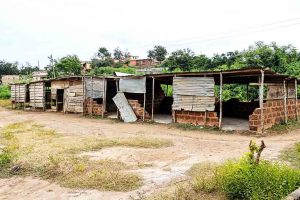
The icing on the JSS-SSS Reforms was the Free Compulsory Universal Basic Education (FCUBE) Policy that made it compulsorily mandatory for all children of school going age to receive free basic education without let or hindrance.
Quality & Standards
Increased population growth naturally and expectedly resulted in corresponding increments in enrollment and access to education, increased enrollments neither compromised nor lowered Ghana’s education quality and standards, MOE and its implementing agencies especially GES made conscious efforts to safeguard, consolidate and improve on Ghana’s education quality and standards.
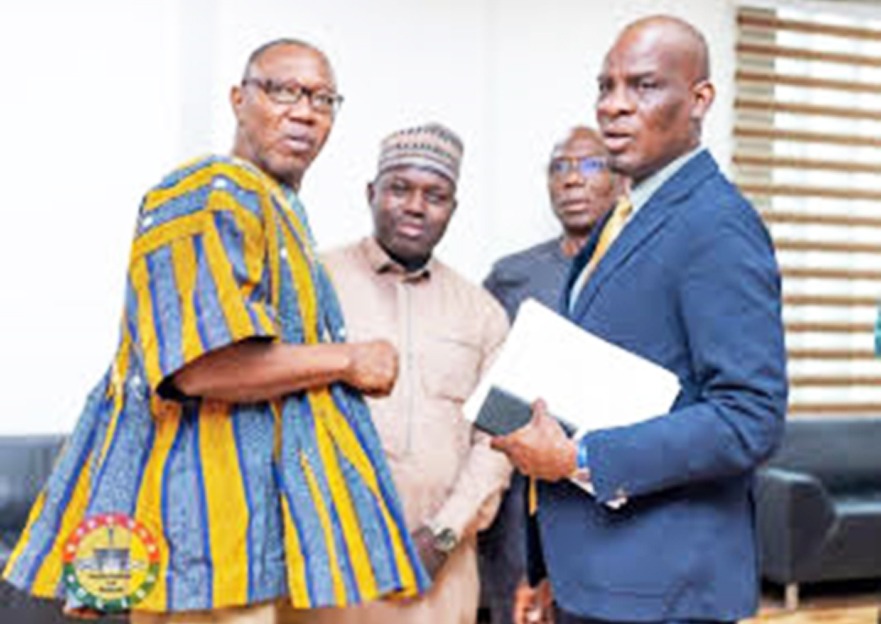
Right Alhaji Haruna Iddrisu, Minister of Education, left Dr. Clement Abas Apaak, Deputy Minister of Education and MOE Technical Advisors in a brainstorming session
CSSPS, Free SHS & Others
Other education reforms implemented by succeeding governments over the years included rebranding and changing the education brand name identity (BNI) from JSS-SSS to Junior High School (JHS)-Senior High School (SHS), district model senior high schools (DMSHSs), SHS duration change from three (3) to four (4)-(3)-years experiments, the famous 2005 Computerized Senior High School Selection and Placement System (CSSPS) as well as the infamous 2017 Free Senior High School among others.
CSSPS dismantled corruption & favoritism
The famous 2005 CSSPS also achieved very satisfactory and remarkable results, it effectively dismantled favoritism and corruption that were synonymous with admission into very prominent and elite SHSs across the country with transparency, equity and inclusivity rather than being a preserve for the few politically connected and the wealthy.
UNESCO Protocols
Succeeding governments since 1987 to date have initiated and implemented one education reform or the other without adhering to standard UNESCO Education Best Practice, Principles and Protocols, especially with regard to funding, investment, teacher-pupil/student ratio, idle student class-size among others, an act of omission that has not helped the national cause over the years.
Free SHS messed CSSPS, swapped quality for quantity
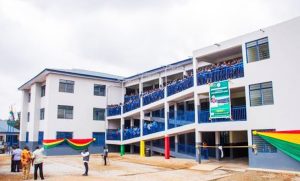
The 2017 Free Senior High School (Free SHS) Policy was the worse culprit with fragrant negligence to UNESCO protocols, Free SHS was not only hurriedly and poorly implemented, it was a politically influenced-populist policy that also reversed noted historic quality education development gains , more particularly the standard and quality of secondary education in the country, apostles of Free SHS fragrantly discarded and replaced quality with quantity, ignored infrastructure capacities and deficits of our SHSs, promoted over-crowding, ignored lack of teaching and learning aides, and reduced teaching and learning contact hours among other logistical constraints in SHSs across the country, the SHS Programme in its haste promoted mass SHS access without regard to quality thereby lowering education quality and standards in the country. The poor implementation of Free SHS also worsened Ghana’s poor ranking and notoriety to her negligence-adherence to UNESCO Education Best practice protocols.
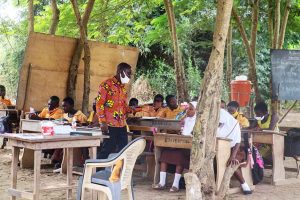
Free SHS distorted Education System & Standards
It is an open secret that between 2017 and 2024, Ghana neglected and abandoned quality foundational and basic education for fixation to mass Free SHS, which also dismantled and destroyed gains from CSSPS as well threw quality secondary education to the dogs in exchange for quantity but for Minister of Education Alhaji Haruna Iddrisu’s 2026 CSSPS reforms and insistence on strictly merit the over fifty-four thousand (54,000) unqualified and unmerited JHS graduates would have entered SHS without notice quietly on our blind side as education quality and standards’ free fall continue unabated, we need to be grateful to the minister for taking the bull by the horn with his insistence on strictly merit to secondary education, for quantity without quality , as espoused by , ’garbage-in-garbage-out’ principle. would only result in cheap and useless SHS graduates, who are more than needless liabilities on an over-burdened and overstretched national purse.
Sustain merit-based SHS & BECE-Resist Option
We need to support the Minister of Education, the ministry and Ghana Education Service (GES) to stick to their guns on strictly merit to access to SHS, MOE and GES since 2015 offer BECE Resit option to all JHS graduates who want to better their grades to explore, we are not in a haste for mass quantity but quality education must be non-negotiable national fixation, since we are part and parcel of very competitive global village.
Ignored UNESCO red flags & Alhaji Haruna Iddrisu Factor
We are lucky to have a very meticulous and down to earth Education Minister, who is very sincere, candid, concerned, forthright, resolute and very bold in addressing a parochial self-inflicted wound that damaged and harmed our national stature and reputation.
The minister’s firm resolve to implement UNESCO’s recommendations from it’s Ghana’s Education quality assurance evaluations so as to address recurring red flags in Ghana’s Education quality assurance evaluations remedies that were continuously swept under the carpet over the years, to repair, remedy and restore Ghana’s falling education quality and standards without compromise, deserve commendation and our collective support.
UNESCO Protocols
The influence and power of science and Information and Communication Technology (ICT) have converged to transform the wide-world into a very competitive global village, Ghana is not an isolated island but part and parcel of the new competitive global village order, there is no Ghana Standard but only one universal global standard therefore Ghana’s legendary notoriety and negligence with regards to her non-adherence to UNESCO Education Development universal standard protocols aberration must not be allowed to fester , the omission has manifested evidently in the free-fall in the quality of Ghana’s Education Standards , which was once highly acknowledged and held in very high esteem across the world, Education Minister, Alhaji Haruna Iddrisu’s firm position on strictly merit to access secondary education must also include comprehensive policy reforms that make it an entrenched ,binding and mandatory national policy that all our education policies strictly adhere to UNESCO Protocols, education is indispensable to produce the appropriate , suitable and critically needed quality human capital-mix to drive our collective socio-economic development ambitions with corresponding population growth, the minister, MOE,GES and its Director-General, GES need our collective full support to repair and restore the faded credibility and quality to our Ghanaian graduates and certificates.
By Prince Dennis Klintings
The Writer is Branding & Communication Consultant & Policy Analyst
Email:kingskonsults@gmail.com
For more news, join The Chronicle Newspaper channel on WhatsApp: https://whatsapp.com/channel/0029VbBSs55E50UqNPvSOm2z