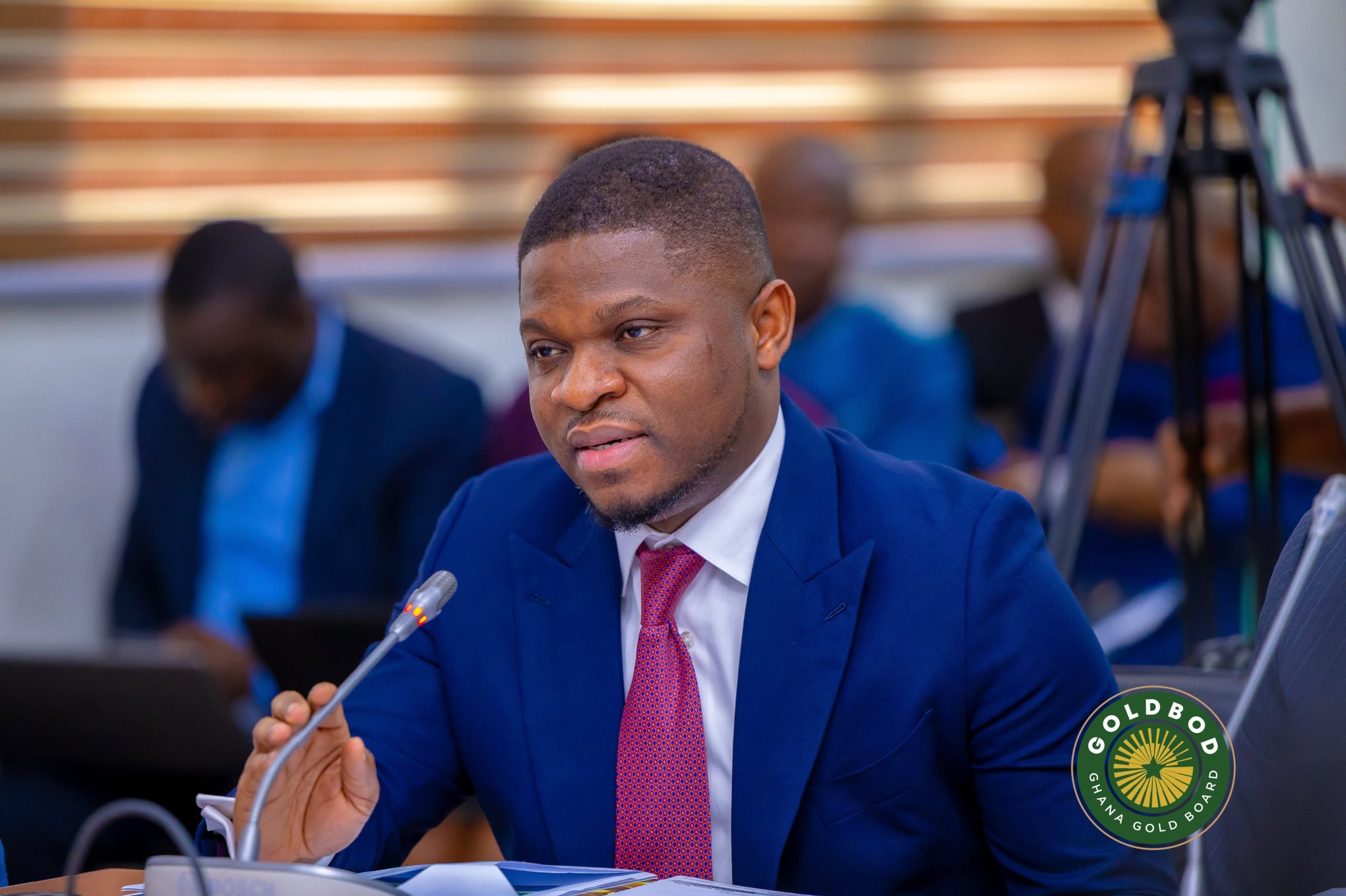
The Chief Executive Officer of the Ghana Gold Board (GoldBod), Sammy Gyamfi, says institutional, licensing and value-addition reforms introduced by his outfit has created 4,866 direct jobs in less than two years, comprising 361 public-sector jobs and 4,505 private-sector jobs.
According to him, the reforms were also opening opportunities for businesses and entrepreneurs involved in artisanal smelting, jewellery production and other activities across the gold value chain.
“For Ghana, the broader ambition is to expand economic participation beyond mineral extraction and trading into higher-value activities that can support industrial development and skilled employment”, he said.
Speaking the African Minerals Policy Forum – Mining in Motion 2026 in Accra yesterday, Mr Gyamfi said mineral sovereignty would remain incomplete if financing, equipment, technology, processing and the most valuable opportunities in the industry continued to be controlled outside Africa.
He called for deliberate government policies to enable local enterprises and young African professionals to become mine owners, geologists, engineers, equipment suppliers, financiers, processors, refiners and traders.
The GoldBod CEO also announced that Ghana had set sights on ending her export of raw minerals by 2030, outlining plans to expand domestic gold refining, create jobs and retain a greater share of the country’s mineral wealth.
According to him, the strategy was intended to change Ghana’s longstanding position as an exporter of raw mineral resources into a country that captures more value through processing, refining and greater participation by indigenous businesses.
“Under the visionary leadership of President John Mahama, the GoldBod is fast-changing Ghana’s tragic story of 100% raw mineral export as at the end of 2024, to zero raw mineral export by the end of 2030,” he said.
The conference was held under the theme, “From Gold Production to National Prosperity: Ghana’s GoldBod Model for Mineral Sovereignty and Value Addition.”
Mr Gyamfi said Ghana’s mineral wealth had historically generated substantial value for foreign markets while the country retained only a fraction of the benefits that could have supported industrialisation, employment and national development.
He argued that the success of Africa’s mineral sector should not be measured solely by production and export volumes, but by the jobs, industries, revenue and economic opportunities created for its people.
Local refineries take centre stage
‘As part of the value-addition drive, GoldBod has entered into refining service agreements with two privately owned Ghanaian facilities, Gold Coast Refinery and Royal Ghana Gold Refinery.The two refineries had cumulatively refined 25 tonnes of artisanal and small-scale mining (ASM) gold purchased and exported by GoldBod in 2026 ”, he said.
The CEO said the value-addition strategy was being supported by reforms aimed at bringing more small-scale gold production into the formal economy.
He disclosed that GoldBod had exported 85.4 tonnes of ASM gold valued at US$11.6 billion between January 1 and October 20, 2026, compared with 76 tonnes of large-scale gold exports worth US$11.1 billion over the same period.
He attributed the growth partly to reforms targeting smuggling, under-declaration and weaknesses in the local gold trading system.
GoldBod is also procuring a blockchain-based tracking system to improve traceability and establish a verifiable record of gold from its legitimate source through the supply chain. The national tendering process was expected to conclude before the end of 2026, he said.
In addition, the board plans to introduce an Artisanal and Small-Scale Mining Formalisation and Financing Support Programme in 2027, in collaboration with the Ministry of Lands and Natural Resources and the University of Mines and Technology, with technical support from South Africa’s Rand Refinery.
The programme is intended to expand production and employment while reducing operational costs and environmental degradation associated with small-scale mining.
Mr Gyamfi said Ghana’s experience could offer useful lessons to other African countries seeking to retain more value from their mineral resources, but stressed the need for cooperation across national borders to address illicit trade and strengthen mineral governance.
He urged African governments to move beyond extracting and exporting minerals towards building domestic industries capable of transforming natural resources into lasting prosperity.
He said the ultimate test of mineral policy was whether the wealth beneath the continent’s soil could create decent jobs, support local enterprise and deliver sustainable benefits to mining communities and future generations.
Mr Gyamfi also disclosed that 30 per cent of the output of large-scale mining companies purchased by government under the Ghana Accelerated National Reserve Accumulation Program was being refined locally.
For more news, join The Chronicle Newspaper channel on WhatsApp: https://whatsapp.com/channel/0029VbBSs55E50UqNPvSOm2z