The highly pathogenic H5N1 avian influenza virus could pose a high risk as a source of a future pandemic, as its spread across birds and mammals continues to expand, a leading infectious disease expert at Imperial College London has warned.
Professor Wendy Barclay, Regius Professor of Infectious Disease at Imperial, said viruses already circulating in nature remained the most likely source of the next pandemic, with H5N1 requiring particular attention because of its spread across species.
“On a numbers game alone, it has to be considered high risk as a pandemic source,” Professor Barclay said.
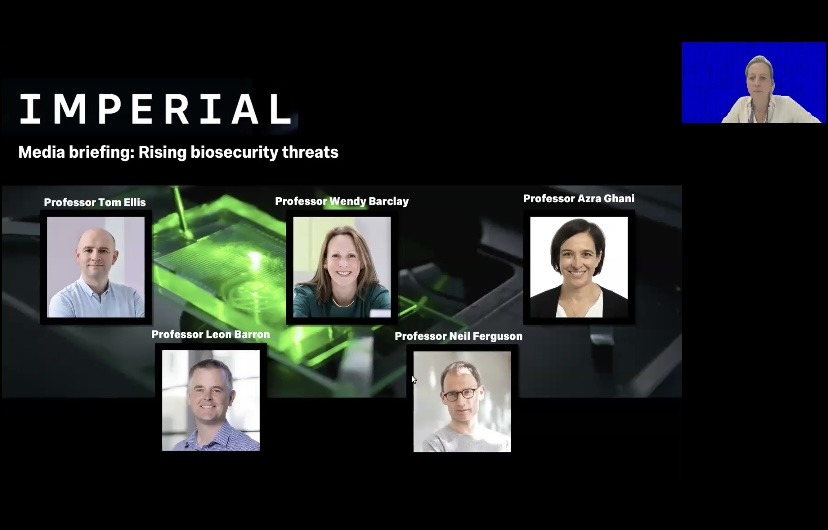
She made the observation during an online Biosecurity Media Briefing organised by Imperial College London to examine emerging biological threats, global biosecurity and the implications of rapid advances in artificial intelligence.
Professor Barclay said H5N1 had re-emerged and spread across the world since 2020, infecting wild birds, farm poultry and more species of wild and domesticated mammals than had previously been seen with an influenza virus.
She said the virus had crossed from wild birds into poultry, resulting in the culling of more than 400 million chickens over the past four years.
The virus has also crossed into dairy cattle in the United States, where it continues to circulate, while its detection in mink farms in Utah had created additional concern over the risks to humans.
Professor Barclay said researchers at Imperial were monitoring how the virus was evolving in new host species and assessing the potential consequences for humans.
She said the international scientific community should use the current period to prepare vaccines, drugs and diagnostic tools rather than wait for a pandemic to emerge.
At Imperial, she said scientists were also engineering or editing chickens to investigate whether they could eventually be made resistant to incursions by H5N1.
AI raises new biosecurity concerns
The H5N1 warning came as the experts examined how advances in AI and synthetic biology could change the biological threat landscape.
Professor Tom Ellis, Professor of Synthetic Genome Engineering at Imperial, said synthetic biology was advancing rapidly as DNA became increasingly accessible to engineer and synthesise.
He said AI was now being incorporated into engineering biology, including through automated laboratories capable of linking AI systems with biological experiments.
Professor Ellis, however, cautioned against exaggerated perceptions of what AI can currently achieve, saying AI-generated biological designs still had substantial failure rates and required extensive laboratory testing.
He nevertheless said the potential biosecurity implications needed to be considered as the technology advanced.
He called for responsible use of AI in engineering biology, including surveillance and regulation of synthetic DNA orders to reduce the possibility of misuse.
Professor Barclay said the potential risks associated with AI and biological research should also be considered alongside the benefits of scientific advances.
She noted that the same knowledge used to understand viruses and develop vaccines, drugs and diagnostics could potentially be misused, creating a “dual-edged sword”.
She cautioned against blanket bans on virus research, advocating instead open discussions, appropriate regulation and risk assessments to ensure potentially high-risk experiments were conducted safely and in properly maintained high-containment laboratories.
Surveillance
Professor Azra Ghani, Professor of Infectious Disease Epidemiology at Imperial, said preparedness required stronger surveillance systems and the rapid development of diagnostics, therapeutics and vaccines.
She said the international community had invested heavily in accelerating the development of medical countermeasures, including through the 100-day mission aimed at shortening the time required to respond to emerging pandemic threats.
Professor Leon Barron, Professor of Analytical and Environmental Sciences at Imperial, highlighted wastewater surveillance as an important tool for detecting biological threats early.
He said wastewater monitoring could provide near-real-time information about pathogens circulating within communities and had been used during the COVID-19 pandemic to detect variants, sometimes weeks before symptomatic cases appeared in clinics.
Professor Neil Ferguson, Director of Imperial’s School of Public Health, said natural biological hazards currently posed the greatest risk, but warned that advances in technology were increasing the potential threat from engineered and synthetic pathogens.
He said biosecurity planning needed to address both natural and man-made hazards, including accidental releases and deliberate misuse.
Professor Ferguson called for greater cooperation between scientists, public health authorities, security agencies and the agricultural and plant-health sectors to strengthen the ability to detect and respond to emerging biological threats.
The briefing was moderated by Samantha Ray, Media Officer for Medicine at Imperial College London.
For more news, join The Chronicle Newspaper channel on WhatsApp: https://whatsapp.com/channel/0029VbBSs55E50UqNPvSOm2z