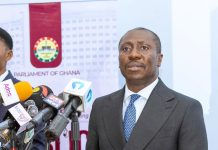
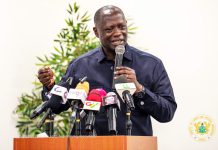
Finance Minister Dr. Cassiel Ato Forson has attributed Ghana’s improving macroeconomic performance to sweeping fiscal, tax and monetary reforms, arguing that disciplined economic management rather than higher taxes has restored investor confidence, strengthened public finances and accelerated economic growth.
Presenting the 2026 Mid-Year Budget Review in Parliament yesterday, Dr. Ato Forson said the government’s economic turnaround was underpinned by tighter expenditure controls, modernised tax administration and policies designed to support inflation targeting and exchange-rate stability.
He said the reforms had produced measurable gains, including stronger revenue mobilisation, improved foreign exchange reserves and the fastest economic growth recorded since 2019.
SOEs blamed for rising public debt
The Finance Minister said one of the government’s most significant fiscal reforms was extending expenditure controls to state-owned enterprises (SOEs), which had historically accumulated liabilities that were eventually transferred to the state.
According to him, SOE liabilities added the equivalent of about 3% of Gross Domestic Product (GDP) to Ghana’s public debt every year over the past decade after many entities failed to honour contractual obligations, forcing successive governments to absorb their debts.
He said government had amended the Public Procurement Act to require commitment authorisation before procurement, ensuring that spending is backed by approved budgets.
For the first time, SOEs are also subject to the commitment authorisation regime to prevent them from spending beyond their financial capacity.
Dr. Ato Forson argued that excluding SOEs from expenditure controls would have undermined efforts to restore fiscal discipline, since taxpayer funds had repeatedly been used to settle their debts instead of financing critical infrastructure such as roads, bridges and hospitals.
Lean government, tighter spending
The Finance Minister said government had also reduced the size of the public sector by cutting the number of ministries from 30 to 23 and reducing the number of ministers and deputy ministers from 123 at its peak to 60.
He said spending on foreign travel, workshops, conferences and vehicle purchases had been curtailed, while programmes deemed to have limited economic impact had been discontinued to redirect scarce resources to priority sectors.
Government has also operationalised the Sinking Fund to improve debt management and restored fiscal decentralisation by ensuring that at least 80% of the District Assemblies Common Fund is transferred directly to metropolitan, municipal and district assemblies.
Tax reforms boost revenue despite abolishing levies
On taxation, Dr. Ato Forson said government had shifted its focus from increasing tax rates to improving compliance and efficiency.
He noted that several levies, including the Electronic Transfer Levy (E-Levy), betting tax, COVID-19 Health Recovery Levy, emissions tax and VAT on motor insurance, had been abolished to reduce the burden on households and businesses.
Despite these tax cuts and without introducing new taxes, non-oil tax revenue increased from 12.6% of GDP in 2024 to 13.1% in 2025, reflecting stronger compliance and improved tax administration.
The Finance Minister said comprehensive Value Added Tax (VAT) reforms undertaken for the first time since 2015 had removed distortions in the tax system while leaving businesses with more working capital to expand operations and create jobs.
He added that artificial intelligence-driven customs reforms had increased monthly customs revenue by approximately 17%, which he attributed to stronger compliance, improved enforcement and reduced revenue leakages.
GoldBod strengthens external position
Dr. Ato Forson also highlighted the role of the Ghana Gold Board (GoldBod) in supporting macroeconomic stability.
He said the institution was established to formalise the gold trade, reduce smuggling and increase the country’s foreign exchange earnings.
According to him, GoldBod generated an additional US$15 billion in foreign exchange revenue, contributing significantly to reserve accumulation and exchange-rate stability.
The intervention, he said, improved Ghana’s current account surplus from 1.9% of GDP in 2024 to 8.3% in 2025, representing what he described as a four-fold increase within a year.
The Finance Minister said government had also launched the Ghana Accelerated National Reserve Accumulation (GANRA) policy, which aims to increase international reserves to the equivalent of 15 months of import cover by the end of 2028.
He further disclosed that government had reached an agreement with large-scale mining companies to sell 30% of their annual gold production for local refining, a move expected to increase domestic value addition and strengthen reserve accumulation.
Fiscal, monetary policy coordination
Dr. Ato Forson said government had amended the Bank of Ghana Act to make inflation targeting a shared responsibility between the Ministry of Finance and the central bank, with the objective of strengthening coordination between fiscal and monetary policy.
He argued that the reforms were already yielding positive results, citing real GDP growth of 6.0% in 2025, the fastest pace of economic expansion since 2019.
“The results of the last eight months demonstrate that disciplined policies, competent economic management and consistent implementation deliver tangible results,” the Finance Minister told Parliament.
The presentation formed part of the 2026 Mid-Year Fiscal Policy Review required under the Public Financial Management Act, 2016 (Act 921).
For more news, join The Chronicle Newspaper channel on WhatsApp: https://whatsapp.com/channel/0029VbBSs55E50UqNPvSOm2z