Ghana has officially launched the Ghana National Research Fund (GNRF), a landmark initiative expected to transform scientific discoveries into practical solutions that drive economic growth, create jobs and strengthen the country’s global competitiveness.
The launch, attended by President John Dramani Mahama, development partners, academics and industry leaders, marked what stakeholders described as a decisive shift towards building a knowledge-driven economy anchored on science, technology and innovation.
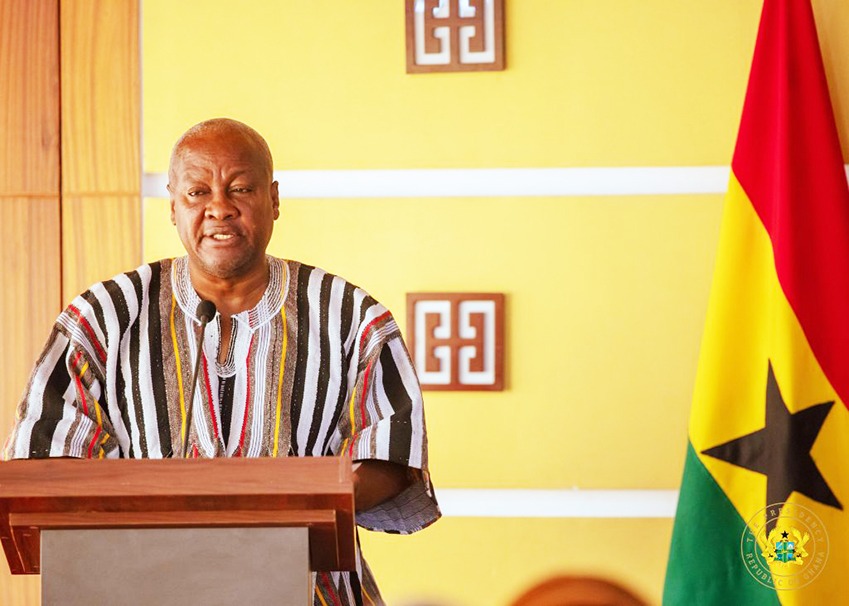
Speaking at the event, President Mahama stressed that research should no longer be viewed as an isolated academic pursuit. “Research can no longer be treated as a peripheral activity. It must become one of the engines that drive our economic growth, our social progress and our national competitiveness,” he said.
The President said Ghana’s industrialisation agenda, including efforts to modernise agriculture, improve healthcare, expand manufacturing and accelerate digital transformation, would require sustained investment in research and innovation.
According to him, the country’s objective should be to produce research that solves problems, informs policy and improves the lives of ordinary Ghanaians.
To support the operationalisation of the Fund, President Mahama announced an initial GH¢100 million catalytic allocation for 2026, which will finance competitive research grants, doctoral and post-doctoral programmes, strategic innovation initiatives and digital grant management systems.
However, the President acknowledged that Ghana still lags behind the African Union’s recommendation that member states invest at least one percent of Gross Domestic Product (GDP) in research and development.
UK backs Ghana’s research ambitions
A significant highlight of the launch was the reaffirmation of the United Kingdom’s commitment to strengthening Ghana’s research ecosystem.
The British High Commissioner to Ghana, Dr. Christiane Rogg, described the establishment of the GNRF as a major milestone capable of accelerating economic growth and improving livelihoods.
“Countries that invest in strong research systems are better equipped to drive growth, create jobs and improve lives,” she noted.
Dr. Rogg disclosed that the UK currently spends approximately 2.5 percent of its national income on research and development, reflecting the central role science and innovation play in national prosperity.
He said the UK had supported Ghana over the years through initiatives aimed at strengthening research governance, institutional capacity and innovation systems. According to her, a recent review identified more than 360 partnerships between Ghanaian and British research institutions, providing a strong foundation for deeper collaboration under the new Fund.
“We look forward to seeing new partnerships fully driven by national priorities and by the Ghana National Research Fund,” she stated.
The High Commissioner cited examples of successful UK-supported innovations already making an impact in Ghana, including Cereal, a fortified flour designed to improve nutrition outcomes, and FarmSense, a technology platform that assists farmers with soil analysis and fertiliser recommendations.
These innovations, she argued, illustrate how research can move beyond academic publications to generate measurable development outcomes.
“The success of the Ghana National Research Fund will be seen not only by the number of publications and citations, but by the innovations it enables, the jobs it creates and the difference it makes to people’s lives in Ghana,” she emphasised.
From importing solutions to producing them
The Head of Office and Country Representative for UNESCO in Ghana, Edmond Moukala, described the Fund as a vehicle for Ghana’s “intellectual independence.”
He argued that for nations to achieve genuine sovereignty in the modern era, they must possess the capacity to generate their own knowledge, technologies and solutions.
“The launch signals the dawn of an era where Ghana is transitioning from a consumer of global innovation to a producer of local solutions with global resonance,” he said.
Mr Moukala also suggested that strengthening local research ecosystems could help reverse Africa’s persistent brain drain.
“The GNRF changes that equation by providing well-funded local laboratories, competitive grants and a vibrant research ecosystem. Ghana is telling its scientists: your brilliance is needed here,” he stated.
Research with measurable impact
Chairman of the GNRF Governing Board, Prof. Eric Yirenkyi Danquah, said the Fund addresses a longstanding gap in Ghana’s development architecture: the absence of predictable and coordinated financing for research.
He noted that fragmented funding arrangements had constrained long-term research programmes and limited the contribution of science to national productivity and industrial growth.
The Fund’s priorities, he explained, include food systems transformation, health innovation and biosecurity, digital and industrial transformation, climate sustainability, and governance systems.
“The Ghana National Research Fund now provides the national framework through which that capability can be financed, organised and advanced with greater strategic discipline and long-term continuity,” he said.
For more news, join The Chronicle Newspaper channel on WhatsApp: https://whatsapp.com/channel/0029VbBSs55E50UqNPvSOm2z