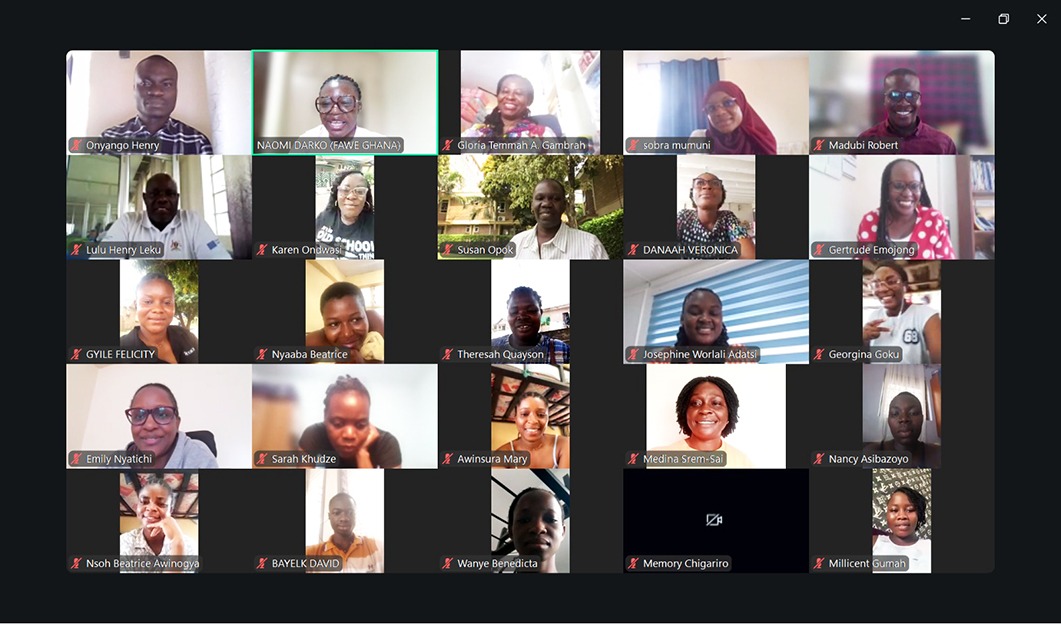
The Forum for African Women Educationalists (FAWE) has called for stronger collaboration among governments, communities, schools and development partners to address period poverty and menstrual stigma, which continue to hinder the education and well-being of millions of girls across Africa.
The call was made during a webinar held on Friday, May 29, 2026 to commemorate World Menstrual Health Day 2026 under the theme: “Together for a #Period Friendly World.”
The event was jointly organised by FAWE Africa, FAWE Ghana and FAWE Uganda to promote menstrual dignity, equity and access to menstrual health services and information across the continent.
Speaking during the webinar, Executive Director of FAWE Uganda, Susan Opok Tumusiime, described menstruation as not only a health issue but also a gender equality and education concern.
She noted that menstruation remains one of the leading causes of school absenteeism among adolescent girls in Uganda, with many falling behind academically or dropping out of school altogether, when they are unable to manage their periods safely and with dignity.
She highlighted interventions implemented by FAWE Uganda under the Sexual Health and Reproductive Education (SHARE) Programme, including menstrual health education, training adolescents to produce reusable sanitary pads and the distribution of sanitary materials in schools.
According to her, these initiatives help reduce stigma, build knowledge and support girls to remain in school.
The webinar brought together health professionals, gender advocates, students and policymakers to discuss menstrual health realities in Africa, period poverty, access to menstrual products, harmful cultural norms and strategies for creating period-friendly schools and communities.
Presenting the keynote address, Gender Specialist and Champion Ms. Esenam Amuzu underscored the importance of addressing menstrual health as a human rights issue.
Discussions highlighted that an estimated 500 million people globally lack access to menstrual products and adequate facilities, while one in 10 girls in Sub-Saharan Africa misses school during menstruation.
Participants noted that stigma, silence and poverty continue to turn a natural biological process into a barrier to education, dignity and opportunity.
The forum also acknowledged progress made in countries such as Uganda and Ghana. In Uganda, participants cited increased production of reusable sanitary pads, improved counselling support for girls, menstrual hygiene spaces in schools and the development of menstrual health guidelines for educational institutions.
In Ghana, gains highlighted included intensified advocacy, the “Don’t Tax My Pad” campaign, the provision of free sanitary pads for students and efforts to engage boys and men in menstrual health conversations.
Despite these achievements, participants observed that menstrual stigma and cultural misconceptions remain widespread. They stressed the need for comprehensive menstrual health education to address misinformation and improve awareness of menstrual health conditions such as dysmenorrhea, amenorrhea and endometriosis.
The webinar concluded with a renewed call for schools to provide clean and gender-responsive sanitation facilities, ensure menstrual products are affordable and accessible, integrate menstrual health education into curricula and involve boys and men in efforts to eliminate stigma. Participants also urged governments to back menstrual health policies with adequate funding and political commitment.
FAWE said it remains committed to working with partners across Africa to build a future where no girl’s education, health or aspirations are limited because of menstruation.
For more news, join The Chronicle Newspaper channel on WhatsApp: https://whatsapp.com/channel/0029VbBSs55E50UqNPvSOm2z