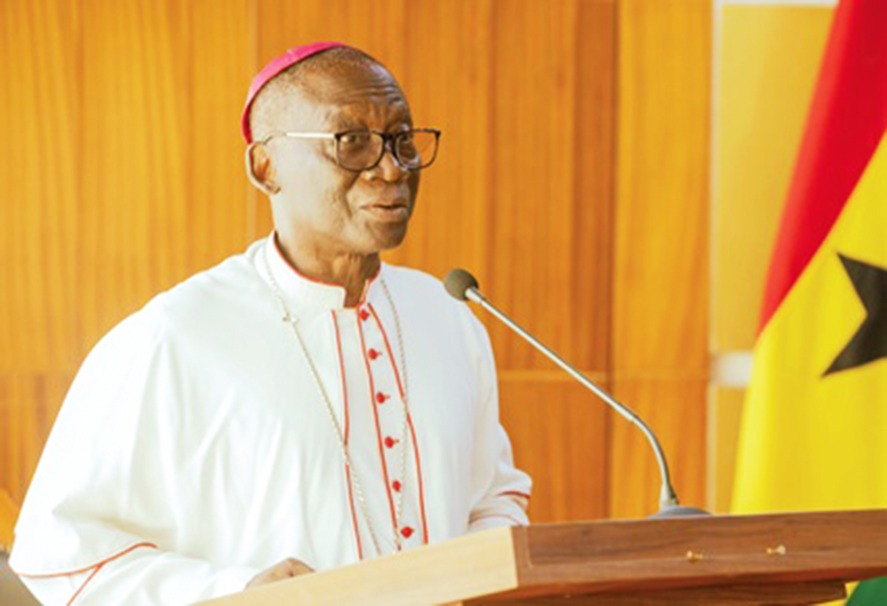
The President of the Ghana Catholic Bishops’ Conference, Most Rev. Matthew Kwasi Gyamfi, says Ghana must prioritise its values and national interests over conditional foreign assistance.
According to him, Ghana should be prepared to forgo foreign aid, if such support comes with conditions that conflict with the country’s values and national interests.
His comments come in the wake of the passage of the Human Sexual Rights and Family Values Bill, 2025, widely referred to as the anti-LGBTQ+ bill by Parliament last Friday.
The revised legislation criminalises LGBTQ+ activities in Ghana, but provides exemptions for lawyers offering legal representation to LGBTQ+ persons, journalists reporting on LGBTQ+ issues and healthcare or mental health professionals providing medical care, counselling, or psychological support.
The bill has generated intense debate both locally and internationally as supporters argue that it is necessary to protect Ghanaian family systems and cultural values, while critics contend that it infringes on constitutional rights and could affect the country’s relations with international partners and donor agencies.
But speaking on Citi News on Friday, Most Rev. Gyamfi questioned the true value of some forms of international aid, particularly when they are tied to conditions that may undermine Ghana’s principles.
“There is a whole ethics and philosophy even about aid that we receive from so-called donors and even for us to think whether they are really aid and if that aid really aids us,” he stated.
According to him, Ghana could become more self-reliant if it reduces dependence on external assistance linked to conditions that contradict the country’s beliefs and priorities.
“Probably if they remove the aid, we will become better. We may not need the aid that they give us,” he added.
Most Rev. Gyamfi stressed that Ghana must be ready to defend what he described as its “essential existential interests,” even at the risk of losing financial support from development partners.
“If this is a unique essential existential interest to Ghana, then if they say if you don’t do this, we will not give you aid, then we say take your aid and we can survive,” he said.
He further emphasised the need for Ghana to pursue self-sufficiency rather than rely heavily on aid attached to conditions that may conflict with the country’s values.
For more news, join The Chronicle Newspaper channel on WhatsApp: https://whatsapp.com/channel/0029VbBSs55E50UqNPvSOm2z