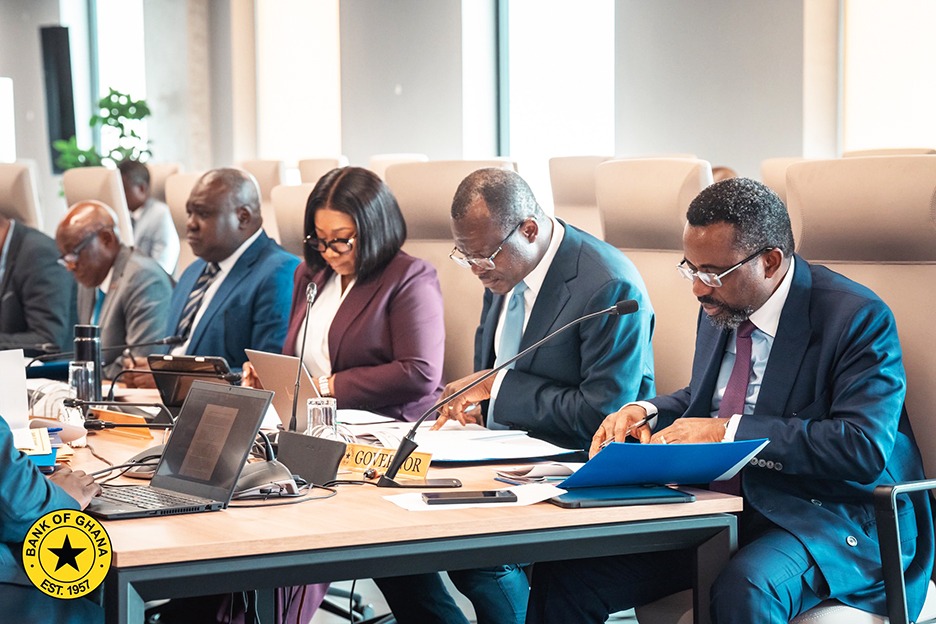
The Governor of the Bank of Ghana, Dr. Johnson Pandit Asiama, has warned that the escalating conflict in the Middle East is emerging as the biggest threat to Ghana’s economic stability, as rising global energy prices begin to fuel inflationary pressures and increase risks to the country’s recovery efforts.
Speaking at the opening of the 130th Monetary Policy Committee (MPC) meeting in Accra on Monday, Dr. Asiama said although Ghana’s economy has shown strong signs of recovery and resilience in recent months, worsening global conditions are creating new uncertainties that could threaten recent gains.
“The protracted Middle East conflict and sustained energy price elevation, the convergence of domestic energy supply disruptions and external cost-push pressures risks, which if not addressed could dislodge inflation expectations before they are firmly anchored,” the Governor said.
He explained that when the MPC last met in March 2026, the committee had hoped the Middle East conflict would be short-lived.
However, the situation has deteriorated, with the closure of the Strait of Hormuz leading to sustained increases in global crude oil prices and renewed inflation concerns across many economies.
According to the Governor, the International Monetary Fund (IMF) has already revised downward its 2026 global growth projection from 3.3 percent to 3.1 percent due to the economic consequences of the conflict.
He noted that several central banks around the world have also been forced to pause or reverse monetary easing measures as inflation pressures re-emerge.
“For a commodity-exporting, energy-importing economy such as Ghana, the transmission channels of this external shock are multiple and material,” Dr. Asiama stated, pointing to rising fuel prices, transportation costs, import bills and consumer prices as key concerns.
Despite the external challenges, the Governor highlighted a number of positive developments within the domestic economy. He disclosed that inflation has recorded its first increase since December 2024, while Ghana’s economy continues to expand according to the IMF’s April 2026 World Economic Outlook report.
He further revealed that Ghana’s current account surplus for the first quarter of 2026 exceeded the same period in 2025 by approximately US$652 million. The government has also successfully resumed domestic treasury bond issuances, a move he described as evidence of renewed investor confidence in the economy.
Dr. Asiama also announced that government intends to raise US$1 billion through local currency bonds to finance cocoa purchases for the 2026/2027 crop season, reducing dependence on foreign lenders and dollar-denominated borrowing. In addition, temporary reductions in regulatory margins on petroleum products have been introduced to cushion consumers from rising global crude oil prices.
The Governor said the recent IMF mission to Ghana acknowledged the country’s macroeconomic progress under the Extended Credit Facility (ECF) programme, citing lower inflation, improved external reserves, stronger confidence in the cedi and enhanced debt sustainability. However, the IMF also warned that the ongoing Middle East conflict could push up global energy, food and fertiliser prices.
Dr. Asiama stressed that the central issue confronting the MPC is how to maintain low inflation while preventing inflation expectations from becoming unanchored amid both domestic energy supply challenges and external price shocks.
He cautioned that risks such as elevated energy prices, domestic power supply disruptions, fiscal pressures and current account vulnerabilities remain key threats to the economy and will dominate discussions during the three-day MPC meeting.
On Ghana’s future engagement with the IMF, the Governor confirmed that discussions have advanced toward a new 36-month non-financing Policy Coordination Instrument (PCI), which would succeed the current ECF programme.
According to him, the PCI will focus on sustaining fiscal discipline, safeguarding debt sustainability, strengthening governance and transparency, reinforcing financial sector stability and supporting inclusive economic growth.
Dr. Asiama said the programme would also support reforms within the Bank of Ghana, including improvements in monetary policy transmission, liquidity forecasting and foreign exchange management.
For more news, join The Chronicle Newspaper channel on WhatsApp: https://whatsapp.com/channel/0029VbBSs55E50UqNPvSOm2z