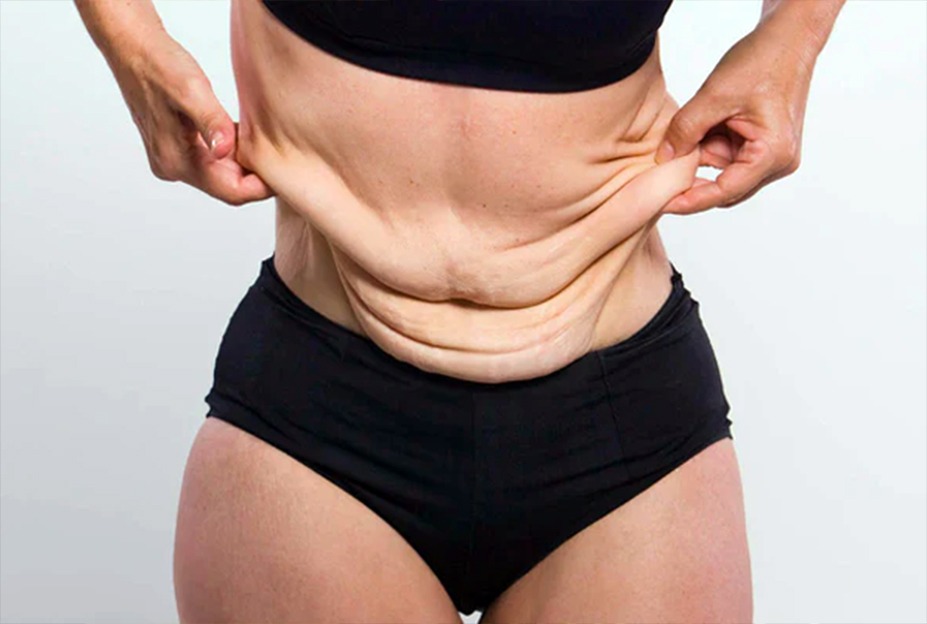
The bottom line is this: Depending on the amount of weight you lose, at what age, and how fast you lose it, you may not be able to avoid skin sagging. But there are ways to take care of your skin during and after weight loss to keep it looking its best.
Gradual weight loss
Slow and steady wins the race, and experts agree that’s the best strategy for weight loss, too, especially if your goal is to trim down by 100 pounds or more. Slow, gradual weight loss gives that all-important collagen and elastin in the epidermis time to retract. Gradual weight loss is also considered better for your general health. The CDC recommends trimming down at a rate of 1-2 pounds per week.
Strength training
Exercise is typically a key part of any ongoing weight loss plan. It helps burn calories and builds muscle. But that muscle mass becomes even more important when it comes to skin tone. Remember the lower layer of the skin called the hypodermis, where fat is stored? As that fat is burned or removed, skin can sag. Building muscle beneath that skin can help fill the gap. That’s why strength training, which focuses on muscle growth, has been shown to improve skin elasticity and thickness.
Diet and hydration
Diet goes hand-in-hand with exercise when it comes to weight loss. But cutting calories should not mean cutting down on the nutritious foods that your body, especially your skin, needs.
But one of the most important things you can put in your body is water. Since skin cells are 64% water, it’s essential for healthy skin. Drinking 2 or more liters of water per day may significantly improve skin health.
Skin care
Skin health can also be approached from the outside through a variety of products that help nourish, moisturize, and protect it. There’s no magic cream or lotion that can tighten up excess saggy skin, but some products do help prevent skin from loosening. The best example of this is sunscreen. Sun damage impacts the skin’s elasticity and can cause skin to sag over time.
Smoking and Alcohol
Research shows that tobacco smoke and the intake of nicotine have a toxic effect on skin and increase the chances of premature aging. The effects are caused both by the smoke and the breathing in of toxins. In a study comparing smokers with nonsmokers, hydration and firmness were lower in the smokers’ skin.
Like nicotine, alcohol is a toxin that can damage the skin on a cellular level. Alcohol is a diuretic, which means it makes you pee more. So drinking it can lead to dehydration.
Tracking Weight Loss
Although your top goal may be losing weight, it’s important to keep in mind that as the pounds drop away, there may be an impact on your skin. Tracking your weight loss weekly can prompt you to pace yourself when necessary so that your skin can keep up.
How to Tighten Loose Skin After Weight Loss
If you’ve already reached your weight loss goal, there are still actions you can take to improve your skin’s resiliency and tone if that’s important to you. An approach that includes nutrition, exercise, and healthy skin care can help.
Build muscle
Sometimes called “body composition,” replacing the body fat you lost with muscle mass can help you look and feel better, even after your weight loss goal is reached. When building muscle is the goal, specific types of exercise, like those used in strength training, isolate muscles and help strengthen and increase their size. Building muscle can also improve skin elasticity and thickness because those bigger, better muscles will support the layer of skin (the hypodermis) where the fat was lost. But be sure to talk with your doctor before starting any new exercise routine.
Moisturizers
Remember to take care of the outside of your skin, too. Hydration is important both inside and outside your body. Although there is no magic elixir that will fully hydrate and tighten your skin overnight, moisturizers may help plump the skin and relieve dryness right away. But if you don’t keep applying them, the effects won’t last.
Skin-firming products
Lotions, serums, and creams that contain retinoids may have some positive effects on saggy skin, as retinol promotes the skin’s ability to make collagen. But creams containing collagen don’t seem to have much benefit for the skin’s natural collagen production. Lotions that contain vitamin C or hyaluronic acid may help reduce sun damage to skin and skin discoloration, but they won’t improve the tightness or elasticity of skin over the long run.
Sun protection
The one over-the-counter skin product that experts agree is good for your skin is sunscreen. Sun damage can impair skin elasticity – a major factor in loose skin – so avoiding extended time in the sun and applying sunscreen throughout the day when you’re outside is your best defense.
Diet and hydration
Now that you’ve lost weight, you may be more motivated than ever to maintain a healthy lifestyle. Keep in mind what your skin needs when you make your nutrition plan:
Foods rich in omega-3 fatty acids, such as salmon, tuna, walnuts, almonds, and edamame, help restore collagen in your skin and help improve firmness.
Water. Experts advise drinking 2 or more liters of water daily for skin health.
Credit: webmd