This series examines why patients sometimes cannot move through hospitals even after the decision to treat or admit them has been made. In this instalment we look at the most visible place where that failure appears: the emergency department.
Many people imagine that the phrase “No-Bed Syndrome,” means that a hospital that has run out of beds. They picture wards filled beyond capacity. They assume the hospital building itself is too small. The instinctive solution is mortar and concrete. Build more space. Add more beds.
Yet in most cases patients remain in the emergency department for a different reason. The hospital has beds, but patients cannot move into them.They get stuck because they cannot move.
Pause briefly to think about a woman who arrives in the emergency department with severe abdominal pain. She is triaged and assessed promptly. Blood tests are sent and scans are arranged. The doctor makes a diagnosis and decides the patient needs to be admitted under the surgical team. She is given pain relief and a drip is started. She is clinically stable. On paper, she is now a hospital inpatient.
Yet she remains on a trolley in the emergency department for hours.As explained in last week’s article, this is called boarding. Boarding occurs when a patient has been admitted but remains physically in the emergency department because no inpatient bed has been vacated. The clinical decision has been made. Responsibility for the patient’s care has shifted to another specialist but the patient cannot be not moved.
Boarding is not just an inconvenience. It is the operational mechanism by which flow failure becomes visible. It is the moment when a hospital’s internal delays become visible in the emergency department.
The patient is no longer waiting for a diagnosis. She is waiting for a bed to open because another patient has not yet been discharged. The ward team may only have reviewed that patient late in the afternoon. A discharge summary may still be incomplete. Relatives may not yet have arrived. Payment or transport arrangements may still be pending. A delay affecting one patient upstream becomes a prolonged wait downstream in the emergency department.
This is how patients get stuck.Hospitals function properly only when patients are able to move through them. Patients arrive, are triaged and assessed, decisions are made, and from there they should move on to a ward before eventually going home. When that movement slows at any point, the effects begin to show up quickly. The emergency department absorbs that pressure because it cannot close its doors.
The most common reason patients remain in the emergency department after admission is delayed discharge upstream.
Discharges that occur late in the day create bottlenecks. When ward rounds start late in the morning rather than early, beds are not vacated in time by discharged patients for new admissions. Discharge processes including medications and bill payments may not be prepared in advance, or may take hours to complete. If insurance authorisation is delayed or payment questions remain unresolved, discharge pauses. Families sometimes travel a distance and cannot collect relatives until later in the day. These can leave hospital beds occupied for hours longer than necessary.
Each of these delays appears minor in isolation. Together, they fill the hospital.There are also delays within inpatient processes themselves. Investigations may be ordered sequentially instead of simultaneously. A specialist review may take hours because one specialist team covers multiple units. Bed allocation may depend on personal phone calls rather than a real-time bed management system. No one step feels catastrophic. The cumulative effect is visible in a crowded emergency department.
Workforce strain magnifies every weakness.When wards are short staffed, discharges slow. When junior doctors cover multiple specialties, reviews are delayed. Some specialists may not have junior staff to assist them. When nurses care for too many patients, documentation and coordination take longer. Fatigue reduces efficiency. Burnout reduces momentum. A system that depends on constant improvisation cannot maintain smooth flow. Temporary adaptations are sometimes necessary, but they are not a substitute for organised capacity.
Financial and social realities also contribute to exit block.Some patients are medically fit for discharge but cannot leave because bills have not been settled. Others require equipment or support at home that is not immediately available. Others wait for relatives to travel from distant towns. These are not trivial issues. They can significantly affect how hospitals operate.
Every occupied hospital bed affects the next patient waiting to be admitted into it from the emergency department.In this way, slowly but surely, the emergency department becomes the holding area for the patients waiting to be admitted.
Another practical question often arises at this stage. A patient has been admitted but is still lying in the emergency department because no ward bed has opened. In that situation it is not always clear who should take responsibility for the patient’s care or for resolving the delay.
Some clinicians assume responsibility is transferred once the admission decision has been made. Others expect it to change only after the patient physically reaches the hospital ward. Uncertainty can also arise about who has the authority to escalate the situation or to override routine processes when the department is under pressure.
Without clarity, admission delays drift. Ambulances are told there is no bed. Families are told to wait. Staff make phone calls searching for bed space that may or may not exist. The system feels uncertain because visibility of beds across the hospital is limited.
In cities such as Accra and Kumasi, emergency departments attached to major referral centres function as pressure valves for entire hospitals. When inpatient occupancy remains near full capacity every day, the effect is that there is no buffer. Therefore, even small increases in demand produce large delays. A road traffic crash. A seasonal malaria surge. A cluster of pneumonia cases. Without margin, boarding increases rapidly.
Research from major health systems shows that emergency department overcrowding is driven more by delayed movement (out of the emergency department) than by new arrivals. The front door is rarely the main problem. The blocked exit is.
Clinical leaders have long argued that health outcomes in low and middle income countries depend not only on access, but on how well hospital systems are organised and how reliably patients move through them. Emergency care fails not simply when resources are scarce, but when coordination across levels of care breaks down. Boarding in the emergency department is one visible expression of that breakdown.
It is important to acknowledge that emergency departments themselves also influence flow. Over‑investigation can delay decisions. Defensive admissions can increase inpatient demand. Incomplete stabilisation before referral can create friction between teams. Poor communication at the point of admission slows acceptance. Flow is not solely a responsibility for inpatient clinicians. It is often shared.
But even a perfectly efficient emergency department cannot compensate for a hospital that operates permanently at full occupancy.
Queueing theory teaches that systems running close to maximum capacity are unstable. When bed occupancy exceeds safe margins, small fluctuations in demand generate disproportionate delays. A hospital that is always full is not efficient. It is fragile. It has no capacity to absorb the unexpected.
An emergency department filled with boarded patients loses functional capacity. Trolleys intended for rapid assessment become temporary ward beds. Cubicles remain occupied by admitted patients. New arrivals wait longer for evaluation. Staff attention is divided between acute resuscitation and ongoing inpatient care tasks. Risk increases quietly.
Over time, what should be exceptional becomes routine. Corridors become care areas. Families adjust expectations. An overcrowded emergency department becomes the baseline rather than the warning sign.
When congestion or overcrowding begins to feel routine, safety is already at risk.As previously stated, these delays accumulate quietly. A late discharge here. A delayed review there. A payment question unresolved. A specialist covering too many wards. Each delay appears small. Together they fill the hospital and leave admitted patients waiting in the emergency department.
The problem is not that hospitals have no beds at all. It is that patients cannot move through the beds that already exist.
Once we recognise that the problem is movement rather than beds, the next question becomes unavoidable: why does movement slow? Patients are assessed. Admission decisions are made. Yet hours later they remain in the emergency department. Somewhere between decision and transfer, patient movement slows.
Hospitals must treat flow through the emergency department as a measurable performance metric. The time between emergency department decision-to-admit and actual transfer to a hospital ward should be measured. Boarding time should be tracked. Discharge timing should be monitored. Bed occupancy rates, for the emergency department and wider hospital, should be measured. Escalation pathways during congestion should be predefined rather than improvised.
These are operational questions, but they can also be cultural ones. They require mutual accountability between emergency clinicians and inpatient teams. They require hospital leadership to recognise that delay at one point in the system creates risk elsewhere.
If you work in healthcare in Accra or Kumasi, where do you see patients getting stuck most often? Is it at the point of inpatient discharge? During specialist review on the wards? In bed allocation? In insurance processing? In communication between teams? What would change tomorrow if flow were treated as seriously as diagnosis?
If you are a patient or family member, were you given clear information while waiting in the emergency department? Did someone explain why a bed was not yet available? Did you feel the hospital knew where space existed? What part of the waiting felt preventable?
These questions are not rhetorical. They are starting points. Sustainable reform begins with honest observation.
Patients get stuck in the emergency department not because care has stopped, but because movement has. The emergency department fills with patients who have already been admitted but cannot yet move to the hospital ward. At that point the problem changes shape. Admission has occurred. Transfer has not. Clinicians call this exit block.
Safe emergency medicine practice depends on safe and timely movement.
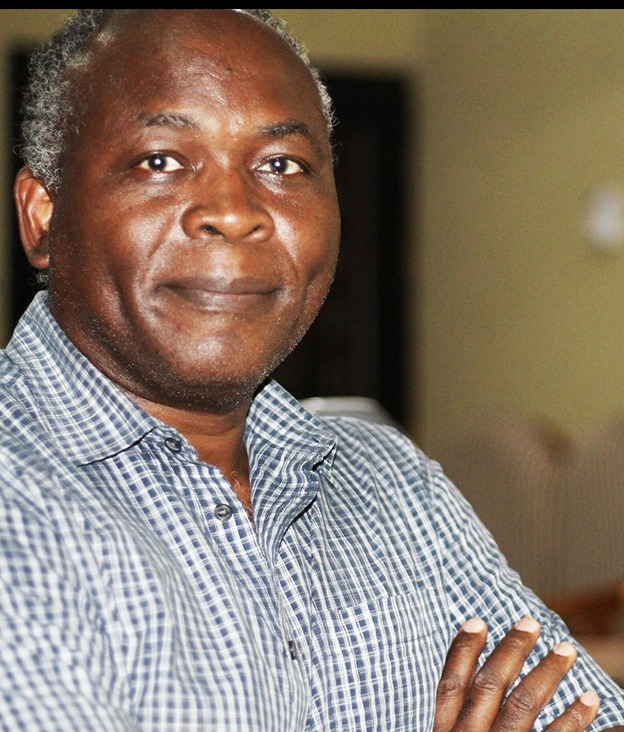
By Dr. George Oduro, FRCS, FRCEM (UK), FGCS
Consultant in Emergency Medicine
For more news, join The Chronicle Newspaper channel on WhatsApp: https://whatsapp.com/channel/0029VbBSs55E50UqNPvSOm2z