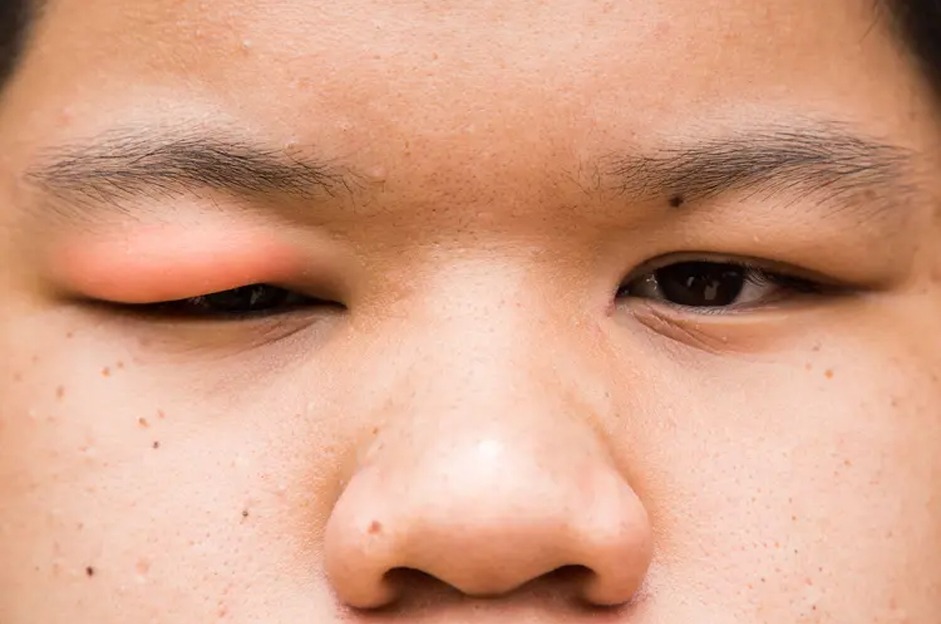
A swollen eyelid is usually a symptom, not a condition. It’s very common and is usually due to allergy, inflammation, infection, or injury. The skin of your eyelid is less than 1 millimeter thick. But since the tissue is loose and stretchy, your eyelid can swell a lot.
The eyelid is a complex, fully functioning skin tissue made up of eyelashes, tear glands, sweat glands, and sebaceous (oil or meibomian) glands, among other parts. These tissues can develop inflammatory reactions, leading to a swollen eyelid.
Your eyelids have more functions than you might think. They:
- Keep sweat out of your eyes
- Trigger a reflex where your eyelids close when insects or other objects come near
- Stop dust and pollen from getting in your eyes
- Keep your eyes lubricated by spreading tears and other fluids around
- Keep eyes from drying out while you sleep
SWOLLEN EYELID CAUSES
A swollen eyelid is usually a sign of a medical condition, such as:
- Allergies
- Clogged oil gland on your eyelid (called a chalazion)
- Pink eye (conjunctivitis)
- Stye (hordeolum), an inflection of a gland inside your eyelid or at the base of your eyelash
Less common reasons for swollen eyelids include:
- Eyelid infection around the skin of your eyelids or around the eyes (preseptal cellulitis or periorbital cellulitis)
- Inflamed eyelids (blepharitis)
- Shingles
- Thyroid conditions such as Graves’ disease
- General body swelling, such as in a kidney disease called nephrotic syndrome
- Infection around your eye socket (orbital cellulitis, which is rare)
- Infected blood clot blocking a vein at the base of your brain (cavernous sinus thrombosis, which is rare).
Depending on the cause, you may get swelling in one or both eyelids. Most of these conditions aren’t serious, but you should make sure to clean and care for your eyes if your eyelid is swollen.
SWOLLEN EYELID TREATMENT
The treatment for a swollen eyelid depends on the cause. If you have an eye infection, you may need to use antibiotic eye drops, ointment, or other topical medication — meaning a medication applied on the body — to help remove the infection and ease your symptoms. Your doctor may give you antibiotics or steroids to take by mouth if the topical treatment doesn’t work.
To relieve eyelid swelling and keep your eyes clear and healthy, try these swollen eyelid home treatments:
APPLY A COMPRESS
Run a clean cloth under warm water and hold it gently on your eyes. Do this twice a day for 15 minutes at a time to help loosen crusty discharge and get rid of any oil that might be plugging your glands. The heat helps to unblock your glands. A cold compress (putting the cloth in cold water) can also work if you just need to get swelling down.
GENTLY WASH THE AREA
After applying a compress, use a cotton swab or washcloth to gently clean your eyelids with diluted baby shampoo. Rinse your eye area well afterward. You can use a saline solution to rinse if you have any discharge or crust around your eye or in your eyelashes.
LEAVE YOUR EYES ALONE
While you have eyelid swelling, don’t wear eye makeup or contact lenses. Get plenty of sleep, and avoid direct sunlight so your eyes can rest. Avoid touching your eyelids unless you’re treating them.
USE EYE DROPS
Use over-the-counter (OTC) artificial tears to keep your eyes moist and comfortable. Try antihistamine drops as well if your eyelid is swollen due to allergens.
WHEN TO SEE A DOCTOR FOR SWOLLEN EYELID TREATMENT
Eyelid swelling usually goes away on its own within a day or so. If it doesn’t get better in 24 to 48 hours, call your regular doctor or see your eye doctor.
If you have any of the following symptoms, see your doctor right away:
- Fever
- Loss of vision
- Double vision
- Bulging of one or both eyes
Your doctor will ask about your symptoms and examine your eye and eyelid, using an object called a slit lamp, which magnifies your eyes. They’ll ask questions about other symptoms or changes that may be causing your eyelid(s) to swell.
Your doctor can usually find out the cause of your eyelid swelling from taking a history and doing a physical examination. But if they think it’s due to a condition like cavernous sinus thrombosis or orbital cellulitis, they may order an imaging test like a CT scan or MRI. If they suspect the swelling is because of a thyroid disease or other condition, they could order lab tests as well as imaging tests.
Credit: webmd