Home Blog Page 455

DCI-Ghana, partners rescue 14-yr-old from alleged forced marriage 

0
DCI-Ghana

Defence for Children International-Ghana (DCI-Ghana) and some Children’s Rights organizations, recently aborted a child- marriage case at Aboaso-Ntonso in the Kwabre East Municipality of the Ashanti region and rescued a 14-year old victim from a supposedly forced marriage.

DCI-GHANA, which chairs the Girls Not Brides Ghana Partnership, collaborated with the She Leads Social Movement, Ministry of Gender, Children and Social Protection, the Anti-Child Marriage Unit and the Department of Children, successfully intervened to rescue the 14-year-old girl (identify withheld) who  was allegedly forced into marriage with a 27-year-old man at Aboaso-Ntonso in the Kwabre East Municipality.

A press release issued and signed by Prof. George Oppong Appiagyei Ampong, the Executive Director of DCI-GHANA and copied to The Chronicle explained the chronology of events, which subsequently led to the rescue of the victim.

The release stated that a Facebook post by one FatiAboni, an anti-child marriage advocate on September 20, 2025 about a child marriage case caught the attention of the Ashanti Regional She Leads Social Movement, who managed to reach out to the informant after which the case was subsequently referred to DCI-GHANA.

A well-coordinated effort, according to the release, between the Regional Department of Social Welfare, Department of Children, DCI-GHANA, the Regional DOVVSU and the Mampong and Agona police, identified the victim and the perpetrators and established that the said marriage violated Section 15 of the Children’s Act, which prohibited child marriage.

The statement further explained that even though the victim insisted she was 18 years, there were inconsistencies about her real age as all the people involved in the marriage including her grandfather, the supposed husband and the woman who claimed to be the mother did not seem to know the exact age of the victim.

The police, therefore, ordered that they should be detained until a proof of age with the victim’s original birth certificate.

The statement emphasized that Children’s Act, 1998 (Act 560), Section 15, prohibits child marriage and Ghana is also a signatory to international conventions, including the Convention on the Rights of the Child(CRC) and the African Charter on the Rights and Welfare of the Child (ACRWC), both of which prohibited child marriage.

The DCI-Ghana, through the release pointed out that “child marriage robs children, particularly the girl-child, their right to life, education, health, childhood, safety and their future.

“This successful rescue shows that the law works when duty bearers, CSOs and communities act decisively. This case is a wakeup call to all governments, child protection agencies, human rights defenders and CSOs to intensify advocacy and enforce the law. No child should ever be forced into marriage in Ghana as it is punishable by a jail sentence”.

DCI-GHANA expressed gratitude to the police, the DOVVSU Unit, the Regional Social Movement and also acknowledged the collaboration and coordination with the Anti-child Marriage Unit and the Department of Children for their significant role in providing guidance and ensuring the safety of the victim and the complainant.

From Thomas Agbenyegah Adzey, Kumasi 


‎Follow the The Chronicle Newspaper channel on WhatsApp: https://whatsapp.com/channel/0029VbBSs55E50UqNPvSOm2z


When Bathing Becomes Science: Why Some Skins Love Water And Others Don’t 

0
Dr. Martin Agyei, a senior dermatologist at the Komfo Anokye Teaching Hospital (KATH)

Why do some people enjoy bathing multiple times a day without any skin irritation, while others feel itchy or dry after every wash?

According to Dr. Martin Agyei, a senior Dermatologist at the Komfo Anokye Teaching Hospital (KATH), the answer lies in physiology – the science of how our bodies are naturally designed – and the geographical environment in which we live.

“When you understand the way God made us, then you’ll also understand the consequences when humans do things that tamper with that natural design,” Dr. Agyei told The Chronicle.

The Skin’s Natural Protection

The skin, Dr. Agyei explained, is not just a covering; it’s the largest organ of the human body, serving as a protective barrier and performing many self-regulating functions.

One of its natural tools is sebum, a type of oil secreted by glands in the skin to help maintain moisture and elasticity.

“Some people produce enough sebum, and we often call them ‘oily-skinned’ individuals,” he said.

“Even if they bathe and don’t apply pomade, their skin still appears supple. On the other hand, those with less sebum have what we call ‘dry skin.’ If they bathe and fail to apply any moisturizer, you can easily see the difference,” he added

Every time we bathe, we remove some of this protective oil. While that may not be a problem for people with oily skin, it can worsen dryness for those already prone to skin dehydration.

Dr. Agyei, who was speaking in an interview with The Chronicle noted that people with certain dermatological conditions such as atopic eczema, naturally have dry and sensitive skin.

“Every dry skin itches, when it itches, you scratch. The scratching causes rashes, which worsens the itching and the cycle continues,” he emphasised.

For such people, frequent bathing can make the condition worse, especially if they do not moisturize within three minutes after bathing.

“Water itself removes the natural oil and when it evaporates, the skin becomes even drier,” he warned.

In such cases, dermatologists often discourage excessive bathing, particularly in dry or cold environments, or when people are not exposed to heavy sweating and dust.

“If someone lives in a temperate region where there’s less sweating and minimal exposure to dirt, then not bathing frequently won’t harm the skin much. But here in the tropics, where people sweat heavily, not bathing is equally harmful,” he said.

The 28-Day Renewal Cycle

Our skin naturally renews itself every 28 days, shedding dead cells and replacing them with new ones. Sweat, odour, and the accumulation of dead cells make bathing necessary—not just for hygiene, but to help this renewal process.


“That’s why we use soap. It helps dead cells and dirt detach easily. But again, balance is key. Bathing cleanses the skin, but overdoing it without moisturizing strips away the natural oils the body needs.”

Some individuals experience itching immediately after contact with water, especially cold water. Dr. Agyei identified this as a medical condition known as Aquagenic Pruritus (from aqua, meaning water).

“It has nothing to do with the type of water or the environment. It’s about how the skin reacts internally.”

He explained that mast cells—tiny immune cells found throughout the skin—contain a chemical called histamine.

Under normal conditions, histamine stays harmlessly stored inside the cells. But in certain people, when water touches their skin, the mast cells release histamine, triggering an intense itch.

“Think of the mast cell like a pregnant woman. The histamine is the baby. When the baby (histamine) is released, the skin reacts, it starts itching,” Dr. Agyei illustrated.

Unfortunately, this condition cannot be cured, only managed. “We treat, but we don’t cure,” he clarified.

“We give antihistamines to block the effects of histamine, but the cells themselves remain. So treatment is often lifelong.”

Balancing Bathing Habits

Dr. Agyei stressed that there was no universal rule about how many times one should bathe daily. The answer depends on a person’s skin type, environment and lifestyle.

“If your work exposes you to dust, dirt, or sweat, then bathing frequently is reasonable. But if your skin is dry or sensitive, you must moisturize immediately after bathing to restore the oil barrier,” he advised.

The Takeaway: Bath, But With Wisdom

Ultimately, Dr. Agyei urges Ghanaians to move beyond the myth that bathing too often is harmful. The key, he says, is balance and understanding your skin.

“The skin is a living organ. It thrives on care, not neglect. Whether you bathe once or thrice a day, always help nature by moisturizing afterward. That’s how you protect the body’s first line of defence,” he concluded.


‎Follow the The Chronicle Newspaper channel on WhatsApp: https://whatsapp.com/channel/0029VbBSs55E50UqNPvSOm2z

Why Do I Get So Tired?

0

It’s the middle of the day and you just can’t seem to get out of first gear. And it’s not the first time.

What’s making you feel so wiped out? There is a long list of possible reasons, and many of them are things that you can influence. Check out these common culprits for fatigue and get some pep back in your step.

Does Your Lifestyle Need a Tweak?

Everyday habits can make a big difference.

“With my patients, I talk about the three pillars of health: sleep, diet, and exercise,” says Theodore Friedman, MD, PhD, chair of medicine at the Charles R. Drew University of Medicine and Science in Los Angeles. “If you aren’t getting good sleep, it’s hard to eat well, and it’s hard to exercise. And the same is true the other way around. They’re all related.”

So try not to short-change yourself on shut-eye. Adults need 7 to 9 hours of sleep. Eat a balanced diet of fruits, veggies, and lean protein, and get a regular dose of physical activity.

If you’ve checked all those boxes and you still drag through your days, it might be time to check possible medical causes of fatigue.

Anemia

It’s a disorder that makes it hard for your blood to move oxygen around your body. A common type is called “iron-deficiency” anemia.

Iron acts like a train car that transports oxygen in your blood. “People with low iron don’t have enough cars on their train,” Friedman says. “They’re tired, they get dizzy when they stand up, they get brain fog, they get heart palpitations.”

Your doctor can check you for anemia with a simple blood test.

Diabetes

Doctors don’t know exactly why it makes people so tired. One likely reason is that your body uses lots of energy to deal with your frequent changes in blood sugar levels.

What doctors do know is that fatigue is one of the most common symptoms of diabetes. It has other signs, too. You may feel thirsty and need to go to the bathroom often.

Problems With Your Thyroid

It’s a small, butterfly-shaped gland that sits in your neck. It makes a hormone that helps control how you use energy. When your thyroid gland is out of whack, you’re out of whack.

“People with an underactive thyroid are going to feel tired,” Friedman says. “Their cells aren’t working well, they’re sluggish, and their reflexes are slow.”

Your doctor may test your blood for thyroid hormone to see if it’s to blame for your fatigue.

Heart Disease

Extreme tiredness is a common symptom of congestive heart failure, which happens when it doesn’t pump as well as it should. If you have it, your fatigue usually gets worse when you exercise. You might also have swelling in your arms or legs and shortness of breath.

Sleep Apnea

This disorder keeps you from getting enough oxygen when you sleep, which means you won’t get real rest during the night.

“The brain notices you’re not getting rid of your CO2, and it wakes up really briefly in an alarmed state,” says Lisa Shives, MD, director of the Sleep Medicine Center at the University of California, San Diego School of Medicine. You don’t even realize it, which makes it hard to figure out why you’re so sleepy during the day.

“You don’t get into REM — the sleep that makes you feel best,” Shives says.

A device called a continuous positive airway pressure (CPAP) machine can help keep your airways open for a solid night’s sleep.

Menopause

If you’re a woman who’s going through menopause, you may find it hard to get good sleep. Your hormones change a lot at this time, which give you night sweats and hot flashes. That can keep you up at night and leave you dragging during the day.

Depression

It robs your brain of the chemicals it needs to work at its best. One of those is serotonin, which helps regulate your internal body clock.

Depression can lower your energy levels and make you feel tired during the day. You may also find it hard to fall asleep at night, or you might wake up earlier than you want in the morning.

Talk to you doctor if you think you’re depressed. Talk therapy and medicine can help.

Credit: webmd

Feature: Appiah Adomako Asks: Can GTV be Funded Without Distorting Competition in the TV Market?

0
Mr. Appiah Kusi Adomako, West Africa Director of CUTS International, Accra

The recent outcry over GBC’s inability to telecast Ghana’s World Cup qualifying matches reignited public frustration on social media. Many Ghanaians asked why the state broadcaster could not secure broadcasting rights (costing about $750,000.00) to such national events.

GBC, on its part, attributed the lapse to inadequate funding. It is an uncomfortable truth that the public broadcaster has been financially anemic for years. Its facilities are aging, its coverage footprint is shrinking, and its programming has lost the appeal it once had when it was the sole television station in the country. As a boy growing up in the 90’s, the state broadcaster was everyone’s darling.

The World Cup qualifiers have resurrected the debate about the return of the television license fee. The TV license touches on three important questions: how to fund public broadcasting sustainably, how to preserve its public service mandate, and how to ensure fair competition in a liberalized media market. GBC, the national broadcaster, sits at the centre of this debate. The state broadcaster is struggling to fulfill its mandate, and yet competing in an increasingly crowded media landscape.

At the heart of the matter is a simple but difficult question: should Ghanaians be compelled to pay the TV license fee as the law prescribes? I do not seek to answer this question today.


Why Public Broadcasting Still Matters

Public broadcasters are not like private channels like UTV, Channel One, GhOne or Joy News. Their mission goes beyond profit or ratings. They are meant to inform, educate and reflect the cultural and linguistic diversity of the nation. In Ghana, this means producing content not only in Twi, Ga, and Ewe, but also in Dagbani, Nzema, Dagaare, and other indigenous languages. It means airing programs that unite rather than divide, and offering airtime to stories that private broadcasters might ignore because they do not attract advertising revenue.

Private broadcasters operate under commercial logic. They will naturally chase the largest audiences and advertisers, sometimes at the expense of minority voices or rural interests. The public broadcaster, by contrast, exists to balance the public interest with cultural inclusion and national cohesion. Yet, fulfilling this mandate requires deep pockets, which the current arrangement unfortunately does not provide.

The Funding Dilemma

For over two decades, the TV license system in Ghana has failed to work effectively. Many citizens stopped paying because enforcement was weak, and the relevance of the service diminished. Government subventions have also been insufficient to bridge the gap, leaving GBC in a perpetual cycle of underinvestment and decline. We have seen competitor stations poaching journalists from the GBC.

Some argue that since private broadcasters are thriving, there is no need for a public broadcaster. This is a toxic idea. Even the most market-oriented democracies maintain public broadcasting precisely because markets alone cannot guarantee pluralism or access to reliable information for all citizens. The real question, therefore, is not whether GBC should exist, but how it should be funded and governed to serve the public interest effectively without undermining competition in the TV market.


Can the TV Licence Be the Answer?

Reintroducing the TV license fee seems logical, after all, those who consume television should contribute to its production. In principle, a license fee ensures financial independence from both government and advertisers. In practice, however, it has proven difficult to collect efficiently in Ghana. Compliance remains low, and the administrative cost of collection often outweighs the revenue raised.

Globally, many countries that once relied on licence fees are rethinking the model. Nations such as Australia, the Netherlands, Finland, and Singapore have abolished the system, replacing it with direct budgetary support or general taxation. The BBC in the United Kingdom is often cited as a successful example of the licence model, but its uniqueness lies in strict conditions: it cannot air commercial advertising and is insulated from political influence. In Ghana, however, GBC not only collects advertising revenue but also competes directly with private channels for commercial airtime. This dual privilege raises questions about fairness in the broadcasting market.

If GBC is permitted to collect license fees while continuing to sell advertising, it would enjoy a structural advantage over private competitors. With additional revenue guaranteed, GBC could undercut competitors in advertising rates or outbid them for broadcasting rights. For example, they could afford to poach Bernard Avle’s, Samson Lardy’s, and Kwame Sefa-Kayi’s. This would distort competition and could even drive smaller stations out of business. Public funding must not become a tool for unfair competition.

Finding the Right Balance

The challenge, therefore, is how to design a funding mechanism that empowers GBC to perform its public service role without distorting the market. One option is for the government to provide direct but transparent budgetary allocations linked to specific public service obligations. For instance, GBC could receive public funds to produce educational programs, cover national events, or air multilingual content while the commercial side of its operations remains self-financing and accountable.

Another approach is a mixed funding model in which a modest public contribution is complemented by limited commercial revenue, but with clear separation between the two. This would ensure that public funds support public-interest programming, not commercial ventures. Oversight by the National Media Commission (NMC).

Whatever the model, funding alone will not fix GBC’s challenges. The corporation needs structural reforms to improve efficiency, programming quality, and digital presence.

Competition and the Public Interest

Competition, when fair, drives innovation and quality. Since Ghana liberalized its airwaves, the media landscape has flourished, giving viewers more choice and diversity. Private broadcasters have invested in technology, improved storytelling, and created vibrant newsrooms. GBC, unfortunately, did not adapt quickly enough. Reviving it should not mean returning to monopoly days, but rather strengthening it to complement the private sector.

A strong public broadcaster can coexist with private media, provided roles are well defined. The private sector thrives on entertainment and advertisement, while the public broadcaster should prioritize education, culture, and civic information. If each plays to its strength, the overall media ecosystem becomes richer and more balanced.

The Way Forward

A well-funded and well-governed public broadcaster can enrich Ghana’s democracy. TV license may not work in this digital world. Perhaps, government can find some funds from the Communication Service Taxes (CST) to give to GBC. We should stay away from anything that can distort competition in the TV market. Again, the state broadcaster must be assisted to perform its public broadcaster’s mandate.

Appiah Kusi Adomako, Esq

NB: The writer is a lawyer and a competition economist, and a consumer protection advocate. He is the West Africa Regional Director of CUTS International. He can be contacted via email: apa@cuts.org or www.cuts-accra.orgor 0302-254-5652.

 

Rain denies Pakistan historic World Cup win over England

0
Rain denies Pakistan win

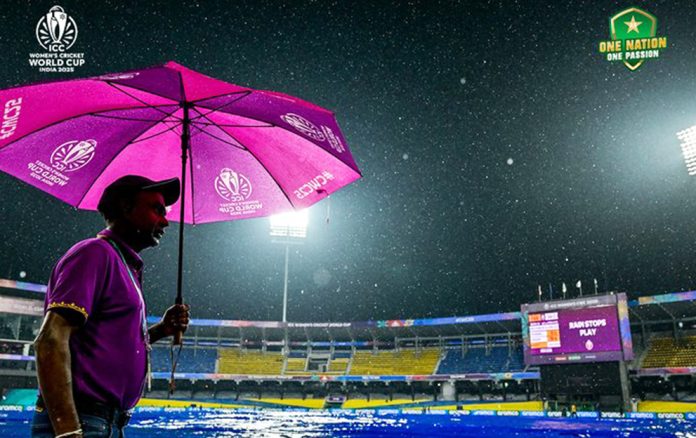
Pakistan were denied a shock victory over England when their Women’s World Cup match was washed out as Colombo continued to be drenched by unrelenting monsoon showers on Wednesday.

Pakistan, rooted to the bottom of the points table and still searching for their first win in the eight-nation tournament, were left cursing their luck after putting England through the wringer with a brilliant bowling display that restricted the four-time champions to 133-9 in a game reduced to 31 overs.

Chasing a revised target of 113, Pakistan’s openers looked in fine touch, coasting to 34-0 in 6.4 overs, before the heavens opened once more and the game was abandoned at 9:58pm local time.

Pakistan’s bowlers had their tails up from the outset, with captain Fatima Sana leading from the front.

She swung the ball into the batters and picked up three early wickets before returning after the rain break to snare another, finishing with eye-catching figures of 4-27.

“We showed today that we can beat any team. Disappointed about the rain. We were really good with the ball and the bat and we would have been happy with a win,” Sana said.

England had never lost to Pakistan in 16 previous ODIs and it needed bad weather to preserve that record.

It was the third rain-affected game in Colombo this World Cup after Australia and Sri Lanka split points without a ball bowled and Sri Lanka’s fixture against New Zealand also ended in a washout on Monday.

Credit: supersport.com

Spintex Knights drafted in 2026 Basketball Africa League Qualifiers Group B

0
Spintex Knights in action

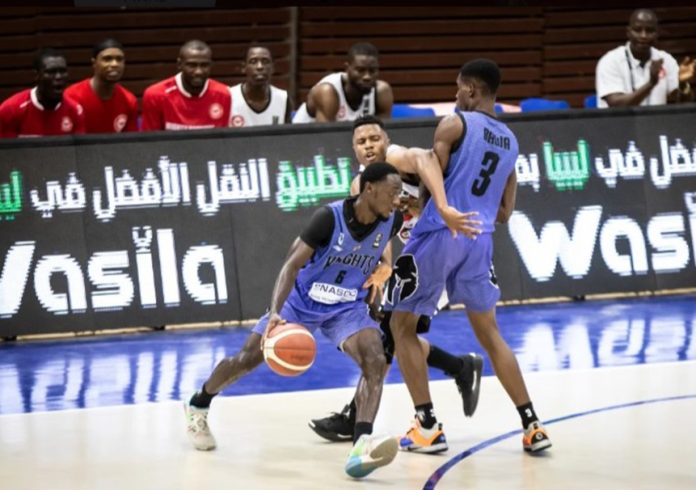
Ghana’s representative in the 2026 Basketball Africa League (BAL), Spintex Knights Basketball Club, will commence its journey to compete at the main stage of the continental championship this weekend.

Spintex Knights will compete in the 2026 Road To BAL competition from Friday, October 17 to Sunday, October 19 in Abidjan, Cote D’Ivoire.

The Accra Basketball League (ABL) Men’s Division Champions have been drawn in Group B of the Division West alongside LPRC Oilers from Liberia, Elan Coton from Benin and Jeunesse Club d’Abidjan from Cote D’Ivoire.

The top two ranked teams in the group after a round robin slate of games progress to the Elite 16 Stage where they take on fellow qualified teams from the Division West Group A.

In the 2025 edition, Spintex Knights made history by being the first Ghanaian team to progress from the divisional competition to the Elite 16 stage.

However, Knights missed out on progressing to the main competition with the likes of Libya’s Al-Ahly Benghazi qualifying. Al-Ahly went on to finish as the overall winners.

Ahead of the tournament, Spintex Knights added Canadian guard of Ghanaian descent Yaw Antwi-Bosiako to its roster. Antwi-Bosiako is a 6 foot 3 inch guard who played at York University.

Credit: citisportsonline.com

Benjamin Asare is a good goalkeeper -Otto Addo

0
Benjamin Asare

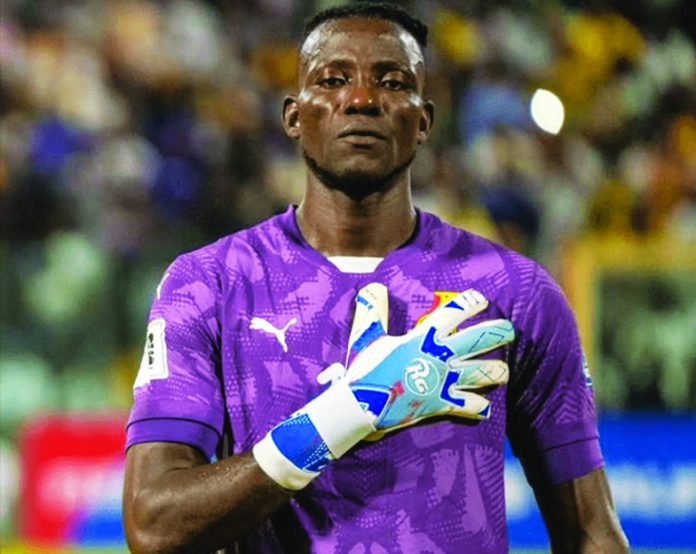
Black Stars head coach Otto Addo has lavished praise on goalkeeper Benjamin Asare, describing the Hearts of Oak shot-stopper as “a really good goalkeeper” following his impressive rise to prominence with the national team.

Asare, 33, made his debut for Ghana in March during the 2026 FIFA World Cup qualifiers against Chad and has since cemented his place as the team’s first-choice goalkeeper.

The former Great Olympics man has been in outstanding form, keeping five clean sheets in six appearances for the Black Stars.

Reflecting on Asare’s performances, Addo couldn’t hide his admiration for the goalkeeper’s consistency and command in goal.

“He’s really good. I think his strength is definitely on the line. Short blocking and on the line. There’s still room to improve, but I think he’s growing from game to game,” Addo told 3Sports.

The 49-year-old tactician also revealed that Asare’s determination during a key training session ultimately convinced the technical team to hand him a starting role.

“It was a close decision. The turning point was the last training when we invited him. He really trained well. He had this self-consciousness. He was pushing the players, organising, doing everything he could to win this training match. This really convinced us,” he revealed.

With Ghana set to make their fifth appearance at the World Cup next June, Asare is expected to retain his place between the posts as the Black Stars aim to make a strong impression on the global stage.

Ghana will discover their group-stage opponents for the 2026 FIFA World Cup on December 5.

Credit: ghanasoccernet

Court chases Businessman Kweku Aboagye over alleged fraudulent deal

0
Court gavel

The Circuit Court 8 in Accra, presided over by His Honour Jojo Amoah Hagan, has issued a bench warrant for the arrest of a 50-year-old businessman, Kweku Aboagye, after he failed to appear before the court to answer charges of forgery of document and defrauding by false pretences.

The prosecution, led by Inspector Nego Dzigbordi, informed the court of the accused’s absence, when the case was called on Monday.

The judge subsequently issued a bench warrant for his arrest and ordered that the first count be amended before the next sitting.

The case has been adjourned to November 4, 2025.

The Charges

On the first count, Aboagye is charged with forgery of document, contrary to Section 159(a) of the Criminal and Other Offences Act, 1960 (Act 29).

The prosecution alleges that on July 26, 2022, at Zongo Junction in Accra, the accused, with intent to defraud, forged a Ghana Revenue Authority (GRA) Customs Division allocation letter originally issued to one Akwesi Agyei, by superimposing his own name on the document, knowing it was not genuine.

On the second count, Aboagye faces a charge of defrauding by false pretences, contrary to Section 131 of Act 29.

The prosecution claims that in August 2022, at the same location, the accused fraudulently obtained GH¢85,000 from Akwesi Agyei under the pretext of securing an auctioned Mercedes Benz vehicle from the GRA.

Case Facts

According to the prosecution, the complainant, Akwesi Agyei, a trader residing at Mallam, was introduced to the accused through a mutual friend, Tanu, after Aboagye claimed he had direct connections with Auctioneers at the GRA, who could facilitate the purchase of auctioned vehicles.

Following this introduction, Agyei, acting on behalf of a friend interested in acquiring a car, met the accused at Tema Harbour, where Aboagye allegedly pointed to a Mercedes Benz C300 and claimed it was available through his contacts.

The parties agreed on a price of GH¢85,000, which was paid in two instalments — GH¢41,000 and GH¢44,000 — through Tanu.

Aboagye later provided what he claimed was an official GRA allocation letter and promised delivery of the vehicle within days. However, after receiving full payment, he failed to deliver the car or refund the money.

Investigations revealed that the document purportedly issued by the GRA was fake and the alleged customs officer to whom the accused claimed to have handed the money could not be traced.

The GRA Customs Division confirmed that the allocation letter did not originate from their office.

Police investigations further suggested that Aboagye had allegedly defrauded several other individuals using similar tactics.

He reportedly admitted receiving the money and pleaded for one month to refund it but failed to do so since 2022.

The case will continue on November 4, 2025, when the amended charge is expected to be presented.


Follow the The Chronicle Newspaper channel on WhatsApp: https://whatsapp.com/channel/0029VbBSs55E50UqNPvSOm2z

Maresca gets one-game ban for Liverpool celebrations

0
Enzo Maresca, Chelsea

Chelsea head coach Enzo Maresca has been given a one-match touchline ban after being sent off in the last-gasp win against Liverpool in the Premier League.

The Italian was shown a second yellow card of the game by referee Anthony Taylor for leaving the technical area to celebrate with his players following Estevao Willian’s 95th-minute winner against the reigning champions this month.

“It was alleged that the manager acted in an improper manner and/or used abusive and/or insulting words and/or behaviour during the fixture, which led to his dismissal around the 96th minute,” the Football Association said.

The FA said Maresca admitted the charge and accepted the standard penalty.

Maresca, who was shown a yellow card for dissent earlier in the game at Stamford Bridge, has also been fined £8,000.

It means he will not be in the Chelsea dugout when the Blues travel to the City Ground to face Ange Postecoglou’s Nottingham Forest on Saturday, with assistant coach Willy Caballero expected to deputise for the former Leicester City boss.

This will be Maresca’s second touchline ban since becoming a Premier League manager in June 2024.

The 45-year-old served his first suspension in April 2025 after picking up a third yellow card of the season while celebrating Pedro Neto’s 93rd-minute winner at Fulham.

Credit: bbc

‘I love the country’ -Potter open to Sweden job

0
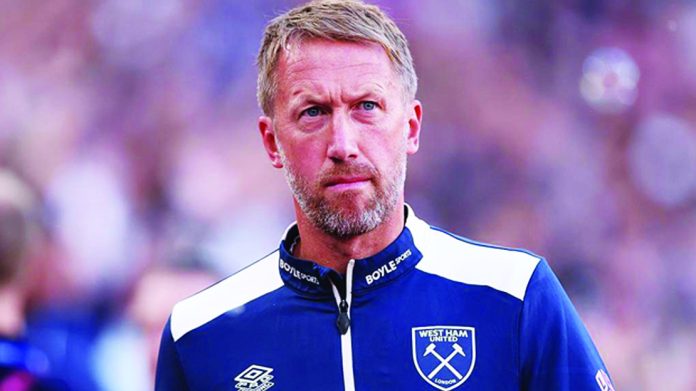
Graham Potter

Former Chelsea and West Ham manager Graham Potter has expressed his interest in becoming Sweden’s next head coach.

Sweden sacked Jon Dahl Tomasson on Tuesday following a poor start to the 2026 World Cup qualifying campaign that has left them sitting bottom of Group B with just one point from four games.

Potter, who was dismissed by West Ham last month after only eight months in charge, previously managed Swedish side Ostersunds from 2011 to 2018.

“I’m actually in Sweden right now, in my house in Sweden,” Potter told Swedish media outlet Fotbollskanalen.

“I’m between jobs and just left the Premier League.

“I’m open to anything, really, where I feel I can help. The job as head coach of the Swedish national team is fantastic.

“I have feelings for Sweden. I love the country and I love Swedish football. I have a lot to be grateful for towards Swedish football.

“So yes, it would be a fantastic opportunity for me, obviously.”

The Englishman, 50, guided Ostersunds from the fourth tier of Swedish football to its top division and also helped them lift the Swedish Cup in 2017.

He then managed Swansea City and Brighton before joining Chelsea in 2022 but was dismissed from his role at Stamford Bridge after seven months.

Former Denmark striker Tomasson was fired from the Sweden job after a 1-0 defeat against Kosovo on Monday.

Sweden – who have an all-star forward line of Liverpool’s Alexander Isak and Viktor Gyokeres of Arsenal – drew with Slovenia and lost against Kosovo and Switzerland in their opening three group games.

Credit: bbc

The Ghanaian Chronicle