Home Blog Page 453

Raila Odinga: The symbol and symptom of Kenya’s political tragedy

0
Opinion

From hero to compromised insider, his life told the story of a nation undone by the very system it created.

Kenyans are wont to refer to Raila Odinga, the long-reigning 80-year-old opposition leader who died on Wednesday, as the “Enigma of Kenyan politics,” a reference to the title of a 2006 biography of him penned by the Nigerian author, Babafemi Badejo. His unequalled ability to survive, even thrive, at the top of the country’s political landscape for decades confounded his rivals and inflicted headaches on the regimes he plagued. But I think he would be best remembered as more mirror than mystery: the personification of Kenya’s tragedy.

The son of Kenya’s first vice president, he carved out a path as a crusader for freedom and better governance that led him from the country’s prisons and torture chambers to some of the highest political offices in the land. But at the end of his life, the compromises he had made to get there, the handshakes that peppered his career, had taken their toll, with a new generation shunning him, considering him part of the problem.

Throughout his long career, he was inseparable from the fight for a better Kenya. From the struggle for the restoration of multiparty democracy in the 1990s to the 25-year battle for a new constitution, he was never far from the limelight. Few could match his ability to mobilise Kenyans or the sway he held over his supporters.

Despite believing Kenya needed to ditch its presidential system for a parliamentary one, a position he argued vociferously during the constitutional conference in 2003, he ran for president in every election since 1997 with the exception of the 2002 one, when his proclamation of “Kibaki Tosha” was sufficient to propel Mwai Kibaki to the office.

He was a man Kenya seemed content to celebrate but determined to frustrate. He was arguably robbed of the presidency on at least two, perhaps three, of those attempts, in 2007, 2013 and 2017. His refusal to meekly accept the injustice led to his opponents, and even The New York Times, branding him “a perennial loser”. His resort to the street as an avenue to protest not just the electoral controversies, but terrible state policies, also led to accusations of being a dangerous instigator of political violence, though in truth, the violence associated with Kenyan political demonstrations almost always comes from the state.

However, it is also important to recall that for all his legendary contributions and deeply held beliefs, he was prone to startling bouts of hypocrisy. It is a potent illustration of how power in Kenya corrupts even its greatest reformers. In 2000, after his handshake with the dictatorship of Daniel arap Moi, which would eventually see him appointed to his cabinet, he called for his erstwhile comrades in the opposition to be charged with treason for holding unauthorised antigovernment rallies.

In 2006 he boasted that, as part of the Rainbow Coalition that had ended Moi’s KANU party’s grip on power, he had blocked action by the Kibaki administration to hold the dictator accountable for some of the looting that had happened during his 24 years in power.

In early 2008, the standoff between him and Kibaki over the bungled December 2007 presidential election would cost 1,300 Kenyans their lives and see hundreds of thousands displaced. Yet a few months later, following yet another handshake resulting in Raila becoming only the second person in Kenya’s history to be appointed prime minister, his family and close associates were implicated in a maize subsidy scam that left a third of the country starving.

For his reputation, the straw that broke the camel’s back was his infamous 2018 handshake with President Uhuru Kenyatta, which again came after the state’s violent repression following the historic annulment of the 2017 presidential election. It was widely seen as a betrayal of his supporters, more than 70 of whom had been murdered by security forces while protesting the hasty repeat election, which Raila boycotted, and its aftermath.

Following that, though he still had enough in the tank for a final run at the presidency, he was largely a spent force. His challenge to the William Ruto regime in the latter part of 2022 and into 2023 was a pale shadow of the protests he had commanded in previous years and was eclipsed by the Gen Z uprising a year later.

Raila’s life epitomised both the promise and disappointment of Kenya, which was born in struggle, nurtured in hope and ruined by betrayal. The true tragedy, however, lies not in his compromises, but in a system that made, and continues to make, integrity nearly impossible.

Despite his tremendous achievements which made him stand out among his contemporaries, not just in Kenya but across the continent and the globe, his trajectory sadly traced a path that too many of Kenya’s – and Africa’s – most promising politicians have walked. His death is a big blow to the country, and he will undoubtedly be remembered fondly by many. But perhaps it should also be with a tinge of sadness and anger for what could have been but for Kenya itself.

Source: Aljazeera

The views expressed in this article are the author’s own and do not necessarily reflect The Chronicle’s editorial stance.


Follow the The Chronicle Newspaper channel on WhatsApp: https://whatsapp.com/channel/0029VbBSs55E50UqNPvSOm2z

Editorial: Influenza Outbreak Demands Responsible Action From All

0
Editorial

The Ghana Health Service (GHS) has sounded an alarm over the sharp rise in seasonal influenza cases across the country. The latest alert, issued on October 15, 2025 identifies the culprits as Influenza A strains H3N2 and H1N1 — familiar viruses that reappear each year but still manage to cause widespread illness, hospitalisation and sometimes death.

This is not the first time Ghanaians have faced a flu outbreak. Yet the persistence and intensity of this year’s wave underscore an uncomfortable truth: we remain slow to take simple public health precautions seriously until a crisis is upon us. The GHS’s statement should, therefore, not be treated as routine information but as a timely warning that demands responsible action from every citizen, institution and community.

The Ghana Health Service reports significant surges in the Greater Accra, Central, Bono and Eastern Regions, coinciding with Ghana’s annual flu season, which typically peaks during the cooler months. While influenza is often dismissed as a “common cold,” its consequences can be severe, particularly for vulnerable groups such as children, the elderly, pregnant women, and those with chronic conditions like asthma or diabetes. These are the individuals who pay the heaviest price when complacency sets in.

Symptoms of the flu fever, cough, sore throat, runny nose, body aches and fatigue — may appear harmless at first glance, but they can escalate quickly into pneumonia or other life-threatening complications. The virus spreads easily through respiratory droplets and contaminated surfaces, making schools, dormitories, markets and transport hubs fertile grounds for transmission. With schools now in full session, vigilance must be more than a slogan; it must become a culture.

To its credit, the Ghana Health Service has responded proactively. Enhanced surveillance and rapid diagnostic testing have been rolled out at health facilities. Clinicians have received updated treatment protocols and public education campaigns have been launched across various media platforms.

The collaboration between the GHS and the Ghana Education Service is also commendable, as schools represent one of the highest-risk environments for outbreaks.

However, official measures can only go so far. The success of any disease-control effort depends on the behaviour of ordinary people. The GHS has repeatedly urged citizens to wash hands regularly, cover coughs and sneezes, disinfect surfaces, avoid crowded places and wear face masks when necessary.

These are not complicated instructions yet they are often ignored. The lessons of COVID-19 seem to have faded too quickly from public memory.

This renewed flu surge must serve as a wake-up call. Personal responsibility is as vital as institutional action. When people insist on attending work or school while ill, when hand-washing facilities in public places run dry, and when health advisories are treated as background noise, the chain of infection remains unbroken. Ghana’s ability to contain the current wave and future ones hinges on public cooperation.

Equally important is the need for sustained investment in public health infrastructure. Seasonal influenza may be predictable, but its impact can be mitigated through improved diagnostic capacity, better stockpiling of antiviral medications, and stronger communication systems linking local clinics to regional health directorates. The government must ensure that these systems remain functional long after the current alert fades from the headlines.

The GHS, under the Ministry of Health, has assured that “all necessary measures are being taken to contain the high number of flu cases.” That commitment is welcome, but it must be matched with transparent updates and consistent community engagement. Preventing panic is one thing; preventing illness is another and the latter requires continuous, visible effort.

In the end, protecting public health is a shared duty. The GHS cannot fight this battle alone. Parents, teachers, transport operators, market women, and employers all have roles to play in reducing exposure and transmission.


Follow the The Chronicle Newspaper channel on WhatsApp: https://whatsapp.com/channel/0029VbBSs55E50UqNPvSOm2z

Ghana’s Stephen Adjokatcher Elected Vice President Of Fiata

0
Mr Stephen Adjokatcher after his election

Mr. Stephen Adjokatcher, President of the Ghana Institute of Freight Forwarders (GIFF), has been elected, Vice President of the International Federation of Freight Forwarders Associations (FIATA), the global body for Freight Forwarders.

The election took place at the National Convention Center in Hanoi, Vietnam, at the FIATA World Congress 2025, held from 6th to 10th October.

His election marks a significant milestone not only for Ghana but for the African freight forwarding community, as Mr. Adjokatcher brings decades of experience and leadership to the global logistics platform.

In stiff competition with 13 other candidates, Mr. Adjokatcher emerged victorious. Other countries who contested the vice presidency included, India, Italy, Columbia, Vietnam, Morocco, Zimbabwe, Tanzania, Iran, Chinese Taipei and Egypt.

In his acceptance remarks, Mr. Adjokatcher expressed gratitude to the newly elected President, Thomas Sim from Singapore and the Director-General of FIATA, Mr. Stephane Graber for the confidence placed in him by FIATA’s member associations and reaffirmed his commitment to addressing the pressing challenges confronting the global logistics and transport sector.

“The world is experiencing rapid changes in supply chain dynamics, digitalization, and sustainability expectations.

“As Vice President, I am dedicated to collaborating with stakeholders worldwide to develop practical, future-oriented solutions,” he stated, and added that “Together, we must ensure that the freight forwarding industry stays resilient, efficient and inclusive amid global disruptions.”

Even before his election, Mr. Adjokatcher had already initiated measures aimed at connecting the Togolese Association, Union Professionnel Des Agrés en Douane du Togo (UPRAD TOGO) with FIATA.

This has allowed the Togolese Freight Forwarders to access the benefits of the global organisation.

An astute Freight Forwarder of several decades, Mr. Adjokatcher is also the founder and Chief Executive Officer of Santa Shipping Company.

The 2025 FIATA World Congress, under the theme, Green and Resilient Logistics, brought together more than 1000 leaders in the logistics and transport sectors from 100 countries across the world.

Speaking to the media on the sidelines of the congress after his election, Mr. Adjokatcher expressed gratitude to the delegates for the confidence reposed in him, promising to perform his duties diligently and to the best of his ability.

He thanked his colleagues from GIFF who went with him to the Congress for the support they gave him, which paved the way for his election.

Under his leadership at GIFF, Mr. Adjokatcher has been instrumental in driving regulatory reforms, capacity building, and the digital transformation of freight forwarding in Ghana.

His international outlook and deep understanding of regional logistics challenges position him as a strong advocate for emerging economies within the global freight forwarding community.

For almost 100 years FIATA has been convening industry leaders and innovators in logistics at its flagship FIATA World Congress (FWC) to discuss industry challenges and trends, hear perspectives from top industry leaders and their solutions, and exchange and network with supply chain actors from different parts of the logistics industry from all around the world.

This annual event, which takes place around September and October, brings together around 700 to 1,000 participants from the logistics, transport, and cargo industries, as well as observers from other sectors and a number of institutional attendees.

FIATA, headquartered in Geneva, Switzerland, represents over 40,000 forwarding and logistics firms worldwide. Mr. Adjokatcher’s election signals a renewed commitment to broader regional representation and collaboration in shaping the future of global trade logistics.


Follow the The Chronicle Newspaper channel on WhatsApp: https://whatsapp.com/channel/0029VbBSs55E50UqNPvSOm2z

Stanbic Bank to renovate maternity ward of Wa Municipal Hospital

0
Stanbic officials handing over the cheque to the hospital administration

The Medical Superintendent of Wa Municipal Hospital in the Upper West Region, Dr Bukari  Zakari, together with the hospital management team, has successfully secured funding support from Stanbic Bank Ghana towards the renovation of the hospital’s maternity ward.

The sponsorship, valued at six hundred and ninety thousand, one hundred and sixty Ghana Cedis (GHS 690,160), is aimed at improving the infrastructure and overall quality of maternal healthcare services provided at the facility.

Officials touring the health facility

The Medical Superintendent expressed profound gratitude to Stanbic Bank Ghana for their generous support.

He prayed for the continued growth and success of the bank so that such good works may continue.

He emphasised that Wa Municipal Hospital is one of the oldest health facilities in the region, with aging infrastructure, yet it continues to record the highest number of deliveries in the Upper West Region.

Dr. Zakari further highlighted that the hospital recorded zero maternal deaths in the first half of 2025 and has maintained this record to date, a testament to the dedication and professionalism of the maternity team.

He noted that this renovation project will further enhance the quality of maternal care and comfort for mothers, newborns, and staff alike.

He added that the project would not only benefit residents of the Wa Municipality, but also clients from neighbouring districts and regions, as the facility serves as a major referral Centre for maternal and child health services.

In a brief ceremony last Friday, which was attended by officials from Stanbic Bank Ghana and Wa Municipal Hospital, the head of Client Coverage, Madam Jackline Osei-Kusi, who presented the cheque on behalf of her outfit noted that the bank had received several proposals for support.

However, upon reviewing the one submitted by Wa Municipal Hospital, they were deeply moved and decided that this was a project worth supporting, particularly because of the hospital’s commitment to maternal and child health, which aligns with one of Stanbic Bank’s key corporate social responsibility pillars in the health sector.

She further stated that after assessing the state of the maternity block, the bank decided to take up the full renovation cost of GHS 690,160. According to her, this will be the first phase of their support, and once completed, the bank will explore additional ways to further upgrade the maternity block to meet the desired standard.

The renovation is expected to be completed within two months, after which the facility will be officially commissioned.


Follow the The Chronicle Newspaper channel on WhatsApp: https://whatsapp.com/channel/0029VbBSs55E50UqNPvSOm2z
We’ll not negotiate with bandits –Gov Radda denies reports

0
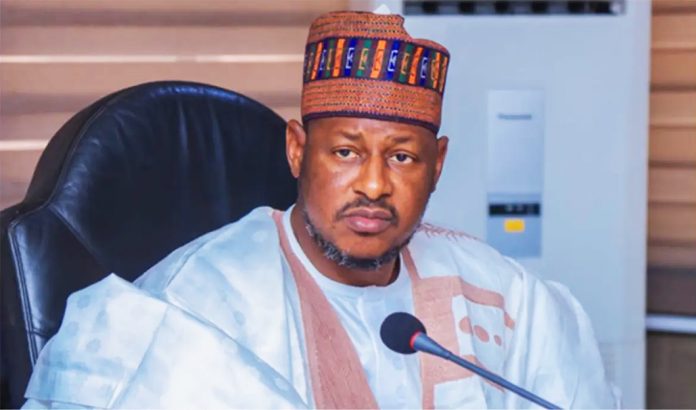
Governor Dikko Radda of Katsina State

Governor Dikko Radda of Katsina State has said that his administration will not seek negotiation with bandits terrorizing some parts of the state but is ready to welcome peace.

Radda said this while inaugurating 100 additional Community Watch Corps (C-Watch) in Katsina on Wednesday.

He said that when his administration launched the C-Watch initiative about two years ago, “the government was in uncharted territory, the learning curve was steep, and the uncertainty was high”.

He denied reports alleging that the state government was negotiating with the troublemakers.

“We were a new administration with the arduous task of bringing peace and security to many parts of the state.

“The only thing I was certain about was my administration’s determination to bring an end to banditry.

“I campaigned on it, and the trust of the people was not going to be forsaken.

“The headlines say the Katsina State Government was negotiating with bandits, but that was far from reality.

“I have publicly maintained that the government will not negotiate with bandits but always welcome peace,” the governor said.

According to him, ‘Katsina Model’ is a fully community-driven approach, allowing members of affected communities to initiate and negotiate peace pacts with repentant bandits, who agree to lay down their arms.

Credit: dailypost.ng


Senator Ben Murray-Bruce dumps PDP for APC 

0
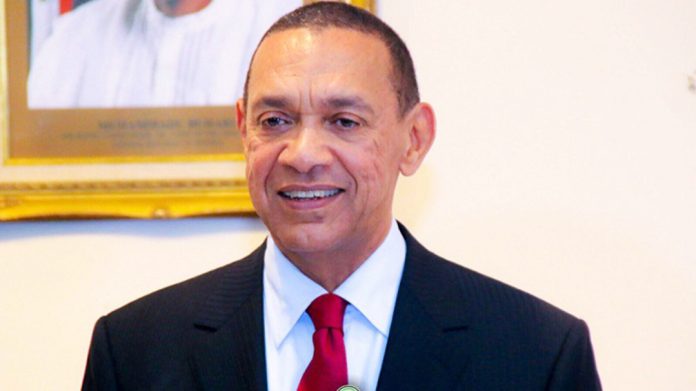
Senator Ben Murray-Bruce

Former federal lawmaker, Ben Murray-Bruce, who represented the Bayelsa East Senatorial District, in Bayelsa State, has announced his resignation from the Peoples Democratic Party, PDP.

The former lawmaker made the announcement on Wednesday in a statement he personally signed and posted on his Facebook page.

He lauded President Bola Tinubu-led administration, stating that for the “first time in our nation’s history, we have a President who truly understands finance, who sees the economy not as a political slogan, but as a living organism that must be disciplined, deregulated, and allowed to breathe.

“The painful reforms we face today are the very foundation of tomorrow’s prosperity. We are moving into a free-market economy, one that rewards hard work and innovation instead of dependency and distortion.

“Look around you: under this administration, the appointment of the National Security Adviser has redefined our national safety architecture. Insecurity is being quietly and systematically dismantled. The Central Bank, now professionally steered, is stabilizing the economy, rebuilding confidence, and restoring the dignity of the naira.

“Our foreign policy is again respected. Our fuel supply is deregulated. We will never again live through the humiliation of fuel scarcity. The numbers are beginning to speak, investments are returning, and the world is watching Nigeria rise again.

“And beyond economics, Bola Tinubu’s infrastructural drive is unprecedented; from massive road networks to modernized ports, airports and housing schemes springing up across the nation. These developments are not just concrete and steel; they are the arteries through which growth and opportunity now flow.

“I know it is still a difficult season for many families. But as history teaches, reform is never painless. Yet, it is in these moments of sacrifice that nations are reborn.

Credit: dailypost.ng

Nigeria’s inflation rate drops for 6th consecutive time

0
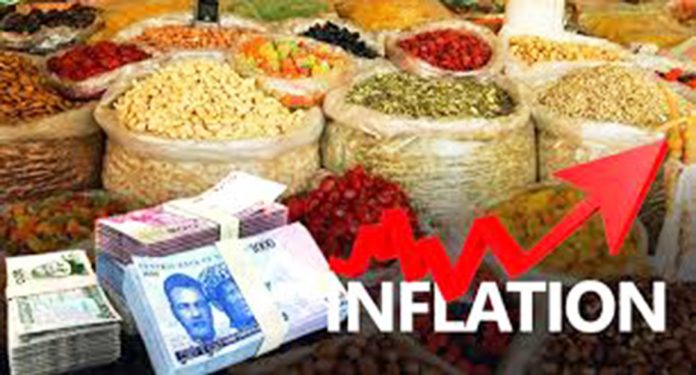
Inflation rate drops

Nigeria’s headline inflation dropped to 18.02 per cent in September 2025, down from 20.12 per cent in August.

This is the sixth consecutive headline inflation drop in Nigeria this year.

National Bureau of Statistics, NBS, disclosed this in its Consumer Price Index and Inflation Data released on Tuesday.

NBS data showed that the country’s inflation declined by 0.72 per cent on a month-on-month basis.

The CPI data noted that the food inflation rate was -1.57 per cent month-on-month.

“In September 2025, the headline inflation rate eased to 18.02 per cent relative to the August 2025 inflation rate of 20.12 per cent.

“The MoM headline inflation rate in September 2025 was 0.72 per cent.

“The food inflation rate was -1.57 per cent MoM,” the NBS stated.

The development comes as Chief Executive Officer of Financial Derivatives Company, Bismark Rewane, in his latest analysis, said Nigeria’s inflation would moderate to 18 per cent in November 2025.

However, the recent hike in the prices of fuel and cooking gas could impact subsequent inflation figures and the cost of living for Nigerians.

Credit: dailypost.ng

Pay our outstanding three months arrears –Workers tell Tinubu

0
President Bola Ahmed Tinubu

Federal workers under the platform of the Federal Workers Forum, FWF, have appealed to the federal government under the leadership of President Bola Ahmed Tinubu to pay their three-month wage award.

FWF made this appeal in a statement signed by its National Coordinator, Comrade Andrew Emelieze.

The statement was made available to DAILY POST on Wednesday.

Emelieze in the statement said that the refusal of the federal government to pay up the balance of the outstanding three months wage award as promised by the Accountant General of the Federation has shown clearly how our government has been treating her workers.

He said that the payment of ₦35,000 wage award was put in place after series of pressure by the workers.

He lamented that the payment since its implementation has been inconsistent and staggering.

Emelieze urged the government to pay the balance of the outstanding three months wage award and also clear the backlog of promotion arrears owed the federal workers.

He equally tasked the government to work out a cost of living allowance for the workers, preferably pay 30% of our salaries as cost of living allowance.

He said, “The refusal of the federal government to pay up the balance of the outstanding three months wage award as promised by the Accountant General of the Federation has shown clearly how our government has been treating her workers.

“Same also has been the case for so many backlog of arrears owed the federal workers, especially promotion arrears, in some cases over ten years backlog owed the federal workers in Nigeria.

“The payment of ₦35, 000 wage award was put in place after series of pressure by workers for government to pay a cost of living allowance after the removal of fuel subsidy and the deliberate forceful devaluation of our national currency by the federal government.

This current ₦70,000 minimum wage is a slave wage, we call for its immediate abolition. We urge the government to pay up now the balance of the outstanding three months wage award. We are calling on the federal government to clear the backlog of promotion arrears owed the federal workers. We call on the government to workout a cost of living allowance for the workers, preferably pay 30% of our salaries as cost of living allowance”.

Credit: dailypost.ng

Chamber of Agribusiness demands quick implementation of tax waivers

0
Chamber of Agribusiness Ghana

The Chamber of Agribusiness Ghana has urged the government to provide clearer timelines and legislative backing as it plans to waive taxes on agro-processing machinery.

In a release copied to Ghana News Agency, the Chamber called for sufficient funding and technical support to the GRATIS Foundation and other local institutions to ensure they deliver on the mandate of designing, producing, and maintaining affordable machinery.

The calls follow the announcement by Mr Sampson Ahi, the Deputy Minister of Trade, Agribusiness and Industry at the Regional Agribusiness Dialogue in Sunyani, that the government would waive taxes on agro-processing machinery in the short term.

Mr Anthony Kofituo Morrison, the Chief Executive Officer, Agribusiness Chamber, described the proposed tax waivers as “a key intervention required to stimulate investment, enhance productivity and improve competitiveness across Ghana’s agribusiness value chains.”

He said though the Chamber welcomed the initiative, the government must move swiftly to implement the plan.

“We urge the government to swiftly translate these announcements into actionable legislation and concrete programmes,” the release said.

“The Chamber and private sector stand ready to collaborate with the Ministry of Trade, Agribusiness and Industry and other stakeholders to maximise the potential of these interventions.”

“We believe that through sustained dialogue and a shared commitment to execution, we can collectively reset Ghana’s agribusiness sector, drive sustainable industrial growth, and secure a more prosperous future for all Ghanaians.”

As part of the implementation, the Chamber urged the government to ensure that ongoing consultations for the National Agribusiness Policy incorporated the specific and practical inputs of farmers, processors and aggregators from all regions.

“The Chamber views the tax waivers, alongside the medium-term strategy to retool local manufacturers like the GRATIS Foundation, as a positive step towards achieving machinery sufficiency and reducing the sector’s heavy reliance on imported equipment,” the release added.

“We commend the government for recognising the challenges and articulating a clear vision, which includes the Feed the Industry Programme, to address the raw material supply challenges that keep industrial capacity utilisation critically low.

“Ending galamsey should be among the top priorities in any policy actions to revive and rejuvenate the agribusiness sector.”

The Chamber of Agribusiness Ghana is the leading voice for agribusiness in the country, advocating policies that promote a sustainable, profitable and food-secure nation.

GNA

Mahama woos Chinese investors to Ghana  

0
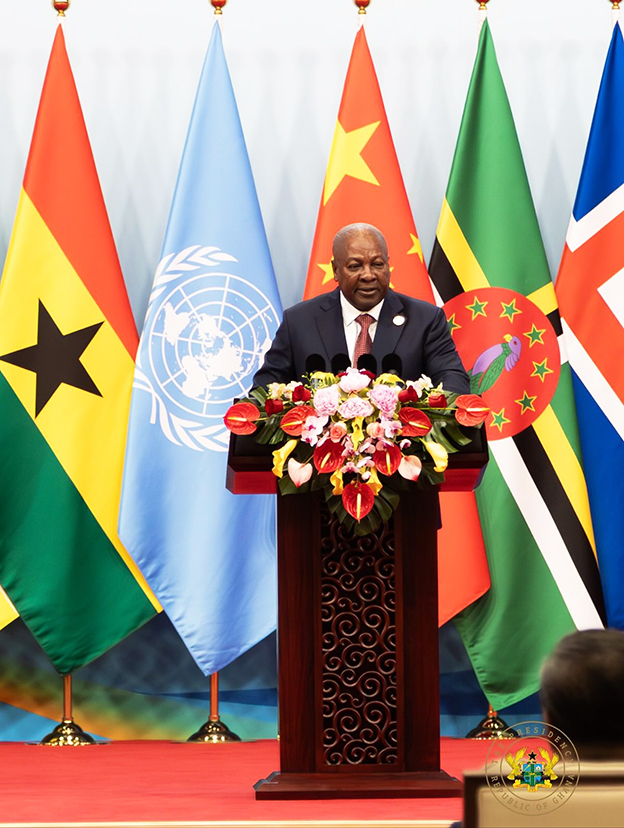
President John Dramani Mahama

President John Dramani Mahama has extended an open invitation to Chinese investors and business people to enter the Ghanaian market, assuring them of a conducive investment climate.

He extended the invitation to them at the Presidential Business Forum in Beijing, China.

This forms part of President Mahama official state visit to China at the invitation of Chinese President Xi Jinping.

President Mahama said as the host of the African Continental Free Trade Area (AfCTA), Ghana provides investors with direct access to a $3.4 trillion single market and over 400 million consumers through the ECOWAS trade liberalization scheme.

He noted that above all, a democratic stability that had been uninterrupted for more than 30 years was the strongest guarantee of investor confidence.

The President said Ghana was opened for business and innovation.

“We are open to partnerships, especially with our Chinese counterparts,” he emphasised.

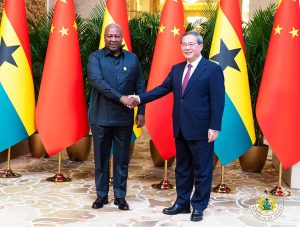
President Mahama being welcomed by Premier of the State Council of the People’s Republic of China, H.E. Li Qiang

He noted that at the heart of the new transformation lay a 24-hour economy and accelerated exports development programme, which was anchored in the Volta Economic Corridor, one of the most ambitious projects in Ghana’s history.

President Mahama said it also rest on four interlinked pillars, involving the irrigation of over two million hectares of land for all-year round farming; the building of agro-industrial parks for textiles, pharmaceuticals and food processing; developing tourism and hospitality hubs along the Volta Lake, one of the world’s largest man-made inland lakes, and the establishment of a modern inland water transport and logistics system, linking farms, factories, and markets.

The President said supporting these were catalytic projects, such as the Legon Pharmaceutical Innovation Park, the Kumasi Machinery and Technology Park, the Akosombo Juapong Garments and Textiles Park and the Eden Volta Agricultural Project.

He said each of those offer investment opportunities in manufacturing, renewable energy, cold chain logistics, and value-added agro-processing.

To unlock large-scale growth, the President said they had launched the Big Push Infrastructure Programme, which was a $10 billion initiative focused on completing major roads, bridges, power systems, and data networks, and also linking Ghana to regional markets.

“We invite Chinese investors to explore partnerships in roads and smart cities, renewable energy, and digital connectivity,” President Mahama said.

He said the agriculture for Economic Transformation Agenda, which was a GH₵1.5 billion programme, and aimed at ensuring food security, boosting productivity and expanding agricultural exports was also available.

He said the country was also investing $3 billion in its Digital Jobs Initiative to prepare the youth for the technology-driven economy of the future.

“We believe that China, with its comparative advantage in digitalization and innovation, will be a partner to the vibrant youthful population of Africa and Ghana in this regard,” President Mahama said.

“And we see vast potential in critical minerals and electric vehicle value chains,” he added.

He said with abundant resources of lithium, bauxite, manganese, and graphite, Ghana was poised to partner with Chinese investors in responsible mining and local processing to drive the global clean energy transition.

He said under Ghana’s Constitution and the Ghana Investment Promotion Centre Act, expropriation of investments was banned.

He said investors enjoy unrestricted repatriation of their dividends and proceeds in convertible currency of their choice.

The President said Ghana’s laws protect investment against discrimination, expropriation, and nationalization, which was consistent with international best practice.

He said Ghana was a proud member of the International Center for Settlements of Investment Disputes and is a signatory to the New York Convention.

This, he said meant that their rights were protected under transparent international arbitration mechanisms.

“We are also implementing pro-enterprise reforms to make Ghana one of the most business-friendly destinations in Africa.”

President Mahama said the new Investment Promotion Authority Bill when passed by Parliament would abolish minimum capital requirements for foreign and joint venture investors and would provide a clear path for long-term investors to qualify for Ghanaian citizenship.

He said a symbol of trust and belonging, public-private partnership frameworks were being modernized to ensure faster, fairer, and more transparent approvals of applications.

By Iddi Yire  

GNA

The Ghanaian Chronicle