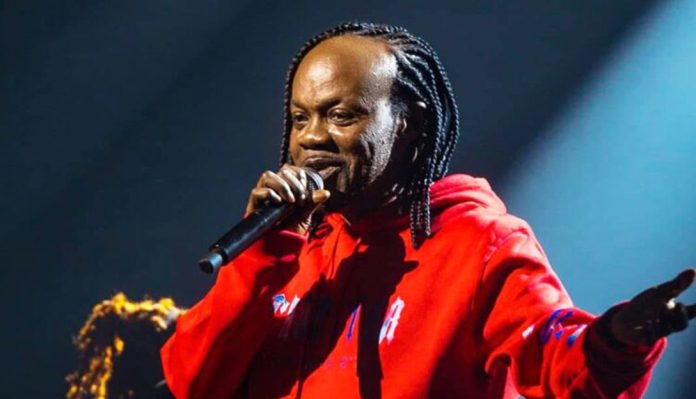
The Kumasi High Court Five has adjourned to October 28, 2025, a case filed by Madam Akosua Serwaa Fosuh, who claims to be the legal wife of the late highlife musician, Charles Kwadwo Fosuh, popularly known as Daddy Lumba.
The adjournment follows a process filed by the first defendant, Abusua Panin Kofi Owusu, challenging the capacity of Madam Akosua Serwaa as the lawful wife of the deceased.
The Presiding Judge, Her Ladyship Dorinda Arthur, postponed proceedings to allow the court to first determine the issue of plaintiff’s legal standing before considering the substantive matter.
Additionally, the second and third defendants, Ms Priscilla Ofori (Odo Broni) and the Transitions Funeral Home (Enterprise Funeral Services) filed a conditional appearance motion, which permitted 14 days to gather the necessary documents and proofs.
As a result, the application for an injunction against the first, second, and third defendants was withheld until the process filed to challenge the plaintiff’s capacity has been addressed.
However, Her Ladyship Arthur advised the parties to explore the possibility of settling the case out of court, recommending Alternative Dispute Resolution. Mr. Henry B A Baidoo, a member of the plaintiff’s legal team said they were ready to settle the case out of court.
He blamed Abusua Panyin Fosu for allowing the plaintiff to drag the case to the court when the issue could have been settled amicably. Madam Akosua Serwaa, on October 2, 2025, filed a lawsuit against Abusua Panyin Kofi Owusu, Priscilla Ofori, and the Transitions Funeral Home for downplaying her capacity as the legal wife of Daddy Lumba.
The lawsuit gave an eight-day ultimatum for the defendants to cause an appearance after being served the writ. The celebrated musician, born Charles Kwadwo Fosuh, died on July 26, 2025.
His family has since announced that his final funeral rites will take place on December 6, 2025, at the Baba Yara Stadium in Kumasi, but those plans could change following the legal battle over the widowhood rights.
Gold Coast – that was the name the European Colonisers, from Portuguese Don Diego d’Azambuja and Italian Christopher Columbus (Cristoforo Colombo) through the Danes, the Dutch, the British gave us. It was a prefect name, but Professor Adu Boahen would challenge anyone who says Don Diego d’ Azambuja “discovered” this country because when he landed in Da-mina Elmina in 1482, chief Caminah Anssah (Kwamina Ansah) was there. They traded in gold which was in abundance, with gold nuggets picked from rivers and the ground especially when it rained or by “panning”. before slaves
Galamsey on Black Volta
You are right to ask why the name Gold Coast was changed to Ghana at independence – to break from the colonial past? Or for Pan Africanism? No need to worry about whether J. B. Danquah suggested the name Ghana or it was “Dr”. Kwame Nkrumah’s own imagination. Don’t rack your brain like Kwesi Pratt and blurt out. “We know the name did not come from J. B. Danquah’’. The name change was, to some of us, not necessary at all; Cote D’Ivoire (Ivory Coast) has maintained its “colonial’ name.
We could have used the Twi version of Gold Coast “Sikaman” “Sika Mpoano” (or a Ga or Ewe or Nzema or Dagomba version. What is our relationship with Ancient Ghana or Ouagadougou (Wagadugu), located around present day Mali and Senegal led by King Magan Dyabe Cisse or the King of gold, Kaya Maghan; or what similarities have our languages to Soninke, Malinke Or Mande? Or the rise (AD 950) and fall (AD 1050) to the Almoravids?
We heard someone cursing nature (NOT: God) for the abundance of wealth bestowed on us (gold, diamond, bauxite, oil, copper, limestone, lithium).
The 1848 discovery of gold in California by James Marshall “Gold Rush” comes to mind. It led to the influx of Americans, Latin Americans, Australians Chinese, Europeans who arrived in California (the forty niners -(49) and this led to the annihilation of native Californian who became victims of starvation and disease, as gravel, silt and toxic chemicals killed fish and destroyed habitats.
Heard about the “zama – zama’’ of the Witwatersrand of Gauteng province of South Africa – the constant feuding between rivals, the attack on the police and other security personnel, although the artisanal mining produces 30% of the South African gold, amounting to some $8 million per annum?
Currently, there are so many horrible scenes shown on our TV: a 62-year-old farmer at Kunsu declares: ”I have been in cocoa farming for 20 years and I have nothing to show for it; after selling a portion of my land to galamseyers, I have had enough money to build a two bedroom house: the land is my own”.
What meaning will such a person give to the Minerals Act 2006 (Act 703) or the 1992 Constitution which in Article 257 (6) says: “Every mineral in its natural state in, under or upon any land in Ghana, rivers, streams, water courses throughout Ghana, the exclusive economic zone and any area covered by the territorial sea or continental shelf is the property of the Republic of Ghana and shall be vested in the President on behalf of, and in trust for, the people of Ghana”?
Our hearts missed a beat seeing how galamsey has destroyed 3km of the 60km active rail line stretching from Takoradi through Akyem to Nsuta. The Ghana Railway Company’s manganese haulage has ceased, because the lines do not sit on solid ground, but rather hang over pits dug by the galamseyers. The officials estimate that repairing the damaged stretch would cost at least $18m; And how much was picked here by these selfish galamseyers?
And it is only intellectuals who discuss these issues on TV and radio; the galamseyers are cut off, or else are not bothered. Water turned brownish by a mixture of mud and chemicals; in artisanal mining gold is extracted from alluvial deposits in waterways; the gold bearing ore is crushed and ground; gold is extracted from the concentrate by adding water mixed with mercury which, unfortunately, is consumed by living organisms, including fish, for human consumption. Humans exposed to mercury are prone to kidney problems, arthritis, memory loss, miscarriages (women), respiratory failure, and neurological damage and deaths.
Dr. Paul Osei Sampene, pathologist at KNUST sounds alarming; “Mercury, lead, cyanide seep into rivers and soil contaminating drinking water and food supplies (including kontomire). Mercury is particularly dangerous because it can pass from a pregnant mother to her unborn child, affecting brain development and causing severe birth defects. Hospitals in Tarkwa, Prestea, Wassa Akropong, Obuasi, Manso – Nkwanta, Tontokrom (the hotspots for illegal mining) have reported increases in babies born with missing limbs, hydrocephalus (brain swelling) cleft palates.
Ghana owes a debt of gratitude to Erastus Asare Donkor for all the revelations on galamsey but we get haunted by his observation “but the larger picture doesn’t look good”.
The Ghana Gold Board (GoldBod) could have raked in $2.7 billon. But how does this compare with the damage caused? Sammy Gyamfi should examine his conscience and say something to convince us, rather than “Goldbod has no competitors”. When the full history of galamsey or illegal mining, is told the name Akufo-Addo, as President, cannot escape being mentioned. It was he who promised to put his presidency on the line for eliminating galamsey but what happened next? Akufo-Addo’s regime introduced L. I. 2462 which permits the President to give someone a permit to enter the forest reserves; and it was he who “cleared” Akonta Mining of illegal mining while Akonta Mining was being examined by the OSP.
In 2018, Honorable Joe Osei Owusu, First Deputy Speaker and MP for Bekwai said this about this life-threatening activity: “Mr. Speaker, the mining activities on water bodies are affecting our crops… extreme behaviour must be met with extreme response… We are dealing with people who are determined to make their money at every cost notwithstanding the damage they do to the environment.
At Aduama, I met an old lady who complained that they (galamseyers) had expanded the river and I cannot go to my farm… if I had authority, I would make a law… If you find people on water bodies, shoot them. Human Rights Lawyers, like Martin Kpebu would jump at this and refer us to Articles 12 – 33 of the 1992 Constitution: “Fundamental Human Rights and Freedoms”.
The anger in us has reached boiling point: why do we treat the financiers and the Chinese galamseyers with soft gloves? Apart from galamsey, what are Chamfans used for? We owe a duty to our children and our offspring to protect Ghana, don’t we? Hasn’t Otumfuo Osei Tutu II, Asantehene given us a lead – destooling chiefs involved in galamsey?
Prof. Stephen Kwaku Asare (aka Kwaku Azar) is upbeat: arrests and prosecutions target small scale miners while financiers receive elite treatment. We cannot fight galamsey using the Queensberry rules. Galamsey financiers have declared war on our rivers, our soil, and our people. They have sown the wind and must reap the whirlwind. We must meet them boot for boot” Citing the success in Peru’s Operation Mercury (cutting deforestation by 90%), he recommends same for Ghana among a 10 point recommendation.
Parliament must enact’ Ecocide Law’; strengthen the anti-Money Laundering Act (Act 1044, 2020); introduce Unexplained Wealth Order (UWO) to allow assets forfeitures for those who can’t explain their sudden wealth with powers to seize properties tied to illegal mining; criminalise mercury trafficking; ban the manufacture of Chamfans; create Ecocide courts; enforce strict bail terms: automatic assets forfeiture fast-track financial investigations; name, shame and debar (financiers from government contracts, corporate boards), re-direct the youth (psychological adjustment of thinking that the more people die, the more gold galamseyers can claim); ban financiers from politics, impose long custodial sentences for arrested galamseyers and financiers.
Readers of the Catholic Standard (October 12- October 18, 2025) will note the editorial “Jubilee House Must Act; The Time For Fine Words is Over: We, the Catholic Standard speak for every child who cannot drink clean water; farmer whose soil is contaminated. citizen whose heritage is stolen by greed. Galamsey is not just a crime against the environment, it is a crime against the poor, against justice and against God’s creation. Promises have been made.
Task forces set up, Speeches delivered. But these are but words unless matched by action. Government: publish the full list of financiers. Freeze suspicious assets; the church and faith leaders: raise your voices pray; yes but also insist on justice. The people: Do not be silenced. Let there be light in the shadows. Let the kingpins be exposed. It is time for our rivers. For our land. For our souls”.
President Mahama should listen to the CSO’s, the TUC, religious leaders, Ken Ashigbey, Vormawor rise. What legacy is President Mahama, leaving this country? Will the 8 heroes including Dr. Omane Boamah, Dr. Samuel Sarpong, Dr. Murtala Mohammed have died in vain? State of Emergency? Yes. Let the rains fall. Let the water flow from the rivers, clean, colourless and healthy.
Premier League football graces our screens again at 12.30pm on Saturday afternoon, when Nottingham Forest and Chelsea resume the domestic campaign at the City Ground.
The Tricky Trees are still yet to achieve success under the pressurised Ange Postecoglou, whereas the Blues are searching for a fourth win from five games across all tournaments.
Both the red half and the blue half of London were celebrating Chelsea’s feats at Stamford Bridge just before international football intervened, as Enzo Maresca‘s Blues prolonged Liverpool’s losing streak to ensure Arsenal would head into the hiatus in first place.
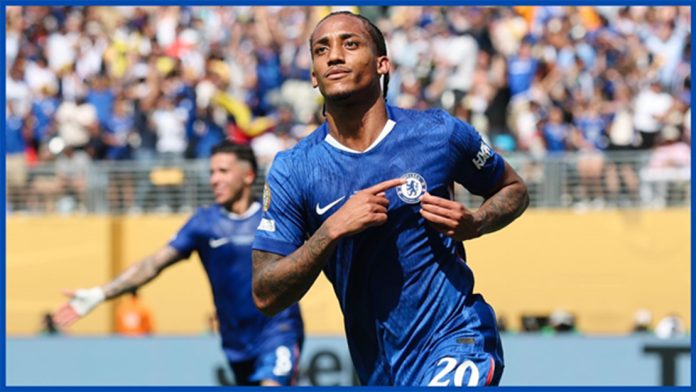
A Moises Caicedo stunner and last-gasp strike from Estevao – now the youngest Brazilian to score a winning goal in the Premier League – cancelled out Cody Gakpo’s leveller in a merited 2-1 triumph for the Blues, who snapped a three-game winless sequence in the top flight by taking down the champions.
By virtue of a third win from seven Premier League outings in 2025-26, the injury and suspension-hit visitors are within touching distance of the Champions League places again, currently ranked seventh in the top-flight standings and three points below fourth-placed Bournemouth.
The overall picture is slightly prettier for those of a Chelsea persuasion – three victories from four games in all tournaments – but the less said about the Club World Cup winners’ recent feats on the road, the better.
Once again, Chelsea did not get through their beating of Liverpool without the red card being brandished, although it was Maresca who was dismissed for his unbridled last-minute celebrations as opposed to one of his players.
Chelsea are still sweating on Enzo Fernandez (knee) Cole Palmer (groin), Andrey Santos (knock), Reece James (knock), Wesley Fofana (concussion) and Tosin Adarabioyo (calf) for the lunchtime kickoff.
The international break came at an ideal time for Forest and an inopportune time for Chelsea, whose surfeit of fitness doubts makes this one of the trickier pre-game predictions.
Barcelona will be aiming to bounce back from successive defeats when they resume their La Liga campaign with a clash against Catalan rivals Girona at Estadi Olimpic Lluis Companys on Saturday afternoon.
Hansi Flick‘s side are second in the La Liga table, two points behind leaders Real Madrid, while Girona occupy 18th, level on points with 17th-placed Real Oviedo ahead of the next set of matches in Spain’s top flight.
As a result, there will be pressure on Flick to ensure that the team return to winning ways on Saturday.
Barcelona now have back-to-back home fixtures against Girona and Olympiacos before the small matter of a trip to Bernabeu to face Real Madrid on October 26, and both teams have a number of key players battling to be available for selection in the first Clasico of the 2025-26 campaign.
Barcelona have won seven of their 11 matches against Girona throughout history, while they have scored 35 times, so they average more than three goals per game against their Catalan rivals.
Girona entered the October international break off the back of a 2-1 win over Valencia, with that proving to be the team’s first success of the 2025-26 campaign.
There is no getting away from the fact that it has been a tough start to the season for Michel’s side, but they are now unbeaten in their last three matches and have only lost one of their last five in Spain’s top flight.
Michel will be looking for his side to climb the table in the coming weeks, and the visitors will be aiming to take advantage of Barcelona’s injury situation in this weekend’s match.
Lamine Yamal is back in training after recovering from a groin issue, and the Spaniard is set to be involved, but a start is unlikely, with Barcelona being cautious when it comes to the teenage superstar.
Fermin Lopez is also in line to return from injury on Saturday, but Robert Lewandowski, Raphinha, Dani Olmo, Gavi, Marc-Andre ter Stegen and Joan Garcia are all out of the match through injury.
Barcelona will be missing a whole host of important players for this match, but Girona have availability issues of their own, and we are expecting Flick’s side to return to winning ways on Saturday afternoon.
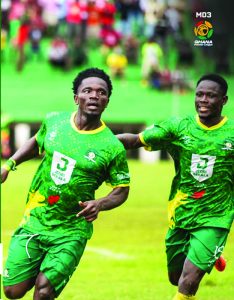
Match day six of the Ghana Premier Leagueof the 2025/26 season comes off this weekend, after Ghana officially booked a place at the 2026 FIFA World Cup, sealing the qualification with a hard-fought 1-0 victory over Comoros at a vibrant Accra Sports Stadium.
With five matches played so far this season in the Ghana Premier League, some shocking results were recorded. Some of the league’s heavyweights, who were predicted to be favourites to win the league are struggling to find their feet. Although some of the newly promoted sides are gradually grinding the results, others are finding it difficult and have to put in much effort if they seek to remain in the league.
Avoiding Violence
An incident on match day four, when Hearts of Oak travelled to face Bechem United, nearly escalated into chaos but was swiftly contained by the match officials. Tensions flared after the referee awarded a free kick against Hearts, prompting a Hearts official to attempt to confront the referee physically. Such behavior is unacceptable and should not be tolerated. The Ghana Football Association must take firm measures to protect referees and uphold discipline on and off the field.
As the saying goes, “The one who follows must watch the leader’s footsteps.” This highlights the important role the team, its management and players play as examples for the fans. Supporters look up to them, and as such, the management, players and officials must uphold a high standard of professionalism both on and off the field.
Below are the match day six previews;
Berekum Chelsea, Hearts face off in Berekum
Berekum Chelsea looks to get their second win of the season as they host Heart of Oak at the Berekum Golden City Park on Saturday afternoon.
Karela United midfielder Zaidan Mohammed
Chelsea hasn’t been impressive this season and will seek a result that would rouse the fans. Sitting 13th on the league log, Berekum Chelsea have scored thrice and conceded 5. This clearly shows they are defensively unstable and need to correct them, going into this encounter. After four matches played, Chelsea has won 1, drawn 1, and lost 2. Chelsea needed to put in much effort if they look to remain in the league.
Accra Hearts of Oak haven’t been beaten this season. The back line of the team has been outstanding, with Ghana number one goalkeeper, Benjamin Asare, joining the team from international duty. This will make the defensive set-up even stronger.
The Phobians have had problems of their own, by finding it difficult to score. After five matches played, Hearts have scored 2 and haven’t conceded a goal yet. The attack needs to be scoring goals to complement their good defense.
Hearts have been impressive anytime these two sides meet and will look to maintain such a remarkable record. Hearts have won 3 out of their last five meetings, with 2 ending in draws.
Bibiani Gold Stars welcome Hearts of Lions
Bibiani looks to return to winning ways when they host Heart of Lions on match day six of the 2025/26 season.
The defending champions, Gold Stars, didn’t start the season well and would look to get a result that would get the fans behind them. They’ve lost 4 out of their last five matches and this speaks badly of a team looking forward to defending their title.
Heart of Lions players
They’ve conceded twice the number of goals scored. After losing their recent match away against Visions FC, they will look to return to winning ways. New head coach, Maxwell Konadu, would look to get the fans behind him and to do so, he needs to be winning matches.
Heart of Lions hasn’t lost a match this season and will be looking to maintain this record when they travel away. Sitting 2nd on the league log, Lions will do their best to get the necessary results. They’ve scored 6 and conceded 1 and this shows they have an effective attack and a stable defense.
In their last five matches, Bibiani has won 1, and three of the matches ended in a draw. Their most recent meeting was in the GHALCA top four. The match ended in a draw, but Bibiani won on penalties.
With Lions’ impressive form and Bibiani’s inconsistent performance, Lions should take advantage of this and get the necessary results, but nothing can be taken from Bibiani, whose new coach would look to get a win.
Leaders Medeama host Samartex
Medeama is looking to maintain impressive form when they host Samartex on match day six of the season.
Gold Stars players
Sitting first in the league, Medeama scored 10 and conceded 3. This clearly shows the attackers are decisive in front of the goal. Coming from a win at home against Dreams, Medeama will be looking to build on that and get the necessary results.
Samartex hasn’t lost a match this season and would seek a good performance going into this encounter. Although they haven’t lost a match, they conceded twice the number of goals scored and should work on that before going into this game, as their opponent are explosive when they get to the final third.
The last five meetings between these two teams have resulted in some remarkable results. Medeama has won 1, two matches ended in a draw and Samartex has won 3. Although on paper Samartex is the favourite going into this match, nothing is assured when these teams meet.
The Porcupine Warriors won’t play this weekend as they host Wydad at the Accra Sports Stadium in their quest to get promotion to the group stages of the CAF Confederation Cup.
New Cambridge University Press & Assessment (Cambridge) report focuses on the role of technology and human skills in the future of education.
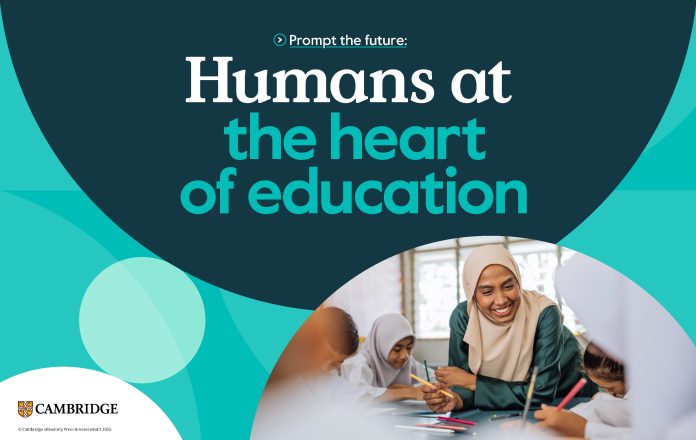
Ghanashould put human skills, knowledge and values at the heart of education to prepare the next generation for the AI era, a new Cambridge University Press & Assessment (Cambridge)report has found.
While it is essential that Ghana’s education system prepares young people for new technology, this does not just entail teaching them digital skills, which can themselves easily become obsolete as the pace of technological change accelerates.The report finds that the greatest possibilities for education systems lie not in technology alone, but in what humans and technology can achieve together.
These are among the findings of ‘Humans at the heart of education’, the new report from Cambridge focused on national education system development.
The report calls on Ghana and education systems around the world to:
1) Focus on education that builds the whole person: If AI can replace us, then we are not teaching the right things. Education must go beyond traditional test scores to develop the knowledge, skills and values that drive economic growth, global engagement and flourishing societies.
2) Build change with people across the system: To get to the heart of education challenges, listen to the people at the heart of education. The best solutions emerge when governments, teachers, learners, families, employers and communities work together.
3) Equip teachers to be agents of change: Technology should empower teachers, not replace them. It should make their lives in the classroom easier and free up their time to focus on hard-to-teach human skills, like creativity and critical thinking.
Key recommendations for Ghana:
Ghana should ensure education continues to be highly relevant to children’s local context because evidence shows that is how they learn best. National education strategies should ensure education remains aligned with national visions, and reflect national history, traditions, cultural values, social priorities and aspirations for the future. Taking a national approach gives learners a firm foundation to interpret issues clearly, build trust and contribute original perspectives. It also helps students form their sense of identity and understand their place in the world. Ghana is already making progress in this direction, with its new senior high school curriculum designed to instil Ghanaian values, culture, and morals.
It is doubly important for Ghana to invest in education that is relevant to students’ context given the increasing adoption of AI with its inherent language biases. While only an estimated 5% of people speak English as a first language, 90% of several Large Language Models’ training data is in English.
Teachers should never be replaced with technology. Nations that use technology as a substitute for teachers risk creating a two-tier system. One tier where children learn from skilled teachers using technology to enhance learning, and another where children rely on digital platforms with little or no human guidance.
Instead, Ghana and other nations should empower teachers with technology. When used wisely, technology can reduce workload by automating marking, feedback and lesson planning. It can enable professional development with reflective tools, peer collaboration and access to expertise. It can support personalised learning, identify gaps, suggest interventions and provide detailed reports to inform teaching. And it can encourage innovation, allowing teachers to trial new methods and engage in research.
Ghana should place teachers at the heart of reforms to make education more human-centred in the AI age. Policymakers must listen to what teachers say works, and where they need help. If education shifts towards human connection and skills like empathy, collaboration and critical thinking, the teacher’s role becomes even more vital. Teachers create spaces to foster “hard to learn” skills, adapt to local contexts, and become role models.
Ghana should teach digital skills as an essential part of its curricula, with The World Economic Forum listing AI, big data, cybersecurity and technology literacy among the fastest-growing skills employers globally look for. But technology changes too fast for one-time learning, so it is vital to focus on building digital competence for life. This is less about how to use specific technologies and more about building wider knowledge and skills to help learners use those tools wisely.
Ghana’s education system should focus on building skills and knowledge side by side to give learners the tools to sharpen their judgements and build a society where AI might guide thinking, but people are responsible for the outcome. With easy access to data through AI, education policymakers should avoid the temptation to focus on building skills and let technology supply knowledge.
While the focus on addressing the teacher shortage is important to close learning gaps, Ghana should also prioritise strengthening teaching quality, which can be equally important. Where teachers lack the training, support and conditions they need to thrive, it limits the impact they can have on learning outcomes.Ghana has already introduced Professional Learning Communities in secondary schools, aiming to meet weekly, to improve teachers’ skills.
Ghana should ensure the curriculum is flexible enough that it gives teachers the space they need to use their judgement and creativity to create lessons that keep students engaged and interested.
Jane Mann, Managing Director, Partnership for Education, Cambridge said:
“AI is changing education, and the world students will graduate into, at a faster pace than any time in human history.
“But teaching digital skills is just the start. Our report shows that for Ghana’s next generation to thrive, we must also equip learners with the deeply human knowledge, skills, values and connections that are key to building resilient individuals, and in turn resilient economies and societies.
“This includes ensuring education remains highly local to students’ context in Ghana, and putting teachers and school leaders at the heart of education reforms. The pace of technology means we don’t know exactly what tomorrow’s world of work looks like for today’s students, but by keeping humans at the heart of education, we prepare Ghana’s next generation for all eventualities.”
About Cambridge University Press & Assessment
Cambridge University Press & Assessment is a world leader in assessment, education, research and academic publishing. We are part of the University of Cambridge and share its mission ‘to contribute to society through the pursuit of education, learning and research at the highest international levels of excellence’. This connection gives us an unrivalled depth of experience in research, academic publishing, national education systems, international education and English language learning.
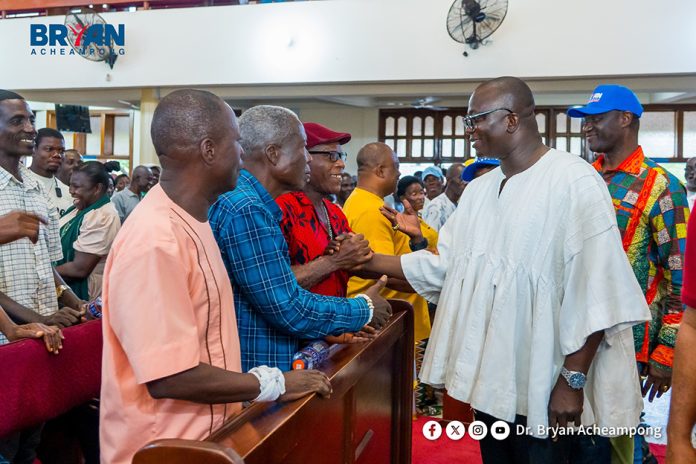
In a move that could reshape Ghana’s environmental and political landscape, the New Patriotic Party (NPP) flagbearer hopeful, Dr. Bryan Acheampong, has issued a powerful call for an immediate 90-day nationwide pause on all mining activities — legal and illegal — citing grave warnings from the Environmental Protection Agency (EPA) that mining-related pollution is contaminating the country’s food supply and drinking water.
Dr Bryan Acheampong
“Everybody should stop mining in this country regardless of the financial consequences, we have to agree that for the next 90 days, during the rainy season, we should stop mining.”
Dr Acheampong’s proposal, framed as a national act of environmental healing is not a declaration of emergency, but a targeted and time-bound moratorium to allow Ghana’s rivers, soils and communities a chance to recover during the rainy season.
According to his office, the 90-day halt would allow rain-fed natural recovery of water bodies polluted by mercury and heavy metals; give the government time to develop a comprehensive, enforceable framework for sustainable and responsible mining.
The call follows alarming new reports from the EPA that Ghana’s major food staples including rice, cassava, plantain and vegetables now contain trace elements of mining-related toxins. These contaminants, including mercury and arsenic, are seeping into water sources and agricultural lands, moving from mining hotspots in the North to farms and rivers in the South.
“We are poisoning our food. If we don’t stop and act, there will be no people left to fix what’s broken,” Dr Acheampong warned.
A Direct Challenge to the Mining Status Quo
Dr Acheampong’s proposal directly confronts powerful mining interests and could ignite sharp political debate.
Mining is a cornerstone of Ghana’s economy, contributing billions to GDP and employing thousands. A nationwide freeze would have economic ramifications but Dr Acheampong argues that the cost of inaction is far greater.
“This is not anti-mining. This is pro-people, pro-soil, pro-river and pro-future. The economy cannot thrive on poisoned crops and dead rivers,” he stated.
He proposed that Goldbod, the government’s mining oversight institution, lead the moratorium leveraging its mandate and operational infrastructure to suspend mining, monitor environmental recovery and ensure illegal operations do not resume under the radar.
“Goldbod controls our mining systems. This is the moment for them to lead — to prove that Ghana can mine responsibly,” he added.
National Security, Not Just Environment
“This is not just an environmental issue, it’s a national security threat. EPA data from 2024 and 2025 show that major river systems like the Pra, Ankobra and Offin are now heavily polluted. Entire communities are losing access to clean drinking water. Farmlands are turning barren. Children are being exposed to toxins through food and water.
“If ignored, this crisis could spiral into massive public health emergencies, food shortages, and economic instability.”
Dr Acheampong’s proposal taps into growing national anxiety over galamsey, environmental degradation, and the perceived failure of institutions to enforce laws.
His plan would require urgent coordination between the EPA, Minerals Commission, Goldbod, and local assemblies, and would include enforcement, riverbank restoration and a new national policy on Responsible Mining.
A Campaign Defining Moment?
The proposal marks a defining moment in Dr Acheampong’s campaign framing him as a candidate willing to confront uncomfortable truths and stand up to entrenched interests for the sake of long-term national wellbeing.
His campaign’s theme: “Power That Works for the People” is on full display in this high-stakes proposal, a bet that Ghanaians are ready for bold, people-first leadership in the face of environmental collapse.
Former Chief Executive Officer of the Public Sector Reforms Secretariat, Mr. Thomas Kusi Boafo, has hailed former Education Minister, Dr. Yaw Osei Adutwum, as the most formidable and unifying contender to lead the New Patriotic Party (NPP) into the 2028 general elections.
Speaking on Nhyira FM’s Morning Show hosted by Nana Jantuah in Kumasi, Mr. Kusi Boafo said Dr. Adutwum embodies the integrity, humility and vision the party urgently needs to rebuild its image and regain public trust after its defeat in the 2024 elections.
Dr Yaw Osei Adutwum – NPP flagbearer aspirant
He described the former Minister as a man with “little political baggage,” whose clean record and performance in the education sector have earned him broad respect both within and outside the party.
“Dr. Adutwum stands tall among all the candidates because he is the one with little baggage. If he can unite the party, he will be successful,” Mr. Kusi Boafo asserted.
Mr. Boafo expressed deep concern over what he called “growing cracks” within the NPP, warning that the party’s chances of returning to power in 2028 would depend on how it manages its internal divisions after the January 31, 2026 presidential primaries.
He condemned the insults, name-calling and wild allegations circulating among supporters of different camps, describing them as destructive to the party’s unity and public image.
“After insulting and throwing wild allegations against opposing candidates, how are you going to campaign for the choice of the delegates who may not be your preferred candidate?” he questioned.
According to him, the NPP must choose a leader who can unite the rank and file and refocus the party on policies that improve the lives of Ghanaians.
Mr. Kusi Boafo emphasised that the party’s next flagbearer should not only be popular, but also possess a clear developmental vision and a track record of results-oriented leadership.
He pointed to Dr. Adutwum’s notable achievements in the education sector, especially his role in expanding Science, Technology, Engineering and Mathematics (STEM) education as evidence of his competence and commitment to innovation.
“Dr. Adutwum’s leadership style and performance in transforming the education space show that he can deliver results if given the opportunity to lead,” he said.
Mr. Boafo added that electing the former education minister would symbolise a fresh start for the NPP, one based on renewal, reconciliation and hope.
“Given what has happened since the party lost power in 2024, I am convinced that Dr. Adutwum’s leadership will give the NPP the best chance to rebuild and win back the confidence of Ghanaians,” he stated.
He urged delegates to rise above personal loyalties and monetary influences and instead vote for a candidate whose integrity, discipline and vision can unify the party and restore public confidence.
Mr. Boafo expressed optimism that with the right leadership, the NPP can heal its divisions, rebuild its credibility and make a strong comeback in the 2028 general elections.
Acting Executive Director of Institute for Fiscal Studies, Said Boakye, presenting the report
Ghana’s heavy dependence on imported rice is inflicting a deep economic strain on the nation, as new research by the Institute for Fiscal Studies (IFS) warns that the country risks losing control of its food security if immediate reforms are not made to revamp domestic rice production.
Dr Said Boakye, Senior Research Fellow and Acting Executive Director in a presentation in Accra yesterday, painted a stark picture of how rice importation has surged over the past four decades despite repeated policy interventions.
His presentation was titled “Increasing Importation of Rice in Ghana: Can the Country Transform Its Fortunes in the Rice Sector.”
According to the IFS, Ghana’s per-capita rice consumption increased almost fivefold from 12.4 kilograms in 1980 to 61.05 kilograms in 2022, but local production has consistently fallen short of meeting demand. The deficit has been filled by imports, which have ballooned in recent years, worsening the country’s balance of payments and exchange rate pressures.
The report reveals that even though several government programmes have targeted rice self-sufficiency including the National Rice Development Strategy, Planting for Food and Jobs, and the Medium-Term Agriculture Sector Investment Plan, their impact has been modest due to poor implementation, weak coordination, and lack of continuity.
Dr Said Boakye stressed that Ghana cannot continue to rely on short-lived initiatives. “Ghana cannot keep repeating the same policy measures and expect significantly different results,” he noted, calling for a complete overhaul of the country’s rice policy framework.
The study attributes the surge in rice imports to multiple structural weaknesses within the local rice value chain.
Among the key factors identified are low yields, limited access to improved seeds, high input costs, inadequate irrigation, poor mechanization, and significant post-harvest losses.
The IFS found that average yields on Ghanaian rice farms are less than half of what is achieved in other West African countries with similar conditions.
Moreover, the report highlights that imported rice continues to dominate Ghana’s urban markets due to superior quality, standardized packaging, and competitive pricing advantages that locally produced rice still lacks.
This situation, the study cautions, has discouraged local millers and farmers, further deepening dependence on foreign suppliers.
The IFS also expressed concern over the foreign exchange burden caused by rice imports. With annual imports now costing Ghana hundreds of millions of dollars, the country’s limited foreign reserves are under strain.
“Rising imports are contributing to exchange rate depreciation and inflationary pressures, undermining efforts to stabilise the economy,” the report emphasised.
Beyond the economic impact, the Institute warns that dependence on imported rice poses a serious food security risk, especially in times of global supply disruptions or currency fluctuations.
It argues that achieving rice self-sufficiency is not only an economic goal, but also a strategic necessity for national resilience.
To reverse the trend, the IFS recommends a comprehensive and sustained national plan that goes beyond ad hoc interventions. The proposed strategy includes: Expanding irrigation infrastructure and mechanisation to increase yields; Supporting smallholder farmers with access to credit, improved seeds and fertilizers.
Others are Investing in modern milling and packaging facilities to enhance the competitiveness of local rice; Enforcing quality standards and marketing campaigns to boost consumer confidence in Ghana rice and Implementing effective import management policies to protect local producers while scaling up production.
The report further calls for stronger institutional coordination, particularly among the Ministry of Food and Agriculture (MoFA), Ghana Irrigation Development Authority (GIDA) and the private sector.
It stresses that achieving transformation will require political commitment, policy consistency, and long-term investment.
Dr. Boakye concluded that Ghana has the potential to not only meet its domestic demand, but also become a net exporter of rice if the government adopts a results-driven approach.
“With the right investment and effective implementation, Ghana can transform its rice sector from a net importer to a competitive regional producer,” he asserted.
Prof. Michael Kpessa-Whyte, the Acting Director-General of SIGA
The Acting Director-General of the State Interests and Governance Authority (SIGA), Prof. Michael Kpessa-Whyte, has called for a drastic shift in how Ghana’s State-Owned Enterprises (SOEs), Joint Venture Companies (JVCs), and Other State Entities (OSEs) are managed to ensure their long-term profitability and sustainability.
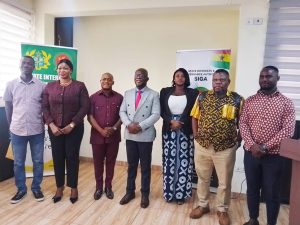
Prof. Kpesse-Whyte in red tie posing for a photograph with some Directors of SIGA and some members of the media
Speaking at an editors’ forum in Accra on Thursday, to discuss the 2024 State Ownership Report (SOR), Prof. Kpessa-Whyte said many state enterprises continue to underperform financially because they have not evolved from their original social-service mandates to operate as commercial entities.
He cited the Electricity Company of Ghana (ECG) and the Ghana Water Company Limited (GWCL) as examples, explaining that these institutions were initially established to provide essential services rather than to generate profit.
“The commercialisation of these entities began in the 1980s, but without proper integration of business models.
“As a result, the old policy frameworks, managerial structures, and mindsets have remained unchanged,” he noted.
The 2024 State Ownership Report, the ninth in the series and fourth since SIGA’s inception in 2019, provides a detailed analysis of the financial and operational performance of 152 specified entities comprising 54 SOEs, 30 JVCs and 68 OSEs.
The report shows that the SOE sector’s total revenue grew by 28.3%, reaching GH¢133.68 billion in 2024, largely driven by gains in the energy and financial services sub-sectors.
However, despite this revenue growth, the sector posted a deepened net loss of GH¢9.67 billion, up from GH¢7.14 billion in 2023, mainly due to high finance costs amounting to GH¢9.39 billion.
While operational efficiency improved, and profit before interest and tax (PBIT) rose to GH¢1.57 billion, the report highlighted persistent losses from entities such as Ghana Cylinder Manufacturing Company, GNPA, Ghana Water Company, Graphic Communications Group and Tema Oil Refinery.
These continue to pose major fiscal risks to the state.
On a brighter note nine SOEs — including Ghana Ports and Harbours Authority (GPHA), Bui Power Authority, Ghana National Gas Company (GNGC) and Bulk Energy Storage and Transportation Company (BOST) maintained consistent profitability over the past five years.
Three SOEs, namely Ghana Reinsurance Company Ltd, TDC Company Ltd. and State Housing Company Ltd. (for the first time in 30 years) paid a combined GH¢29.36 million in dividends, marking a 78.9% increase from the previous year.
Improved Performance Among JVCs
Joint Venture Companies recorded a strong recovery, moving from a net loss of GH¢1.33 billion in 2023 to a net profit of GH¢1.51 billion in 2024 — a 213% improvement.
Total JVC assets grew by nearly 40%, while dividend contributions surged, led by minority-interest companies which paid GH¢1.03 billion, representing 91% of total dividends received by the state.
Other State Entities Narrow Losses
Other State Entities (OSEs) also showed signs of recovery, recording a net deficit of GH¢2.4 billion, a sharp reduction from GH¢7.72 billion in 2023.
However, the sector continues to face financial instability, with accumulated negative funds of GH¢12.54 billion, largely due to the Bank of Ghana’s negative equity position of GH¢58.62 billion.
Macroeconomic and Policy Context
The report notes that Ghana’s economy grew by 5.7% in 2024, with moderate inflation at 23.8% and a stabilised cedi.
Despite this, the fiscal deficit widened to 7.9% of GDP, while public debt rose to GH¢726.7 billion, though it improved relative to GDP at 61.8%, following debt restructuring and Eurobond renegotiations.
To address governance gaps, SIGA and the government introduced two key policy instruments in 2024, the State Ownership Policy and the Code of Corporate Governance for Specified Entities to institutionalise accountability and improve performance across public organisations.
Key investments during the year included: Ghana Gas Company’s acquisition of Ghana Cylinder Manufacturing Company; Commissioning of the US$40 million GOIL–SMB Bitumen Processing Terminal; Nuclear Power Ghana’s agreement to deploy Nu Scale’s Small Modular Reactor by 2030; Launch of the Jomoro Petroleum Hub Development, valued at US$12 billion, expected to create 780,000 jobs by 2036.
Challenges and Calls for Reform
The report also highlighted worrying trends, such as a decline in climate-smart initiatives, limited gender diversity (only 29.67% of SE workforce are women), and low youth participation at 2.6%.
Finance Minister Dr. Cassiel Ato Forson, in his remarks, acknowledged the ongoing challenges, stressing the need for SOEs to deliver better returns.
“The task ahead is immensely difficult, given the dismal nature of the 2024 performance. The Ghanaian people expect SOEs to deliver and offer value as their shareholders,” he said.
He urged SIGA to strictly enforce reporting deadlines and sanction non-compliant entities, while accelerating reforms under the IMF-supported Post-COVID-19 Programme for Economic Growth (PC-PEG).
Prof. Kpessa-Whyte reiterated SIGA’s commitment to driving reforms that ensure SOEs become viable, transparent, and accountable.
“We must rethink the way state enterprises operate. They must evolve beyond social service delivery to become engines of growth, efficiency and national prosperity,” he said.