Home Blog Page 450

The United Party (UP) Rises From The Dust

0
Opinion

On October 13, 1957, six political parties came together to form the United Party (UP). The parties were the National Liberation Movement (NLM), a mid-land Akan based, led by Dr. K.A. Busia; Northern Peoples Party (NPP), Northern based, led by Mr. Dombo; Ga Shifimokpe, Ga based, led by Mr. Attor Quarshie; Togoland Congress, Northern Ewe based, led by S.G. Antor; Anlo Youth Party (AYA), Southern Ewe based, led by Mr. Apaloo and Muslim Association Party (MAP), Islamic based, led by Bankole.

It became necessary for all the six parties to unite or risk being disbanded in line with the Avoidance of Discrimination Act of 1957.

The UP storm into the political scene, with the aim of making Nkrumah and his CPP very accountable. As the leading opposition party in the House, it did just that.

Nkrumah and the CPP would not take things for granted and moves were made to entice leading members of the UP into the CPP.

On record, Mr. Dombo and Alhaji Mumuni Bawumia were approached with promises of juicy opportunities, should they defect to the CPP. While Dombo declined, Bawumia succumbed and joined the socialist party and remained socialist for the rest of his life.

Still very determined to run the UP down, obnoxious laws were passed which ended up with the declaration of Ghana as a One-Party State in 1965 with Nkrumah as the president for life. In the 1965 parliamentary elections, only CPP candidates stood at every constituency in Ghana. The UP was no more.

In 1969, the UP returned in the form of the Progress Party (PP) and won the elections to form government headed by Dr. K.A. Busia. The dream of reviving the tenets and principles of the UP Tradition did not live long when the PP was removed from power in 1972.

In 1978, the opportunity came when the ban on political activities were lifted. At a meeting to form a political party, former PP gurus split on the issue of forming a party with the core members belonging to the PP or adding on people from the socialist tradition who have converted.

During the debate, Mr. William Ofori-Atta (Paa Willie) and a few worked out to later form the United National Convention (UNC). The UP Tradition went into Elections 1979, a disunited front and both the UNC led by Paa Willie and the Popular Front Party (PFP) led by Victor Owusu, succumbed to the pro-Nkrumaist, Peoples National Party (PNP) led by Dr. Hilla Limann. The UNC had earlier declined to back the PFP during a run-off to determine who would be president.

And after the 1981 Coup which toppled Limann’s government, the radical capitalist reformist of our time, Jerry Rawlings lifted the ban on political activities in 1992.

This time the UP Traditionalists came together and vowed not to split again. The New Patriotic Party (NPP) was formed.

Based on the standards and strong principles of the UP, the NPP took off strongly during the most difficult times of post Nkrumah political times. All the same, the party became so attractive to Ghanaians and in 2000, it won the General Elections led by H.E. J.A. Kufuor. By the end of his second term, a new era came into being in the NPP. The era of democratic dictatorship, where just as a word from Nkrumah was never to be challenged but accepted as law, a word from the leader of the NPP was to be kowtowed to.

Anyone perceived to be pro-Kufuor was put in the class of anti-NPP. In his victory speech after Alan Kyerematen ceded to him during the 2007 presidential primaries, Nana Addo made a solemn promise to see that Alan became the flag bearer and president after him.

This solemn promise was broken when all pro-Nana Addo party activists looked at Alan as an enemy of the NPP and with him were included anyone who is perceived to be pro-Kufuor and therefore pro-Alan. Things grew from bad to worse, with some NPP gurus openly declaring in public with words of attack against Alanites, that they do not belong to the NPP anymore.

As openly declared by Wontomi and Abronye, party albums were seriously compromised to favour anyone but Alan. Finding that out he gifted the NPP leaders an amount of GH¢500,000.00 to do the right thing. Nothing was done and the money was never refunded. In addition to many attacks on his person, including being belittled in public, with the obvious scheme to make sure that he loses the primary, Alan stepped out of the race and out of the party.

During the 2024 General Elections, even though Alan was tactically made to lose miserably, 2.1 million NPP members decided not to vote at all and this led the party, now without any ounce of UP principles and standards in it, was whipped mercilessly by the National Democratic Congress (NDC).

It looked like the UP Tradition was going to be wiped out of Ghana’s politics for good. Because, from the way things are going if the NPP does not re-brand itself and bring back onboard the standards and principles of the UP, then more millions will desert the party in 2028 and by 2032, the NPP will be reduced to the level of the CPP, PNC and those insignificant parties, and would be fighting over 3% of total votes cast during elections.

Strangely, by divine ordinance and certainly not by coincidence, three days after the sixty-eighth anniversary of the United Party another political party was formed by a blue-blooded UP Traditionalist, Alan Kwadwo Kyerematen. And this new party is called the United Party (UP).

Speaking boldly and convincingly, Alan spelt of the principles and standards of the new United Party. He spoke and said, “Today we are ushering in a new dawn in Ghanaian politics; a new dawn that will end the divisiveness, acrimony and rancor in politics in our country; a dawn that will also end the duopoly in Ghanaian politics by offering Ghanaians a credible alternative and eliminate the culture of “Winner Takes All”; a new dawn that will bring about economic transformation which will translate into massive job opportunities, usher in a golden age of business and create prosperity for Ghana; a new dawn that will mobilize the collective talents of all Ghanaians for national development, irrespective of age, ethnicity, religion or political affiliation; a new dawn that will promote accountable and transparent governance and introduce a policy of zero tolerance for corruption; and last but not the least, a new dawn that will protect the environment and promote sustainable development.”

The new UP is a broad-based, Centrist Party that seeks to build a united Ghana and accelerate the economic and social transformation of the country by mobilizing the collective strengths and talents of all Ghanaians.

According to the leader of the UP, its vision is to make Ghana the economic powerhouse of Africa by the year 2040 and that Vision 2024 is branded as the Paradise Project.

Hon. Alan Kwadwo Kyerematen, spelt out many issues facing the country today and he sounded very convincing that should he get the nod in 2028, he would begin the process of re-branding this country and make it a rich and powerful nation.

He did not sound like the NDC in opposition when the top members promised Ghanaians that it is only through a state of emergency that illegal and irresponsibly mining aka galamsey can be halted, yet ten months in power the NDC is now telling us state of emergency is not the solution and that the state is benefiting from galamsey, more so without galamsey, four million youths will become unemployed.

He did not sound like the NDC guru who condemned Nana Addo for using private jets on his foreign travels and vowed to step out of office and resign his post of minister should President Mahama step into a private jet to travel overseas. Mahama did that on a number of occasions and yet Ghanaians have not heard of the minister resigning.

The UP, with experienced politicians in the helm of affairs, can be the alternative Ghanaians would need should the NDC and NPP not do the right things.

Sixty-eight years ago, this month, the United Party was born. It brought hope to Ghanaians until it was shot down by Nkrumah and listed as an anti-Ghanaian party. Sixty-eight years after, exactly to the month, the United Party (UP) has been resurrected, exactly three days after its birthday. This new UP looks certain to unite all Ghanaians and this could pose problems for the two leading parties.

The disappointed liberals in the NDC may look at the UP as the best alternative and the disappointed pro-UP NPP members may defect to join the UP. Already there are 2.1 million disappointed NPP members waiting and watching. If the UP demonstrates to be a better party, then these and millions more from the NPP would become members of the new UP.

The New Patriotic Party must sit up and start doing the right things and reinstalling the good old standards and principles that the party was admired for during the early nineties to 2008. Nothing other than that would see the party losing members.

The NPP elders, who are promising to get Alan back to the party, must know that their dreams cannot be achieved. A new United Party (UP) has come and it has come to stay.

Hon. Daniel Dugan


Follow the The Chronicle Newspaper channel on WhatsApp: https://whatsapp.com/channel/0029VbBSs55E50UqNPvSOm2z


Editorial: Exporting Our Healers -A Symptom Of Leadership Failure

0
Editorial

Ghana’s policy to export health professionals abroad, particularly to the United Kingdom and Barbados, has stirred deep national unease. At first glance, it may seem like an innovative way to earn foreign exchange.

But beneath the glossy rhetoric lies a disturbing truth a government willing to trade away its healers while its own citizens languish in overcrowded hospitals, battling diseases with dwindling staff and scarce medical supplies.

Across Ghana, the signs of a failing health system are everywhere. Expectant mothers in rural districts travel miles to deliver in under-resourced facilities. Nurses work exhausting shifts without adequate tools or motivation. Patients lie on hospital floors because beds are full, while others die waiting to be attended to. Yet, rather than fixing these systemic problems, our leaders have chosen to monetize them, turning national frustration into foreign labour contracts.

The Ghana Health Service estimates that over 4,000 nurses and midwives have already left the country in the past two years. The doctor-to-patient ratio still falls far below the World Health Organisation’s standard, with some districts having just one doctor for every 10,000 people. These are not mere numbers; they represent mothers, children and families left without timely care. In this crisis, exporting even more professionals is not policy innovation it is moral neglect.

Supporters of the policy argue that bilateral agreements will generate income and create opportunities abroad, drawing inspiration from the Philippines’ nurse export model. But Ghana is not the Philippines. We are a country still struggling to provide basic healthcare, still losing lives to preventable diseases, and still unable to fully equip our hospitals. What we need are reforms that retain our skilled workforce not strategies that drain it further.

The root of the problem lies not in the migration of health professionals but in the leadership vacuum that drives them away. How can a nurse stay in a system that delays her salary for months? How can a young doctor remain in a district hospital with no basic diagnostic equipment, no housing and no professional support? Leadership has failed to make healthcare work and now, that same leadership seeks to profit from its own failure.

There is also a deeper moral and national question. What does it say about our priorities when we can export nurses but cannot ensure clean water in our clinics? When we can negotiate foreign labour deals but not improve rural health infrastructure? When the lives of Ghanaians become less urgent than remittances?

If the government insists on pursuing this policy, transparency and accountability must be non-negotiable. The public deserves to know how much Ghana earns from these bilateral agreements, how those funds are reinvested, and what measures exist to replace the departing workforce. Destination countries must also be held to fair commitments, including investments in training institutions, equipment and technology transfer to strengthen Ghana’s health system.

But beyond agreements and figures, this debate should jolt national conscience. No nation develops by outsourcing its best minds while its citizens die from avoidable illnesses. Ghana needs a leadership that views health not as an economic export, but as a moral responsibility.

The export of nurses and doctors should not be celebrated as progress. It should be seen for what it is, a painful indictment of leadership failure and misplaced priorities. Until we build a health system that inspires our own professionals to stay, Ghana will continue to heal others while bleeding at home.


Follow the The Chronicle Newspaper channel on WhatsApp: https://whatsapp.com/channel/0029VbBSs55E50UqNPvSOm2z
 

‘The Final Call’ brings health and hope to Koforidua Freeman Methodist Basic School

0
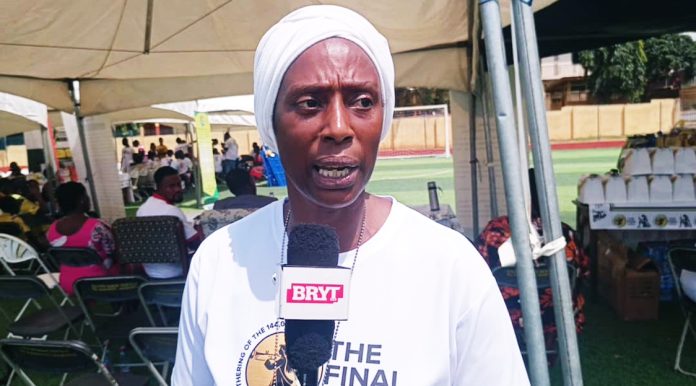
The founder of The Final Call, H.E. Rev. Dr. Angela Patricia Alexis (Ph.D.)

In a remarkable act of community service, The Final Call, an international non-governmental organization (NGO), has supported Koforidua Freeman Methodist Basic School in the New Juaben South Municipality with a comprehensive health screening and essential donations.

The outreach, which aligns with the United Nations’ Sustainable Development Goal 3 (SDG 3) ensuring healthy lives and promoting well-being for all, provided free medical check-ups for students and nearby residents.

Alongside the health services, the organisation donated school uniforms, installed burglar-proof windows and supplied vital materials to improve safety and promote learning within the school community.

The founder of The Final Call, Rev. Dr. Angela Patricia Alexis (Ph.D.), reaffirmed the organisation’s commitment to empowering youth and strengthening families through faith and humanitarian work.

“We are here to bless these young learners,” Dr. Alexis said, adding “God has a plan for the youth and they must be spiritually equipped to become responsible citizens of His Kingdom.”

As part of the outreach, The Final Call also donated 38 maternity packs to support expectant mothers.

Each pack contained essentials such as nappies, toothpaste, toothbrushes, and detergents aimed at promoting safer and more comfortable childbirth experiences.

“We believe in holistic care. By supporting both children and mothers, we help build stronger families and ultimately, a stronger Ghana,” she said.

Dr. Alexis further urged Ghanaians to embrace righteousness and spiritual preparedness, asserting that Ghana holds a divine mandate to share the gospel with the world.

“God wants to use Ghana to spread His message. Every generation we inspire brings the nation one step closer to spiritual renewal.”

Addressing public health challenges, Dr. Alexis expressed concern over preventable diseases linked to poor diet and unhealthy lifestyles. She encouraged a return to natural foods and active living.

“God has called The Final Call to help Ghanaians live longer, healthier lives. Through health education and spiritual guidance, we aim to nurture righteous and healthy communities,” she said.

The organization announced plans to extend similar programs nationwide, urging citizens to “reflect, repent, and prepare for the Kingdom of God is at hand.”

According to The Final Call Administrator, Melissa Alexis, the donated supplies were targeted to assist students from low-income families, ensuring they have the resources needed to thrive academically.

The school’s headmistress, Madam Bernie Kaki Caesar, expressed heartfelt gratitude for the gesture, describing the support as “timely and life-changing” for many students and families.

Dr. Angela Patricia Alexis is a globally recognized spiritual leader, holistic herbal scientist, medical missionary and licensed chaplain.

She has served in the five-fold ministry since childhood and was honoured by the United Nations in 2019 for her healing ministry, which has transformed thousands of lives worldwide.

A mother of five and grandmother of eight, Dr. Alexis is the founder of The Final Call, which champions both spiritual revival and humanitarian aid under the slogan: CIA — Christians In Action.”


Follow the The Chronicle Newspaper channel on WhatsApp: https://whatsapp.com/channel/0029VbBSs55E50UqNPvSOm2z
 

Ex-Police officer jailed 12yrs for defilement of minor

0
Jailed

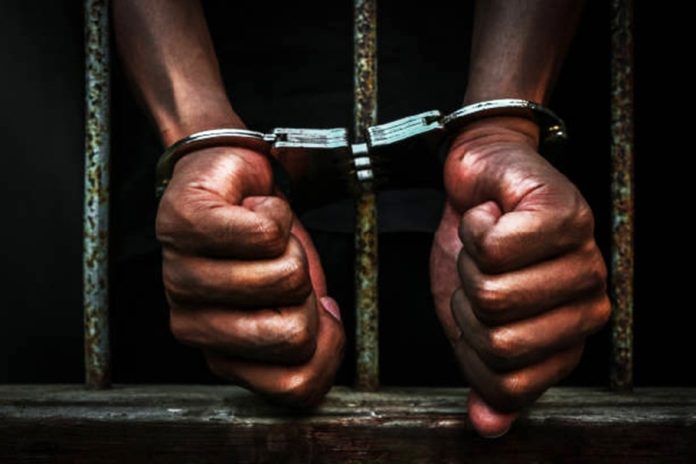
The Koforidua Circuit Court Presided by Her Honour Matilda Rebiero has sentenced former Police Corporal Emmanuel Nyame to 12 years in imprisonment for defiling a 13-year-old girl in 2019.

The convict, who was dismissed from the service following the incident, was found guilty of luring, assaulting, and threatening the child, who was at the time living with his fiancée.

Presenting the facts of the case, Regional State Attorney, Emily Addo-Kyereh, detailed that the crime occurred on April 11, 2019.

The prosecution stated that Emmanuel Nyame, a former officer with Motor Traffic and Transport Department of Ghana Police Service stationed in Koforidua, took advantage of his fiancée’s absence to orchestrate the sexual assault.

He took the victim under the pretext of running an errand, driving her to various locations including a drinking spot called Timberland and a funeral ground, before finally taking her to his room at the Nsukwao Police Barracks near Ghateco.

Once inside the room, Nyame forcibly had sexual intercourse with the girl despite her resistance and threatened her of losing her life in the event that she made the act known to anyone.

Regardless of the threat, the victim later confided in a cousin, which led to her father being informed, leading to a formal report to the police, and a medical examination confirmed the sexual assault.

Despite denying the allegations in his initial statement, Emmanuel Nyame was formally charged with defilement.

However, on August 13, 2019, he jumped bail and fled the country through Togo to Dubai, prompting investigators to issue a bench warrant for his arrest and declare him wanted.

After nearly five years on the run, Nyame was arrested on June 21, 2024 upon his arrival at Kotoka International Airport, by officers of the Ghana Immigration Service, who subsequently handed him over to the police.

During court proceedings, Defence Counsel Francis Xavier Sosu applied for bail, citing his client’s status as a first-time offender.

The court, however, rejected the application, emphasizing the seriousness of the crime and Nyame’s prior attempt to abscond.

After a thorough review of the medical evidence and witness testimonies, the Presiding Judge, Her Honour Matilda Rebiero, found Nyame guilty and sentenced him to 12 years in prison on Thursday, October 16, 2025.


Follow the The Chronicle Newspaper channel on WhatsApp: https://whatsapp.com/channel/0029VbBSs55E50UqNPvSOm2z
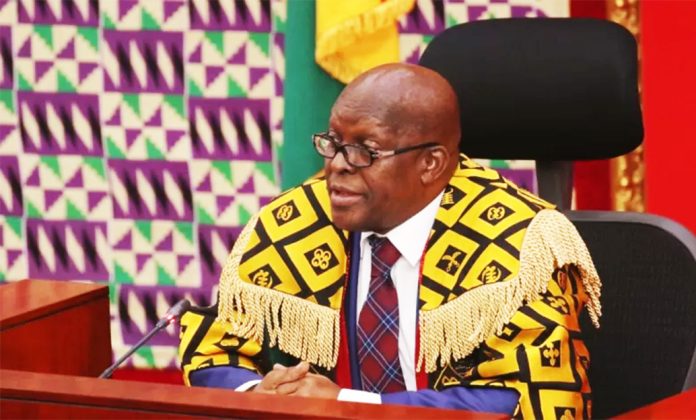
 

Former DCE petitions Bagbin over roles of MPs, DCEs in district development

0

A former District Chief Executive (DCE) of the Fanteakwa District Assembly, Mr. Abass Fuseini Sbaabe, has petitioned the Speaker of Parliament, calling for a clear interpretation and reaffirmation of the constitutional and legal roles of District Chief Executives (DCEs) and Members of Parliament (MPs) in district development planning.

Mr. Sbaabe’s petition follows recent comments attributed to the Chairperson of Parliament’s Committee on Local Government, suggesting that MPs should decide where government projects are located within districts, on the grounds that they make campaign promises to the electorate, unlike DCEs who are appointed.

In his petition, the former DCE described the statement as “legally unfounded, administratively misleading and fundamentally inconsistent with Ghana’s constitutional principles of decentralisation.”

Mr. Sbaabe argued that the comments reveal a “serious misunderstanding” of Ghana’s decentralised governance framework and the distinct roles assigned to MPs and DCEs.

Citing Article 240(2) of the 1992 Constitution, he emphasised that the constitution vests developmental authority at the district level in the District Assemblies, not in individual Members of Parliament.

“MPs play an important role in legislation and national representation, but they do not exercise executive or administrative authority over local development projects,” he stated in the petition.

District Assemblies Are the Highest Authority

Quoting the Local Governance Act, 2016 (Act 936), Mr Sbaabe reminded Parliament that the District Assembly, chaired by the DCE, is “the highest political authority in the district with deliberative, legislative and executive powers.

“All district projects,” he noted, “must conform to the Medium-Term Development Plan (MTDP) prepared in consultation with local communities and approved by the National Development Planning Commission (NDPC).”

He further stated that the DCE, as the President’s representative, is constitutionally responsible for coordinating and implementing all government programs and development initiatives within the district, a mandate that cannot be diminished by the fact that DCEs are not elected.

The petition also cites Section 16(1)(a) of Act 936, which stipulates that an MP representing a constituency within a district may participate in the deliberations of the District Assembly, but shall not have the right to vote.”

“This clearly shows that the MP’s role is consultative and advisory, not executive,” Mr. Sbaabe stressed.

He cautioned that allowing MPs’ campaign promises to determine project locations could undermine fairness, distort planning priorities and politicise development at the local level.

Mr. Sbaabe urged the Speaker to: Direct the Committee on Local Government to issue an official clarification on the lawful roles of DCEs and MPs in district development planning.

Reaffirm Parliament’s commitment to the principles of decentralization as enshrined in the Constitution and Act 936.

Encourage continuous education and orientation for MPs and committee members to foster better cooperation between legislators and local government officials.

Mr. Sbaabe warned that public statements suggesting that MPs have authority over project siting could “erode the credibility of Ghana’s decentralisation system” and “undermine the lawful authority of District Assemblies.”

He concluded: “For effective governance and administrative harmony, development decisions must be rooted in law, planning and community consultation not in campaign promises or political influence.”


Follow the The Chronicle Newspaper channel on WhatsApp: https://whatsapp.com/channel/0029VbBSs55E50UqNPvSOm2z
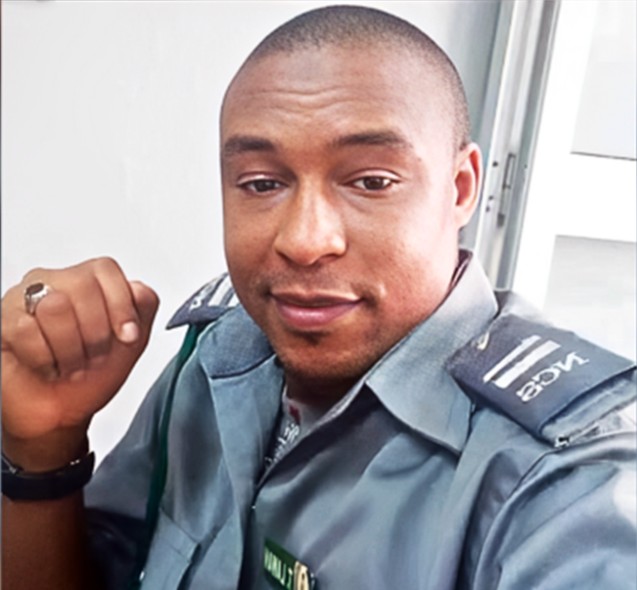
Customs Officer Found Dead In Katsina Hotel

0
Assistant Superintendent of Customs (ASC) Lawal Tukur found dead

A young customs officer, identified as Assistant Superintendent of Customs (ASC) Lawal Tukur, was found dead in a hotel room in Katsina State.

Sources confirmed that the incident occurred on Wednesday at Murjani Hotel in Katsina metropolis, where the deceased had lodged with three women.

A hotel staff member reportedly discovered the officer lying lifeless in his room at about 8:30 a.m. on Wednesday, 15 October 2025, and immediately raised the alarm.

Investigations revealed that empty sachets of suspected substances were found in the wastebasket of the room.

The three women, identified as Khadija Ali, 34, of Dutsin Amare Quarters, Katsina; Aisha Lawal, 30, of Ingawa Local Government Area; and Hafsat Yusuf, 22, of Brigade Quarters, Kano, were reportedly in the hotel at the time of the incident.

It was gathered that Khadija and Aisha spent the night with the deceased, while Hafsat visited them later and also lodged in the same hotel.

The officer was confirmed dead by a medical doctor after being taken to the Federal Teaching Hospital, Katsina, where his body was deposited at the mortuary for autopsy.

Although the Katsina State Area Command of the Nigeria Customs Service has yet to issue an official statement on the cause of death, the remains of the deceased have been laid to rest in accordance with Islamic rites.

His funeral prayer was conducted on Wednesday evening at his family house in the Sabon Layi area, close to the Katsina Police Compound.

Credit: channelstv.com

Declare Gov Diri’s office vacant for resigning from PDP –Kenneth Okonkwo to INEC

0
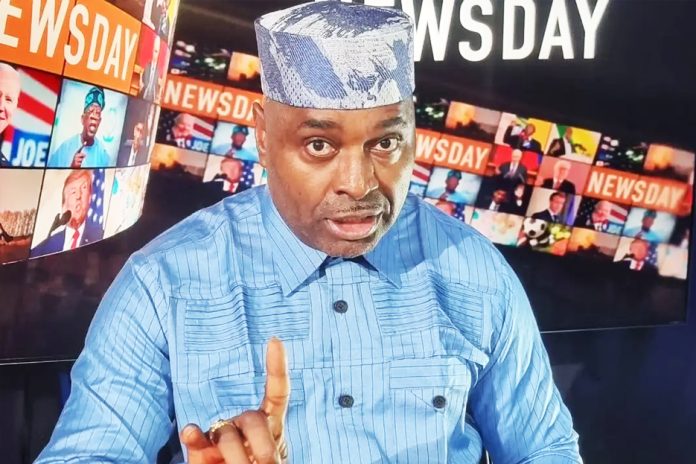
Kenneth Okonkwo

Nollywood veteran Kenneth Okonkwo has urged the Independent National Electoral Commission, INEC, to declare the office of Bayelsa State Governor, Douye Diri, vacant from defecting from the Peoples Democratic Party, PDP.

The ADC chieftain argued that Diri has effectively vacated his office after his resignation from the PDP.

DAILY POST recalls that Diri on Wednesday, announced his resignation from the PDP during a cabinet meeting at the government house in Yenagoa.

Reacting in a statement on Thursday, the lawyer cited section 177(c) of the 1999 Constitution, which mandates that every elected government official must belong to a political party.

According to him, since Diri is currently not a member of any party, he has lost his seat as governor.

This is the post from Kenneth Okonkwo on his Instagram page:

Gov Douye Diri of Bayelsa State has just vacated his seat as the Governor of Bayelsa State by resigning from the PDP and not belonging to any party. The position of the law is that every elected member of the government must be a member of a political party. (Section 177(c) of the 1999 Constitution) Gov Diri, being not a member of any political party, has lost his seat as Governor.

An elected member of government can only defect from one party to another but cannot be partyless at any point in time. I, therefore, call on INEC to declare his seat vacant immediately and conduct a gubernatorial election in Bayelsa State within the next 90 days.

Credit: dailypost.ng

Nnamdi Kanu Fit To Stand Trial, Ailment Not Life-Threatening —NMA

0
Nnamdi Kanu

The team led by the president of the Nigerian Medical Association (NMA) has said the ailment complained about by the leader of the Indigenous People of Biafra (IPOB), Nnamdi Kanu, is not life-threatening.

Justice James Omotosho had ordered the medical team to ascertain Kanu’s actual health status following conflicting claims on the issue by medical experts engaged by the prosecution and the defence.

In the panel’s report, submitted to the court on October 13 by the prosecution team led by Adegboyega Awomolo (SAN), part of which was read in open court during Thursday’s proceedings, it was stated that the defendant’s ailment is not life-threatening.

The team concluded that Kanu was fit to stand trial.

Based on the information contained in the report and in the absence of any objection from lawyers to the parties, Justice Omotosho said the court was convinced that the defendant could proceed with the trial.

Justice Omotosho subsequently granted the defendant six consecutive days, beginning from October 23, to open and close his defence.

The judge granted an oral application by his lawyer, Kanu Agabi (SAN), that Kanu’s legal team be granted a private consultation opportunity with the defendant, outside the premises of the Department of State Services (DSS).

Agabi said the defendant’s legal team was afraid that its consultation with him (Kanu) could be tapped or recorded by the DSS.

Justice Omotosho also acceded to Agabi’s request that the private meeting with Kanu be held in the courtroom, during which only the defendant and his lawyers would be present.

By the court’s directive, the private consultation meeting will be held within the courtroom between 9 am and noon on October 22, while the trial will resume on October 23.

Credit: dailypost.ng

INEC Chairman, Amupitan considers use of drones during elections

0
Prof Joash Ojo Amupitan, INEC Chair Nominee

Nominated Chairman of the Independent National Electoral Commission, INEC has proposed the use of drones to monitor elections.

Amupitan made the remark on Thursday while answering a question put forward to him by the lawmaker representing Abia North, Senator Orji Uzor Kalu.

Senator Kalu, who was worried over the deteriorating security situation in the country, asked what Amupitan would do to ensure that sensitive election materials are safely transported to polling units.

In response, Amupitan assured that there would be more investment in logistics to procure devices including drones that would be used to monitor movements.

He said, “The issue of security is a major challenge but at the same time, it can be tackled.

“I know there is a joint committee on election security, one of the things we have to do is to work with that committee to see how we can handle security issues in some challenge areas.

“We can also invest more on logistics to ensure that we can penetrate every part of Nigeria even if we have to use drones or whatever to ensure that material gets to where it ought to”.

Credit: dailypost.ng

Government Launches ‘Feed Ghana Programme’ to Tackle Food Insecurity and Cut Imports

0
Minister for Foo and Agriculture, Eric Opoku addressing the gathering

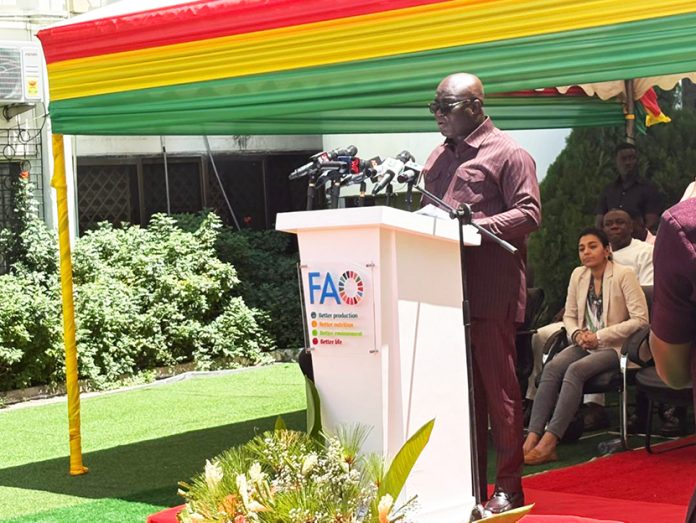
Minister for Food and Agriculture, Eric Opoku, has announced the official launch of the Feed Ghana Programme (FGP), a new flagship initiative aimed at achieving national food self-sufficiency, reducing import dependence and creating jobs for youth and women.

Speaking at the 2025 World Food Day celebration held at the forecourt of the Ministry of Food and Agriculture on Thursday, Mr. Opoku said the programme marks a “major milestone in Ghana’s agricultural transformation agenda.”

The event also coincided with the 80th anniversary of the Food and Agriculture Organisation (FAO), celebrated under the theme: “Hand in Hand for Better Food and a Better Future.”

“The Feed Ghana Programme is designed to accelerate productivity, strengthen value chains, reduce import dependency, and ensure sustainable food and nutrition security,” the Minister said.

He explained that government will prioritise value chains such as cereals, legumes, vegetables, tree crops, and livestock sectors with strong potential to enhance food security and generate employment.

Mr. Eric Opoku highlighted several interventions under the programme, including the establishment of Farmers’ Service Centres in all regions to provide mechanisation services, inputs and training.

He also disclosed that 350,000 smallholder farmers have already received support in the form of improved seeds, fertilizers and irrigation facilities.

In the poultry sector, he said over 7 million birds are being produced annually through initiatives such as the Poultry Farmer-to-Table Project and the NkokoNketenkete Backyard Poultry Programme, with a focus on women and youth empowerment.

The Minister commended FAO, WFP, UNDP and private sector partners for their role in advancing Ghana’s agricultural agenda and reaffirmed government’s commitment to align the Feed Ghana Programme with FAO’s Hand-in-Hand Initiative.

Minister for Fisheries and Aquaculture Development, Emilia Arthur, reaffirmed government’s commitment to promoting sustainability and resilience in Ghana’s fisheries sector, as part of efforts to achieve food and nutrition security.

Delivering a speech on her behalf at the 2025 World Food Day celebration in Accra, the Minister announced that Cabinet has approved the establishment of a Marine Protected Area at Greater Cape Three Points in the Western Region to safeguard marine ecosystems.

She highlighted the passage of the Fisheries and Aquaculture Act, 2025 (Act 1146) and the development of a National Blue Economy Strategy as major milestones toward responsible fisheries management.

Emelia Arthur noted that the sector supports over 3 million livelihoods and provides 60% of Ghana’s animal protein intake, making it vital to national food security.

The minister urged all stakeholders to work “hand in hand” to build a fisheries system that nourishes people, protects ecosystems, and ensures a sustainable future.

Dr. Nicole Karn, the Food and Agriculture Organisation (FAO) Country Representative to Ghana, said the milestone marks “eight decades of partnership, progress and purpose.”

She highlighted FAO’s global achievements, including the eradication of rinderpest, the first animal disease eliminated worldwide and the establishment of international food safety standards.

Dr. Karn noted that while progress has been made, millions still go hungry amid climate challenges and high production costs.

She said FAO is working closely with Ghana’s Ministries of Food and Agriculture and Fisheries to promote sustainable cocoa agroforestry, fisheries development, and climate-smart agriculture.

“As FAO turns 80, we reaffirm our pledge to work hand in hand for better food, a better planet, and a better future for all,” she said.


Follow the The Chronicle Newspaper channel on WhatsApp: https://whatsapp.com/channel/0029VbBSs55E50UqNPvSOm2z
The Ghanaian Chronicle