The National Democratic Congress (NDC) is heavily descending on the Bank of Ghana (BoG) and inciting the ordinary Ghanaian to attack our Central Bank.
First, the opposition party directly or indirectly came out with a publication, “Bank of Ghana Bankrupt – The BoG’s Recklessness and Mismanagement,” which catalogued things that alleged that a few individuals were operating the Bank like it was a private entity and illegally enjoying benefits, to the detriment of the state.
Bank of Ghana may be broke, but not bankrupt or insolvent. Firstly, to be broke means to, not currently have a lot of money. That’s all it means and nothing else.
Secondly, to be bankrupt is a legal process, this is undertaken when an individual can no longer afford to pay off their debt. This applies to individuals and not to limited companies or partnerships. So, by this definition, the situation BoG finds itself today cannot be said to be a case of bankruptcy.
Insolvency is a state of financial being. When you’re insolvent, you can no longer pay your debts when they’re due. Either an individual or a business can be said to be insolvent, but the term is most often used to refer to businesses.
A business can become insolvent in one or both of two ways. Cashflow and balance sheet insolvency.Insolvency can happen quicker than you think. A slippery slope to debt can start with: a cash flow crisis; loss of business contract; loss of customers or services not becoming relevant with changing needs and markets. Unexpected and unaccounted for costs, such as lawsuits, can also lead to insolvency.
With these explanations, BoG cannot be said to be insolvent or bankrupt, which is the word the NDC wants to use on the Central Bank.
The Bank of Ghana in trying to resolve the country’s debt situation, paid up some of the debt we owed. That is one of the mandates of a Central Bank. When any bank is facing liquidity problems, the Central Bank may choose to recapitalise it by paying off its debts and given it something to start off afresh.
This is what BoG did when Ghana faced serious financial challenges. And here it has no excuse to back out and watch Ghana become insolvent. The Bank of Ghana is like an agency under the Ministry of Finance and must be seen to make sure Government of Ghana (GoG) functions well.
The question is how come, GoG run into liquidity problems? After running the economy very well in the first four years, with good results showing in our trade balances and inflation rates, the country was hit by global crisis: Covid-19 and Russia-Ukraine war. GoG knew that only taxation will maintain cash flow and so decided to implement a low-rate tax of 1.50% on financial transaction called E-Levy.
The NDC knowing that this could keep government out of financial crunch, resolve to demonise it and used its numbers in Parliament to halt the E-Levy. When in government, the NDC implement a 17.5% VAT on Financial Transactions but resolved to halt a 1.50% tax, on same.
The long delay in the implementation of the E-levy landed Ghana into financial problems, and with other adversities, we had to take a trip to the IMF. Against the propaganda spread by the NDC that the economy was poorly managed, the Bretton Woods Institution said our problems were due to Covid-19 and Russia-Ukraine war and not mismanagement.
Not satisfied with unwarranted attacks on GoG, the NDC are out again attacking BoG for recklessly misusing funds, and here again, IMF found nothing wrong, but blame the situation on the domestic debt exchange (DDE).
Now the attacks have shifted to the construction of a new BoG building which is put at $ 250 million, which the NDC is saying, it is misplaced priority. Firstly, the Bank of Ghana needs a new office building. The current office block was constructed to contain not more than 300 workers. To operate in a more modern environment, with state-of-the-art equipment and machinery andto be abreast with world leading central banks, and to contain its over 1,500 members of staff, BoG needs a new and a much bigger office building.
Interestingly, the decision to construct a new building began in the 90’s and the actual construction work started during the era of NDC’s JEAM/JDM government.
Just as the NDC who initiated Ghana participation in the HIPC Initiative, but blamed the NPP for going HIPC, the NDC is here again blaming the NPP for continuing the construction of a new BoG block.
Then comes the news that BoG spent GH¢2 million on give-away wrist watches for seventy-two retiring staff. This event actually took place during the JEAM/JDM NDC’s administration and yet the current NPP era is blamed for this.
And the NDC MPs are saying what? That the call for resignation of the BoG governor and his deputies is non-negotiable? Are they carrying out the mandate given to them by their electorates by choosing to boycott sittings in the House and rather go to courts that are trying their colleagues for criminal acts? And at the end of the day, they will collect their salaries. Causing financial loss to the state, that’s it.
Fabrication of stories is not what we need now. BoG’s governor and deputies are doing their best to keep Ghana afloat.
Hon. Daniel Dugan
The views expressed in this article are the author’s own and do not necessarily reflect The Chronicle’s stance.
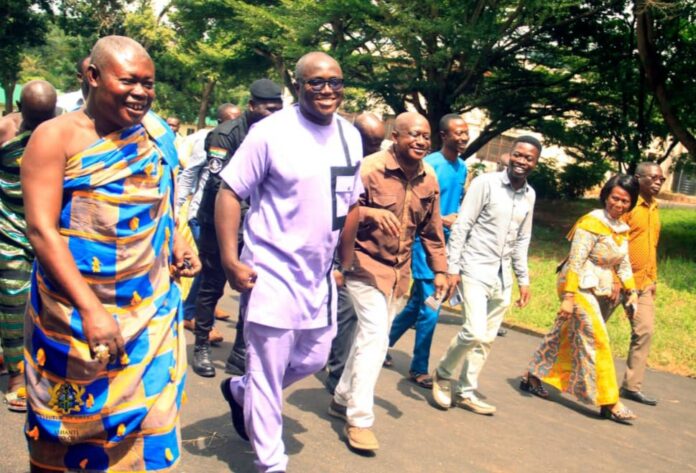
Regional minister, MP, DCE, Nananom inspecting progress of the project
The Sekyere Kumawu District Hospital Project is likely to be completed by the end of this year, the Ashanti Regional Minister, Simon Osei Mensah, has assured.
He noted during a working visit to the project site last week Wednesday that the project was about 90% complete.
The Minister assured that with the current rate of work and progression the project would be completed and commissioned by the end of this year.
At the wards
The Minister tasked the Electricity Company of Ghana (ECG) to speed up the connection of power to the site in readiness, while the road from Juaben to Kumawu was almost done.
Mr. Ernest Anim, Member of Parliament (MP) for Kumawu Constituency, expressed satisfaction with the pace and progress of the project and commended the contractor for the efforts in ensuring the completion of the project on time.
The MP commended Mr. Addai Agyekum, the District Chief Executive for Kumawu for the supervision role he had so far played in the execution of the project.
Mr. Addai Agyekum assured that the District Assembly would continue to play its supervising role to ensure that the project was completed timely to improve quality healthcare in the area and the surrounding communities.
The project consists of a theater, four bed recovery unit, 24-bed surgical female/male ward, 24-bed female/male medical ward and 6-bed accident and emergency ward.
The rest are 6-bed observation/out-patient ward, maternity, 32-bed obstetrics/gynecologist ward and 15-bed pediatric ward.
The 120-bed capacity Sekyere Kumawu District Hospital Project, which started in 2012, is being executed by NMS Infrastructure Limited.
The Kumawu Hospital is one of six proposed district hospitals captured in a US$175 million loan agreement to be located in Kumawu and Fomena in the Ashanti Region, Sekondi in the Western Region, Abetifi in the Eastern Region, Dodowa in the Greater Accra Region and Tempane in the Upper East Region.
The transition in government in 2016 stalled the project at the time 80 per cent of concrete works had been completed, with major plumbing work yet to be done.
The contractors returned to the site in August 2020, following the government’s commitment to pursue its Health for All policy, after it (government) had duly done value for money analysis of the project, giving the hope that the US$29.6 million project would be completed.
However, an additional US$10 million variation was needed to complete the project.
Seth Akumani (UNDP Ghana) hands over the vehicle to KMA
The Kumasi Metropolitan Assembly (KMA) has secured a US$1 million funding from New York-based Bloomberg Philanthropies, a philanthropic organisation which focuses its resources on five areas of environment, public health, the arts, government innovation and education.
In 2021, the KMA was selected as one of 50 champion cities from 614 cities around the globe in the Global Mayors Challenge competition, after it had presented the 2022-2025 Medium Term Development Plan based on the National Medium Term Development Policy Framework.
KMA Director receives other logistics for the GMC
The KMA proposed management’s continuous engagements with Assembly members in fashioning out solutions to common problems in the metropolis.
As part of its prize, the KMA has received a Toyota Hilux from the United Nations Development Programme (UNDP) which is managing the funds provided by Bloomberg Philanthropies, to ensure mobility in the beneficiary communities under the project.
The KMA has also taken delivery of assorted logistics, including laptop, printer, projector and a screen, as well as office accommodation located at Moshie Zongo, a suburb of Kumasi.
The project has three components, made up of the construction of private toilets, finance and youth training.
The logistics, means basically to help with the implementation of the project, were presented to the KMA by Mr. Seth Akumani, Head of Exploration, UNDP Ghana, and Dr. Catherine Adodoadji-Dogbe, Innovation in Public Services Lead at the Global Mayors Challenge and Programme Analyst, UNDP Ghana representative.
Mr. Akumani said the UNDP was passionate about supporting the vulnerable as the project was aimed at covering the two key Sustainable Development Goals (SDGs) to provide access to adequate sanitation and achieving full employment and productive work for women and youth to have skills and be part of the project.
The UNDP team poses with the KMA project team
He hoped the project would address the challenges for which it was instituted, and that Kumasi would live up to expectation.
The Metro Coordinating Director, Mr. Francis Dwira Darko, representing the Mayor, Mr. Sam Pyne, noted that the intervention would enable the KMA to ensure proper sanitation, which was the Assembly’s biggest challenge, and to help address and control open defecation.
The Coordinating Director assured that the KMA fully supported the successful implementation of the project.
The Project Officer of the KMA, Mr. Joshua Nii Noye Tetteh-Nortey, said the KMA would set up a revolving fund for the construction of more private places of convenience to benefit more members of the communities through soft loans in order to sustain the project into the years ahead.
He assured that the KMA would not disappoint the benefactor.
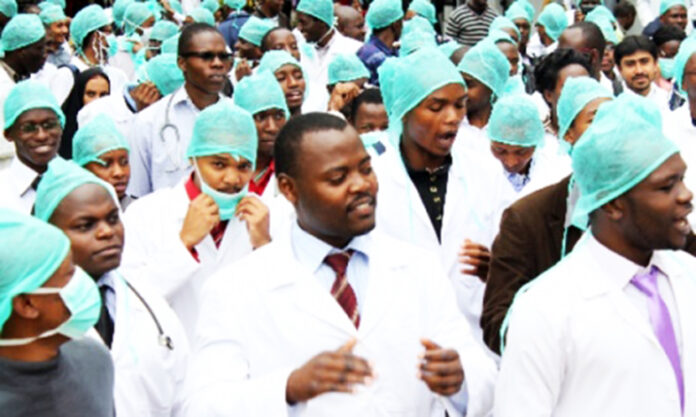
Despite calling off its strike, there are strong indications that the National Association of Resident Doctors, alongside other medical personnel, may again resume another action over a Neurologist, Prof Ephraim Ekanem, who was kidnapped at gunpoint on July 13, 2023.
The National President of the Nigerian Medical Association, (NMA), Dr. Uche Ojinmah, has given a seven-day ultimatum, which would expire this Friday if she was not rescued alive.
Ojinmah spoke in an interview with journalists on Saturday in Calabar. The armed men who abducted Prof Ekanem in her house in Calabar had pretended to be patients.
The national president of the NMA said, “We have had interactions with the state governor and we have made it clear that if by the end of next week we do not get a result, we will take tougher stands because we have watched the maltreatment of medical practitioners in Cross River in the last few years.
“If our member is not released by Friday, there will be a national action that will have Cross River at the epicentre.
“We may withdraw our members so that those people who like kidnapping will have to treat the people of Cross River themselves.”
Ojinmah called on the Cross River State Government to take proactive measures to protect their citizens and contain attempts to de-market the state.
NMA has appealed to the kidnappers to return the abducted doctor to them.
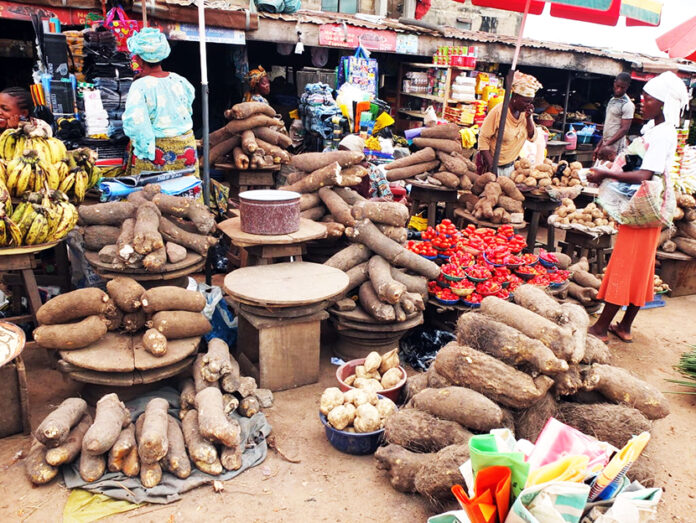
Residents of Zamfara State have cried out over the uncontrollable hike in prices of foodstuffs.
A survey conducted by DAILY POST in several major markets in Gusau, the State capital, showed that prices of essential food items have increased by over 100 percent in the last one month.
It was gathered that apart from fuel subsidy removal, banditry has contributed in no small measure, as farmers could no longer access their farmlands, thereby creating food insecurity in the State.
Fielding questions from our correspondent, one Suleiman Abubakar, a foodstuffs dealer in Gusau Central market, said the rise in the prices of key food items was worsened by the recent subsidy removal.
“A bag of maize that sold for about N26,000 between May and June, 2023 has increased to between N55,000 – N57,000 per 100 kg.
“A bag of guinea corn that sold for N21,000 has skyrocketed to N54,000 and a bag of millet has risen from its usual price of N20,000 to 45,000.
“A bag of rice (foreign) that moved from N27,000 in May, 2023, to N40,000, while a kilo of local rice that sold for N1,200 has jumped to N2000,” he said.
Checks by this medium revealed that a kilogram of chicken that was previously sold for N800 now goes for N1300, while a crate of egg that was sold for N1000, now goes for the range of N2000 – N2100.
Alhaji Bala Usman, an economic expert said many citizens now ate what was at their disposal and not what they desired.
“Majority of the people eat what is available and not what they want because of the current inflation,” he said.
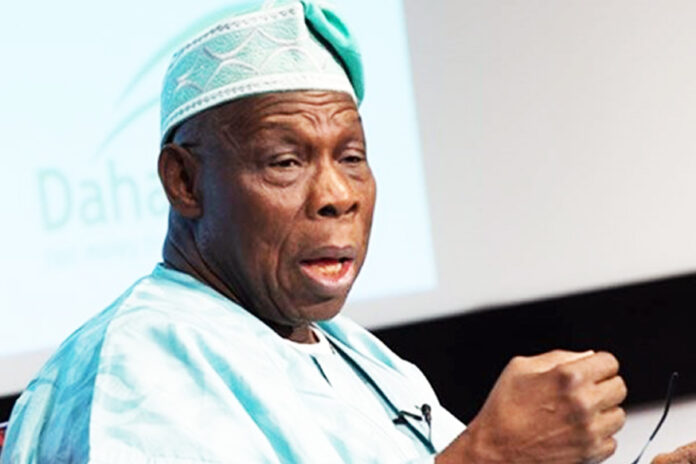
A former president, Chief Olusegun Obasanjo, has expressed worry over the pervasive corruption in Nigeria’s electoral system. He, however, called for an urgent need for Christians to engage in politics to drive positive change.
The former president made the call while delivering a speech during the 57th Annual Convention and 67th Anniversary of The Gospel Faith Mission International (GOFAMINT) held at the Gospel City, Ogunmakin, Ogun State.
Speaking on the theme ‘The Roles of the Church in Nation Building at a Time Like This,’ Chief Olusegun Obasanjo congratulated the church for successfully hosting the convention and urged Christians to stand out as beacons of righteousness in the realm of politics. He lamented that while politics should not inherently be corrupt, it is the actions of those who partake in politics that taint its image.
Chief Obasanjo highlighted the challenges faced by the nation including insecurity, hopelessness, poverty, and depression, and called on the Church to rise as a force for good, invoking its role as the “salt of the world” to bring about meaningful change.
“We are in the world, yet we are not of the world. The influence of corrupting corruption is enormous. We are the light of the world,” he said Saturday.
“A city set on a hill cannot be hidden. We are to be like Jesus who, when He was in the world, did not belong to the world.”
The former president stressed the importance of the church demanding justice, fairness, and equity across the nation’s social, political, and economic landscape.
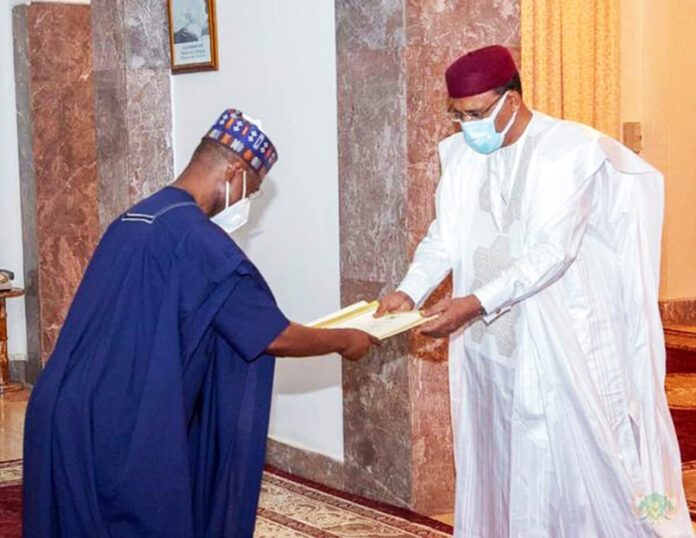
Ambassador Mohammed Sani Usman presenting Letters of Credence to deposed President Mohamed Bazoum of Niger
Nigerien protesters tried to attack the Nigerian embassy in Niamey but were repelled by the Nigerien military, an official has said.
The attempted attack happened on Sunday, 30 July, four days after presidential guards toppled the democratically elected government of President Mohamed Bazoum who has since remained in detention with his family.
Nigeria’s Ambassador to Niger, Mohamed Usman, stated this in a Friday statement signed by a staff of the embassy Liti Auwalu, following a video shared on social media of a building being set ablaze which many claimed is the Nigerian embassy.
“At the moment, the Embassy is well guarded by the Nigerien Military and other Security Authorities,” the statement said, reiterating that the videos are fake and should be disregarded.
Nigeria has continued to operate its embassy in Niger despite the coup there and the strong response of ECOWAS. Presidential guards led by General Abdourahamane Tchiani on Wednesday, 26 July, arrested Mr Bazoum, dissolved the government and assumed leadership of the country.
In response, ECOWASimposed sanctions on Niger in a bid to have them reinstate Mr Bazoum. It also gave a seven days ultimatum to the putschists which they ignored.
The bloc held another meeting last Thursday where it ordered the activation and deployment of its standby force to restore constitutional order in Niger.
Mr Baffour Awuah (2nd left) at the sod cutting ceremony with some chiefs
The Ministry of Employment and Labour, Mr. Ignatius Baffour Awuah, has cut the sod for the construction of a Public Employment Centre at the forecourt of the Education Service office in the Asutifi North District.
The construction of the office complex is going to ease the stress job applicants go through in search of vacancies.
Addressing the gathering, Mr. George Yaw Boakye, Ahafo Regional Minister, applauded President Akufo-Addo and Ignatius Baffour Awuah for bringing the project to the district, and the region as a whole.
“Since the creation of the region, the government has been supporting developmental projects in the region such as the Fire Service Training School, which is 80% completed, two of the Agenda 111 project in Asutifi North and Asunafo South, to be completed in December this year, and the Technical Vocational Training (TVET) in Asutifi North and Asunafo North,” the Minister said.
“We will talk to Newmont Company to bring their vacancies to the Public Employment Centre so that qualified candidates can access all information about employment vacancies,” the Minister added
The Ministry of Employment sourced $30 million from the World Bank for the construction of 16 Public Employment Centres across the country, according to Mr. Baffour Awuah.
“Now, the world is changing and most things are now electronic or digitalised, and so, we are creating the Ghana Labour Market Information System that is data based,” he said.
The Minister added that “the project will enable the unemployed and employers to put up their resume and vacancies respectively on the database.”
The District Chief Executive (DCE) for Asutifi North, Mr. Anthony Adjei Mensah, said the District was honoured to be hosting the Employment Center in the Ahafo Region.
The contractor for the project is Kpalua Company Limited which assured that the project would be completed on schedule.
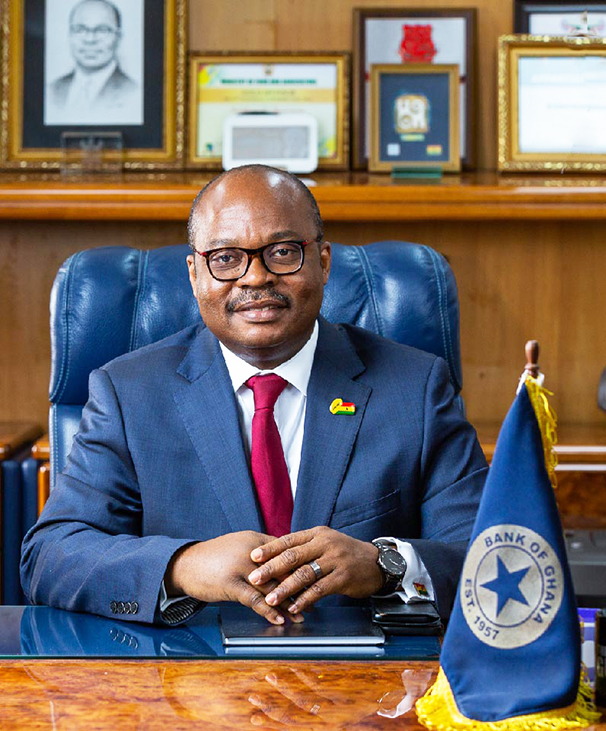
Dr Ernest Kwamina Addison, Governor of Bank of Ghana
Background to large jumps in key expenditure lines in 2022
Comparing 2022 financial performance with 2021, without taking cognizance of the economic situation in the country is misleading. The year 2022 was the peak of economic and social crisis in Ghana. A culmination of fiscal overruns and debt distress resulted in Ghana losing access to both international and domestic markets.
The Rating agencies downgraded Ghana to the junk category with huge macroeconomic imbalances. The cedi depreciated sharply from GHC6 to the dollar at the end of 2021 to almost GHC13.1 to the dollar at the end of November 2022 until it came down to about GHC8.57 to the dollar at the end of December 2022 (resulting in about 30 percent on a year-on-year basis and averaged 31.13%). Similarly, inflation rose from an average of 12.62 percent at the end of December 2021 to 54.14 percent at the end of December 2022.
New Bank of Ghana building under construction
These developments had a significant impact on the operations of the Bank and every other entity in the country. A year-on-year comparison of the financial statement of all entities in Ghana would reveal this sharp jumps.
Below are some specific examples and how these developments impacted the Bank’s Operations
Vehicle maintenance expenses: – Firstly, the vehicle maintenance expenses line is a generic name for expense covering fuel cost for all BoG operations, insurance of all BoG fleet of vehicles, car parts replacements, and other maintenance cost. Historically, fuel cost has accounted for about 90 percent of this vehicle maintenance expenses expenditure line. For 2022, the fuel cost increased by 123.3 percent compared to 28.9 percent in 2021.
This was on the back of petrol and diesel prices increasing from GHC6.6618 per liter of petrol, and GHC6.665 per liter of diesel at the end of 2021 to GHC 16.5811 per litre of petrol and GHC19.6053 per liter of diesel at the end of 2022. This implies increases of 149% (Avg. 87%) and 194% (Avg. 122%).
Given the scale of the Bank’s operations, ensuring that the currency is distributed to every corner of the country to ensure seamless medium of exchange for our legal tender, the cedi, such a cost is a major line in our operations and any such changes would lead to a huge jump.
Also, car parts etc are all linked to the dollar and converting these to Ghana cedis at the exchange rate in 2022 would also lead to a huge jump in expenses under vehicle maintenance. We also had significant increases in insurance costs etc for all our fleet of vehicles and bullion vans across the country.
Communication expenses: The major item under communication is electronic data transmission charges, including the Reuters and Bloomberg platforms which supports our reserve management and management of petroleum funds as well as currency and exchange rate constituted about 57.4% of the total communications cost. This was followed by the publications and Gazettes (15%), Advertisement (10%), Newspapers local (0.75%) and Newspapers foreign (0.46%).
The computer expenses: The jump in computer expenses is mainly the result of the Bank’s asset replacement policy which was implemented in 2022 where most of the Desktop computers were replaced with laptops. This is in line with the Bank’s Business Continuity Policy following lessons learnt from the covid-19 pandemic, to allow for flexible working arrangements.
Minority Leader Dr. Cassiel Ato Forson
In addition, all these hardware and software license purchases were in US dollars and the exchange rate depreciation and the inflation both domestically and globally impacted the cedi equivalent on the books of the central bank.
Foreign and domestic travel expenses: Like other expenditure lines, the foreign and domestic travel reflect sharply the exchange rate and inflation effects, and not necessarily increased number of travels.
The supervision staff travel to visit every single regulated institution and their branches, spread all over the country, at least once a year. This is a huge operation and a core function of the Bank, which constitutes a significant expenditure line of the Bank’s operations. In addition, the Bank of Ghana takes continuous professional development seriously to maintain the standards required of a modern central bank.
External Directors Expenses: This expenditure line is made up of logistics to run the Board secretariat, Board training, and External Directors fees. They were all heavily affected by the inflation and exchange rate movements during the year.
On the issue of waiver or write offs without recourse to Parliament as per section 53(1) (2) of the PFM Act
Firstly, the BoG’s understanding is that the Minister for Finance in his 2023 budget statement, which was approved by Parliament, had the policy of debt restructuring as a key policy initiative. Any further discussion on parliamentary approvals beyond what was approved in the 2023 budget would be handled by the Ministry of Finance.
Secondly, beyond the parliamentary approval, the IFRS accounting standard, which requires the full implementation of the expected credit loss (ECL), meant that the mere announcement by the government of a debt restructuring would trigger ECL applications and impairment charged. On this score, the issue of parliamentary approval or not would not stop an ECL application and impairments on the books of BoG.
And lastly, on this point, the Minister has followed up on his intentions and has submitted a letter to the Bank of Ghana detailing out the terms of the exchange. All conditions precedent (seeking parliamentary approval) to allow for the exchange of the BoG’s non-marketable instruments under the Domestic Debt Exchange have been satisfied.
The New Bank of Ghana Headquarters
A structural integrity assessment conducted by the BoG revealed that the current BoG Head Office building, built by the Nkrumah Government in the early 1960s, is no longer fit for purpose and could not stand any major earth tremors.
The outcome of the structural integrity work was that the main building does not satisfy the full complement of excess strength required for a building to be considered safe for usage.
This means that in the case of a worst case gravity and wind loading scenario, for example, unusually strong wind, the building may be significantly affected. The building also does not have the required strength to withstand the expected imposed significant earthquake loads that would be expected to occur in the Accra area.
Based on the above, and looking at the strategic objective of positioning Ghana as the financial hub of the subregion, with prospects of a potential Headquarters for a future regional Central Bank, The Board and Management of the Bank considered a new Head Office building as the most important priority project to support the operational efficiency of the Bank, and also position the Bank of Ghana in a very good position to be the host of the regional Central Bank as we currently host the West African Monetary Institute (WAMI) of the Sub region.
Frequently Asked
The Bank of Ghana reported a Loss of GHC 60.8 billion. What is driving this huge
loss: The main reason for this huge loss is the impairment of the holding of marketable Government stocks and non-marketable instruments of Government all being held in the books of the Bank of Ghana.
Bank of Ghana
This stock of Government instruments has been built over the years. In addition, the Bank of Ghana’s (BoG’s) exposure to COCOBOD, which has been built over the years, was also impaired. As we all know, the Government of Ghana embarked on both domestic and external debt restructuring. The holdings of Government instruments and COCOBOD exposures were all part of the perimeter of the debt exchange.
Whereas all other stakeholders that participated in the Domestic Debt Exchange (DDEP) did not have principal haircuts, but rather had new instruments with new tenors and coupon structure, the BoG, served as the loss absorber to the entire debt exchange program, a key requirement that allowed the Government of Ghana to meet the threshold for the approval of the IMF program. As a result, the BoG had to take on a 50 percent principal haircut on the total principal (which stood at GHC 64.5 billion at the time of the exchange).
Consequently, BoG had new instruments with extended tenor and significantly reduced coupon. By applying the full requirements of IFRS 9, this means that from the principal alone, a 50 percent haircut on the non-marketables amounted to a loss of GHC32.3 billion. Restructuring of marketable instruments amounted to a loss of GHC16.1 billion.
The impairment from exposure to COCOBOD also amounted to GHC 4.7 billion. These three DDEP items (i.e., marketable, non-marketable and COCOBOD) accounted for GHC53.1 billion out of the total loss of GHC 60.8 billion for 2022.
In addition to these three items, price and exchange rate valuation effects accounted for GHC 5.2 billion of the total loss, whereas interest expense on cost of monetary policy operation accounted for GH3.3 billion.
In the Financial Statements, we see a loss of GHC 60.8 billion and a negative equity position of GHC 55.1 billion. What is the difference between these two numbers.Normally when profits or losses of institutions are declared, they are posted to a General Reserve Fund Account. The equity (also known as shareholders funds) is defined to include the minimum stated capital and General Reserves.
In this instance, the GHC 60.8 billion loss was posted to the general reserve account which had some positive balances. The loss, together with the positive balances in the General Reserve Account resulted in an overall negative equity of GHC 55.1 billion.
The stated capital of the Bank of Ghana is reported at GHC 10 million. Is this adequate
for an institution like the Bank of Ghana with such a huge responsibility. The Bank of Ghana, as we all know, is not a typical profit-making institution and the extent of its capitalization doesn’t necessarily determine its policy solvency—meaning its ability to deliver on its mandate of price stability, and in addition, promote financial stability.
That said, every institution should be concerned about negative equity and at a point in time, capitalization of central banks is critical, otherwise a sustained period of negative equity could undermine its credibility.
Based on the assessment of the external auditors, and the IMF, even though BoG would have a significant negative equity based on the huge impairment from 2022, structures are in place to ensure that the BoG remains policy solvent and well able to deliver on its primary mandate.
Structures and actions have been identified (including where needed, recapitalization by Government) over the next 5 years to return the Bank to positive equity. During that period, it is assessed that the Bank will continue to remain policy solvent and discharge its mandate effectively.
Does negative equity affect positive policy solvency?:A central bank policy solvency is the ongoing ability of the central bank to fund and implement operations in line with the policy aims for which it has independent responsibility without recourse to the government.
Policy solvency requires sufficient realized revenues to cover costs and to build longer-term capital reserves allowing for independent and appropriate policy decisions.
Inability to cover costs and build sufficient buffers over the long term may require capital injection from the government which can undermine its independence and credibility of monetary policy and also affect public confidence in the central bank’s operations.
Therefore, although the financial position of the central bank has no immediate impact on its ability to pursue the policies it deems appropriate, its equity and its earning capacity should be high enough in the long-run to ensure that it is sufficiently financially independent of the government.
Are there Central Banks operating with negative equity?:Historically, some central banks
have operated with negative equity yet fully met their objectives. For example, the Central Banks of Chile, Czech Republic, Israel, Germany and Mexico experienced years of negative
capital. Here are a few facts:
The Czech National Bank reported negative equity from 2002 through 2013 due to valuation write-downs on its sizable foreign currency reserves.
German Bundesbank, was technically overleveraged in the early 1970s because its losses exceeded its equity.
Between 2002 and 2021, some 10 out of 32 Emerging Market Economies and Small Open Economies (EME/SOE) central banks had negative equity, only briefly in many cases, but for more than 30 percent of the time for three of them.
But throughout these periods of negative equity positions, price and financial stability were maintained.
What is the difference between insolvency and negative equity.In general, insolvency means inability to pay one’s debts. It may take the form of Cash flow insolvency or Lack of liquidity, in which the central bank cannot pay its debt as they fall due. In the case of negative equity, what it basically means is that Central Bank’s Liabilities exceeds its Assets.
Are there Central Banks that made loses in 2022 comparable to what Ghana
experienced in 2022: In 2022, several central banks run losses and, in some cases, the
losses pushed them into negative equity. A few of them have been highlighted below:
The Reserve Bank of Australia (RBA) recorded a 2022 book loss of 37 billion Australian dollars, which more than wiped out the central bank’s equity.
The UK Government faces £150 billion bill to cover Bank of England’s losses (According to the Financial Times of July 25, 2023).
The Swiss National Bank (SNB) in early January reported a record preliminary loss of 132 billion francs for 2022.
In September 2022, the central bank of the Netherlands notified the country’s government in a letter that it projects net interest losses amounting to a potential EUR 9 billion for the years 2023 through 2026.
The US Federal Reserve has no longer been able to remit weekly billion-dollar transfers to the US Treasury since autumn 2022. Instead, a debt obligation to the US Treasury (a liability that the Fed recognizes as a deferred asset) has been growing on the Fed’s balance sheet since then. The Fed eventually will have to pay this liability sometime in the future (when it resumes generating profits).
For the financial year ended 31 March 2023, the Monetary Authority of Singapore recorded a net loss of $30.8 billion.
Why Central Banks are reporting losses in 2022: Central banks exist to fulfil their policy mandates, including price and financial stability. The attainment of this mandate involves the central bank taking on financial risks such as credit risk and interest rate risks, through loans to commercial banks/government or currency risk, through the holding of foreign exchange reserves. Some of these risks may materialize leading to losses.
Making losses may therefore be perfectly compatible with a central bank’s remit of ensuring the smooth functioning of the economy. It contributes to a well-functioning economy by maintaining confidence in the financial system and by stabilizing inflation and economic activity.
Therefore, the success of central bank interventions should always be judged on whether they fulfil these mandates. Over the course of 2022, Central Banks around the world aggressively hiked interest rates in an attempt to tackle record-high inflation and re-anchor inflation expectations.
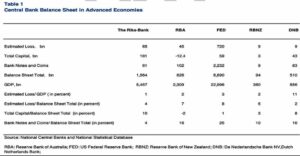
These decisive actions have led to losses and in some cases negative equities (i.e., assets < liabilities), raising concerns about the ability of such central banks to fulfil their mandates of price and financial stability. In Table 1, information on central banks reporting negative equity compiled for 2021is reported.
After the heartbreaking loss of his first wife, Vida Nartey, three years ago, actor, director, and producer, Eddie Nartey finds new joy as he ties the knot in a plush ceremony to his beautiful new bride Cathie
The beautiful union was celebrated in a heartwarming ceremony on August 12, 2023. The colorful ceremony saw celebrity friends and industry colleagues grace the occasion in simple and elegant attires, the likes of James Gardiner, Bismarck the Joke, Peter Richie, and Foster Romanus who were also part of his groom’s men.
The actor seeks happiness on this new journey of matrimony after the devastation of losing his first wife Vida Ohenewaa Nartey on January 24, 2021.
Congratulations and well wishes have poured in for the newlywed couple as they journey into a shared path of love and companionship.








 Based on the assessment of the external auditors, and the IMF, even though BoG would have a significant negative equity based on the huge impairment from 2022, structures are in place to ensure that the BoG remains policy solvent and well able to deliver on its primary mandate.