Home Blog Page 1993

GNFS to trace and arrest prank callers 

0
GNFS

Residents who make prank calls would be tracked down and arrested, Divisional Officer III Ebenezer Yenzu, the Public Relations Officer for the Ghana National Fire Service (GNFS), Tema Regional Command, has said.

He noted that the GNFS continued to see a significant number of hoax calls and have put mechanisms in place to address the situation.

DO III Yenzu said travelling to a site based on a hoax call with the limited resources is worrying and has an impact on the operations of the service.

“Imagine that after leaving Tema for Sakumono, we finally realise that the call was a joke, but by this time Tema Community Two had experienced a true emergency.

“For instance, millions of Ghana cedis worth of property would have been lost before we get to the real fire scene,” he said.

He warned Ghanaians, in particular the youth, to refrain from such bad behaviour because those arrested would face appropriate punishment.

DO III Yenzu said some persistent hoax callers were detected and dealt with in the past and emphasised that plans are in place to make sure that hoax callers are arrested and dealt with appropriately.

He said investigations have shown that most hoax callers are teenagers who find the prank calls amusing.

GNA 

Ghana can win war against corruption -CHRAJ 

0
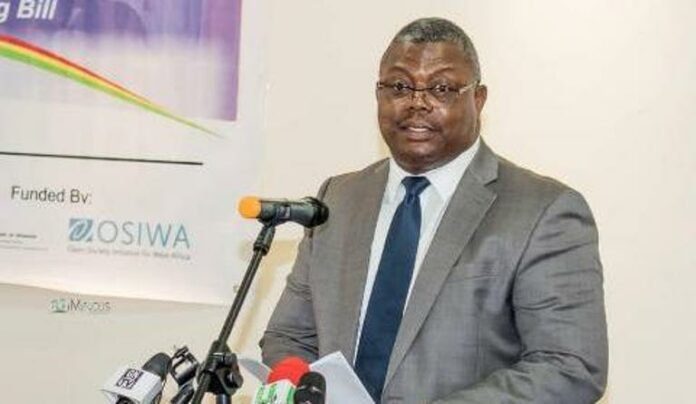
Richard A. Quayson, Deputy Commissioner, CHRAJ

Mr. Richard A. Quayson, Deputy Commissioner of the Commission on Human Rights and Administrative Justice (CHRAJ), says the fight against corruption in Ghana might be won by working together.

He explained that over time people had become more aware of the negative effects of corruption and the tools for reporting such offences, including whistleblowing.

“Most institutions have or are in the process of establishing safe corruption reporting mechanisms at the workplace,” Mr. Quayson said during a stakeholders’ engagement session organised by the Ghana News Agency.

He spoke on the topic: “Is the fight against corruption a mirage or reality 30 years under the Fourth Republic?”

Mr. Quayson said many institutions that generated revenue had gone digital, eliminating the potential for malfeasance.

The Public Service Integrity Programme’s (PSIP) implementation of the conflict of interest rule, the gift policy, and the asset declaration system outlined in the code of conduct for public servants, according to Mr. Quayson, has increased the dispute.

The Judicial Service’s Electronic Case Distribution System has been made available to all superior and circuit courts, according to the CHRAJ Deputy Commissioner to prevent practises that favour judicial corruption.

He said that the adoption of sexual harassment policies by more institutions, the creation of integrity awards, the enforcement of pertinent laws, and the rise of investigative journalism and media exposés all represented progress.

He said because corruption undermined national advances, he appealed to all Ghanaians to join the fight to eradicate it for the sake of the country’s next generation.

Mr. Quayson said the country’s socioeconomic development was being severely harmed by the money being lost to corruption.

The GNA Tema Regional Manager, Mr. Francis Ameyibor, pleaded with both public and commercial institutions to work effectively with the media in their initiatives and programmes to combat corruption.

Mr. Ameyibor urged stakeholders to work together to fight corruption, adding the fight against corruption would be ineffective without the media raising awareness of the dangers of corruption and the responsibility of every citizen to combat it.

Source: GNA

Editorial: Our streets are dark, fix the street lights

0
Editorial

The importance of street lights cannot be under-rated because of the essential role it plays. Street lighting is a critical social good that has many advantages for both pedestrians and drivers.

It goes a long way to improve road safety and reduce criminal activities in our communities. Whilst some street lights have become non-functional for a long time, others come on and immediately go off, posing a threat to the safety of drivers and pedestrians.

In the Accra and Tema Metropolitan Assemblies, some ceremonial streets have their street lights functioning properly in the night, whilst many others are nothing, but white elephants dotted along the streets. Some street lights have hanging bulbs and others are without bulbs, while some others have fallen down or been uprooted.

Poor street lighting in the Accra-Tema Metropolis has been an issue for some time now. On most of the streets and highways poor street lighting can be seen almost everywhere. The poor lighting system on the streets has been a major reason for the rising spate of robbery in our urban areas.

The robbers also find it easy to attack people on the streets, especially around dark areas, by snatching valuable items or physically harassing passers-by.

Some vehicles may also accidentally knock down pedestrians on dark streets and run away leaving them unattended to. On the dark street it is very difficult to identify figures and their activities. With highways that have bushes on both sides, female pedestrians are sometimes dragged and raped in the bushes. Children sent on errands at odd hours in the night are easily kidnapped.

The Chronicle is, therefore, happy with a Graphic.com.gh report that the Greater Accra Regional Coordinating Council (GARCC) has procured 20,000 street light to be distributed and installed in the various metropolitan, municipal and district assemblies (MMDAs) in the Greater Accra Region. This, according to the GARCC, is to improve the lighting system and security in the nation’s capital.

The Greater Accra Regional Minister, Henry Quartey, also took the opportunity to announce that the Accra Metropolitan Assembly and the Tema Metropolitan Assembly would each receive 600 street lights, while the various municipalities get 400 each and in addition district assemblies would also receive 300 street lights each.

It was also announced that the GARCC is currently collating a list of all the electoral areas within the Greater Accra region to help draw an itinerary with contractors to fix the street lights.

The Chronicle will like to admonish the Greater Accra Regional Coordinating Council to fast track the implementation of the street lighting project to give the national capital a befitting status. We also urge that when the project is completed, the various assemblies should strictly adhere to a rigid maintenance culture to keep the street lights working.

Also, we must all safeguard and protect the street lights from unscrupulous persons who steal the poles and lamps for their own selfish benefits.

Niger coup: Will the West change its security approach to the Sahel?

0
Opinion

Until the recent military takeover in July 2023, Niger had played a key role in the security architecture of the West, particularly the United States and France, in the Sahel region.

Niger hosts US and French military bases, while international support in different fields has increased exponentially in recent years. For example, take the 500 million euros ($546m) provided by the European Union in 2021, 120 million euros ($131m) of aid from France in 2022 or $150m of direct aid announced during US Secretary of State Antony Blinken’s visit to Niamey in March 2023.

This is one of the reasons why Niger had a relatively secure environment that did not allow violent armed activities to a large extent. Even though casualties from “terrorist attacks” increased worldwide after 2021, the loss of civilians in Niger decreased by 80 percent in 2022.

However, the military coups in Mali (2020, 2021), Guinea (2021), Burkina Faso (2022) and most recently in Niger (2023) in the last three years have raised questions about the strategy behind the large-scale military engagements of the US and France in the region.

These military interventions have helped solidify anti-Westernism in the region and gave room for Russia and China, perceived by the West as strategic rivals, to expand their influence. On the other hand, non-state armed groups (NSAGs) — whether state-sponsored civil defence units, militia groups or organisations such as al-Qaeda in the Maghreb (AQIM), Jama’at Nusrat al-Islam wal-Muslimin (JNIM) and the Islamic State in the Greater Sahara (ISGS) — have spread their reach. They have morphed into de facto sovereign authority or “proto-states” in the regions they control.

All of this may force Western decision-makers to rethink their security policies in the Sahel.

The US has a drone base in Agadez, Niger, affiliated with its Africa Command or AFRICOM. It is responsible for conducting surveillance and intelligence gathering in the Sahel.

The base’s location has been contingent on a stable government and secure environment in the country. As that equation changes, the US might reconsider its policy. Nonetheless, the US might come to depend even more on AFRICOM than on its 1,000-strong force in Niger — as it did in Libya after 2012.

After the death of then-US Ambassador Chris Stevens as a result of the attack in Benghazi, the US changed its security policies in Libya, reduced its military engagements to a minimum, and let AFRICOM oversee its interests in the country. A similar scenario could materialise in Niger.

For US decision-makers, Vietnam and Afghanistan are examples of “protracted wars” that they will not want to repeat in regions that are not a priority for US foreign policy. In this respect, the US might view the costs of positioning itself as a dominant security enforcer against violent extremism in the region as outweighing benefits, at least in the short-to-middle term.

Top of Form

This approach would lay the groundwork for realist policies that move away from the rhetoric that rival states such as Russia or China threaten Western interests and political values by expanding their sphere of influence.

If the US views developments in Niger from this perspective, it would be surprising if it shifts its focus to the more democratic and economically prosperous West African states such as Ghana and Senegal. Limiting its activities in the region to remote intelligence and support in the form of consultations could be a rational and prudent choice for the US.

France is another conventional security actor in the Sahel region.

After the coup in Mali, France withdrew the soldiers deployed there and shifted a significant part of them to Niger.

Unlike the US, the presence of France in Niger is predicated on more concrete reasons. Safely accessing Niger’s uranium resources for its own energy needs is one of France’s economic interests in the country, while preserving its political hegemony rooted in its former colonial rule remains a factor in the background.

However, the last three years have seen the emergence of a Pan-Africanism wave, centred around anti-Westernism, that has mobilised sections of the military and political elites in the Sahel countries and has highlighted anti-French sentiment as the most legitimate tool to seize power. The inadequacy of France in the fight against armed violent groups despite seemingly having the means at its disposal has been an important argument in the overthrow of leaders who had close relations with France.

After the new military elites excluded France from local politics and the balance of power, the weakness of their militaries led them to seek out alternatives for the security provider role vacated by France. Russia’s Wagner private military company has tried to in Mali, Burkina Faso and Niger. Wagner, as a paramilitary group that is not liable to any legal procedure, approaches conflicts and crises with economic motivations and in compliance with the political agenda of those leaders who have hired it.

At the same time, French efforts against armed groups in the Sahel, have also focused on only the military capacities of these groups, ignoring the equally important local networks, ethnic bases and socioeconomic connections that fuel their success. It is this that allows groups in the Sahel such as JNIM and ISGS to survive and thrive despite military operations that involve regional and international actors.

Due to their rapid decision-making abilities, they adapt quickly to the conditions, become embedded among the local people, and take advantage of opportunities by evaluating security vulnerabilities.

All of this raises questions about a possible ECOWAS intervention in Niger in the coming days. The military administration in Niger has the support of Burkina Faso and Mali, so any international intervention is unlikely to materialise without support from France and the US.

But will France and the US be ready to incur the costs of getting involved in Niger militarily? Or will they look to cut their losses and retreat from their approach to the Sahel?

Source: aljazeera

The views expressed in this article are the author’s own and do not necessarily reflect The Chronicle’s stance.


PCG commissions health training school at Begoro

0
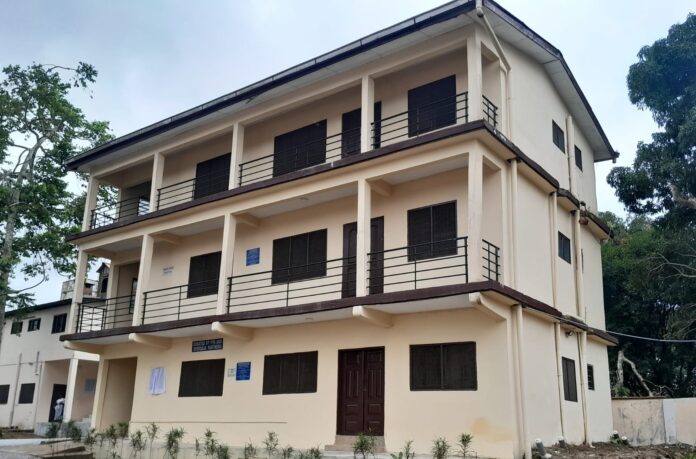
The new College of Health at Begoro

The Presbyterian Church of Ghana (PCG) has commissioned and dedicated a new College of Health at Begoro in the Fanteakwa North District.

The new college, which is known as the Presbyterian College of Health, will be an institution for training laboratory technicians and other allied health professionals. It is the first of its kind in the region, and is expected to fully take off by the close of this year, 2023.

The Moderator of the General Assembly of the Presbyterian Church of Ghana, Rt. Rev. Prof. Joseph Obiri Yeboah Mante, commissioning the College, commended the Akyem Abuakwa Presbytery and its Chairperson, Rev. Dr. Seth Kissi, traditional authorities, individuals, the Begoro District of the PCG, and the local congregation for working hard to establish the College.

Rt. Rev. Prof. Joseph Mante extolled the implementation committee set up in March 2020 to oversee the establishment of the College.

Rt. Rev. Prof. Joseph Obiri Yeboah Mante (in the middle) with other very important personalities in a group picture shortly after the ceremony

He explained that the Church’s decision to turn the campus of the then Begoro Presbyterian Vocational School into a tertiary training institution was to ensure that the facilities were put to good use.

The Moderator added that the same was done at Dormaa and Duayaw Nkwanta, where collapsed vocational schools of the church had been turned into nursing training institutions.

Rt. Rev. Prof. Joseph Obiri Yeboah Mante indicated that the implementation of the Free Senior High School (SHS) required expansion and more tertiary institutions, and that the establishment of the Health College had come at the right time to offer tertiary education to the majority of the beneficiaries.

It will be recalled that the Moderator, in March 2020, inaugurated an Interim Organising Committee to oversee the process and preparations for the establishment of the College.

The terms of reference for the Committee, under the convenorship of Reverend Dr. Seth Kissi, Akyem Abuakwa, Presbytery Chairperson, were to assess the building structure of the former Begoro Presbyterian Vocational School (PREVOC), which was being turned into the College of Health, in order to work out the cost of renovation and initiate the process for accreditation for the final take-off of the school.

Other members of the Committee were a representative of the Begoro Local Congregation of the PCG, Baffuor Sakyi Amankwa, representing the Begoro Traditional Council; Mr. Charles Oware-Tweneboah, District Chief Executive of Fanteakwa North, and representatives from the Begoro Development Association, the District Health Directorate, and the Akyem Abuakwa Traditional Council.

The Moderator presented a cheque of GH¢50,000 as seed money for the smooth takeoff of the College.

Present at the ceremony were Dr. Peter Yeboah, the Executive Director of the Christian Health Association of Ghana; Mr. Donkor, the Chief Director of the Eastern Regional Coordinating Council, who represented the Regional Minister; the Eastern Regional Manager of Presbyterian Schools, Mrs. Vida Kyeremateng; and both Members of Parliament for Fanteakwa North and South, Hon. Amankwaah Asiama and Hon. Kofi Okyere Agyekum, known as Arafat, respectively.

The rest were the District Chief Executive (DCE) for Fanteakwa North, Hon. Charles Oware-Tweneboah, Nanaom, and the Director of the Department of Development and Social Services of the Presbyterian Church of Ghana, Mrs. Rebecca Teiko Sabah, and the Health Coordinator of the Presbyterian Health Services, Mr. Sam Appiah, and the clergy.

NCCE educates on election-related activities in Akuapem South

0
The Akuapem South NCCE director educating the students on the election process

As part of measures to improve the knowledge of citizenry on elections-related activities, the Akuapem South Directorate of the National Commission for Civic Education (NCCE), in collaboration with the Electoral Commission (EC), has organised a civic education and practicalised election in some selected basic schools during their school prefects’ polls in the Akuapem South Municipality.

The schools involved are Aburi Presbyterian Junior High School (B) and Presbyterian Women’s College of Education (PWCE) Demonstration Junior High School (JHS).

One of the students casting her vote

Prior to the casting of votes, the Akuapem South Director of the NCCE, Mr. Alex Owusu Akyaw, urged the students to take the election exercise very seriously as a national assignment in the quest to become the future of the country.

He added that the exercise was to improve the experiences of the students in order to reduce the higher number of rejected and spoiled ballot among other electoral challenges.

Mr. Owusu Akyaw indicated that the NCCE aimed to contribute to the knowledge of the students on the electoral processes, as some students were used as agents which formed the effort to build a democratic Ghana.

“It was a face-to-face interaction to impart virtues of good citizenship at the basic school level,” Mr. Owusu Akyaw said.

He averred that the NCCE was working hard to promote and sustain democracy among the Ghanaian citizenry.

A student going through the voting process

He added that the Commission would continue to create awareness of their rights and obligations, through civic education.

Madam Patience Abekwei, Municipal Electoral Officer for the Electoral Commission (EC), on her part, added that the students had observed the rules and regulations regarding the election.

The exercise will enable the students to learn the dos and don’ts during elections, and know the fundamental contributions to democratic governance.

Elections also give citizens the choice to vote for their local and national representatives.

JHS graduates advised to lead good lives …as they await their results

0
Group photograph of dignitaries and the JHS graduates

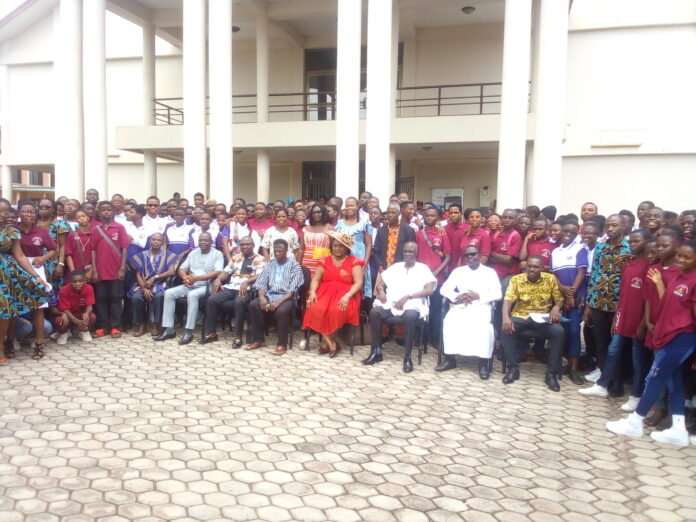
The Principal of St. Francis College of Education (FRANCO), Dr. Adwoa Kwegyiriba, has advised graduates of Junior High Schools (JHS) who had just completed their Basic Education Certificate Examination (BECE) to lead lives that would not prevent them from furthering their education as they wait for their results.

Dr. Kwegyiriba stressed the need for them to avoid indulging in premarital sex, particularly the girls since they could become pregnant, which could prevent them from furthering their education, and would affect their future prospects.

The Principal gave the advice when she addressed 269 graduates of St. Francis JHS ‘A’ and ‘B’ at a graduation ceremony on the theme “Resilient” at Hohoe over the weekend.

She asked the graduates to be resilient and focused on whatever they wished to become in life, because they could become anything that they put their minds to, and with determination they could achieve their dreams through hard work.

Dr. Kwegyiriba reminded the graduates that life was full of ups and downs, and in the unlikely event that some of them did not pass their examinations they should not regard it as failure, but rather see it as an opportunity to re-write the examination and pass.

According to the Principal, with resilience they could become successful in their future endeavours, adding that there was nothing that they could not achieve in life if they were purposeful, and that there was nothing that they would not be able to achieve if they decided to become successful persons.

She observed that the youth were endowed with rich skills and knowledge, therefore, they should endeavour to develop their talents through education, to enable them contribute to national development, because they were the future leaders of the country and must be prepared to become responsible adults.

Dr Kwegyiriba said it was important for the graduates to respect their parents, the elderly and lead lives that would conform to their respective communities, to serve as role models, and stressed that their parents had shown much commitment to the success of their basic education and would again support them if they conducted themselves well.

The Priest in charge of St. Augustine Catholic Church at Hohoe, Rev. Fr. Daniel Tenu, urged the graduates to let what they were taught in school reflect in their conducts in their respective communities, because society held them in high esteem, and should not disappoint them.

Rev. Fr. Tenu observed that some parents struggled to look after them, therefore, they should support them during the period they await their results, and said the destinies of their families were in their hands because much was being invested in them to enable them succeed in life.

The Headmasters of St. Francis JHS ‘A’ and ‘B’, Mr. Daniel Agbetawokpor and Francis Awuku, urged the graduates to be good ambassadors of the schools, which were among the best JHS in the Volta Region.

Digital Cooperation Organisation launches Digital Prosperity Awards

0
Digital Cooperation Organisation

The Digital Cooperation Organisation (DCO) has launched the Digital Prosperity Awards to honour individuals and entities that have made remarkable contributions to the development and growth of nations through the digital economy.

The global awards scheme is in line with DCO’s aim of “enabling digital prosperity for all by accelerating the inclusive growth of the digital economy”.

The event is to accelerate digital economic advancement and lay the groundwork for constructive cooperation, cultivating shared vision and aspirations among all stakeholders.  It is also to reinforce the role of the DCO as an information provider, advocator, facilitator, and advisor, speeding up the sustainable growth of the digital economy and digital transformation of Member States.

The awards scheme will strengthen the welfare, social stability, and cooperation to achieve digital prosperity for all. “The launch of the Digital Prosperity Awards is a significant milestone in recognising outstanding digital contributions of the organisations that enable prosperity for all”, said Ms. Deemah Al Yahya, the Secretary-General of the Digital Cooperation Organization (DCO), in a release.

“We are looking forward to identifying the best digital innovators from the DCO’s Member States and worldwide that benefit humankind.

“The awards aim to acknowledge exceptional initiatives in adopting best practices, policies, and strategies to accelerate digital transformation in their respective countries,” she added.

It is categorised under three main pillars of Digital Innovation, Digital Transformation and Empowering Society.

A technical committee and a judging panel of impartial global leaders, innovators, and technical specialists will thoroughly assess the entrants and nominees based on their initiatives tackling local, regional, or global challenges in all economic sectors, fostering a more inclusive and digitally advanced world through cooperation and innovation.

“In each category, there will be a winner from the public sector and another from the private sector or civil society, both exclusively representing DCO Member States. Those victorious from the private sector or civil society will be eligible for the DCO Member Prize for Digital Prosperity for All,” the statement read.

It added that: “There will be one finalist from global civil society for each category, which is open to nominations from the public, and the ultimate recipient will be handed the DCO International Prize for Digital Prosperity for All.”

Source: GNA

Govt to withdraw firearms case against Emefiele, files 20-count charge

0
Suspended Central Bank Governor, Godwin Emefiele

The Federal Government on Tuesday applied to withdraw the “illegal possession of firearms” case it filed against the suspended Central Bank of Nigeria (CBN) Governor, Godwin Emefiele.

The Director of Public Prosecutions (DPP) at the Federal Ministry of Justice, Mohammed Abubakar, in an oral application, told Justice Nicholas Oweibo of the Federal High Court sitting in Lagos State that the application followed the result of further investigations.

But, Emefiele’s counsel, Senior Advocate of Nigeria, Joseph Daudu, opposed the application, insisting that the government must first purge itself of the disobedience of the court’s order granting Emefiele bail before its application could be taken.

Justice Oweibo has adjourned till Thursday, August 17, 2023, to rule on the application.

Speaking to newsmen, the DPP said a fresh 20 counts have been filed at the Federal Capital Territory (FCT) High Court.

One of the counts, he said, accused Emefiele of “conferring unlawful advantages”.

In an interview with journalists after the proceedings, the DPP said a fresh 20 counts has been filed at the Federal Capital Territory (FCT) High Court against the suspended CBN governor.

He said one of the charges accused Emefiele of “conferring unlawful advantages”.

Credit: dailypost.ng

Tinubu’s ministers can’t perform magic, yam will cost N4000, Garri, N500 -Primate Ayodele

0
Primate Elijah Ayodele

The leader of INRI Evangelical Spiritual Church, Primate Elijah Ayodele, has warned about an increase in the price of food items in the next three months.

Primate Ayodele warned that the price of Yam will cost N4000 while a cup of garri will be hiked to N500 within the next three months.

He disclosed this in a statement by his spokesman, Oluwatosin Osho, on Tuesday. Primate Ayodele urged President Bola Tinubu to be serious as his ministers cannot perform magic.

The prophet further revealed that the prices of essential commodities, especially, food will cost more if the hardship is not addressed.

He said, ‘’If care isn’t taken, a big yam will cost N4,000 in the next three months, a cup of garri will cost N500 and a bottle of groundnut oil will cost N3,000 if the economic situation isn’t addressed.

“Tinubu must be serious, those ministers cannot perform any magic, and they are all noisemakers. He needs technocrats and economic experts to resolve the issue.’’

Credit: dailypost.ng

The Ghanaian Chronicle