Home Blog Page 1546

Israel would “make its own decisions” over how to respond to Iran               -Netanyahu

0
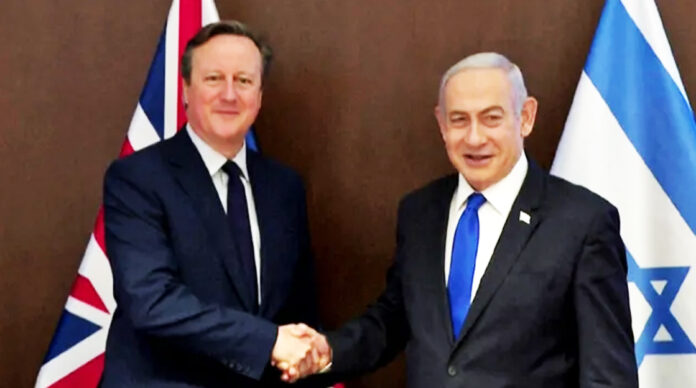
UK Foreign Secretary Lord Cameron held talks with Israel's Prime Minister Benjamin Netanyahu

Benjamin Netanyahu has told UK Foreign Secretary Lord Cameron that Israel would “make its own decisions” over how to respond to an Iranian attack.

He said his government would “do everything necessary to defend itself” during talks the British government had hoped would help prevent escalation.

Mr Netanyahu has repeatedly vowed to retaliate to the unprecedented missile and drone assault at the weekend.

Lord Cameron told him any response should be “smart” and limited.

Speaking to reporters in Jerusalem after the meeting with Mr Netanyahu, Lord Cameron said he was there to “demonstrate our solidarity” after Iran’s “appalling” attack. He continued: “We hope that anything Israel does is as limited and as targeted and as smart as possible.

After the meeting, the Israeli prime minister said: “I want to make it clear – we will make our own decisions, and the State of Israel will do everything necessary to defend itself.”

Mr Netanyahu’s remarks will reinforce the belief in western capitals that Israel is set to take action against Iran and there is a limit to how often they can call for restraint.

Israel is more than aware of concerns in Europe and the United States about the war escalating in the region.

Credit: bbc.com

Russian missile strike in northern Ukraine kills 14

0
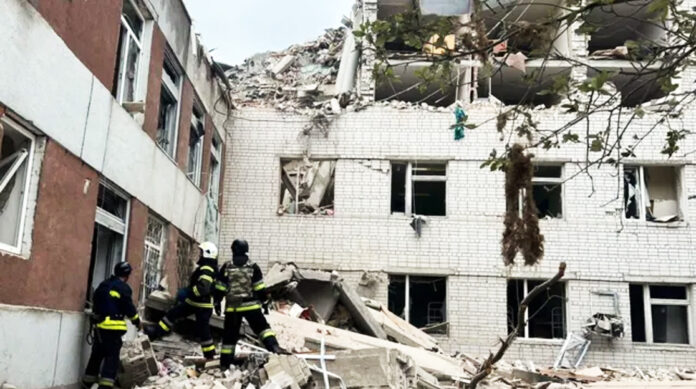
Scene of the Russian missile strike

A Russian missile attack has killed 14 people in the city of Chernihiv in northern Ukraine, according to Ukrainian officials.

Ukraine’s interior minister said there were more than 60 injured in the attack, which hit an eight-storey building in a densely populated area.

Three missiles had struck close to the centre of the city, officials said.

The attack came hours after reports of a Ukrainian strike on a Russian military airfield in occupied Crimea.

Details have yet to be confirmed, although local social media channels shared video of an apparent fire on the airfield at Dzhankoy in northern Crimea.

In Chernihiv, acting mayor Oleksandr Lomako said one building had suffered a direct hit from one of the Russian missiles and several floors had been damaged.

The presidential office in Kyiv said another four high-rise buildings, a hospital, dozens of cars and a higher education institution were all damaged in the attack. Ukrainian Interior Minister Ihor Klymenko said that two children were among the casualties, and police were searching the rubble for further victims.

Credit: bbc.com

Speaker of Parliament to be honoured by Full Gospel Business Men’s Fellowship Int’l 

0
The Rt. Hon Alban Bagbin, Executives of Full Gospel Businessmen Fellowship International in a group picture

Full Gospel Business Men’s Fellowship International is set to honour Rt. Hon. Alban Sumana Kingsford Bagbin, the Speaker of Ghana’s Parliament, with Distinguished Footprints Award for Political Leadership.

According to the Full Gospel Business Men’s Fellowship International, the Award is in recognition of the Speaker’s outstanding leadership in politics and good governance in the Fourth Republic as well as the Speaker’s unwavering dedication to good governance and Ghana’s democratic stability.

Mr. Emmanuel Baba Mahama, National President of the Fellowship disclosed that with over 140 chapters across Ghana and thousands of members globally, FGBMFI aims to honour individuals who exemplify integrity and public spiritedness, regardless of their religious backgrounds.

The National President of FGBMFI, led a team to announce the decision to the Speaker at his office in Parliament last Friday.

Presenting a letter to the Speaker to officially invite him to a ceremony later in the year, where he would be publicly celebrated, he expressed admiration for the Speaker’s commitment in fostering peace and progress in the nation’s political landscape.

According to him, the award ceremony is scheduled to take place in Accra to mark the inauguration of FGBMFI Distinguished Footprints Awards.

The National President indicated that among the key thematic areas considered for selection for the award includes agriculture and food security, environmental sustainability and public spiritedness.

He noted that Ghana is often lauded as one of the most stable democracies in Africa and has seen remarkable strides in peaceful transitions of power over the past three decades.

He stressed that Speaker Bagbin, a longstanding member of the National Democratic Congress (NDC), has played a pivotal role in upholding democratic principles and promoting bipartisan cooperation within the period.

In accepting this prestigious honour, Speaker Bagbin underscored the importance of collaborative efforts in addressing Ghana’s developmental challenges.

He expressed gratitude to FGBMFI for the honour and reaffirmed his commitment to serving the nation with integrity and dedication.

Jomoro MP reshapes 8km Ankasa Forest Reserve road

0
the deplorable state of the road when it rains

The road leading to the Ankasa Forest Reserve in the Jomoro Constituency of the Western Region is being reshaped by the Member of Parliament (MP) for the area, Dorcas Affo-Toffey.The eight-kilometre roadhas not seen any form of rehabilitation for years.

The reshaping of the road would inure to the benefitof nearby communities like Amokwawsuazo, Fire, “Odo y3 f3“, Paradise and French-Man.

The rest are Mfante New Town, Anhweafutukrom, Anhweafutu Junction and New Ankasa,

Given that farming is the main occupation of the people, the latter always struggle to transport their produce to the market centres.

The Ankasa forest reserve has historical significance and supports government revenue through eco-tourism, but its accessibility is hampered by the poor condition of the road.

The deplorable Ankasa Forest road being reshaped

Though the government is aware of the state of the road, no action has been taken to address this issue. The situation becomes worse when it rains.

MP Dorcas Affo-Toffey has, therefore, decided to repair the road.The aim is to alleviate the hardship of commuters, tourists and farmers.

The Assembly Member for Solanim Electoral Area, Ebenezer Adjei, confirmed the deplorable poor state of the road and asked the MP for help.

Some of the residents who spoke to The Chronicle expressed gratitude to the MP, saying several dignitaries use the Ankasa road, but no efforts had been made to construct it, until the MP decided to reshape the road.

They said they have reported the state of the road to the Municipal Chief Executive officer and other executives, but nothing has been done.

Adutwum praises Ghanaian student for winning Global Cambridge AS Level French Exam

0
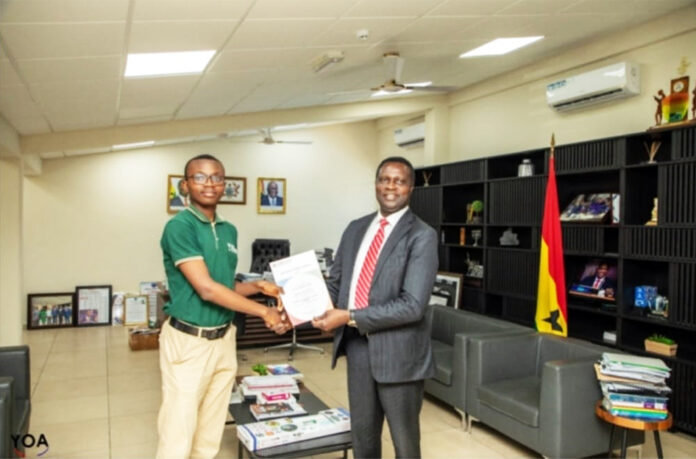
Dr Adutwum with Master Kofi Kokua Asante

The Education Minister, Dr Yaw Osei Adutwum, has eulogized master Kofi Kokua Asante Anyimadu, a student of Galaxy International School, for clinching the top spot worldwide for the Cambridge AS Level French Exam in the year 2023.

He was presented with a certificate in his honour for the feat chalked, despite facing stiff competition from other candidates.

The outstanding performance of the young student attested to the quality of education offered to the students at the Galaxy International School.

Dr Yaw Osei Adutwum, at a meeting with the leadership of Galaxy International School was full of praise to the young Kofi Anyimadu for his hard work, leading to the attainment of this feat, which had brought honour to the nation.

The Minister urged students in the country to take keen interest in their studies, irrespective of where they are located in the country.

He assured that the government would continue to create an enabling environment in the country for all businesses and institutions to excel and to support the transformation of the country.

Mr Mehmet Akmermer, the Managing Director of Galaxy International School, eulogised Dr Adutwum for his support and effort being made towards the development of education in the country.

He stated that Galaxy International School would continue to work hard towards the development of education in the country.

The Managing Director mentioned that with state-of-the-art equipment and infrastructure available in the school, it would continue to provide quality education for students in the country.

Feature:  How To Address Violence Related Issues In Our Society

0
Feature

Violence is a pervasive issue that has plagued societies throughout history. It manifests in various forms, including physical assault, emotional abuse, and even war. The consequences of violence are devastating, leading to physical and psychological harm, loss of life, and widespread fear and insecurity.

Numerous factors contribute to the prevalence of violence in society. One of the primary drivers of violence is inequality and social injustice. Studies have shown that individuals who live in poverty, lack access to education and employment opportunities, and experience discrimination are more likely to resort to violent behaviour.

Economic marginalization and social exclusion can create feelings of frustration and hopelessness, leading individuals to lash out in violent ways. In addition, systemic issues such as racism, sexism, and homophobia can fuel prejudice and discrimination, creating a fertile ground for violence to flourish.

Another factor that contributes to violence is the normalization of aggression and conflict in society. From a young age, individuals are exposed to violence through the media, video games, and even in their own homes.

Research has shown that exposure to violence can desensitize individuals to its effects and increase the likelihood of engaging in aggressive behaviour. In addition, cultural attitudes that glorify aggression and dominance can further perpetuate a cycle of violence in society.

The impact of violence on individuals and communities is profound and far-reaching. Victims of violence experience physical injuries, emotional trauma, and psychological distress that can have lasting effects on their well-being.

For example, survivors of domestic violence may suffer from anxiety, depression, and post-traumatic stress disorder, making it difficult for them to trust others and form healthy relationships. In addition, communities that are affected by violence may experience social fragmentation, loss of trust, and a sense of collective trauma that can erode the fabric of society.

Violence also has significant economic consequences, costing societies billions of dollars in medical expenses, law enforcement costs, and lost productivity. In countries affected by war and conflict, violence can devastate entire economies, leading to poverty, food insecurity, and displacement of populations. The ripple effects of violence can be felt across generations, perpetuating cycles of poverty and social instability.

To address the issue of violence, it is essential to implement strategies that focus on prevention, intervention, and support for survivors. Prevention efforts should target the root causes of violence, such as inequality, social injustice, and cultural attitudes that condone aggression.

This could involve initiatives aimed at promoting social inclusion, reducing poverty, and challenging harmful stereotypes and prejudices. Education and awareness-raising campaigns can also play a key role in changing attitudes and behaviours related to violence.

Intervention strategies should focus on providing support and assistance to individuals who are at risk of or have experienced violence. This could include counselling services, legal support, and access to shelters and safe spaces for survivors of domestic violence. It is crucial to ensure that survivors can access the resources they need to heal and rebuild their lives in a safe and supportive environment.

In addition, efforts to address violence should involve collaboration between government agencies, non-governmental organizations, and community stakeholders. By working together, these groups can develop comprehensive solutions that address the complex and multifaceted nature of violence.

For example, law enforcement agencies can work with social service providers to ensure that survivors of violence receive the help they need, while community organizations can engage in outreach and education efforts to raise awareness about the issue.

Whether it is conflict between nations, civil unrest within a country, or acts of terrorism, violence poses a serious threat to peace and stability. As such, it is important for diplomatic strategies to be implemented to prevent or stop violence before it escalates and causes further harm.

One of the most effective diplomatic strategies to prevent or stop violence is through the use of diplomatic mediation. Mediation involves the intervention of a neutral third party to facilitate communication and negotiation between conflicting parties. By providing a safe and neutral space for dialogue, mediators can help conflicting parties find common ground and work towards peaceful resolutions.

A successful example of diplomatic mediation in preventing violence is the Oslo Accords. In the early 1990s, the Oslo Accords brought together Israeli and Palestinian leaders to negotiate a peace agreement.

Through the mediation of international diplomats, the two sides were able to reach agreements on key issues such as borders, security, and the status of Jerusalem. While the Oslo Accords ultimately did not lead to a lasting peace, they did help to reduce violence in the region and pave the way for future negotiations.

In addition to diplomatic mediation, another effective strategy to prevent or stop violence is through the use of diplomatic pressure. This involves using diplomatic means such as sanctions, embargoes, and diplomatic condemnations to pressure conflicting parties to end their violent actions.

By applying diplomatic pressure, the international community can send a strong message that violence will not be tolerated and that there will be consequences for those who continue to engage in it.

An example of diplomatic pressure preventing violence is the case of South Africa during the apartheid era. The international community, through the use of diplomatic pressure and sanctions, was able to put pressure on the South African government to end its discriminatory policies. This eventually led to the abolition of apartheid and the transition to a democratic government.

Furthermore, diplomatic strategies can also be used to promote conflict prevention and resolution through early warning mechanisms. By identifying and addressing the root causes of violence before they escalate, diplomats can prevent conflicts from erupting in the first place.

Early warning mechanisms can include monitoring social, economic, and political indicators for signs of escalating tensions, as well as engaging with local communities to address grievances and prevent violence.

A successful example of early warning mechanisms in preventing violence is the work of the United Nations Office for the Prevention of Genocide. The office monitors potential genocidal threats around the world and works with governments and civil society to address root causes and prevent violence. By identifying early warning signs and taking preventive action, the office has been able to prevent numerous conflicts from escalating into genocide.

In conclusion, diplomatic strategies play a crucial role in preventing and stopping violence around the world. By utilizing diplomatic mediation, pressure, and early warning mechanisms, diplomats can help to de-escalate conflicts, address the root causes of violence, and promote peaceful resolutions. The international community must work together to deploy these diplomatic strategies to prevent further violence and promote peace and stability.

By  Aaron Babako Korkormissah. 

 (Korkormissahaaronbabako@gmail.com)

10 Tips to Beat Insomnia

0

Insomnia is a common sleep disorder that can make it hard to fall asleep or stay asleep. It also can cause you to wake up too early and not be able to get back to sleep. You may still feel tired when you wake up. Insomnia can drain your energy level and affect your mood.

If you are suffering from insomnia, there are many steps you can take to change behaviors and lifestyle to help you get to sleep. Here are some tips for beating insomnia;

  1. Wake up at the same time each day. It is tempting to sleep late on weekends, especially if you have had poor sleep during the week. However, if you suffer from insomnia you should get up at the same time every day in order to train your body to wake at a consistent time.
  2. Eliminate alcohol and stimulants like nicotine and caffeine. The effects of caffeine can last for several hours, perhaps up to 24 hours, so the chances of it affecting sleep are significant. Caffeine may not only cause difficulty initiating sleep, but may also cause frequent awakenings. Alcohol may have a sedative effect for the first few hours following consumption, but it can then lead to frequent arousals and a non-restful night’s sleep. If you are on medications that act as stimulants, such as decongestants or asthma inhalers, ask your doctor when they should best be taken to help minimize any effect on sleep.
  3. Limit naps. While napping seems like a proper way to catch up on missed sleep, it is not always so. It is important to establish and maintain a regular sleep pattern and train oneself to associate sleep with cues like darkness and a consistent bedtime. Napping can affect the quality of nighttime sleep.
  4. Exercise regularly. Regular exercise can improve sleep quality and duration. However, exercising immediately before bedtime can have a stimulant effect on the body and should be avoided. Try to finish exercising at least three hours before you plan to retire for the night.
  5. Limit activities in bed. The bed is for sleeping and having sex and that’s it. If you suffer from insomnia, do not balance the checkbook, study, or make phone calls, for example, while in bed or even in the bedroom, and avoid watching television or listening to the radio. All these activities can increase alertness and make it difficult to fall asleep.
  6. Do not eat or drink right before going to bed. Eating a late dinner or snacking before going to bed can activate the digestive system and keep you up. If you suffer from gastroesophageal reflux (GERD) or heartburn, it is even more important to avoid eating and drinking right before bed since this can make your symptoms worse. In addition, drinking a lot of fluids prior to bed can overwhelm the bladder, requiring frequent visits to the bathroom that disturb your sleep.
  7. Make your sleeping environment comfortable. Temperature, lighting, and noise should be controlled to make the bedroom conducive to falling (and staying) asleep. Your bed should feel comfortable and if you have a pet that sleeps in the room with you, consider having the pet sleep somewhere else if it tends to make noise in the night.
  8. Get all your worrying over with before you go to bed. If you find you lay in bed thinking about tomorrow, consider setting aside a period of time — perhaps after dinner — to review the day and to make plans for the next day. The goal is to avoid doing these things while trying to fall asleep. It is also useful to make a list of, say, work-related tasks for the next day before leaving work. That, at least, eliminates one set of concerns.
  9. Reduce stress. There are a number of relaxation therapies and stress reduction methods you may want to try to relax the mind and the body before going to bed. Examples include progressive muscle relaxation (perhaps with audio tapes), deep breathing techniques, imagery, meditation, and biofeedback.
  10. Consider participating in cognitive therapy. Cognitive therapy helps some people with insomnia identify and correct inappropriate thoughts and beliefs that may contribute to insomnia. In addition, cognitive therapy can give you the proper information about sleep norms, age-related sleep changes, and help set reasonable sleep goals, among other things.

Source: webmd.com


Today’s Europa League 2nd Leg Quarter-Finals

0
AC Milan players

Roma welcome AC Milan to Stadio Olimpico

Concluding an all-Italian tie in the Europa League quarter-finals, Roma welcome AC Milan to Stadio Olimpico on Thursday evening, with a slim lead in hand from last week’s first leg.

Milan had won both Serie A meetings this season, but the Giallorossi’s 1-0 success in the second city puts them closer to meeting either West Ham United or new German champions Bayer Leverkusen in the semi-finals.

After reaching two UEFA finals in as many years, Roma’s aim of making this season’s Europa League decider in Dublin is very much alive following events at San Siro last Thursday.

Having won the inaugural Europa Conference League in 2022, before being edged out by Sevilla in UEFA’s second-tier competition 12 months later, the Giallorossi became battle-hardened under former coach Jose Mourinho, and they channelled his spirit to leave Milan with an advantage.

Occupying fifth place in the Serie A standings, Roma are targeting Champions League football for next term, but they could alternatively secure a spot in the expanded competition by winning this year’s Europa League.

While both teams are capable of scoring from several different sources, the hosts have recently shown some resilience at the back and are particularly tough to beat in the capital.

Credit: sportsmole.co.uk

Liverpool face a mountainous hill as they travel to Atalanta

Staring down the barrel of Europa League elimination, Liverpool have a mountainous hill to climb when they visit the Gewiss Stadium for the second leg of their quarter-final with Atalanta on Thursday night.

Liverpool face a mountainous hill to climb

La Dea left Anfield dumbstruck with an astonishing 3-0 success in last week’s opening fixture, although the Reds are no strangers to overturning seemingly unassailable deficits on the continent.

Fresh from dumping out Sporting Lisbon, Atalanta returned to English shores for a three-year reunion with the Reds, whom they memorably managed to conquer at Anfield in the 2020-21 Champions League group stage. Atalanta were unable to carry last Thursday’s momentum forward to the weekend’s Serie A battle with Hellas Verona, though – letting a 2-0 lead slip in a 2-2 home draw – and the shock beating of Liverpool represents only the hosts’ third win from their last 11 contests across all competitions.

Liverpool’s plight continued in a similarly agonising Premier League home beating at the hands of Crystal Palace on Sunday. The time is nigh for Liverpool to rediscover their cutting edge – which the ice-cool Jota should certainly help to provide – and Atalanta’s domestic defending has often left a lot to be desired.

Gasperini’s men have always been heralded for their scintillating offensive play, though, and while Liverpool might manage a consolation win on the night, Atalanta can capitalise on gaps opening up to ensure that Klopp will leave Anfield without ever lifting the Europa League trophy aloft.

Credit: sportsmole.co.uk

West Ham host new German champions Leverkusen                                                    

Bayer Leverkusen now seek to finish the job in the second leg of their Europa League quarter-final with West Ham United on Thursday evening. The newly-crowned German champions strolled past David Moyes‘s men 2-0 in last week’s opening battle, although their hosts already have one comeback win over a Bundesliga outfit under their belt in 2024.

Kudus, West Ham United

The London Stadium faithful are unlikely to be holding out hope of another second-leg turnaround if Sunday’s showing against Fulham is anything to go by. Boasting just one success from their last six matches in all competitions during an indifferent run of form, the Hammers have just two wins to show from 10 home contests in 2024, and they have been knocked out of their last two European ties when losing the first leg by at least two goals.

The Europa Conference League champions can take significant encouragement from an 11-game home winning run in continental matches, but such statistics may pale into triviality against the irrepressible juggernaut of Bayer Leverkusen.

The weekend’s energy-sapping title celebrations may be felt by Alonso’s men at the London Stadium, but the German champions have a near fully-fit squad and plenty of candidates for rotation, which spells serious danger for a ravaged West Ham outfit.

Credit: sportsmole.co.uk

Marseille, Benfica faceoff in Europa League quarter-finals

Marseille seek an end to a wretched losing run when they welcome Benfica to the Orange Velodrome in Thursday’s Europa League quarter-final second leg.

Les Olympiens’ upswing after Jean-Louis Gasset‘s arrival is well and truly over, with the Ligue 1 side unable to string results together in recent weeks, and they host an in-form crop that have lost just once in nine games.

Gasset’s arrival at Marseille caused a difference in performances and results, but the Ligue 1 side have been brought back down to earth with the recent five losses in all competitions.

Benfica players

Marseille returning to winning ways is the higher ambition, as they seek to take advantage of having last weekend off in Ligue 1 to overturn a deficit on the continent for the first time since the 2017-18 campaign.

Both sides have suffered setbacks on the continent in recent years, but they head into this week’s quarter-final second leg knowing they have the opportunity to end their respective dispiriting streaks.

While Marseille have won four and drawn one of their five Europa League games at the Velodrome this season, averaging 3.2 goals per game, the impact of recent defeats and injury worries could hinder Gasset’s men. Thus, Benfica are backed to make it into the Europa League semis where they would face Liverpool or Atalanta.

Credit: sportsmole.co.uk


FIXTURES

Roma 20:00 Milan

Atalanta 20:00 Liverpool

West Ham United 20:00 Bayer Leverkusen

Olympique Marseille 20:00 Benfica

Feature: Why Is Accra Always Flooded?

0
Feature

Floods are natural disasters that can cause widespread damage and devastation to communities. Accra, the capital city of Ghana, has experienced its fair share of flooding over the years. The city’s geographical location, climate, and rapid urbanization have all contributed to the flooding problem in Accra.

One of the main causes of floods in Accra is the city’s location along the coast. Accra sits at a low elevation, making it prone to flooding from rising sea levels and heavy rains. The city’s drainage system is also inadequate and poorly maintained, leading to water not being able to flow properly during heavy rainfall.

In addition, deforestation and urbanization have contributed to the increase in flooding as natural barriers are removed and the ground becomes less able to absorb excess water.

The impact of flooding in Accra is significant, affecting thousands of residents every year. Homes, businesses, and infrastructure are damaged or destroyed, leading to economic losses and displacement of people.

The health of residents is also at risk as floodwaters can carry contaminants and increase the spread of diseases such as cholera and malaria. In extreme cases, loss of life can occur when floods are severe.

In recent years, the government of Ghana has taken steps to address the issue of flooding in Accra. Infrastructure projects such as the construction of drainage systems and flood protection measures have been put in place to mitigate the effects of flooding. However, challenges remain, as funding and resources are limited, and the problem of flooding is complex and requires a holistic approach to solve.

One of the most effective measures that town planners and city authorities can enforce to prevent flooding in Accra is the establishment of proper drainage systems. Accra is prone to flooding due to poor drainage systems that are unable to handle large volumes of water during heavy rainfall.

By improving and expanding the city’s drainage infrastructure, excess water can be safely and efficiently channelled away from roads, buildings, and other structures, reducing the risk of flooding.

Additionally, town planners and city authorities should consider implementing green infrastructure solutions such as rain gardens, green roofs, and permeable pavements.

These solutions help to absorb and filter rainwater, reducing the amount of runoff that enters the city’s drainage system. Green infrastructure also helps to mitigate the urban heat island effect and improve air quality, making cities more sustainable and resilient to climate change.

Furthermore, town planners and city authorities must enforce strict building codes and land use regulations to prevent construction in flood-prone areas. Accra’s rapid urbanization has led to the construction of buildings and infrastructure in low-lying areas that are at high risk of flooding.

By enforcing zoning regulations and building codes that restrict development in these areas, town planners can reduce the potential for flood damage and protect residents from harm.

In addition to physical infrastructure solutions, town planners and city authorities should also prioritize community engagement and education initiatives to raise awareness about the risks of flooding and the importance of preparedness.

By working with local residents, businesses, and community organizations, city planners can develop flood response plans, emergency evacuation routes, and communication systems to ensure that residents are prepared for flooding events.

Finally, town planners and city authorities should collaborate with regional and national agencies to develop comprehensive flood risk management strategies that address the root causes of flooding in Accra and other parts of the country.

By coordinating efforts with other stakeholders, including government agencies, non-governmental organizations, and the private sector, town planners can access funding, technical expertise, and resources to implement long-term solutions to prevent flooding and build resilience to climate change.

In conclusion, preventing flooding in Accra and other parts of the country requires a holistic approach that combines physical infrastructure improvements, green infrastructure solutions, land use regulations, community engagement, and strategic partnerships.

By enforcing these measures, town planners, city authorities, and city planners can reduce the risk of flooding, protect lives and property, and create more sustainable and resilient cities for future generations.

By Aaron Babako Korkormissah. 

(Korkormissahaaronbabako@gmail.com)
Green Ghana meant to fight climate crisis -Lands Minister

0
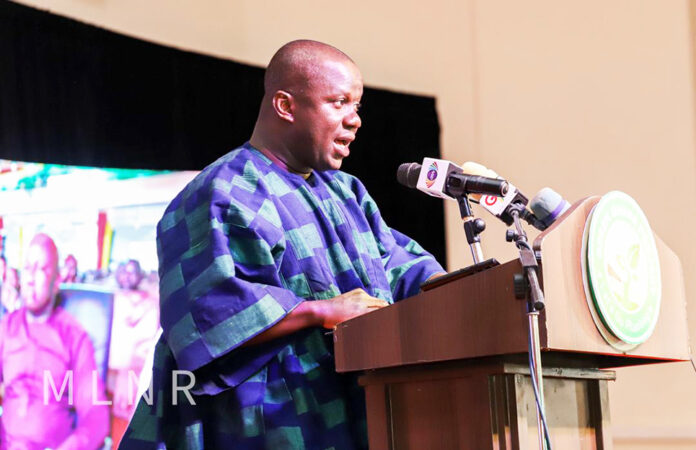
Mr Samuel Jinapor delivering his address

The Minister for lands and Natural Resources, Samuel Abu Jinapor, has called on all Ghanaians to support the Green Ghana Project, which his ministry introduced three years ago.

According to him, the successful execution of the project will help Ghana to contribute her quota towards the global fight against climate change.

Speaking at the launch of this year’s tree planting exercise in Tamale yesterday, Minister Jinapor drew the attention of Ghanaians to the alarming statistics, indicating record-breaking temperatures and ecological threats and the need to support the conservation efforts to stem the tide.

Representative of Ya-Na reading his speech at the launch

According to the minister, since the project started three years ago, over 42 million trees have been planted nationwide, surpassing targets and exceeding expectations.

He announced an ambitious target of planting an additional ten million trees during this year’s Green Ghana Day, which is slated for June. It will be under the theme: “Growing for a Greener Tomorrow.”

The theme, he told the gathering of chiefs and others, summarises the essence of nurturing planted trees to maturity, thereby maximizing their contribution to climate resilience.

Acknowledging the pivotal role of stakeholders and Ghanaians across various sectors, Minister Jinapor called for a unified effort to achieve the set objectives.

He appealed to individuals, communities, corporate entities and government institutions to actively participate in tree planting activities and support the initiative’s expansion.

In the keynote address, delivered by his representative, Yaa Naa Abubakari Mahama II emphasised the significance of the Green Ghana Day Project initiated by President Akufo-Addo and reflected on the commendable progress made, since its inception in 2021.

“In the year 2021, 7 million trees were planted. In subsequent years more trees were planted. This year the target is to plant over 10 million tree seedlings,” Yaa Naa announced, underscoring the ambitious goals set for the forthcoming campaign.

Government officials who attended the launch

Highlighting the multifaceted benefits of afforestation, Yaa Naa stressed its pivotal role in mitigating the adverse effects of climate change, particularly in the northern regions where erratic rainfall patterns pose significant challenges to livelihoods.

He lauded the initiative’s potential to enhance economic opportunities, preserve biodiversity, and mitigate the threat of bushfires, thereby safeguarding the environment for future generations.

Ya-Na Abubakari Mahama II advocated for a concerted effort to promote the cultivation and protection of shea trees, a vital economic resource for the region’s inhabitants.

He advised the sector minister to spearhead initiatives aimed at expanding shea tree cultivation and safeguarding existing wild trees from annual bushfires.

The Dagbon Overlord reiterated his unwavering commitment to championing environmental conservation efforts within the Dagbon Kingdom and beyond.

He called on his paramount and divisional chiefs to actively participate in the Green Ghana Day initiative and ensure its success through diligent oversight and reporting.

In his welcome address, Northern Regional Minister, Shani Alhassan Shaibu, at the launch of the 2024 Green Ghana Day highlighted the collective dedication to environmental sustainability, while underscoring the importance of proactive measures against pressing environmental challenges, including climate change, deforestation and pollution.

Minister Shaibu expressed gratitude for the attendees’ commitment, recognizing it as a testament to their willingness to safeguard the planet for present and future generations.

He called for drawing inspiration from past achievements and ensuring that actions are sustainable, while acknowledging the indispensable contribution of stakeholders such as invited guests, chiefs, and the press to the success of such endeavors.

Minister Jinapor in a group picture with the chiefs

The Vice Chancellor of the University of Development Studies, Professor Seidu Al-Hassan in his remarks commended the government for such a promising initiative while urging all to support it for a massive success.

“Government is working on fixing the degrading state of nature at the moment and the best we can do is to support this government for the good of Ghana and the world.”

Also at the event, were the Board Chairpersons of the Forestry Commission, the Minerals Development Fund, Deputy CEOs of Agencies, Directors and staff of the Ministry and the Forestry Commission.

The Ghanaian Chronicle